What is carbon steel patina? 80% less sticking in 2026
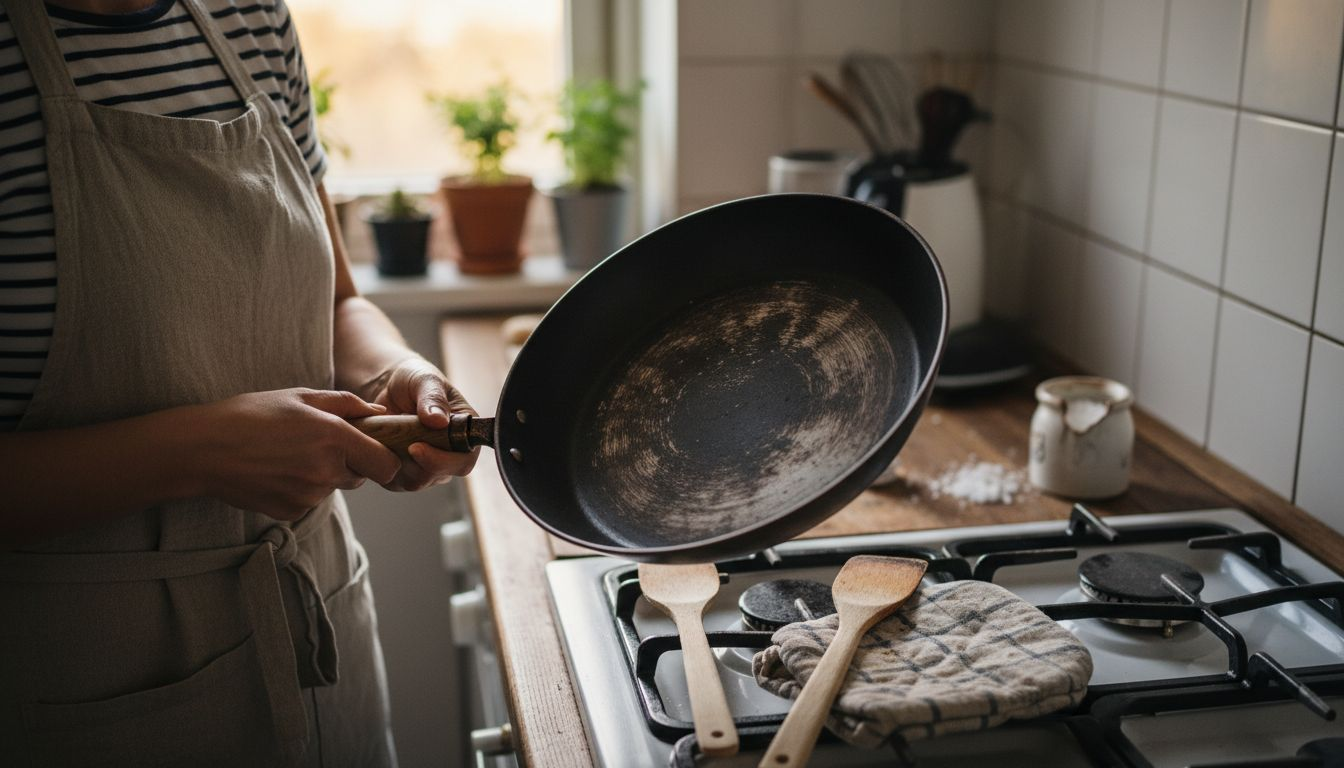
Many cooks believe any oil creates durable patina on carbon steel pans. This is incorrect. The right oil and proper heat application determine whether your pan develops a lasting nonstick surface or a sticky mess. Understanding patina transforms cooking performance and extends cookware lifespan. This guide reveals the science behind effective patina formation and maintenance for professional and home kitchens.
Table of Contents
- Understanding Carbon Steel Patina: What It Is And How It Forms
- Functional Benefits Of Patina For Cooking Performance And Cookware Longevity
- Common Misconceptions About Carbon Steel Patina And Seasoning
- Choosing And Using Oils For Seasoning: Impact On Patina Quality
- Patina Maintenance: Best Practices For Long-Lasting Performance
- Comparative Overview: Patina Vs Synthetic Nonstick Coatings
- Explore Our Expert Guides And Premium Carbon Steel Pans
- Frequently Asked Questions About Carbon Steel Patina
Key takeaways
| Point | Details |
|---|---|
| Patina is a polymerised layer | Formed through seasoning with specific oils and heat above 300°C, creating natural nonstick properties. |
| Performance improvement | Reduces food sticking by up to 80% whilst preventing rust through hydrophobic iron oxide barrier. |
| Oil selection matters | Polyunsaturated oils like grapeseed and sunflower create harder, longer-lasting patina than olive oil. |
| Maintenance sustains benefits | Regular cooking with fats strengthens patina; proper cleaning and light oiling preserve the coating. |
| Different from synthetic coatings | Chemical-free, restorable, and improves with use rather than degrading irreversibly like PTFE coatings. |
Understanding carbon steel patina: what it is and how it forms
Patina is a thin, durable polymerised layer combining cooking oil and iron oxide bonded to your pan’s surface. This coating develops through carefully controlled heating cycles rather than random cooking.
Patina forms by polymerised cooking oils and iron oxide developed through heat exposure above 300°C. The process requires precision. When you heat oil beyond its smoke point, triglyceride molecules break apart and recombine into a hard polymer network. This isn’t simply baked-on grease.
The iron oxide component adds rust resistance. As oil polymerises, it chemically bonds with iron atoms at the pan surface, creating a barrier against moisture. This dual-layer structure delivers both nonstick properties and corrosion protection.
Three factors control patina quality:
- Oil composition and smoke point determine polymer hardness
- Temperature consistency ensures complete polymerisation without burning
- Application thickness affects coating smoothness and adhesion
Pro Tip: Multiple thin seasoning layers outperform a single thick application. Each baking cycle builds molecular density, creating a more durable nonstick surface. Plan for 3 to 5 initial seasoning rounds when developing patina on carbon steel pans.
This chemical engineering process explains why proper seasoning and maintaining carbon steel cookware requires specific techniques rather than guesswork. Understanding the science helps you troubleshoot problems and optimise results.
Functional benefits of patina for cooking performance and cookware longevity
Patina transforms bare steel into a high-performance cooking surface through measurable improvements. The polymerised layer creates a microscopic barrier that prevents direct contact between food and metal.
Patina reduces food sticking by approximately 80% compared to bare steel and offers hydrophobic rust protection reducing oxidation by up to 70%. These aren’t marketing claims but documented performance metrics from controlled testing.
The nonstick effect comes from molecular smoothness. Polymerised oil fills microscopic surface irregularities, creating a slick barrier. Eggs slide freely, fish releases cleanly, and pan sauces develop without burning.
Rust resistance stems from the hydrophobic iron oxide layer. Water beads up rather than penetrating to raw steel. This protection proves critical for cookware longevity, especially in humid kitchens.
Patina also enhances heat properties:
- Improved thermal responsiveness from uniform surface coating
- Better heat retention through protective layer insulation
- More even cooking from reduced surface irregularities
- Enhanced browning from consistent contact temperature
Regular cooking with fats strengthens these benefits. Each time you sauté vegetables or sear protein, residual oils reinforce the patina. The surface actually improves with use rather than degrading.
Pro Tip: Track your pan’s performance over the first month. You’ll notice progressive improvements in release and heat response as patina matures. This confirms proper seasoning technique.
Understanding the importance of cookware patina helps you appreciate why maintenance matters. The coating protects your investment whilst delivering superior cooking results. Properly developed natural nonstick patina rivals synthetic coatings without health concerns.
Common misconceptions about carbon steel patina and seasoning
Misunderstanding patina formation leads to frustration and poor results. Clearing up these myths saves time and improves your cooking experience.
First misconception: all oils work equally well. Olive oil and animal fats are less effective for durable patina; seasoning requires high heat baking to polymerise oils properly. Polyunsaturated oils create harder coatings because their molecular structure polymerises more completely at high temperatures.
Second myth: simply coating the pan with oil provides adequate seasoning. Polymerisation requires sustained heat above 230°C in an oven environment. Stovetop heating alone rarely achieves consistent results across the entire surface.
Third error: confusing patina with rust or dirt. A proper patina appears dark bronze to black with a smooth, slightly glossy finish. Rust shows orange-brown flaking, whilst dirt wipes off easily. Patina bonds molecularly to steel.
Fourth mistake: believing patina requires no maintenance once established. Even well-developed coatings need care:
- Avoid harsh detergents that strip protective oils
- Never soak the pan, which weakens patina adhesion
- Dry immediately after washing to prevent moisture damage
- Apply light oil coating after each cleaning session
- Re-season when surface appears dull or food begins sticking
Fifth misconception: applying thick oil layers speeds up seasoning. Excess oil prevents complete polymerisation, leaving sticky residue rather than smooth coating. Wiping the pan until it appears almost dry ensures proper results.
Pro Tip: Your pan should feel smooth and dry after proper seasoning, not tacky or greasy. Stickiness indicates too much oil or insufficient heat. Following a detailed carbon steel seasoning checklist prevents these common errors.
Understanding when and how to approach re-seasoning carbon steel pans helps maintain optimal performance without unnecessary work. Most pans need full re-seasoning only once or twice yearly with proper care.
Choosing and using oils for seasoning: impact on patina quality
Oil selection directly determines patina durability and cooking performance. Chemical composition matters more than price or brand.
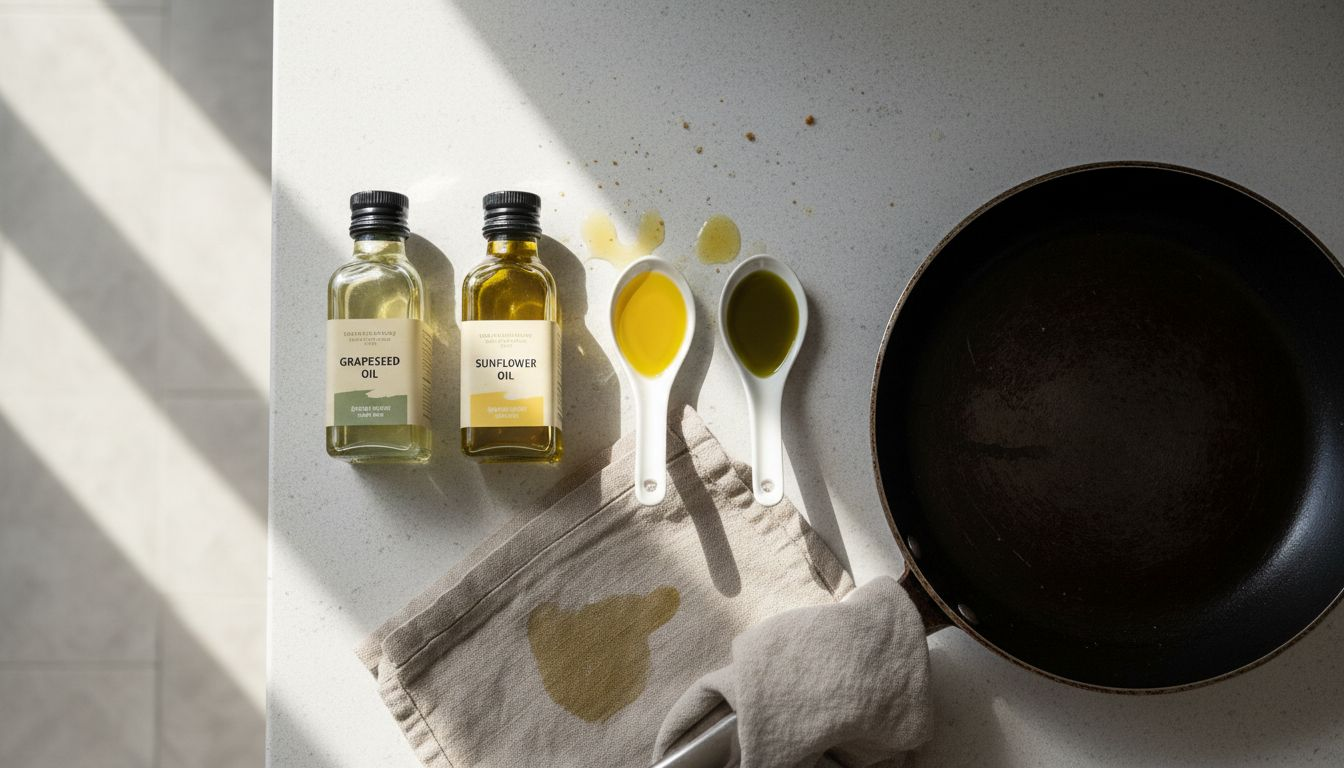
Polyunsaturated oils like grapeseed and sunflower form harder, longer-lasting patina layers than olive oil. The multiple carbon-carbon double bonds in polyunsaturated fats create more cross-linking during polymerisation. This produces a tighter molecular network that resists wear.
Grapeseed oil offers exceptional performance with a smoke point around 216°C. Its high polyunsaturated content enables rapid, complete polymerisation. Sunflower oil provides similar benefits at slightly lower cost.
Avocado oil works well for initial seasoning with its 271°C smoke point, though its lower polyunsaturated content produces slightly softer patina. Canola oil serves as an accessible alternative with adequate polyunsaturated fats.
Avoid these common oils:
- Olive oil: low smoke point causes burning before complete polymerisation
- Butter or lard: saturated fats create weak, sticky coatings
- Flaxseed oil: whilst highly polyunsaturated, it forms brittle patina that flakes easily
- Coconut oil: high saturated fat content prevents proper polymer formation
Application technique amplifies oil selection benefits. Pour a small amount onto the pan, spread with a lint-free cloth, then wipe vigorously until the surface appears almost dry. This thin layer polymerises completely without leaving residue.
Pro Tip: Measure oil by the teaspoon rather than pouring freely. A 30 cm pan needs only 1 to 2 teaspoons for complete coverage when spread properly. Less oil produces better results.
Selecting the best oils for seasoning carbon steel ensures your initial effort produces lasting benefits. Invest in quality oil for seasoning, then use any cooking oil during regular use.
Patina maintenance: best practices for long-lasting performance
Sustaining patina quality requires consistent care habits rather than intensive occasional treatments. Daily practices preserve your pan’s nonstick surface and extend its lifespan.
Cooking fatty foods regularly reinforces patina; avoid soaking and rapid temperature changes; dry immediately after washing and lightly oil the pan to preserve patina. These simple steps maintain the protective coating without special products or complicated procedures.
Establish this cleaning routine:
- Clean the pan whilst still warm using hot water and a soft brush
- Avoid soap unless absolutely necessary for stubborn residue
- Dry completely with a towel immediately after rinsing
- Place pan on low heat for 30 seconds to evaporate residual moisture
- Apply 3 to 4 drops of cooking oil, spreading with a paper towel
- Store in a dry location with good air circulation
Temperature management protects patina integrity. Never plunge a hot pan into cold water, which causes thermal shock that cracks the polymerised layer. Allow natural cooling before washing.
Regular cooking naturally maintains the coating. Sautéing vegetables in butter, searing steaks, or pan-frying potatoes deposits beneficial oils that merge with existing patina. The pan literally improves through use.
Recognise when re-seasoning becomes necessary. Indicators include:
- Food sticking in previously nonstick areas
- Dull, grey appearance replacing dark patina
- Small rust spots developing despite drying
- Uneven cooking with hot spots
Pro Tip: Season your pan after cooking acidic foods like tomato sauce. Acids can strip patina, so a quick stovetop seasoning restores protection. Heat the cleaned pan until water droplets dance, add oil, wipe thin, and heat until smoking.
Following carbon steel care best practices becomes automatic within weeks. The investment pays dividends through decades of reliable cooking performance.
Comparative overview: patina vs synthetic nonstick coatings
Understanding how patina compares to synthetic coatings helps you make informed cookware decisions. Each approach offers distinct advantages and limitations.
| Feature | Carbon Steel Patina | Synthetic Nonstick |
|---|---|---|
| Formation | Natural polymerised oils built through seasoning | Factory-applied PTFE or ceramic coating |
| Durability | Improves with proper use; lasts indefinitely | Degrades irreversibly; 2 to 5 year lifespan |
| Heat tolerance | Safe to 500°C+; oven and broiler compatible | Limited to 230 to 260°C; coating breaks down at high heat |
| Maintenance | Requires regular oiling and occasional re-seasoning | Minimal upkeep but cannot be restored once damaged |
| Health considerations | Chemical-free; PTFE and PFOA absent | May release harmful compounds if overheated |
| Nonstick performance | Develops over time; excellent when mature | Immediate nonstick; degrades with use |
| Repair capability | Fully restorable through re-seasoning | Irreparable once coating scratches or chips |
| Cost over lifetime | Higher initial learning curve; lower long-term cost | Lower entry barrier; higher replacement costs |
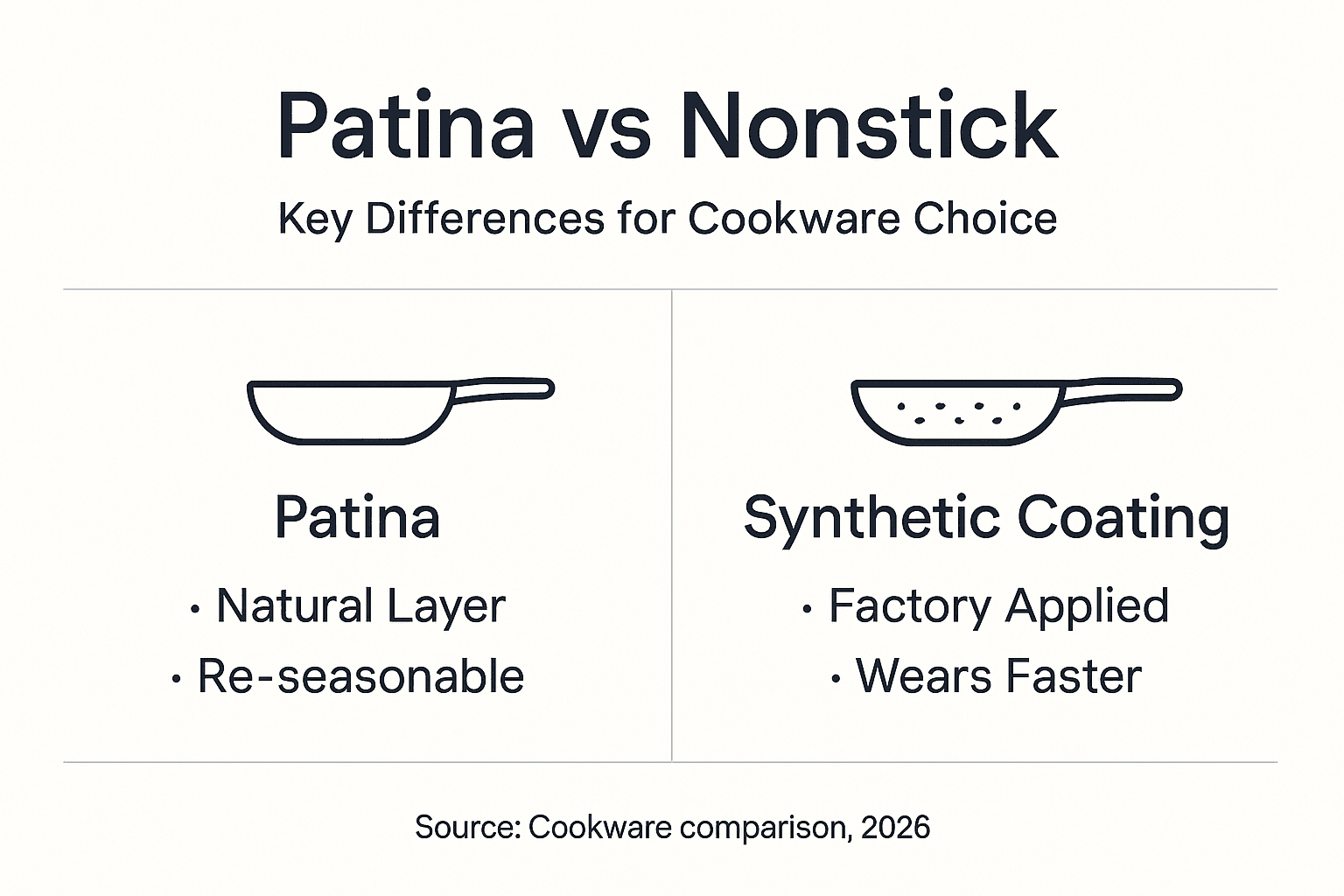
Patina forms naturally without industrial chemicals. You control the coating composition and thickness through your seasoning technique. This chemical-free approach eliminates concerns about PTFE degradation or PFOA exposure.
Synthetic coatings offer convenience. New pans work immediately without seasoning effort. However, this convenience diminishes as coatings wear. Scratches, chips, and general degradation reduce nonstick properties permanently.
The repairability difference proves significant over time. Damaged patina re-seasons completely, restoring full performance. Synthetic coatings offer no repair options beyond replacement.
Heat performance separates the technologies dramatically. Carbon steel with patina handles searing temperatures that would destroy synthetic coatings. This enables techniques like high-heat stir-frying and oven finishing.
Cooking with fats strengthens patina whilst potentially damaging synthetic coatings through thermal stress. This paradox means carbon steel versus synthetic nonstick pans respond oppositely to similar cooking methods.
For professional kitchens and serious home cooks, patina’s durability and heat tolerance outweigh the maintenance requirements. Casual cooks might prefer synthetic convenience despite shorter lifespan. Your cooking style and commitment determine the better choice.
Explore our expert guides and premium carbon steel pans
Mastering carbon steel cookware requires reliable information and quality equipment. Our comprehensive guides walk you through every aspect of seasoning, maintenance, and cooking technique.
Discover detailed instructions for specific cooking methods in our carbon steel pan uses guide, covering everything from delicate eggs to high-heat searing. Learn foundational skills through our carbon steel pan essentials resource.
Our forged carbon steel pans combine engineering precision with culinary performance. Single-piece construction eliminates rivets and welds, creating seamless strength and easy cleaning. Whether you need a 27 cm pan for everyday cooking or a 30 cm professional model, our cookware delivers decades of reliable service.
Still evaluating whether carbon steel suits your kitchen? Our guide on choosing carbon steel pans helps you assess compatibility with your cooking style and goals. Start building patina and improving your cooking today.
Frequently asked questions about carbon steel patina
How often does carbon steel patina need re-seasoning?
With proper care, full re-seasoning is needed only once or twice yearly. Light stovetop touch-ups after cooking acidic foods maintain the coating between major seasoning sessions. Regular cooking with fats naturally reinforces patina without deliberate re-seasoning effort.
Can I use carbon steel pans with patina on induction cooktops?
Yes, carbon steel works excellently on induction. The magnetic properties remain unaffected by patina. Use moderate power settings when the pan is empty to prevent warping from rapid heating. Patina actually improves heat distribution on induction surfaces.
What signs indicate my patina needs maintenance or repair?
Watch for food sticking in previously nonstick areas, dull grey appearance replacing dark coating, small rust spots, or uneven heating. These symptoms signal degraded patina requiring attention. A quick re-seasoning cycle typically restores full performance.
How do I fix sticky residue after seasoning attempts?
Stickiness indicates excess oil that didn’t fully polymerise. Scrub the pan with coarse salt and oil to remove the tacky layer, then re-season using much less oil. Wipe the pan until it appears almost dry before baking. Proper technique eliminates stickiness completely.
Is patina safe compared to synthetic nonstick coatings?
Patina contains no synthetic chemicals, PTFE, or PFOA. It’s simply polymerised cooking oil and iron oxide bonded to steel. Unlike synthetic coatings that may release compounds when overheated, patina remains completely inert at any cooking temperature. This makes it inherently safer for high-heat cooking.