How to Clean a Carbon Steel Pan Naturally Step-by-Step

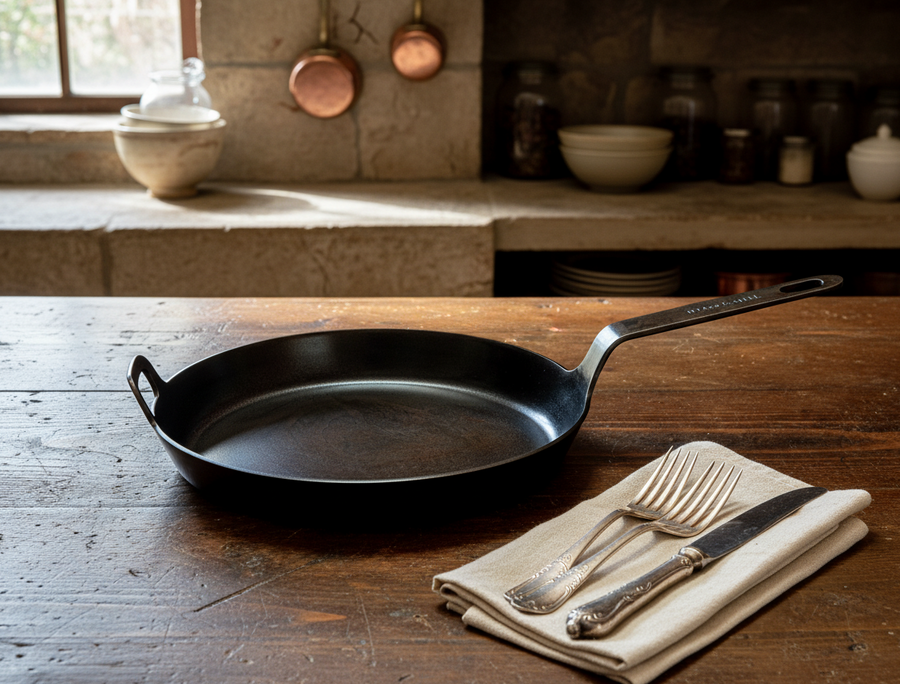
Every cook in Europe knows the satisfaction of using a well-seasoned carbon steel pan, but keeping it performing its best can bring unexpected challenges. Proper preparation and cleaning techniques are essential to protect your investment and prevent corrosion. By focusing on practices like gentle rinsing with warm water and using soft materials for scrubbing, you maintain the pan’s seasoning and ensure it lasts for years. Discover how to achieve optimal pan performance with practical, expert-recommended steps.
Table of Contents
- Step 1: Prepare Your Carbon Steel Pan for Cleaning
- Step 2: Rinse Off Food Residues with Warm Water
- Step 3: Scrub Gently Using a Soft Brush or Cloth
- Step 4: Dry Thoroughly to Prevent Rust Formation
- Step 5: Oil the Surface to Maintain Natural Nonstick
Quick Summary
| Key Insight | Explanation |
|---|---|
| 1. Prepare Before Cleaning | Remove debris gently to preserve the pan’s seasoning and avoid scratches during cleaning. |
| 2. Rinse with Warm Water | Use lukewarm water to effectively loosen food residues without soaking the pan, which protects the seasoning. |
| 3. Scrub Gently | Utilise soft tools and light motions to clean stubborn residues while maintaining the pan’s protective layer. |
| 4. Dry Thoroughly | Ensure complete moisture removal to prevent rust, focusing on all areas of the pan. |
| 5. Apply Oil for Protection | Use a suitable oil to create a hydrophobic barrier that enhances nonstick properties and prevents corrosion. |
Step 1: Prepare Your Carbon Steel Pan for Cleaning
Before diving into the cleaning process, understanding your carbon steel pan’s surface preparation is crucial. Surface properties significantly impact cleaning effectiveness, requiring careful initial steps to maintain your cookware’s integrity.
To begin preparing your carbon steel pan, you’ll want to gather some essential tools and assess the pan’s current condition. Start by removing any loose food particles or debris using a soft cloth or paper towel. This preliminary step helps prevent scratching during deeper cleaning. Your preparation toolkit should include:
- Soft kitchen cloth or paper towels
- Warm water
- Gentle scraping tool (wooden or silicone spatula)
- Clean, dry towel for final drying
Carefully inspect the pan’s surface, looking for any stubborn food residues or potential areas of buildup. The goal is to remove surface contaminants without damaging the pan’s seasoning. Steel manufacturing processes influence surface characteristics, so gentle handling is key.
Proper preparation prevents potential damage and ensures your carbon steel pan remains in optimal condition.
Pro tip: Always handle your carbon steel pan with care during preparation, using soft materials to protect its delicate seasoned surface.
Step 2: Rinse Off Food Residues with Warm Water
Now that you’ve prepared your carbon steel pan, the next crucial step is effectively removing food residues. Warm water helps loosen food particles efficiently, making your cleaning process smoother and more effective.
To rinse your carbon steel pan properly, follow these important guidelines:
- Use lukewarm water (not hot)
- Hold the pan at a slight angle
- Allow water to flow gently over the surface
- Avoid using high water pressure
The goal is to gently remove food remnants without damaging the pan’s seasoning. Warm water breaks down oils and food residues more effectively than cold water, helping prepare the surface for deeper cleaning. Be mindful not to soak the pan, as prolonged water exposure can compromise the pan’s protective seasoning.
Gentle rinsing prevents potential damage and maintains your carbon steel pan’s protective layer.
Pro tip: Use a soft, flexible silicone spatula to help guide food particles away during rinsing without scratching the pan’s surface.
Step 3: Scrub Gently Using a Soft Brush or Cloth
With your carbon steel pan rinsed, it’s time to tackle any remaining food residues through careful scrubbing. Gentle scrubbing prevents surface damage, ensuring your pan’s longevity and performance.
Choose your scrubbing tools wisely to protect the pan’s delicate seasoned surface. Recommended options include:
- Soft-bristled kitchen brush
- Microfibre cloth
- Non-abrasive silicone scrubber
- Soft sponge with non-scratch surface
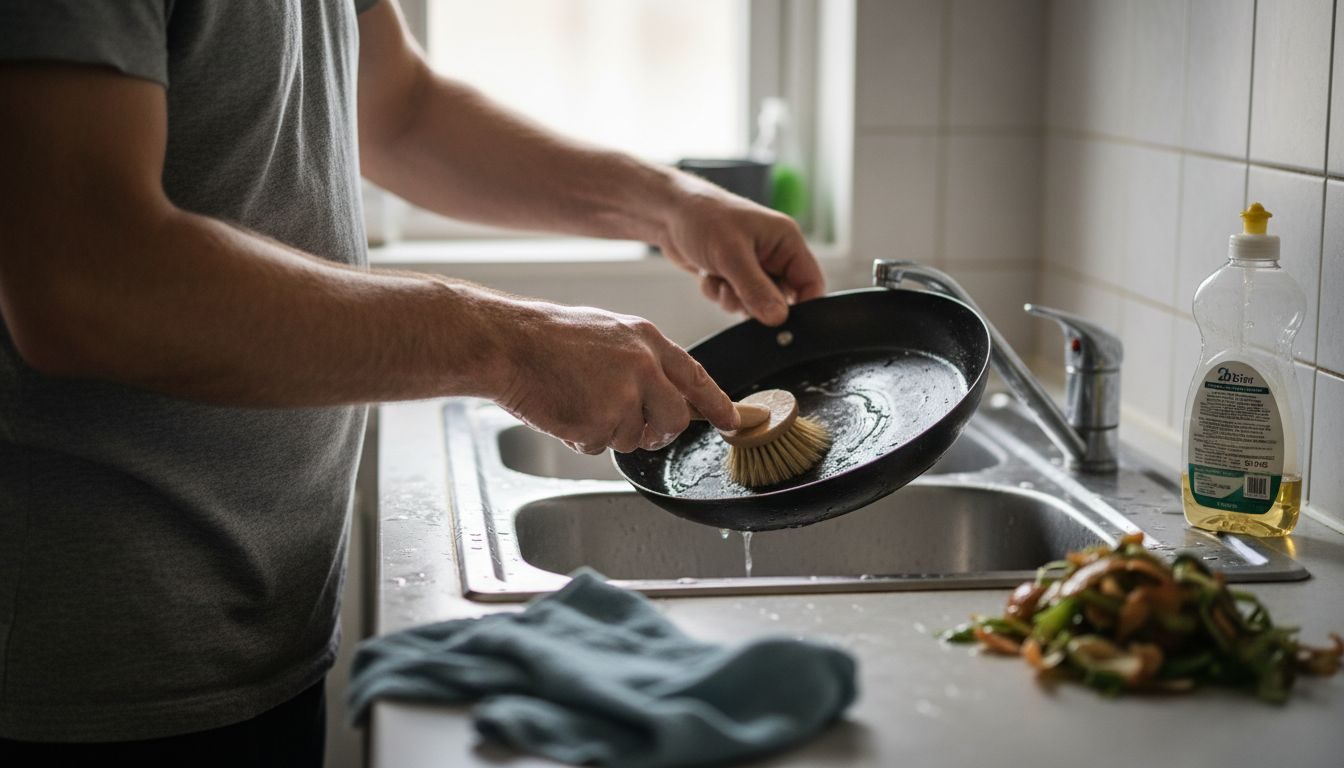
When scrubbing, use light, circular motions to remove stubborn food particles without compromising the pan’s protective layer. Manual cleaning relies on gentle friction to effectively clean without causing damage. Apply minimal pressure and focus on problem areas, working systematically across the pan’s surface.
Consistent, gentle technique is more effective than aggressive scrubbing.
Pro tip: Always move your scrubbing tool in the direction of the pan’s grain to minimise potential surface scratching.
Step 4: Dry Thoroughly to Prevent Rust Formation
After cleaning your carbon steel pan, thorough drying is absolutely critical. Carbon steel surfaces require complete moisture removal to prevent corrosion and maintain the pan’s pristine condition.
To effectively dry your pan and protect it from rust, follow these essential steps:
- Use a clean, lint-free kitchen towel
- Pat the pan dry immediately after rinsing
- Ensure no water droplets remain on the surface
- Place the pan on low heat for final moisture evaporation
The key to preventing rust is eliminating all moisture. Sealing the metal from water exposure stops oxidation by limiting contact with oxygen. Pay special attention to corners, handle, and any textured areas where water might collect.
Complete drying is your first defence against carbon steel pan corrosion.
Pro tip: After towel drying, heat the pan briefly to ensure absolute moisture elimination and prepare for light oiling.
Step 5: Oil the Surface to Maintain Natural Nonstick
After thoroughly drying your carbon steel pan, the final step is applying a protective layer of oil. Oiling creates a hydrophobic protective barrier that enhances the pan’s natural nonstick properties and prevents rust formation.
Choose the right oil for seasoning your pan. Recommended options include:
- Grapeseed oil
- Avocado oil
- Sunflower oil
- Refined coconut oil
To apply the oil, use a paper towel or clean cloth to spread a thin, even layer across the entire surface. Microscopic pores are filled during this process, creating a smooth barrier that protects against moisture and oxidation. Ensure you cover every part of the pan, including the sides and handle.
The table below compares common types of oils ideal for seasoning carbon steel pans:
| Oil Type | Smoke Point (°C) | Flavour Impact | Seasoning Effectiveness |
|---|---|---|---|
| Grapeseed | 216 | Neutral | Excellent |
| Avocado | 270 | Very mild | Outstanding |
| Sunflower | 230 | Neutral | Very good |
| Refined Coconut | 232 | Subtle, slightly sweet | Good |
A thin oil layer is your carbon steel pan’s best defence against corrosion.
Pro tip: Heat the oiled pan briefly on low heat to help the oil polymerise and bond more effectively with the pan’s surface.
Here’s a summary of each cleaning stage and its main focus:
| Step | Primary Goal | What to Avoid |
|---|---|---|
| Preparation | Preserve seasoning, remove debris | Scratching, harsh scrapers |
| Rinsing | Remove loose food residues | High pressure, soaking |
| Gentle Scrubbing | Dislodge stuck particles | Abrasive tools, aggression |
| Thorough Drying | Eliminate moisture, prevent rust | Leaving damp spots |
| Oil Application | Create protective, nonstick layer | Uneven or thick coating |
Discover the Perfect Carbon Steel Pan for Natural Care and Lasting Performance
Cleaning your carbon steel pan naturally takes careful preparation and maintenance to protect its seasoned surface and prevent rust. If you want cookware designed specifically to complement your cleaning routine and cooking style, explore our robust Carbon Steel Collection | Brass&Steel. Our pans are forged from a single piece of high-quality carbon steel, featuring a naturally developing, non-toxic patina that intensifies with proper seasoning and use.

Experience a pan that combines durability, professional-grade heat performance, and effortless maintenance. Start your journey to heirloom-quality cookware with our 27 cm and 30 cm carbon steel sauté pans, expertly crafted to enhance your everyday cooking and simplify care. Visit Brass & Steel now to select your ideal pan and access detailed guides on seasoning and upkeep. For the latest additions, check out New arrivals – Brass & Steel and ensure your kitchen is equipped with tools that grow better with natural care.
Frequently Asked Questions
How do I prepare my carbon steel pan for cleaning?
To prepare your carbon steel pan for cleaning, begin by removing any loose food particles with a soft cloth or paper towel. Gather tools like warm water, a gentle scraping tool, and a clean, dry towel to ensure you’re ready for the next steps.
What steps should I follow to rinse off food residues from my carbon steel pan?
To rinse off food residues, use lukewarm water, holding the pan at a slight angle to allow the water to flow gently over the surface. Avoid soaking the pan and instead focus on ensuring any remnants are easily dislodged without damaging the seasoning.
How can I effectively scrub my carbon steel pan without damaging it?
Use a soft-bristled kitchen brush or a non-abrasive sponge to scrub your carbon steel pan gently. Opt for light, circular motions to remove stubborn particles while avoiding any aggressive pressure that may harm the seasoned surface.
What is the best way to dry my carbon steel pan to prevent rust?
To dry your carbon steel pan thoroughly, use a clean, lint-free kitchen towel immediately after rinsing. Ensure no moisture remains by placing the pan on low heat for a brief period to evaporate any lingering water.
How do I oil my carbon steel pan after cleaning?
After drying your carbon steel pan, apply a thin, even layer of appropriate oil using a paper towel or clean cloth. Ensure to cover the entire surface, including sides and the handle, to form a protective barrier that enhances its nonstick properties and prevents rust formation.
Recommended
- How to Clean Carbon Steel Pan Naturally: Step-by-Step Guide – Brass & Steel
- How to Deep Clean Carbon Steel Pan for Lasting Performance – Brass & Steel
- How to Repair Seasoning on a Carbon Steel Pan Easily – Brass & Steel
- How to Prevent Rust on a Carbon Steel Pan Easily – Brass & Steel
- Cleaning Plant Leaves Naturally for Healthier Houseplants - Lushy Gardens