Essential Carbon Steel Care Routines for Lasting Performance
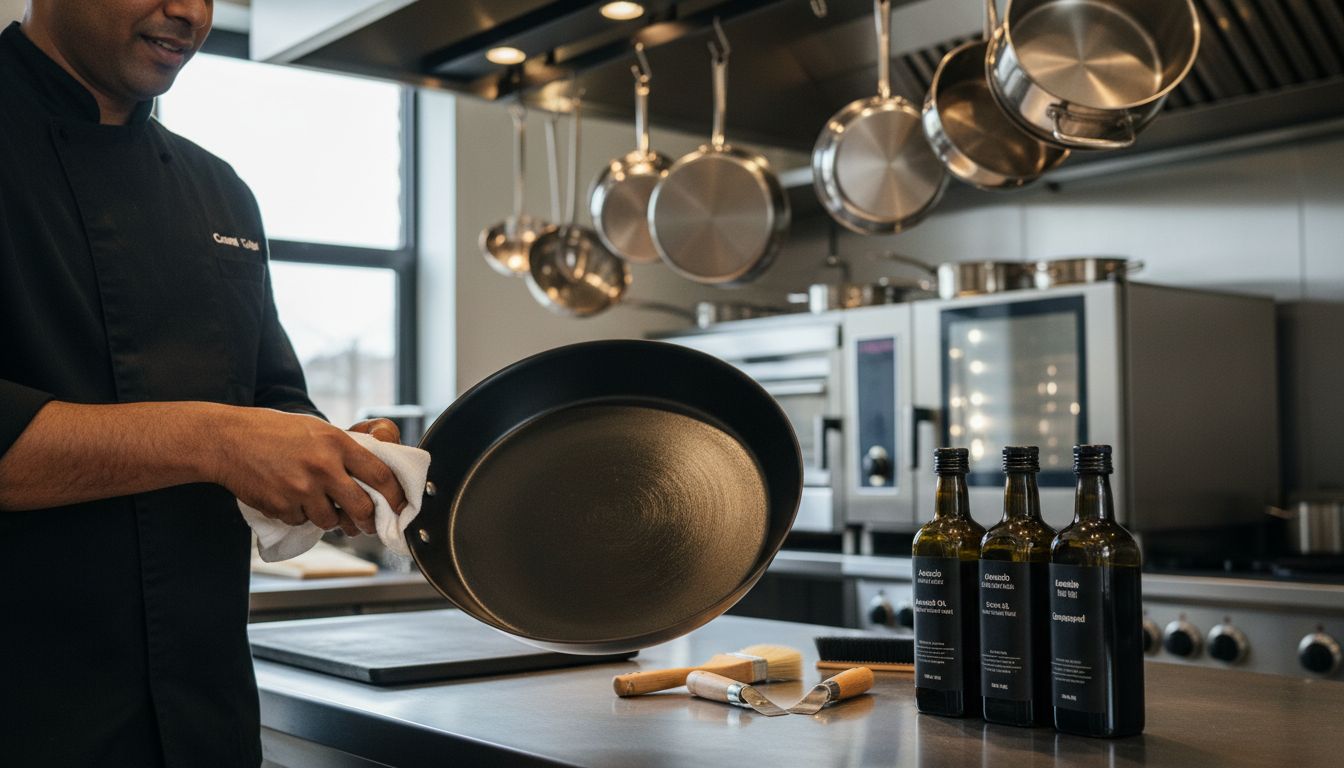
Did you know that a properly seasoned carbon steel pan can last for generations when cared for correctly? Many home cooks struggle to maintain that coveted nonstick surface, but one simple mistake can wipe out months of seasoning. Caring for carbon steel is easier when you understand the key steps that prevent rust and help your cookware perform at its best. Discover the small habits and expert techniques that keep your pan slick, durable, and always ready for your next meal.
Table of Contents
- Step 1: Clean And Prepare Your Carbon Steel Pan
- Step 2: Apply And Bake Initial Seasoning Layers
- Step 3: Maintain Patina With Daily Care Habits
- Step 4: Refresh Seasoning When Needed
- Step 5: Verify Nonstick Performance And Pan Longevity
Quick Summary
| Key Point | Explanation |
|---|---|
| 1. Rinse and dry immediately after cooking | Always wash your carbon steel pan right after cooking to prevent food residue and rust formation. |
| 2. Apply a thin layer of oil post-cleaning | After drying, use a high smoke point oil to protect the seasoning and prevent moisture. |
| 3. Reseason when dull or sticky | Look for signs of wear or reduced nonstick properties to determine when to refresh the seasoning. |
| 4. Avoid soaking or prolonged wetness | Never soak your pan or leave it wet to maintain the integrity of its protective patina. |
| 5. Test nonstick performance regularly | Cook simple foods like eggs to assess if the pan needs reseasoning or maintenance. |
Step 1: Clean and Prepare Your Carbon Steel Pan
Learning to clean and prepare your carbon steel pan correctly is fundamental to maintaining its performance and longevity. According to research from University of Maine Extension, the right cleaning routine involves several key steps that protect your pan’s seasoning and prevent rust.
Start by rinsing your pan with warm water immediately after cooking. If there are stuck food particles, use a soft brush or scraper to gently remove them without damaging the seasoning. As experts recommend University of Maine Extension, you can use a small amount of mild soap if absolutely necessary, but avoid harsh scrubbing that might strip away the protective layer.
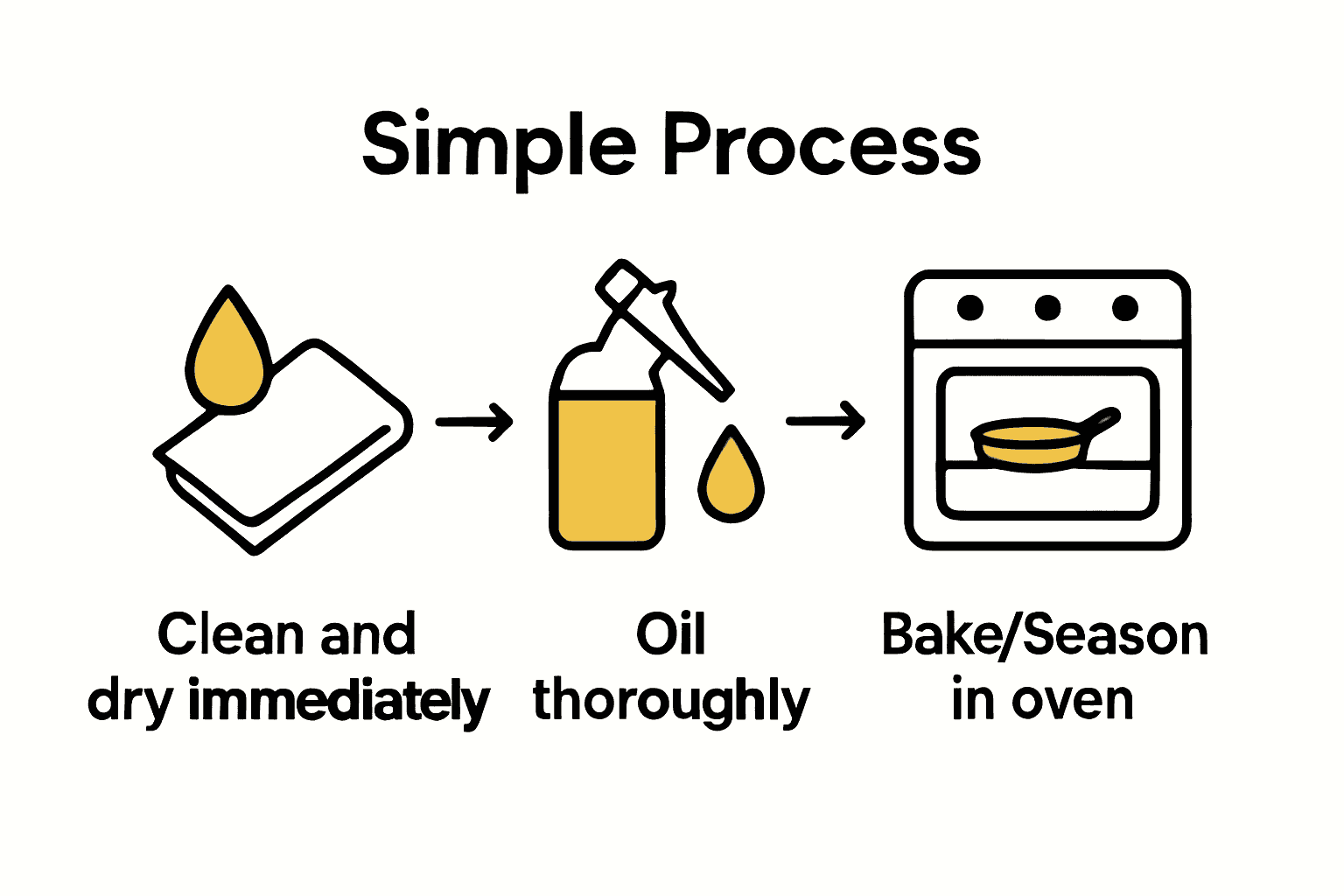
After washing, thoroughly dry your pan using a clean kitchen towel or paper towel. Moisture is the enemy of carbon steel, so ensure every surface is completely dry. Then, apply a very thin layer of high smoke point oil like grapeseed or canola to maintain the seasoning. Check out our detailed guide on carbon steel care for more in depth maintenance tips.
Warning: Never let your carbon steel pan air dry, as this can lead to rapid rust formation. Always dry and oil your pan immediately after washing.
Step 2: Apply and Bake Initial Seasoning Layers
Initial seasoning transforms your carbon steel pan from a raw metal surface into a naturally nonstick cooking companion. According to research from University of Maine Extension, the seasoning process involves a precise combination of fat and heat that creates a protective layer on your cookware.
Start by preheating your oven to 350°F and preparing your pan for seasoning. As experts recommend University of Maine Extension, begin by washing and thoroughly drying your pan. Then heat the pan on low heat on the stovetop. Using a paper towel, apply about one tablespoon of high smoke point oil like grapeseed or sunflower oil across the entire interior surface. Ensure you wipe away any excess oil so the pan looks almost dry. This prevents pooling and ensures an even seasoning.
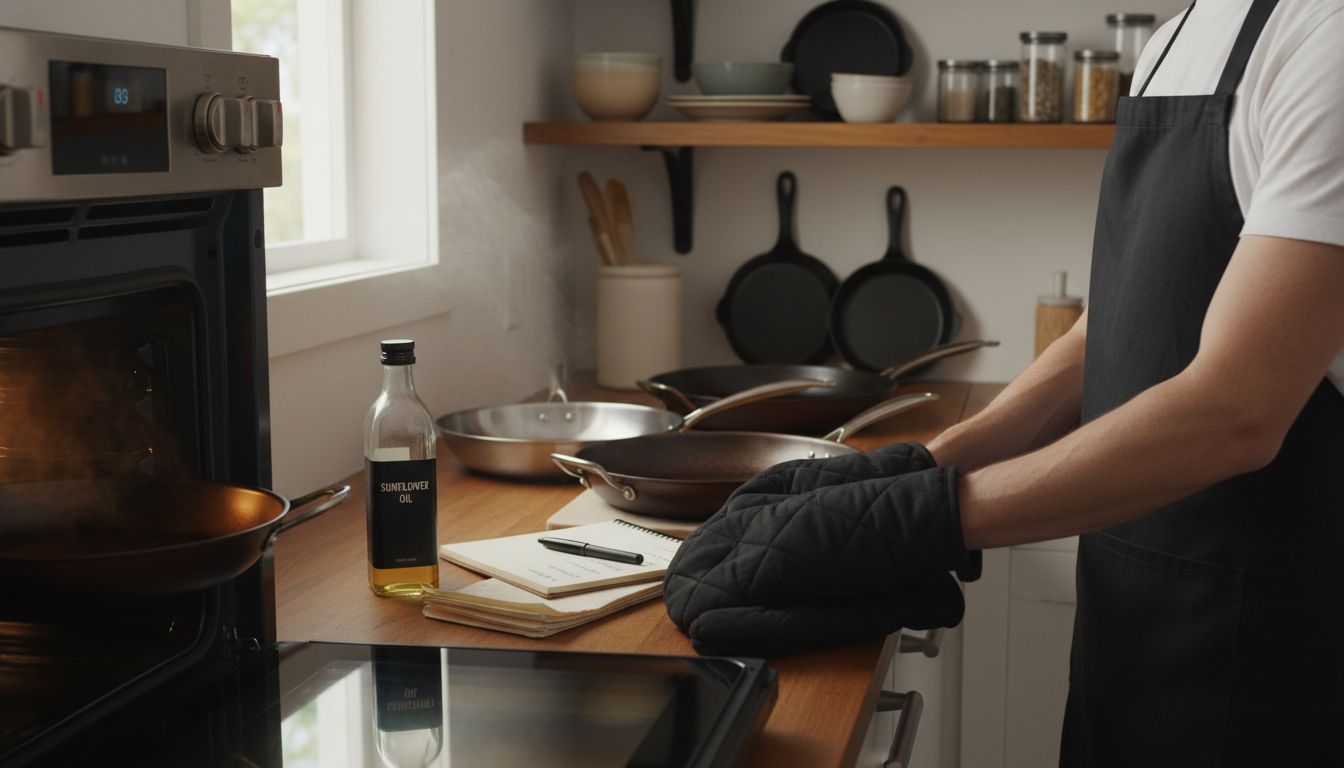
Place the warm pan in the oven and bake for one hour. According to Virginia Tech News, you should repeat this process two to three times to create an impermeable protective layer.
 Learn more about carbon steel seasoning in our comprehensive guide.
Warning: Always use oven mitts and work carefully when handling hot cookware during the seasoning process.
Step 3: Maintain Patina with Daily Care Habits
Developing and preserving the patina on your carbon steel pan is crucial for achieving naturally nonstick cooking surfaces and long lasting cookware performance. The key to maintaining this protective layer lies in consistent daily care and mindful cooking practices.
According to research from Virginia Tech News, your post cooking routine should involve rinsing the pan with warm water and thoroughly drying it. After each cooking session, gently wipe the pan with a thin layer of high smoke point oil like grapeseed or sunflower oil. This simple step helps reinforce the seasoning and prevents moisture from causing rust. Learn more about carbon steel maintenance in our detailed guide.
To strengthen your pan’s patina, prioritize cooking fatty foods like bacon or searing meats during the early stages of seasoning. These foods naturally contribute to building up a robust protective layer. Avoid cooking acidic foods like tomatoes or wine in the pan until your seasoning is well established. Remember that your carbon steel pan is a living surface that improves with each careful use.
Warning: Never soak your carbon steel pan or leave it wet for extended periods as this can rapidly break down the protective patina and cause rust.
Step 4: Refresh Seasoning When Needed
Even with careful maintenance, your carbon steel pan will occasionally need a complete reseasoning to restore its nonstick performance and protective layer. Understanding when and how to refresh your pan’s seasoning is crucial for maintaining its long term cooking quality.
According to research from Virginia Tech News, the key to successful reseasoning is repeating the process two to three times to create an impermeable layer of oxidized oil. University of Maine Extension recommends starting by washing and thoroughly drying your pan. Preheat your oven to 350°F and heat the pan on low stovetop heat. Using a paper towel, apply a thin layer of high smoke point oil like grapeseed or sunflower across the entire surface. Wipe away excess oil to ensure an even coating.
Look for specific signs that indicate your pan needs reseasoning: a dull appearance, sticky texture, visible rust spots, or food starting to stick during cooking. Learn the complete process for reseasoning your carbon steel pan, which will help you restore its natural nonstick properties.
Warning: If you see significant rust or damage, you may need to strip the pan completely and start with a fresh seasoning process.
Step 5: Verify Nonstick Performance and Pan Longevity
Maintaining your carbon steel pan is an ongoing process that requires regular assessment of its nonstick performance and overall condition. Understanding how to evaluate your pan will help you preserve its cooking quality and extend its lifespan.
According to research from University of Maine Extension, your post cooking routine should involve careful inspection. After each use, rinse the pan with warm water and thoroughly dry it. Perform a simple nonstick test by cooking a small amount of beaten egg or preparing a delicate fish fillet. If the food sticks significantly or requires excessive oil, it may be time to refresh your pan’s seasoning. Explore our guide on comparing carbon steel with other nonstick cookware options to understand the unique characteristics of your pan.
Look for these key indicators of pan health: a smooth and slightly glossy surface, minimal food sticking, even heat distribution, and no visible rust or discoloration. Your carbon steel pan should develop a dark brown to black patina over time. If the surface becomes dull, sticky, or shows signs of wear, it is time to reseason the pan and restore its protective layer.
Warning: Inconsistent maintenance can lead to decreased performance and potential damage to your carbon steel cookware.
Elevate Your Carbon Steel Care with Brass & Steel
Caring for a carbon steel pan is a journey that requires patience and the right tools to achieve lasting performance and that coveted natural nonstick patina. The challenges of proper cleaning, seasoning, and maintenance highlighted in “Essential Carbon Steel Care Routines for Lasting Performance” can feel overwhelming, but with the right cookware built to support this process, your efforts are rewarded with a pan that improves over time and becomes a treasured kitchen companion.
Explore our Carbon Steel Collection where every pan is forged as a single piece for unrivalled durability and optimal heat performance. Our pans are designed for cooks who value health-conscious, induction-compatible, and naturally nonstick cookware that responds beautifully to seasoning and care routines.
Start your journey today by choosing cookware that complements your care routine, ensuring your pan develops the robust seasoning layers and patina it deserves. Visit Brass & Steel to discover why our heirloom-quality carbon steel pans are trusted in kitchens aiming for excellence. Take control of your cooking experience now and transform your kitchen with a carbon steel pan built to last a lifetime.
Frequently Asked Questions
How do I properly clean my carbon steel pan after cooking?
To clean your carbon steel pan, rinse it with warm water immediately after use. If needed, use a soft brush to gently remove stuck food, then dry it thoroughly and apply a thin layer of high smoke point oil to maintain the seasoning.
How can I tell if my carbon steel pan needs reseasoning?
Your pan may need reseasoning if it shows signs like a dull appearance, a sticky surface, or if food starts sticking during cooking. Wash and dry the pan, then follow the seasoning process described in the article to refresh its nonstick properties.
What are the steps to develop the initial seasoning on my carbon steel pan?
To develop initial seasoning, wash and dry your pan, then preheat your oven to 350°F and heat the pan with a tablespoon of high smoke point oil. Wipe away excess oil, bake the pan for one hour, and repeat this two to three times for optimal results.
What daily care habits should I follow to maintain the patina on my carbon steel pan?
After each use, rinse your pan with warm water and dry it completely. Apply a thin layer of high smoke point oil to reinforce the seasoning and prevent rust, aiming to do this after every use.
What indicators should I look for to assess the longevity of my carbon steel pan?
Key indicators of your pan’s longevity include a smooth, slightly glossy surface, minimal sticking, and no visible rust. Regularly check for these signs to maintain performance, and reseason as needed if you notice any dull or sticky areas.
How can cooking practices affect the seasoning and performance of my carbon steel pan?
Cooking fatty foods like bacon early on helps build a robust protective layer, while acidic foods can weaken seasoning. Focus on fatty dishes initially, and avoid acidic ingredients until the patina is well established for optimal performance.
Recommended
- What is Carbon Steel Maintenance? Understanding its Importance – Brass & Steel
- Best Practices for Carbon Steel Care: Expert Guide – Brass & Steel
- How to Clean Carbon Steel Pan Naturally: Step-by-Step Guide – Brass & Steel
- Master the Art of How to Store Carbon Steel Pans – Brass & Steel
- 7 Key Examples of Auto Detailing Services for Local Car Owners
- The best Essential Tips for Maintaining Your Motorcycle’s Shine – shinykingsinc