How to Deep Clean Carbon Steel Pan for Lasting Performance

More than 80 percent of british home cooks rely on carbon steel pans, yet many find deep cleaning these trusted tools surprisingly tricky. A well seasoned pan promises unmatched nonstick performance, but one wrong move can ruin its protective layer or invite stubborn rust. Understanding the proper steps to clean and care for carbon steel ensures your favourite pan lasts for years, letting you get the most out of every meal with less hassle and more confidence.
Table of Contents
- Step 1: Prepare Your Carbon Steel Pan For Deep Cleaning
- Step 2: Remove Stubborn Residues With Safe Abrasives
- Step 3: Eliminate Rust And Restore The Natural Surface
- Step 4: Rinse, Dry, And Inspect The Pan’s Condition
- Step 5: Re-Season Your Carbon Steel Pan For Protection
Quick Summary
| Key Insight | Explanation |
|---|---|
| 1. Prepare the pan before deep cleaning | Remove loose particles with hot water and a soft brush to protect the seasoning. |
| 2. Use safe abrasives for stubborn residues | Coarse kosher salt and gentle scraping help lift stuck food without damaging the pan. |
| 3. Remove rust with a vinegar solution | A 50/50 mix of water and vinegar effectively eliminates rust while preserving the pan’s surface. |
| 4. Thoroughly rinse and dry the pan | Ensure all residues are removed and the pan is completely dry to prevent rust formation. |
| 5. Re-season to restore nonstick properties | After cleaning, apply a thin layer of oil and heat to create a protective coating against rust and enhance nonstick qualities. |
Step 1: Prepare your carbon steel pan for deep cleaning
Deep cleaning your carbon steel pan requires careful preparation to protect its seasoned surface. The goal is to remove stubborn food residues while preserving the valuable patina that gives your pan its natural nonstick properties.
Start by removing loose food particles using hot water and a soft brush or sponge. Avoid harsh scrubbing tools that might damage the seasoning. Gentle cleaning ensures you maintain the pan’s protective layer while preparing it for a thorough yet careful deep clean. Hot water helps loosen stuck-on bits without requiring aggressive mechanical action.
A critical warning: never soak your carbon steel pan or use harsh chemical cleaners. Extended water exposure can cause rust, and aggressive detergents will strip away the seasoning you have carefully developed. Instead, work quickly and efficiently. Dry the pan immediately after initial cleaning to prevent moisture retention. The next steps will guide you through a careful deep cleaning process that preserves your pan’s performance and longevity.
Step 2: Remove stubborn residues with safe abrasives
Sometimes your carbon steel pan requires targeted techniques to remove stubborn food residues without compromising its precious seasoned surface. The key is to use gentle yet effective methods that restore your pan’s cleanliness while protecting its nonstick properties.
One powerful technique involves sprinkling coarse kosher salt directly into the pan and using a soft cloth or paper towel to create a mild abrasive action. This method helps lift stuck food particles without scratching the surface. For particularly challenging residues, add a small amount of water and simmer on low heat, which loosens stubborn bits while maintaining your pan’s seasoning. Use a wooden or plastic spatula to gently scrape away loosened food particles, ensuring you avoid metal utensils that might damage the pan’s delicate surface.
Warning: Always prioritise gentle cleaning techniques. Aggressive scrubbing or using metal scouring pads can permanently damage your pan’s seasoning, requiring extensive re-seasoning. Work patiently and methodically, understanding that preserving your pan’s surface is more important than removing every single molecule of residue. The next step will guide you through final cleaning and preparation for future cooking adventures.
Step 3: Eliminate rust and restore the natural surface
Rust can be a carbon steel pan’s worst enemy, threatening its performance and longevity. Understanding how to safely remove rust while preserving your pan’s essential seasoning is crucial for maintaining its cooking capabilities.
To tackle rust effectively, create a 50/50 solution of water and vinegar and soak the affected areas. The acidic properties of vinegar help break down rust particles without causing significant damage to the pan’s surface. After soaking, gently scrub using a non metallic pad or soft brush, working carefully to remove rust without scratching the underlying metal. Once the rust is removed, thoroughly rinse the pan with warm water and dry it completely to prevent future oxidation.
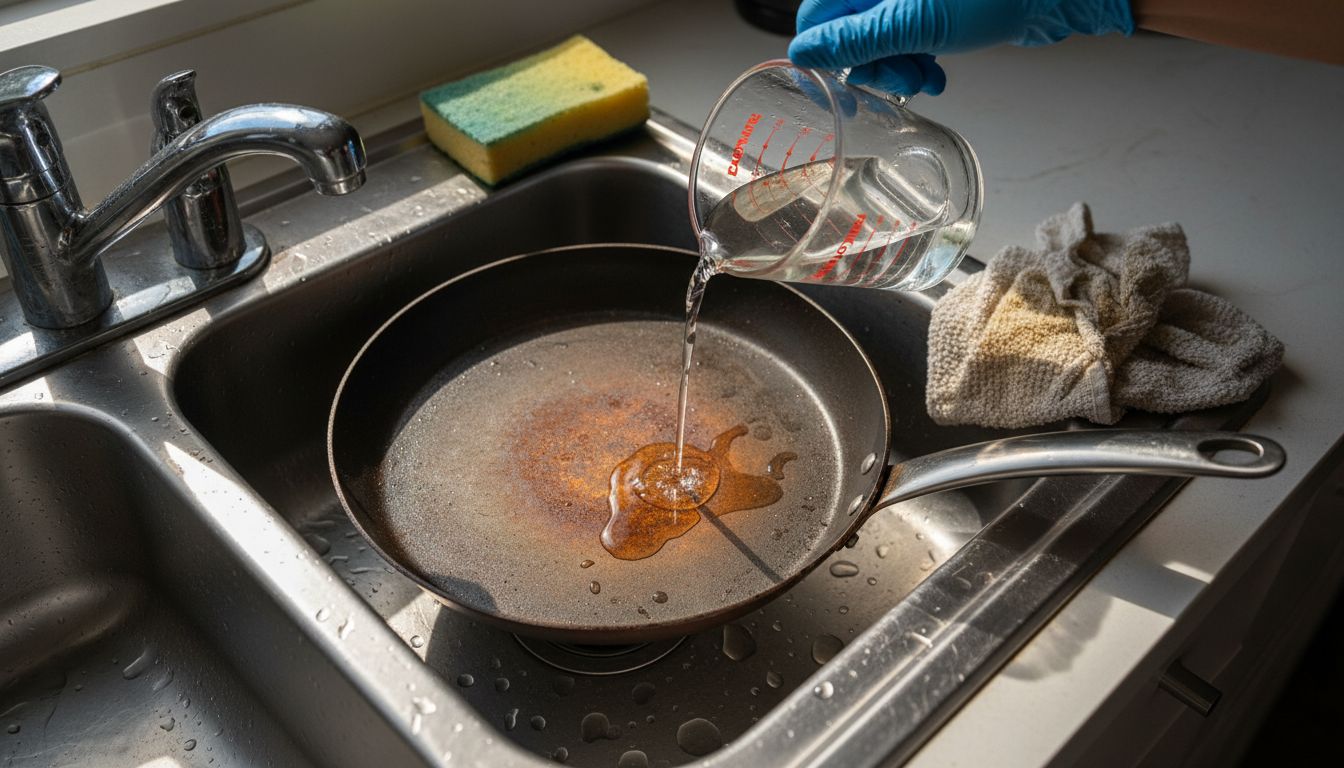
A critical warning: Always follow rust removal with immediate re-seasoning to protect the pan’s surface. Apply a thin layer of high smoke point oil, ensuring complete coverage to create a protective barrier against future rust formation. This process not only prevents corrosion but also restores your pan’s natural nonstick properties, preparing it for many more delicious cooking adventures.
Step 4: Rinse, dry, and inspect the pan’s condition
After deep cleaning your carbon steel pan, the final crucial steps involve thorough rinsing, precise drying, and careful inspection to ensure your cookware remains in pristine condition. These steps are essential for maintaining the pan’s performance and preventing potential future damage.
Rinse the pan with hot water, ensuring all cleaning residues are completely removed. Dry the pan immediately using a clean kitchen towel or by briefly heating it on the stovetop to evaporate any remaining moisture. During the drying process, carefully inspect the pan’s surface for any remaining residues or potential rust spots, paying close attention to corners and crevices where moisture might accumulate.
A critical warning: Moisture is the primary enemy of carbon steel pans. Even small droplets can trigger rust formation, so take extra care to ensure your pan is completely dry before storing. If you notice any areas that seem damp or suspect, consider preventing rust by applying a light layer of cooking oil. This final protective step will help maintain your pan’s integrity and prepare it for your next culinary adventure.
Step 5: Re-season your carbon steel pan for protection
Re-seasoning is the final critical step in deep cleaning your carbon steel pan, creating a protective barrier that prevents rust and ensures optimal cooking performance. This process restores the pan’s natural nonstick surface and guards against future damage.
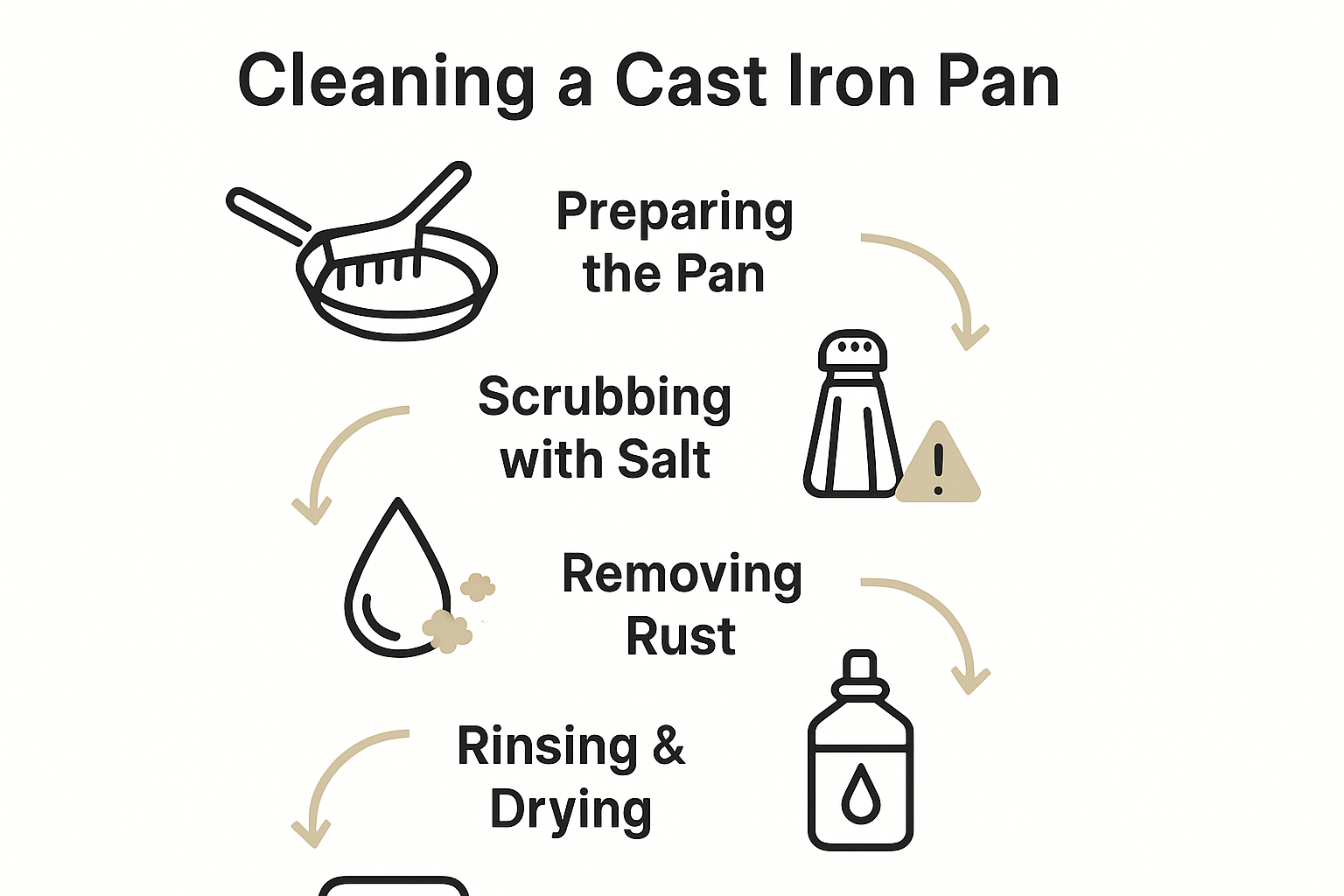
Apply a thin layer of vegetable oil over the entire pan surface, ensuring complete and even coverage. Use a clean cloth or paper towel to spread the oil, removing any excess so the pan looks almost dry. Heat the pan on the stovetop or in the oven at a high temperature around 250 degrees Celsius, which allows the oil to polymerise and create a durable protective coating.
A critical warning: Less oil is more during seasoning. Thick layers will become sticky and uneven, compromising your pan’s performance. Repeat the seasoning process two or three times for a robust protective layer that will enhance your carbon steel pan’s nonstick properties and resistance to rust. This final step transforms your freshly cleaned pan into a resilient cooking companion ready for countless culinary adventures.
Keep Your Carbon Steel Pan Performing Like New With Brass & Steel
Maintaining a deep clean and flawless seasoning on your carbon steel pan can seem challenging. From removing stubborn residues and rust to perfecting your pan’s natural nonstick surface, every step is crucial to protect its performance and longevity. If you want a pan designed for durability and ease of maintenance, explore the Carbon Steel Collection | Brass&Steel where quality meets precision.

Experience cookware forged from a single piece of carbon steel, delivering exceptional heat retention without rivets or welds that trap food and complicate cleaning. Our pans are crafted to build a safe, non-toxic patina that enhances every meal you prepare. Take control of your kitchen tools today by browsing the New arrivals – Brass & Steel and upgrading to an heirloom-quality pan. For detailed care tips and your next cookware investment, visit https://brass-steel.com and start your cooking journey with confidence.
Frequently Asked Questions
How should I begin deep cleaning my carbon steel pan?
Start deep cleaning your carbon steel pan by removing loose food particles with hot water and a soft brush or sponge. Avoid soaking the pan or using harsh chemical cleaners, as both can damage the seasoning and lead to rust.
What methods can I use to remove stubborn residues from my pan?
To effectively remove stubborn residues, sprinkle coarse kosher salt directly into the pan and gently scrub with a soft cloth or paper towel. For tougher bits, you can add a small amount of water and simmer on low heat to loosen the food particles.
How do I eliminate rust without damaging my pan’s surface?
To eliminate rust, create a 50/50 mixture of water and vinegar and apply it to the affected areas. Soak for a short time, then gently scrub with a non-metallic pad, ensuring you don’t scratch the pan before rinsing and drying it completely.
Why is it important to properly dry my carbon steel pan after cleaning?
Properly drying your carbon steel pan is crucial to prevent rust formation, as even small amounts of moisture can cause oxidation. Wipe the pan with a clean towel or heat it briefly on the stovetop to ensure it’s completely dry before storing.
How do I re-season my carbon steel pan after deep cleaning?
Re-season your carbon steel pan by applying a thin layer of vegetable oil over its entire surface, ensuring even coverage. Heat it on the stovetop or in the oven at around 250 degrees Celsius, repeating the seasoning process two or three times for optimal protection against rust.