Frying vs sautéing: making the most of carbon steel
TL;DR:
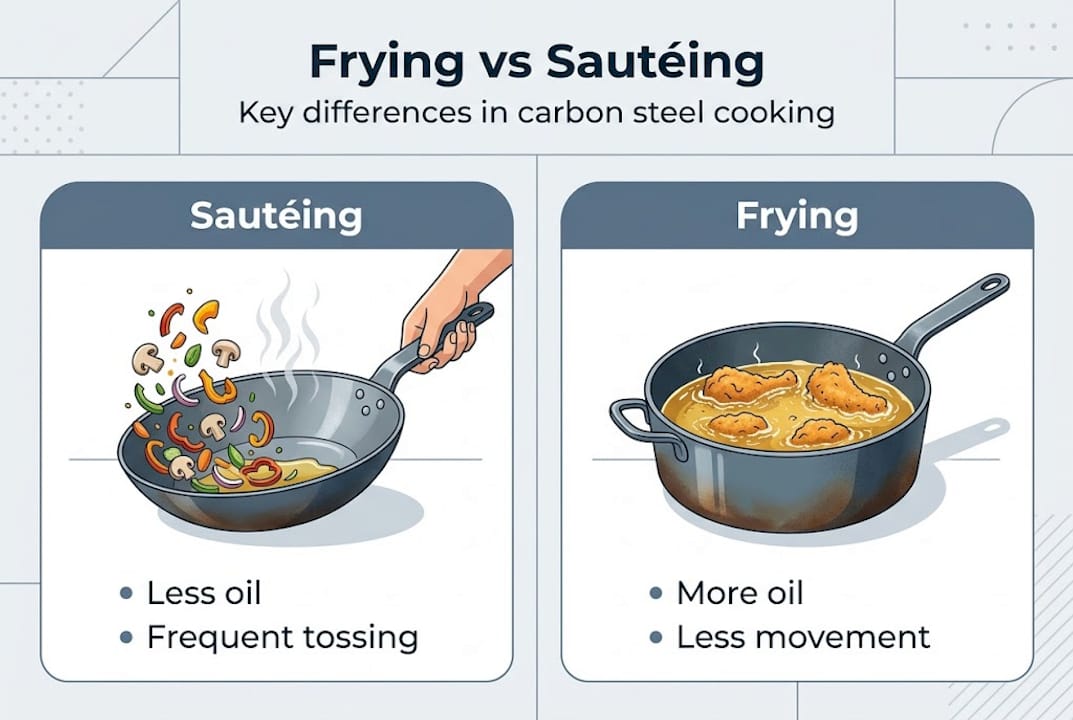
- Sautéing involves high heat, minimal oil, constant movement, and small food pieces.
- Pan-frying uses more oil, larger pieces, less movement, and aims for a crust.
- Understanding these differences improves cooking results and preserves your carbon steel pan’s performance.
Most home cooks use the words “frying” and “sautéing” as if they mean the same thing. They don’t. Sautéing uses a small amount of fat to cook small pieces quickly over high heat with frequent movement, whilst pan-frying relies on more oil, larger pieces, and minimal stirring to build a proper crust. Mix the two up in your kitchen and you’ll end up with food that steams instead of browns, or a crust that falls apart before it forms. This guide untangles both methods and shows you exactly how to apply each one with a carbon steel pan for genuinely better results.
Table of Contents
- Setting the stage: why know the difference?
- What does sautéing mean?
- How frying is different
- Key technical and practical differences
- When to sauté and when to fry: applying the differences
- What most guides get wrong about sautéing versus frying
- Perfect your pan skills with Brass & Steel
- Frequently asked questions
Key Takeaways
| Point | Details |
|---|---|
| Oil and movement | Sautéing uses less oil and more movement while frying uses more oil and less movement for crust. |
| Pan suitability | Carbon steel excels in both methods when seasoned and heated properly. |
| Technique matters | Choosing sauté or fry directly impacts flavour, texture, and pan performance. |
| Avoid overcrowding | Give food in the pan enough space to brown, avoiding steaming. |
Setting the stage: why know the difference?
Choosing between sautéing and frying isn’t just a matter of culinary vocabulary. It directly affects whether your chicken thigh comes out golden and crisp or pale and soggy. It determines whether your courgette stays tender or turns to mush. And with a carbon steel pan, the stakes are slightly higher than with a non-stick, because the method you choose actually shapes the pan’s long-term performance.
Here’s why the distinction matters so much in practice:
- Oil quantity affects how the seasoning on your carbon steel develops over time. Too little oil during frying starves the pan. Too much during sautéing leads to a gummy, uneven surface.
- Movement during cooking influences how the patina builds. Constant tossing during sautéing keeps the surface active, whilst still-frying lets heat concentrate in specific zones.
- Heat level changes how quickly the pan responds. Carbon steel heats quickly and develops seasoning, which means sautéing calls for roughly 1 to 2 teaspoons of oil per 20cm pan to prevent sticking without flooding the surface.
- Food size matters enormously. Small, thin cuts sautéed well. Large, thick pieces fry better. Putting a thick pork chop in a sauté situation typically means undercooked centres and over-browned exteriors.
Understanding these mechanical differences protects your pan and improves your food. The carbon steel pan performance you read about from professional kitchens depends entirely on cooks knowing which technique to deploy at the right moment.
Pro Tip: Before you start cooking, ask yourself two questions: how big are my pieces, and how much crust do I want? The answers will tell you whether to sauté or fry almost every time.
For a fuller picture of how to match method to pan, the cooking with carbon steel tips guide from Brass & Steel covers practical setup from preheating to seasoning in one place.
What does sautéing mean?
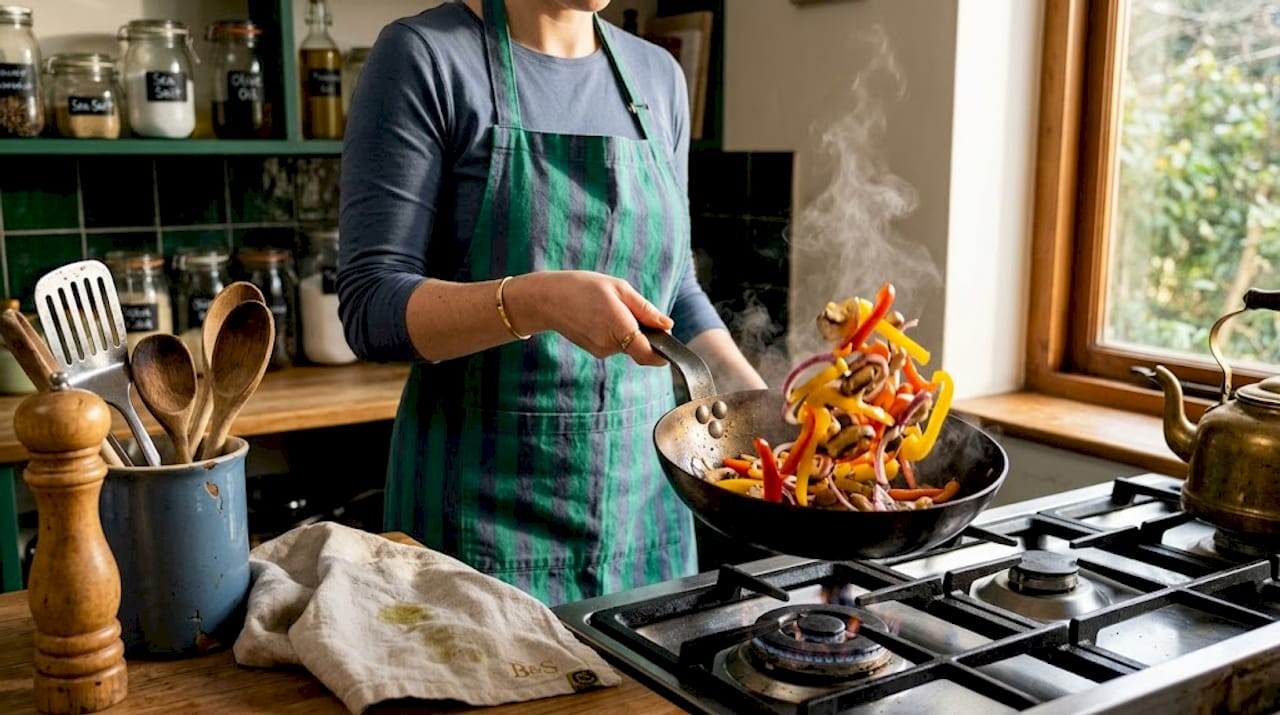
Sautéing comes from the French verb sauter, meaning to jump. That etymological clue tells you exactly what the food should be doing: moving. Sautéing uses a small amount of fat over high or medium-high heat, with the cook keeping ingredients in near-constant motion through stirring or tossing. The result is quick, even cooking with light browning and good moisture retention.
Here’s how to sauté correctly with a carbon steel pan, step by step:
- Preheat the pan properly. Place your carbon steel pan over medium-high heat for one to two minutes before adding oil. A well-preheated pan prevents sticking and ensures immediate contact cooking when the food hits the surface.
- Add a minimal amount of oil. Minimal oil covering the pan bottom is all you need. Roughly a teaspoon to a tablespoon, depending on pan size. Swirl it to coat evenly.
- Add food in a single layer. Do not pile ingredients. Each piece should have direct contact with the pan surface. This is the single most important rule in sautéing.
- Keep things moving. Stir, toss, or shake the pan frequently. The goal is even browning, not a deep crust. Garlic, onions, mushrooms, courgette, asparagus spears, and diced proteins all respond brilliantly to this approach.
- Remove from heat the moment cooking is done. Sautéed food carries residual heat. Pull it off a few seconds early to avoid overcooking.
“The pan should be hot enough that a drop of water evaporates immediately on contact. If it pools and sizzles slowly, the pan isn’t ready.”
The most common sautéing mistake isn’t heat or oil. It’s overcrowding. When you pile too much food into the pan, moisture escapes faster than it can evaporate. The temperature drops, and instead of browning you get steaming. This is especially critical in a carbon steel pan, where the responsive heat makes temperature recovery slower than cast iron.
For a detailed look at structuring your cooking session from prep to plating, the sauté pan workflow guide walks you through real kitchen scenarios. And if you want to go deeper into exactly how technique adapts to different foods, the sauté techniques carbon steel pans guide covers each step in full.
Pro Tip: If your food is releasing a lot of water (frozen vegetables, for example), let moisture cook off in a separate dry pan first, then sauté. Starting with wet food in a sauté context almost always guarantees steaming instead of browning.
How frying is different
Pan-frying is a fundamentally different operation. Where sautéing prizes movement and minimal fat, frying uses more fat for larger pieces with minimal movement so that a proper crust can form. You’re building something structural when you pan-fry. That golden exterior is a physical barrier that locks in juices and creates the textural contrast that makes fried food so satisfying.
The mechanics of pan-frying are almost the inverse of sautéing. More oil reaches partway up the sides of the food, heat runs at medium to medium-high, pieces are larger and thicker, and movement is kept to an absolute minimum. Moving food too early tears the crust before it’s set. Patience is the skill here, not agility.
“When you lay a piece of food in hot oil and it sticks initially, don’t force it. A properly formed crust releases naturally. If you have to pry it, wait another thirty seconds.”
Carbon steel is particularly well suited to pan-frying because of how evenly it distributes heat across its surface once properly preheated. A 4mm pan like Brass & Steel’s 30 cm model retains enough thermal mass to recover quickly when cold food hits the surface, which means you get a consistent crust rather than a pale, patchy exterior. Thinner pans can drop in temperature sharply when a cold chicken breast lands in them, which is exactly when a crust fails to form properly.
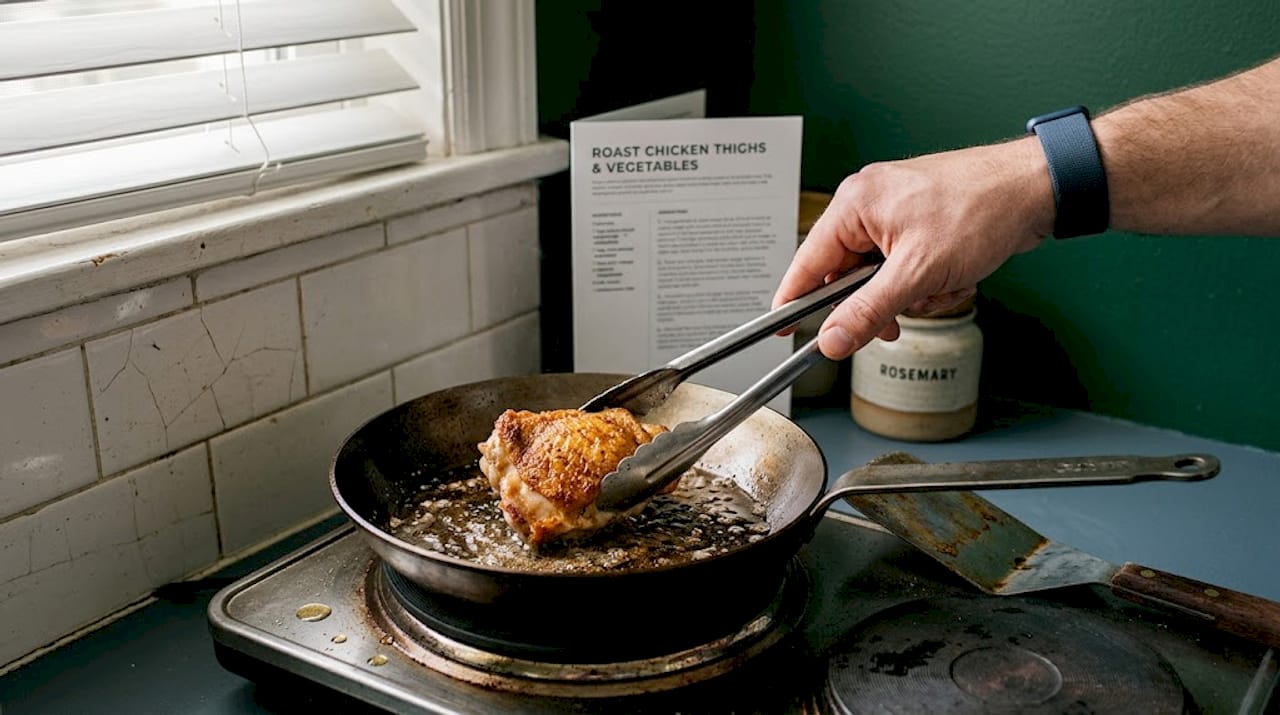
Typical foods for pan-frying include skin-on chicken pieces, thick fish fillets, pork chops, beef steaks, and breaded items like schnitzel. These all benefit from the extended, relatively still contact time that builds flavour and texture.
For a wider view of what you can achieve across both methods, the top uses for carbon steel pans guide offers a useful overview across different cooking scenarios.
Key technical and practical differences
Let’s put both methods side by side for a clear comparison.
| Feature | Sautéing | Pan-frying |
|---|---|---|
| Oil quantity | 1 to 2 tbsp per 30cm pan | Enough to reach ¼ to ⅓ up food sides |
| Heat level | High to medium-high | Medium to medium-high |
| Food size | Small pieces, thin cuts | Large pieces, thick cuts |
| Movement | Frequent, constant | Minimal, patient |
| Goal | Even browning, moisture retention | Crust development, texture contrast |
| Typical foods | Vegetables, diced chicken, garlic | Steaks, chops, whole fish fillets |
| Carbon steel benefit | Quick response to heat changes | Thermal mass for even crusting |
A few common pitfalls are worth knowing before you cook:
- Overcrowding ruins both methods. Overcrowding causes steaming rather than browning, but it is especially destructive during sautéing, where high heat and movement depend on moisture escaping quickly.
- Moving food too early during frying prevents crust formation. The protein bonds need time to set before the food will release cleanly from the pan.
- Using too little oil during pan-frying means uneven contact and a patchy crust. Using too much oil during sautéing leads to greasy food and a sticky pan surface over time.
- Starting with cold food drops the pan temperature sharply. Pat proteins dry and bring them closer to room temperature before adding them to a hot pan.
Practical temperature benchmarks are straightforward. For frying, target 175 to 190°C (350 to 375°F). For sautéing, you can work slightly hotter if the food is very thin or slightly cooler for more delicate ingredients. The key is that the pan must be fully preheated in both cases before oil or food goes in.
Pro Tip: Use the water droplet test. Flick a drop of water into the pan before adding oil. If it evaporates instantly, you’re ready to sauté. If it beads and skitters across the surface (the Leidenfrost effect), ease off the heat by thirty seconds before adding oil.
For precision guidance on setting up and reading your pan before cooking, the precision with carbon steel pans guide goes into detail. If you’re deciding between materials altogether, the stainless vs carbon steel comparison is worth reading.
When to sauté and when to fry: applying the differences
Choosing the right method becomes instinctive once you’ve cooked with both a few times. Until then, a simple decision framework helps.
- Is the food small or thin? Diced onion, sliced mushrooms, cubed chicken, asparagus tips. Sauté.
- Is the food large or thick? A whole chicken thigh, a pork chop, a 3cm steak. Pan-fry.
- Do you want significant crust development? Fish skin, schnitzel, seared steak. Pan-fry.
- Do you want even cooking with minimal browning? Garlic softened for a sauce base, courgette for a pasta. Sauté.
- Is time short and the food cut small? Sauté always works faster.
- Is moisture a concern (juicy meat, high water vegetables)? Pan-frying’s higher oil volume buffers moisture better for proteins. Sautéing works if you dry the food first.
Some sources frame sautéing as strictly a high-heat, minimal-fat French technique, while others allow for medium heat in broader usage. Either way, the consensus is consistent: relative to frying, sautéing always uses less oil and more motion. That relationship is the reliable rule.
Carbon steel pans reward both methods genuinely. Because the seasoned surface develops over time into a natural, non-toxic nonstick layer, both sautéing and frying actually improve your pan with each use, provided you’re using appropriate oil quantities and avoiding soaking or harsh scrubbing afterwards.
Pro Tip: After pan-frying, deglaze with a splash of stock or wine while the pan is still hot. The fond (browned bits on the surface) lifts easily in carbon steel and makes an instant pan sauce that would take considerably more effort with most other materials.
For a practical breakdown of which foods and cooking styles suit carbon steel best, the carbon steel pan uses guide is a useful reference. And for keeping your pan in optimal condition after cooking, the carbon steel pan upkeep guide covers everything from cleaning to re-seasoning.
What most guides get wrong about sautéing versus frying
Here’s the thing most guides don’t acknowledge: the method descriptions you read online are written for an idealised kitchen. They assume a commercial-grade cooktop with precise, stable heat output, a pan that’s been seasoned perfectly, and food that’s been prepped under professional conditions. Most home kitchens don’t work like that.
Home cooktops vary wildly. An induction hob set to 7 out of 9 on one model might run 30 degrees cooler than the same setting on another brand. This means the textbook advice to “sauté on high heat” is almost meaningless without actually observing what your specific pan and hob combination does in practice. The water droplet test and visual cues from the food itself are far more reliable than a setting on a dial.
The second thing most guides overlook is the role of pan material. They treat “sauté pan” as a generic category. It isn’t. A 3mm carbon steel pan and a heavy cast iron skillet behave completely differently at the same heat setting. Carbon steel responds to heat changes quickly, meaning it both heats up fast and cools down fast. This is an advantage during sautéing (you can pull the heat and trust the food will stop cooking quickly) but requires more attention during pan-frying, where temperature drops from cold food need to be actively managed.
The practical implication is this: rather than memorising rules, observe your pan. Understand that essential carbon steel pan tips are a starting point, not a rigid script. The cook who learns to read their own equipment will always outperform the one who follows instructions without adapting. Carbon steel rewards attentiveness precisely because it gives you immediate feedback through sound, colour, and smell that slower-responding pans simply can’t match.
Perfect your pan skills with Brass & Steel
Mastering sautéing and frying is far easier when you’re working with a pan that responds honestly to your decisions.
At Brass & Steel, our carbon steel sauté pans are forged from a single piece of steel, with no rivets or welds to trap residue or weaken over time. The 27 cm pan (3mm, €99) suits everyday sautéing and quick pan-frying sessions. The 30 cm pan (4mm, €119) brings the thermal mass you need for larger cuts and confident crust development. Both are free from PTFE and PFOA, work on all cooktops including induction, and build a natural nonstick patina that genuinely improves with every cook. Explore our full range and technique guides to take both methods further.
Frequently asked questions
How much oil should I use when sautéing in a carbon steel pan?
Use 1 to 2 teaspoons of oil in a 20cm pan to prevent sticking without adding excess fat. Scale up slightly for larger pans.
Why is overcrowding a problem when sautéing or frying?
Overcrowding causes steaming instead of browning, which defeats the purpose of both methods. In frying, moving food too early also prevents the crust from setting properly.
Can I use the same pan for both frying and sautéing?
Yes. A well-seasoned carbon steel pan handles both methods well. Simply adjust your oil quantity, heat level, and how much you move the food depending on what you’re cooking.
What temperature is best for pan-frying?
Aim for 175 to 190°C (350 to 375°F). At this range, the food develops a proper crust without the oil breaking down or the exterior burning before the inside cooks through.