7 Essential Tips for Cooking with Carbon Steel Pans
Over 60 percent of british home cooks say their cookware struggles to keep up with daily use. Finding a pan that truly lives up to the challenge can change not just the meals you cook but how much you enjoy time in your kitchen. Choosing the right carbon steel pan means better heat control, natural nonstick qualities, and years of dependable cooking, all while bringing professional results into british homes.
Table of Contents
- Choosing The Right Carbon Steel Pan For Your Kitchen
- Understanding Single-Piece Construction Benefits
- Seasoning Your Carbon Steel Pan: Step-By-Step Guide
- Maintaining The Natural Nonstick Surface Safely
- Maximising Heat Performance Without Coatings
- Proper Cleaning And Storage To Prevent Rust
- Using Steel Pans On All Types Of Cooktops
Quick Summary
| Key Insight | Explanation |
|---|---|
| 1. Choose the right size pan | A pan between 27-30 centimetres is versatile for most cooking tasks. Consider weight and thickness based on your cooking style. |
| 2. Single-piece pans offer greater durability | Single-piece construction eliminates weak points, ensuring better heat distribution and easier cleaning. |
| 3. Proper seasoning is essential | Season your pan to create a nonstick surface, enhancing its durability and cooking efficiency over time. |
| 4. Use gentle cleaning methods | Maintain the pan’s seasoning by avoiding harsh scrubbers and soaking, which can damage the protective layer. |
| 5. Compatible with all cooktops | Carbon steel pans can be used on gas, electric, induction, and even campfire cooking surfaces, making them highly versatile. |
1. Choosing the Right Carbon Steel Pan for Your Kitchen
Selecting the perfect carbon steel pan is more than just a cooking equipment purchase it is an investment in your culinary journey. Unlike generic cookware, a well-chosen carbon steel pan can transform your cooking experience with its exceptional heat responsiveness and natural nonstick properties.
When exploring carbon steel cookware, size matters significantly. Professional chefs recommend starting with a pan between 27 and 30 centimetres, which provides versatility for most home cooking tasks. The right carbon steel pan for serious cooks typically balances weight, thickness, and cooking surface area.
Consider your cooking style and kitchen needs. A pan with 3mm thickness works brilliantly for everyday sautéing and searing, while a 4mm pan offers superior heat retention for more intense cooking techniques. Consumer Reports highlights that carbon steel pans excel in versatility, performing admirably across different cooking scenarios.
Weight is another crucial factor. Lighter pans around 2 kilograms suit home cooks seeking manoeuvrability, whereas heavier pans approaching 3 kilograms provide professional-grade performance. Look for pans forged from a single piece of steel, eliminating weak points like rivets or welds.
Induction compatibility has become increasingly important. Ensure your chosen pan works seamlessly across all cooktop types electric, gas, and induction. A pan that adapts to multiple heat sources offers maximum kitchen flexibility and demonstrates superior engineering.
Budget considerations are essential. While premium carbon steel pans might seem expensive initially, they represent a long term investment. A high quality pan can last decades with proper care, making the upfront cost more palatable when spread across years of exceptional cooking experiences.
Lastly, assess the pan’s seasoning potential. A good carbon steel pan develops a natural nonstick patina over time, improving with each use. Select a pan that promises easy initial seasoning and long term performance to ensure a rewarding cooking companion.
2. Understanding Single-Piece Construction Benefits
Single-piece construction represents a revolutionary approach to cookware design, transforming how professional and home chefs approach their cooking equipment. A pan crafted from one continuous sheet of metal offers superior performance and durability compared to traditional multi-part cookware.
The structural integrity of a single-piece pan eliminates weak points that typically compromise cookware performance. Single-piece carbon steel pans ensure seamless heat distribution and remarkable strength, providing an exceptional cooking experience.
Consumer Reports highlights that single-piece construction contributes significantly to cookware durability. By removing welded joints or riveted connections, manufacturers create a pan with enhanced structural stability. This design prevents potential food trapping areas and reduces maintenance challenges.
Heat conductivity becomes remarkably uniform in single-piece pans. Without interruptions from welds or attachments, thermal energy transfers more efficiently across the entire cooking surface. This means more consistent temperatures and better control during complex cooking techniques.
Cleaning becomes substantially easier with a seamless pan design. No crevices or joining points mean fewer areas where food residue can accumulate, making maintenance straightforward and hygienic. Home cooks appreciate this streamlined approach to cookware care.
The manufacturing process for single-piece pans requires precision engineering. Forging an entire pan from one metal sheet demands advanced metalworking techniques, resulting in a product that represents both technological innovation and culinary craftsmanship.
Ultimately, choosing a single-piece constructed pan is an investment in quality. These pans offer longevity, superior performance, and a testament to modern cookware design principles that prioritise functionality and user experience.
3. Seasoning Your Carbon Steel Pan: Step-by-Step Guide
Seasoning transforms a raw carbon steel pan into a culinary powerhouse, creating a natural nonstick surface that improves with every cooking session. Understanding the carbon steel pan seasoning guide is crucial for achieving optimal pan performance.
The seasoning process involves creating a protective layer of polymerised oil that bonds with the pan’s surface. This molecular transformation prevents rust and establishes a naturally nonstick cooking environment. Consumer Reports highlights that proper seasoning significantly enhances cookware durability and cooking efficiency.
Preparation Steps:
- Wash the pan thoroughly with warm water and mild soap
- Dry completely using a clean kitchen towel
- Ensure the pan is absolutely moisture free
Seasoning Technique: Choose high smoke point oils like grapeseed, avocado, or sunflower oil. Apply an extremely thin layer using a clean cloth or paper towel. The key is minimal oil application thin enough that the pan appears almost dry after rubbing.
Oven Seasoning Method:
- Preheat oven to 250 degrees Celsius
- Place pan upside down on middle rack
- Bake for approximately 30 minutes
- Allow pan to cool completely in oven
- Repeat process 2 to 3 times for robust seasoning
Maintaining your seasoned pan requires gentle care. Avoid using harsh scrubbers or soap that might strip the protective layer. Instead, clean with hot water and a soft brush, then dry immediately and apply a light oil coating.
A well-seasoned carbon steel pan becomes more nonstick with each use. Cooking fatty foods like bacon or using oils during cooking helps strengthen the seasoning. Patience and consistent care transform your pan into a cherished kitchen companion that will serve you for decades.
4. Maintaining the Natural Nonstick Surface Safely
Preserving the natural nonstick surface of your carbon steel pan requires gentle care and strategic maintenance. Understanding carbon steel pan safety is crucial for maintaining its performance and longevity.
Consumer Reports emphasises avoiding harsh cleaning methods that can strip away the carefully developed seasoning. The key is creating a protective patina that grows more effective with each cooking session. Think of your pan as a living surface that improves with mindful treatment.
Cleaning Best Practices:
- Use warm water and a soft brush
- Avoid harsh detergents
- Never soak the pan
- Dry immediately after washing
Immediate post cooking care prevents food residue from becoming difficult to remove. After cooking, wipe the pan with a paper towel while it is still warm. This simple step helps maintain the nonstick properties and prevents unnecessary scrubbing.
Restoration Techniques: If the seasoning becomes damaged, do not panic. A gentle reseasoning process can restore the pan’s natural nonstick surface. Heat the pan and apply a thin layer of high smoke point oil, allowing it to polymerise and rebuild the protective layer.
Cooking fatty foods occasionally helps reinforce the seasoning. Bacon, fatty meats, and initial seasoning oils contribute to developing a robust nonstick surface. Avoid using metal utensils that might scratch the delicate patina.
Remember that your carbon steel pan actually becomes more nonstick with proper use. Each cooking session adds to its unique character, creating a kitchen tool that improves with age and attention.
5. Maximising Heat Performance Without Coatings
Carbon steel pans represent the pinnacle of heat performance engineering without relying on synthetic coatings. Understanding carbon steel cookware performance reveals a remarkable material that conducts and retains heat with exceptional efficiency.
Heat Performance Fundamentals:
- Rapid and even heat distribution
- Superior thermal conductivity
- Exceptional heat retention
- No synthetic coating interference
The secret lies in carbon steel’s molecular structure. Its composition allows for incredibly quick temperature adjustments, making it ideal for techniques requiring precise heat control. Professional chefs appreciate how these pans respond instantly to temperature changes, allowing nuanced cooking techniques.
Preheating Techniques:
- Always start with medium heat
- Gradually increase temperature
- Distribute heat evenly across pan surface
- Allow pan to warm uniformly
Unlike coated pans that can degrade under high temperatures, carbon steel thrives. Its robust construction withstands extreme cooking conditions without compromising performance. The pan’s natural seasoning actually improves heat distribution over time, creating a progressively more effective cooking surface.
Mastering heat management means understanding your pan’s unique characteristics. Rotate the pan periodically during preheating to ensure uniform temperature distribution. Start cooking when the pan reaches an optimal temperature indicated by a light shimmering effect on its surface.
Carbon steel pans transform cooking from a mundane task into a precise culinary art. By embracing their natural heat conductivity, you unlock cooking potential that synthetic coatings simply cannot match.
6. Proper Cleaning and Storage to Prevent Rust
Carbon steel pans demand careful maintenance to prevent rust formation, transforming routine cleaning into an art of preservation. How to prevent rust on a carbon steel pan requires understanding the delicate balance between moisture exposure and protective seasoning.
Immediate Post Cooking Care:
- Remove food residue while pan is warm
- Use soft brush or cloth
- Avoid prolonged soaking
- Never use harsh metal scrubbers
Consumer Reports emphasises the critical importance of thorough drying. Water is the primary enemy of carbon steel, causing rapid oxidation. Immediately after washing, use a clean kitchen towel to remove all moisture, paying special attention to corners and handle connections.
Rust Prevention Techniques:
- Dry pan completely after each wash
- Apply thin layer of high smoke point oil
- Store in dry environment
- Use silica gel packets in storage area
Oil acts as a protective barrier against moisture. After drying, apply a gossamer thin coat of grapeseed or avocado oil using a paper towel. The oil creates a microscopic protective film that prevents rust while maintaining the pan’s seasoning.
Storage environment matters significantly. Choose a cool dry location with minimal humidity. Hanging the pan or placing it on a rack allows air circulation, further preventing moisture accumulation. Avoid storing in damp areas like near dishwashers or under sinks.
With consistent care, your carbon steel pan will develop a robust patina that naturally resists rust while improving its nonstick properties. Think of maintenance not as a chore but as nurturing a culinary companion that grows more valuable with each careful treatment.
7. Using Steel Pans on All Types of Cooktops
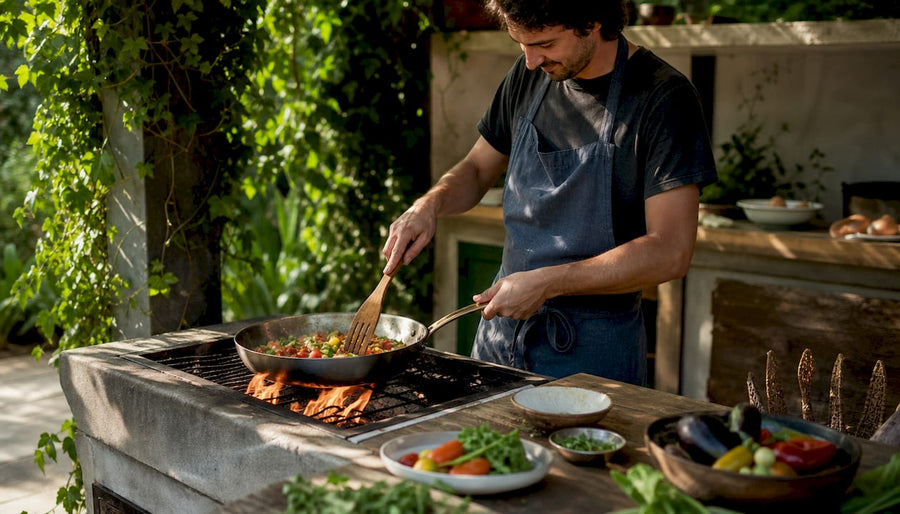
Carbon steel pans represent the pinnacle of culinary versatility, performing brilliantly across every conceivable cooking surface. Mastering carbon steel on induction cooktops reveals their extraordinary adaptability.
Cooktop Compatibility:
- Gas stoves
- Electric ranges
- Induction surfaces
- Ceramic hobs
- Outdoor grills
- Campfire cooking
Consumer Reports highlights carbon steel pans as exceptional performers across diverse heat sources. Their magnetic properties ensure seamless interaction with induction technologies, while their robust construction withstands intense direct flame environments.
Induction Cooking Considerations:
- Ensure flat pan bottom
- Use moderate initial heat
- Allow gradual temperature build
- Clean magnetic surface thoroughly
Professional chefs appreciate carbon steel pans precisely because they transition effortlessly between cooking environments. Unlike specialised cookware restricted to singular heat sources, these pans offer unparalleled flexibility.
When using induction cooktops, understanding thermal dynamics becomes crucial. Start with lower power settings, allowing the pan to warm gradually. This approach prevents potential warping and ensures optimal heat distribution.
Ultimately, carbon steel pans transcend traditional cookware limitations. Whether you are preparing a delicate sauce or searing a robust steak, these versatile kitchen companions deliver consistent performance across every cooking platform.
Below is a comprehensive table summarising the key considerations and benefits of carbon steel pans as discussed throughout the article.
| Topic | Description | Key Considerations |
|---|---|---|
| Choosing the Right Pan | Size and thickness influence versatility and performance. | Professional chefs recommend 27-30cm; 3-4mm thickness suits various techniques. |
| Single-Piece Construction | Eliminates weak points, offering seamless heat distribution. | Ensures uniform heat, reduces maintenance, and enhances durability. |
| Seasoning Guide | Transform pan with polymerised oil for a nonstick surface. | Choose high smoke point oils; repeat seasoning for robust patina. |
| Maintaining Nonstick | Avoid harsh cleaning to preserve seasoning. | Use warm water, soft brush, and immediate drying. Re-season as needed. |
| Heat Performance | Superior heat conduction and retention without coatings. | Preheat gradually, distribute heat evenly; improve over time. |
| Rust Prevention | Essential to prevent corrosion from moisture. | Dry thoroughly, apply oil coating, and store in a dry place. |
| Cooktop Compatibility | Versatile across all cooking surfaces including induction. | Magnetic properties allow use on induction; gradual heat increase advised. |
Unlock the Full Potential of Your Carbon Steel Pan with Brass & Steel
If you have embraced the superb heat control and natural nonstick benefits of carbon steel cookware but find seasoning, maintenance and durability a challenge Brass & Steel offers a superior solution crafted to meet your cooking ambitions. Our pans are forged in one piece to eliminate weak points ensuring even heat distribution and easy cleaning while the carefully designed thickness and weight options cater to everyday home cooks and professional chefs alike.
Experience the exceptional performance of our Carbon Steel Collection | Brass&Steel and benefit from pans that build a safe natural patina free from coatings with every use. Designed for all cooktops including induction and priced to start your heirloom cookware collection today you can explore our offerings at https://brass-steel.com or check New arrivals – Brass & Steel for the latest options. Upgrade your kitchen with cookware engineered to last decades and cook better every day.
Frequently Asked Questions
How do I choose the right carbon steel pan size for my cooking needs?
To select the ideal carbon steel pan size, opt for a pan between 27 and 30 centimetres. This size offers versatility for most cooking tasks, making it easier to sauté, sear, or fry various dishes.
What is the best way to season my carbon steel pan?
Season your carbon steel pan by cleaning it thoroughly, drying it completely, and applying a thin layer of high smoke point oil. Then, place it upside down in a preheated oven at 250 degrees Celsius for about 30 minutes and repeat this process two to three times for a robust seasoning.
How can I maintain the nonstick surface of my carbon steel pan?
To preserve the nonstick surface, clean your pan with warm water and a soft brush immediately after cooking, ensuring it dries out completely. Apply a thin layer of cooking oil after drying to maintain the protective seasoning and keep it in optimal condition.
What should I avoid when cleaning my carbon steel pan?
Avoid using harsh detergents, metal scrubbers, or prolonged soaking as these can strip the seasoning from your carbon steel pan. Instead, focus on immediate washing with warm water and a gentle scrub to maintain its longevity.
Can I use my carbon steel pan on any type of cooktop?
Yes, carbon steel pans are compatible with various cooking surfaces, including gas, electric, and induction cooktops. Ensure your pan has a flat bottom for optimum performance, especially on induction surfaces to facilitate efficient heat distribution.
How do I prevent rust on my carbon steel pan?
To prevent rust, ensure your pan is thoroughly dried after washing and store it in a dry environment. Apply a thin layer of oil to its surface, creating a protective barrier against moisture, which helps maintain its condition over time.