What makes a pan non-stick? Science, safety and eco options
TL;DR:
- Most non-stick surfaces rely on surface chemistry and treatment to prevent food bonding. Different coatings like PTFE, ceramic, and natural seasoning vary in longevity, safety, and eco-friendliness. The best choice depends on individual cooking priorities, with seasoned carbon steel offering durable, chemical-free non-stick performance.
Eggs sliding effortlessly from a pan sounds simple, but achieving it consistently frustrates even experienced home cooks. The truth is, most people assume non-stick means a specific coating, when actually it involves surface chemistry, material science, and how you treat your cookware day to day. Some pans lose their slickness within months; others improve with every meal cooked. This guide cuts through the confusion, compares the most popular non-stick surfaces, and helps you choose an option that suits both your cooking style and your values around health and the environment.
Table of Contents
- The real science behind non-stick surfaces
- Comparing non-stick coatings: PTFE, ceramic and natural seasoning
- Natural seasoning: How cast iron and carbon steel create non-stick surfaces
- Eco-friendly and health-conscious pan choices in Europe
- A chef’s perspective: Why there’s no one ‘perfect’ non-stick pan
- Experience long-lasting non-stick with quality carbon steel
- Frequently asked questions
Key Takeaways
| Point | Details |
|---|---|
| Surface science explained | Non-stick pans repel food by lowering surface energy or filling microscopic pores, preventing sticking. |
| Material matters | Your choice of non-stick coating or natural seasoning directly affects eco-safety, performance, and lifespan. |
| Seasoning offers longevity | Properly seasoned cast iron or carbon steel can deliver decades of natural, PFAS-free non-stick use. |
| Eco brands to watch | GreenPan, de Buyer, and Made In are top options for European cooks seeking health and sustainability. |
The real science behind non-stick surfaces
When food sticks to a pan, it is not simply bad luck. It is chemistry. Food molecules form bonds with the metal surface when heat and moisture create the right conditions. The goal of any non-stick surface is to interrupt those bonds before they take hold.
The key mechanism is surface energy. Materials with low surface energy repel other molecules rather than attracting them. Teflon (PTFE) is the classic example: it has one of the lowest surface energies of any known solid, which is why water beads off it and food struggles to grip it. Seasoned oil layers on carbon steel and cast iron work differently but achieve a similar result by creating a hydrophobic, polymerised barrier between the food and the metal.
There is also a physical dimension to this. Raw metal surfaces are not truly smooth. Under a microscope, they look more like a mountain range, full of tiny peaks and valleys. Food particles nestle into those irregularities and bond there. Coatings and seasoning layers fill those micro-pores, levelling the surface and giving food far less to grip onto. As non-stick properties arise from low surface energy coatings or polymerised oil layers that prevent food adhesion by minimising intermolecular forces and filling microscopic surface irregularities, the science is consistent whether the material is synthetic or natural.
“The best non-stick surface is the one you maintain properly. Surface energy matters, but technique matters just as much.”
Different surface types translate this science into very different real-life experiences. The table below gives a quick overview of how the main non-stick surfaces compare on the key scientific factors.
| Surface type | Surface energy | Fills micro-pores? | Performance over time |
|---|---|---|---|
| PTFE (Teflon) | Very low | Yes, via coating | Stable but degrades if scratched |
| Ceramic | Low | Yes, via sol-gel layer | Declines faster than PTFE |
| Seasoned carbon steel | Low (polymerised oil) | Yes, builds with use | Improves over time |
| Bare stainless steel | High | No | Sticks without fat or technique |
For a deeper look at how synthetic coatings compare, the guide on ceramic vs Teflon cookware is worth reading alongside this article.
Comparing non-stick coatings: PTFE, ceramic and natural seasoning
Now that the underlying science is clear, it is time to look at what you will actually find on shop shelves and what each option genuinely offers.
PTFE (Teflon) remains the most widely used non-stick coating in the world. Its performance is hard to argue with: food slides off cleanly, cleaning is effortless, and the surface lasts several years with reasonable care. The concern most people have heard is about safety. PTFE coatings have ultra-low surface energy, creating weak van der Waals interactions with food, and are effective below 260°C but degrade releasing fumes if overheated. That is an important caveat. Keep temperatures sensible and avoid metal utensils, and PTFE performs well.
Ceramic coatings have grown enormously in popularity as a PFAS-free alternative. They use a silica-based sol-gel process to create a smooth, hard surface that tolerates higher heat than PTFE before degrading. The trade-off is longevity. Ceramic coatings use silica-based sol-gel processes, are PFAS-free, and have higher heat tolerance, but lose non-stick faster, typically lasting 6 to 18 months compared to PTFE’s 3 to 5 years in tests. For eco-conscious cooks, that shorter lifespan means more frequent replacement, which has its own environmental cost.
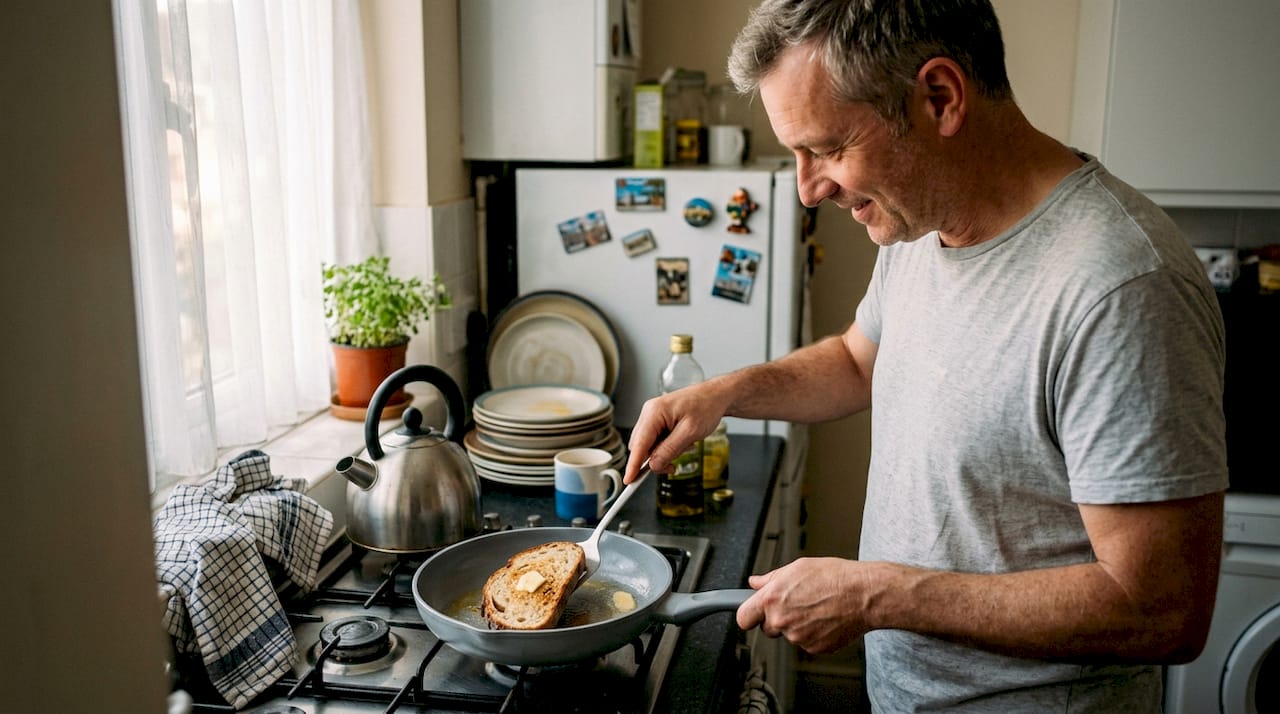
Natural seasoning on carbon steel or cast iron sits in a different category entirely. It is not a coating applied in a factory. It is a layer you build yourself, over time, through cooking. The more you use the pan, the better it performs.
Here is a quick comparison to keep things clear:
| Coating type | PFAS-free? | Lifespan | Eco credentials | Best for |
|---|---|---|---|---|
| PTFE | No | 3 to 5 years | Lower | Low-heat everyday cooking |
| Ceramic | Yes | 6 to 18 months | Good | Health-conscious cooks |
| Natural seasoning | Yes | Decades | Excellent | Long-term, performance cooking |
- PTFE is effective but requires careful temperature management
- Ceramic is the cleanest synthetic option but needs replacing more often
- Natural seasoning rewards patience and improves with every use
Pro Tip: When seasoning a carbon steel pan, use oils with a high smoke point such as grapeseed or avocado oil. Thin, even layers baked at around 250°C build the strongest non-stick base. Our carbon steel pan seasoning guide walks through each step in detail.
For a side-by-side breakdown of synthetic options, the article on ceramic vs Teflon cookware covers the topic thoroughly.
Natural seasoning: How cast iron and carbon steel create non-stick surfaces
Among all the non-stick solutions available, seasoned iron and steel pans stand apart. They do not rely on a factory-applied coating that will eventually wear away. Instead, they build their non-stick properties through a process you control.
Seasoning works by applying a thin layer of oil to the pan surface and heating it to a temperature where the oil polymerises. At around 200 to 260°C, the oil molecules break down and bond together, forming a hard, hydrophobic carbon layer directly on the metal. Natural seasoning on cast iron and carbon steel polymerises oils at 200 to 260°C into a hydrophobic carbon layer, is PFAS-free, improves with use, and lasts decades if maintained. That last point is significant. Every time you cook with fat in a well-seasoned pan, you are adding to that layer.
Here is how to build a solid base seasoning on a new carbon steel pan:
- Wash the pan with warm, soapy water to remove any factory protective coating.
- Dry it completely, either with a cloth or in a low oven for a few minutes.
- Preheat your oven to 250°C.
- Apply a very thin coat of high-smoke-point oil (grapeseed, avocado, sunflower, or canola).
- Wipe off the excess until the pan looks almost dry, not shiny.
- Bake the pan upside down for 30 minutes.
- Repeat the process two to three times to build a strong initial layer.
Pro Tip: Resist the temptation to apply a thick coat of oil. More oil does not mean better seasoning. It means a sticky, uneven surface that will take much longer to cure properly. Thin is always better.
For a more detailed walkthrough, the guides on seasoning a carbon steel pan and how to season a pan for perfect cooking cover everything from first use to long-term upkeep. If you prefer a structured approach, the carbon steel seasoning checklist is a handy reference to keep nearby.
Eco-friendly and health-conscious pan choices in Europe
European consumers are increasingly aware of PFAS chemicals, sometimes called forever chemicals, and their potential environmental and health impacts. That awareness is reshaping the cookware market in a meaningful way.
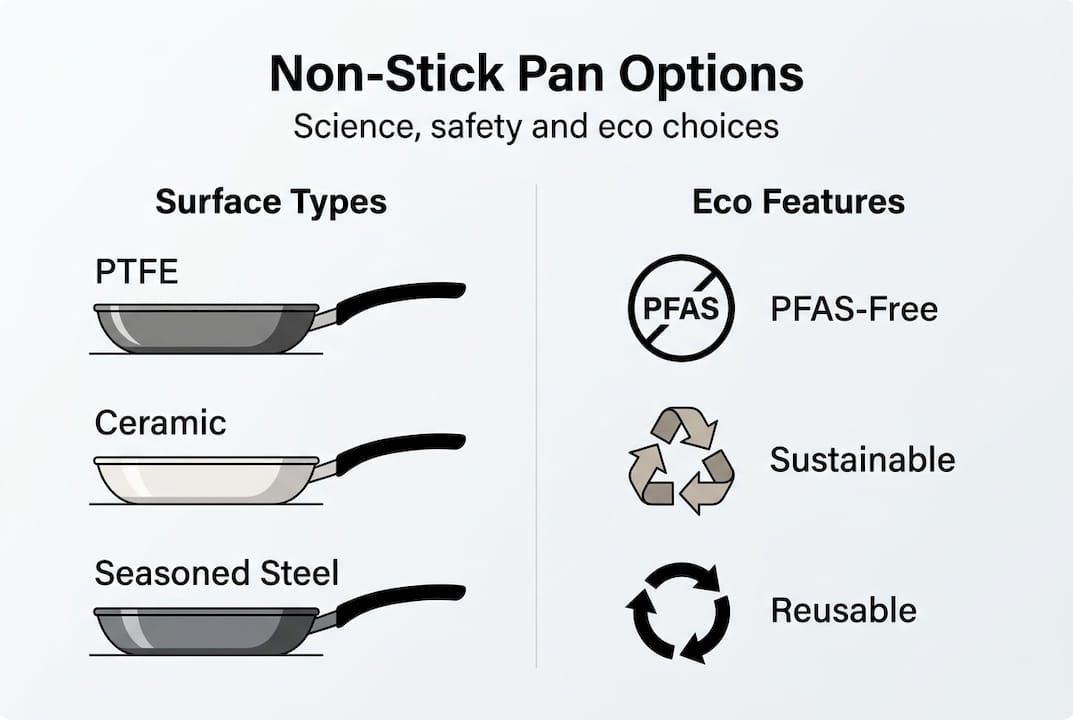
Demand for PFAS-free cookware has grown sharply across Europe, driven by tighter EU regulations and greater consumer scrutiny of product ingredients. This shift has pushed manufacturers to invest in genuinely cleaner alternatives rather than simply marketing old products with new language.
For ceramic options, GreenPan stands out. Their Thermolon coating is NSF-certified and PFAS-free, making it one of the most credible eco-friendly synthetic coatings available. For those who prefer a natural, coating-free approach, de Buyer and Made In carbon steel pans are consistently recommended by professionals for their durability and seasoning performance. GreenPan (Thermolon ceramic) and de Buyer or Made In carbon steel are recommended as healthy, durable alternatives for European consumers.
When evaluating your options, consider these factors:
- Longevity: A pan that lasts 20 years has a far lower environmental footprint than one replaced every 18 months.
- Certifications: Look for NSF certification or explicit PFAS-free labelling.
- Care requirements: Seasoned pans need attention but reward you with a surface that genuinely improves.
- Material origin: European-manufactured cookware often comes with stronger quality controls and lower transport emissions.
Carbon steel, in particular, offers an impressive combination of performance and sustainability. The benefits of carbon steel pans go well beyond non-stick properties, including heat responsiveness, induction compatibility, and a lifespan that can span generations.
A chef’s perspective: Why there’s no one ‘perfect’ non-stick pan
Here is something the cookware industry rarely admits: no single pan type is best for everything. The idea of a perfect non-stick pan is a marketing concept, not a culinary reality.
PTFE pans have a worse reputation than they deserve. Used correctly, below 260°C and without metal utensils, PTFE is largely inert and safe for everyday cooking. Ceramic is genuinely cleaner from a chemical standpoint, but its shorter lifespan means more waste over time. Carbon steel and stainless steel demand more skill but reward that investment with performance that synthetic coatings simply cannot match at high heat.
Professional kitchens rarely rely on a single pan type. They rotate materials based on the task: a carbon steel pan for searing, a ceramic-coated pan for delicate eggs, stainless steel for sauces. Home cooks who adopt the same mindset will cook better and stress less. The comparison of carbon steel vs stainless steel pans is a useful starting point if you are building a practical, versatile kitchen.
The honest question is not “which pan is best?” It is “which pan suits my priorities?” Health, sustainability, ease of care, and cooking performance are all valid priorities. Knowing where you stand makes the choice straightforward.
Experience long-lasting non-stick with quality carbon steel
If natural, PFAS-free non-stick performance is what you are after, carbon steel is hard to beat. At Brass & Steel, we forge our pans from a single piece of carbon steel, with no rivets, no welds, and no synthetic coatings. The non-stick surface you build through seasoning is entirely your own, and it only gets better with time.
Our carbon steel pans are designed for serious home cooks who want cookware that lasts a lifetime rather than a season. Whether you are starting from scratch or switching from synthetic non-stick, our seasoning guide gives you everything you need to build a genuinely non-stick surface from day one. Explore the full range and find the pan that fits your kitchen.
Frequently asked questions
Is PTFE (Teflon) safe for everyday cooking?
PTFE-coated pans are safe as long as they are not overheated above 260°C or scratched. Use wooden or silicone utensils and avoid preheating an empty pan on high heat for best results.
How does natural seasoning compare to synthetic non-stick coatings?
Natural seasoning forms a durable, hydrophobic non-stick layer that strengthens with every use, unlike synthetic coatings which degrade over time. The trade-off is that seasoned pans require regular maintenance to stay at their best.
Which eco-friendly, non-stick brands are recommended in Europe?
GreenPan’s Thermolon ceramic and de Buyer or Made In carbon steel pans are consistently cited as the top PFAS-free, eco-conscious choices for European consumers.
How long does ceramic coating last versus PTFE?
Ceramic coatings typically last 6 to 18 months before losing their non-stick properties, while PTFE coatings generally last 3 to 5 years with proper care and gentle use.