What is one-piece cookware: a home cook's guide
TL;DR:
- Most people misunderstand that one-piece cookware refers to how the pan is constructed, not how it is used. Made from a single metal piece without rivets or welds, it offers superior durability, even heat distribution, and easier cleaning. Choosing forged, one-piece pans ensures long-lasting performance free from weak points found in multi-part cookware.
Most people searching for one-piece cookware end up confused before they even buy anything. The phrase sounds like it might mean a single pot you cook everything in, but that is not what it means at all. What is one-piece cookware is actually a question about how a pan is made, not how you use it. Understanding that difference changes how you shop, what you buy, and how long your cookware lasts.
Table of Contents
- Key takeaways
- What is one-piece cookware: construction explained
- One-piece cookware benefits for home cooks
- One-piece vs traditional multi-part cookware
- Choosing and using the best one-piece cookware
- My honest take on one-piece cookware
- Brass-steel one-piece carbon steel pans
- FAQ
Key takeaways
| Point | Details |
|---|---|
| Manufacturing, not method | One-piece refers to how cookware is constructed, not a cooking style or technique. |
| No rivets or welds | Forged from a single metal piece, so there are no structural weak points to loosen or fail. |
| Superior durability | One-piece forged cookware can last decades when maintained properly. |
| Safer cooking surface | No synthetic coatings means no risk of PFOA or PFAS exposure during cooking. |
| Worth the investment | Higher upfront cost pays off through longevity, performance, and reduced replacement. |
What is one-piece cookware: construction explained
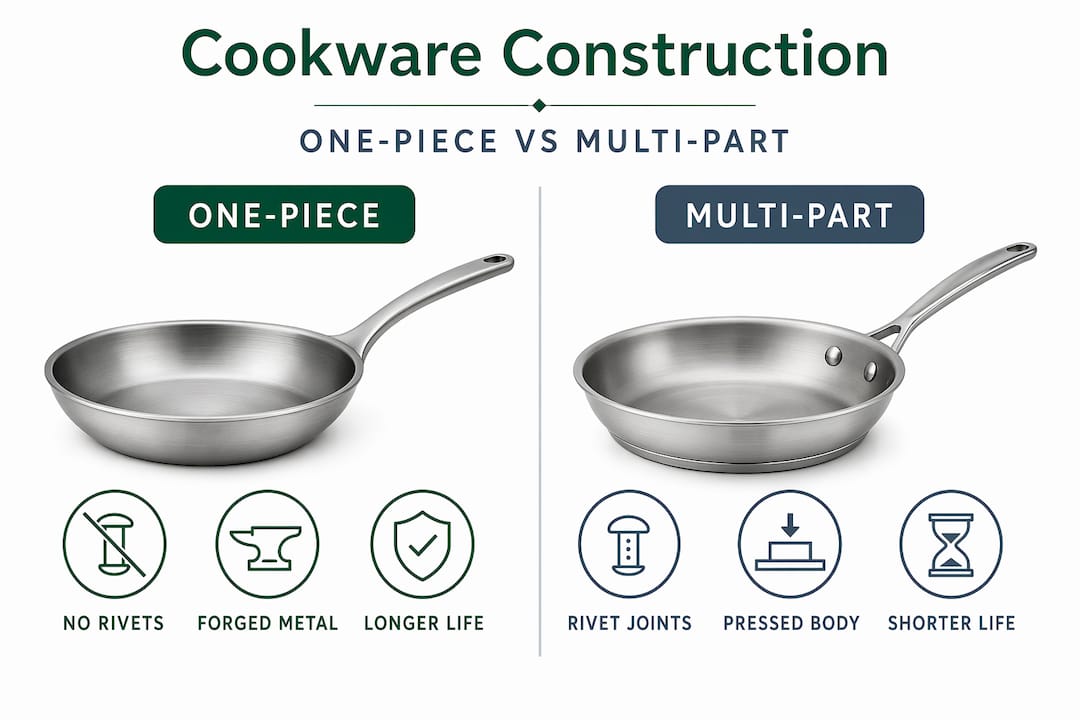
One-piece cookware is cookware made from a single continuous piece of metal, with no joints, rivets, welds, or separate components attached to form the body. The pan, the sides, and the handle (or handle base) all come from the same original sheet or billet of material. Nothing is bolted on. Nothing is pressed together. It is one solid form.
The manufacturing process behind this matters more than most buyers realise. Precise forging techniques like cold rolling and annealing are used to shape the metal while preserving its internal grain structure. This gives the finished pan strength, thermal resistance, and the ability to handle repeated heating and cooling without warping. The metallurgical quality of the original blank, including control over microstructure and manufacturing tolerances, is what determines pan performance in real cooking conditions.
Compare that to stamped or multi-part cookware, where a pressed steel or aluminium body is manufactured separately and then a handle is riveted or welded on. Those connection points are weak spots. Rivets can loosen over time with thermal expansion. Welds can crack under repeated stress. The area around a rivet also traps food and grease, making cleaning harder and hygiene worse. Elimination of rivets reduces these failure risks entirely.
Pro Tip: When assessing any pan, turn it over and look at the inside of the handle connection. If you see rivet heads protruding into the cooking surface, that is a multi-part design. A truly one-piece forged pan will have no visible attachment points at all.
Here is a quick comparison of construction types:
| Feature | One-piece forged | Stamped multi-part |
|---|---|---|
| Handle attachment | Formed from same metal piece | Riveted or welded on separately |
| Structural weak points | None | Rivets, welds, joints |
| Thermal performance | Consistent throughout | Variable near attachment zones |
| Cleaning ease | Smooth, uninterrupted surface | Rivet heads trap residue |
| Lifespan potential | Decades with care | Shorter, limited by joint integrity |
Carbon steel, used by Brass-steel in their sauté pans, is a strong example of one-piece cookware construction done well. The pan body and handle are pressed and formed from a single carbon steel sheet, with no separate components added.
One-piece cookware benefits for home cooks
Once you understand the construction, the practical benefits follow naturally. Here is what a one-piece design actually gives you in the kitchen.
-
No structural failure over time. Riveted handles on cheaper pans work fine for a year or two. Then thermal cycling loosens the rivets, the handle wobbles, and you are replacing the pan. A one-piece forged pan has no joints to loosen. The handle is as strong on day 3,000 as on day one.
-
Even heat distribution. Forged metals offer superior thermal performance compared to stamped alternatives because the grain structure is uniform throughout. There are no density inconsistencies that create hot spots.
-
No coating to degrade. Pure metal cookware without coatings eliminates any risk of PFOA, PFAS, or other harmful substances entering your food. Non-stick coatings on cheaper pans scratch, flake, and wear out. A one-piece carbon steel or cast iron pan never has this problem.
-
Easier cleaning. A smooth, uninterrupted interior means food has nowhere to hide. No rivet heads, no seams, no recessed areas around handle bolts. Warm water and a cloth are usually enough.
-
Genuine heirloom potential. Properly maintained one-piece forged cookware can last decades or longer. This is not marketing language. It is a direct result of the structural integrity that comes from having no weak points in the design.
Pro Tip: To preserve the longevity of any one-piece carbon steel pan, dry it immediately after washing and apply a very light coat of oil before storing. This prevents surface oxidation without affecting cooking performance.
One-piece vs traditional multi-part cookware
This is where the buying decision becomes clear. Most cookware you find in supermarkets and high-street kitchen shops is multi-part construction. A pressed body, a handle manufactured separately, connection hardware, and often a non-stick coating applied on top. Each of those elements adds a potential failure point.
Durability and structural integrity
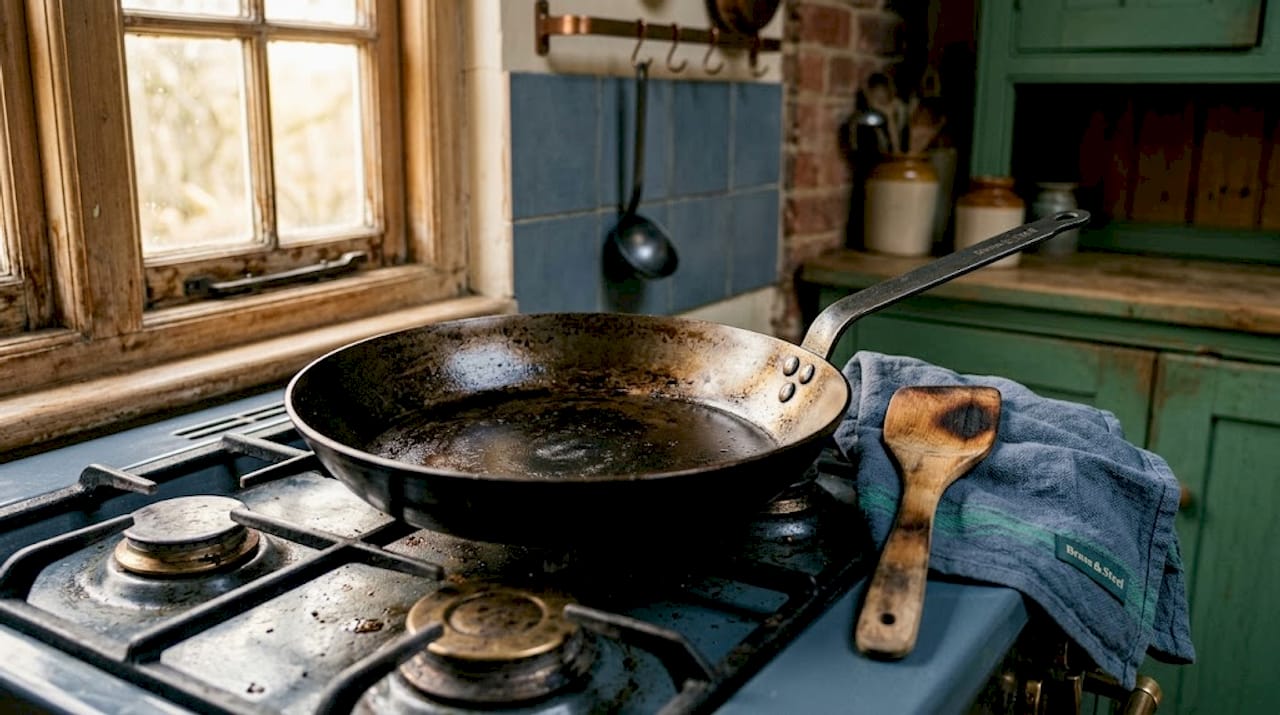
A one-piece forged pan ages well. The metal becomes more seasoned and more non-stick over time, not less capable. Multi-part pans tend to degrade. The coating scratches. The rivets loosen. The base can warp if it was not pressed to a sufficient thickness in the first place. You can read more about forged vs stamped pans to understand the specific engineering differences.
Heat conduction and thermal fatigue
One-piece forged pans handle thermal fatigue better than stamped alternatives. When you go from a hot stovetop to a cold sink, or use a pan under a grill at 250°C, the metal expands and contracts. A welded or riveted joint experiences stress at that connection point every time. A one-piece pan distributes that stress across the entire structure.
Maintenance and lifespan
Multi-part pans with coatings require careful maintenance to preserve the coating surface. Metal utensils, high heat, and acidic foods all shorten their life. One-piece cookware, particularly carbon steel and cast iron, actually benefits from heavy use. Cooking fatty foods builds up the seasoned patina. High heat is encouraged. Maintenance is straightforward.
Cost over time
A quality one-piece forged pan costs more upfront. A Brass-steel 27 cm carbon steel sauté pan is €99, and the 30 cm version is €119. Compare that to a budget coated pan at €20 to €30 that needs replacing every two to three years. Over a decade, the one-piece pan wins on cost, and it performs better the whole time.
Choosing and using the best one-piece cookware
Knowing what one-piece cookware is gets you halfway there. Choosing the right one for your kitchen is the practical next step.
-
Decide on your material. Carbon steel is lighter than cast iron, heats up faster, and responds quickly to temperature changes. Forged aluminium is lighter still and conducts heat quickly, though it requires a protective coating on the interior to be food-safe. Stainless steel is durable but heats less evenly on its own. For most home cooks, carbon steel offers the best balance of weight, heat performance, and longevity.
-
Choose the right size. For everyday solo or couple cooking, a 27 cm pan handles most tasks well. For family meals or batch cooking, a 30 cm pan gives you the surface area you need without overcrowding food. Overcrowded pans steam instead of sear, which matters a great deal for results.
-
Check cooktop compatibility. One-piece forged carbon steel pans work on all cooktops including induction, because the flat steel base creates the magnetic contact induction requires. If you are using induction, confirm the base is flat and consistent before buying.
-
Season before first use. Carbon steel one-piece pans need seasoning to develop their non-stick surface. Wash the pan with warm soapy water, dry it completely, apply a very thin layer of high smoke-point oil (grapeseed or avocado oil work well), and bake it upside down at 250°C for 30 minutes. Repeat two or three times for a solid base.
-
Avoid common buying mistakes. Do not buy based on weight alone. A very heavy pan is not always better, it is just harder to handle. Do not prioritise a shiny finish. Uncoated carbon steel looks utilitarian and darkens with seasoning. That is the point. And do not confuse one-piece construction with what it is not: a marketing term on pans that still have riveted handles.
My honest take on one-piece cookware
I have spent years cooking with and evaluating different types of pans, and I keep coming back to the same conclusion. Most buyers are shopping for the wrong thing. They look at surface coating claims, colour, and price per centimetre of diameter. Very few are asking how the pan was actually made.
In my experience, the single biggest predictor of a pan’s long-term performance is whether its handle is structurally part of the pan or bolted to it. I have thrown out riveted pans with wobbling handles that were otherwise fine. The pan itself was not the problem. The attachment point was.
What I find most interesting about one-piece forged carbon steel pans specifically is how the cooking experience changes over time. The pan I use most is noticeably better than it was six months ago. The seasoning is darker, the non-stick performance is stronger, and searing is more predictable. No coated pan improves with use. They all degrade. That fundamental difference is something most cookware marketing completely ignores.
The engineering behind cookware longevity is genuinely interesting once you start looking into it. Most buyers will never look into it, and that is exactly why so many people end up replacing pans every two years and wondering why nothing lasts.
If you cook regularly and you are tired of cookware that lets you down, the move is simple. Buy one-piece. Buy forged. Do not buy coated.
— Davide
Brass-steel one-piece carbon steel pans
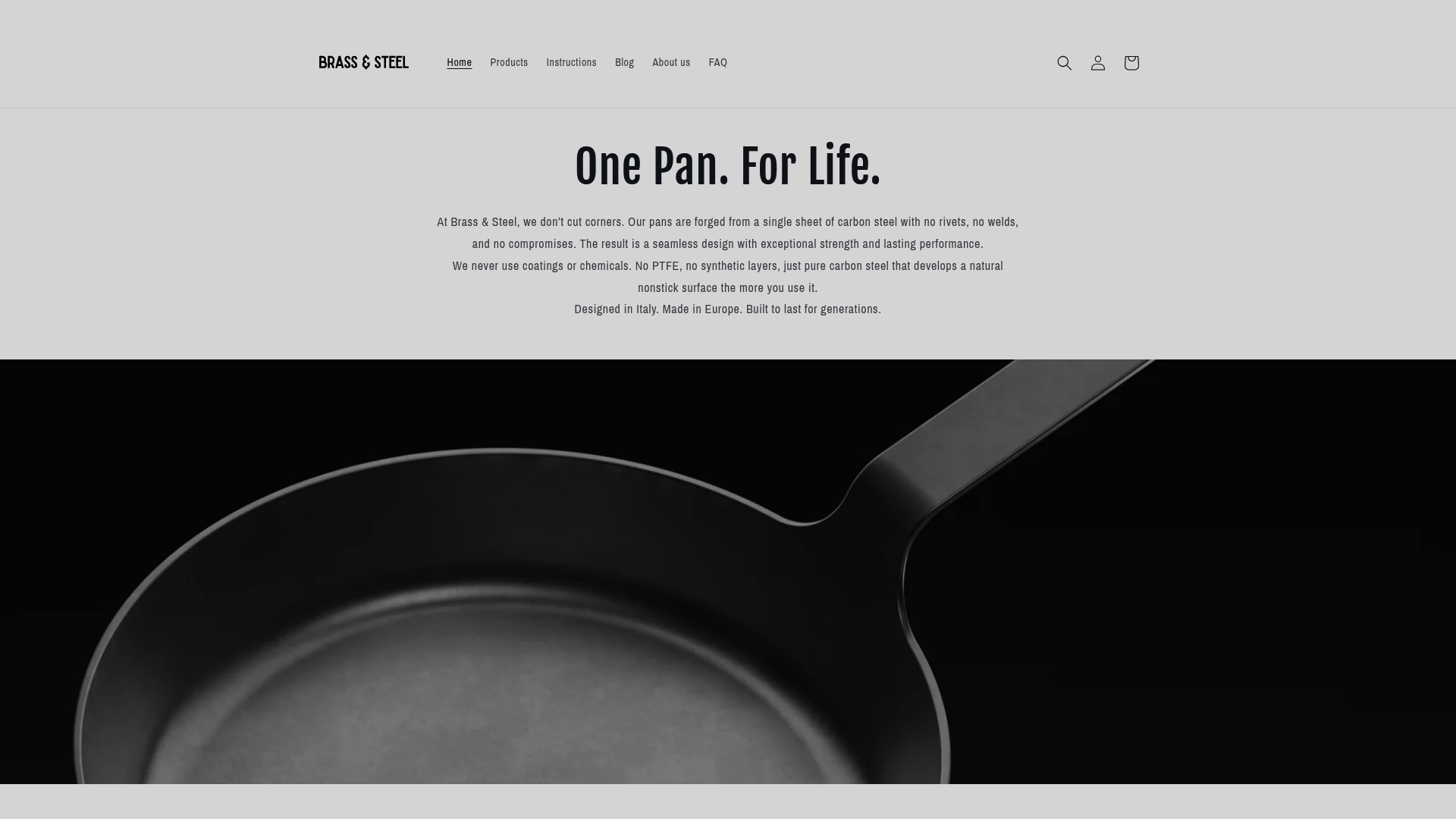
Brass-steel makes one-piece forged carbon steel sauté pans manufactured in Jarocin, Poland, with no rivets, no synthetic coatings, and no compromise on construction quality. Every pan is pressed from a single carbon steel sheet so the handle and body are the same piece of metal.
The 27 cm pan (3 mm steel, approximately 2 kg) covers everyday cooking at €99. The 30 cm pan (4 mm steel, approximately 3 kg) handles family meals and higher-volume cooking at €119. Both work on all cooktops including induction, and both develop a natural non-stick patina through seasoning. If you are ready to stop replacing pans and start cooking with something built to last, the Brass-steel pan range is the right place to start. For more on aluminium and steel safety comparisons, the aluminium vs stainless steel guide is worth reading before you decide.
FAQ
What does one-piece cookware mean?
One-piece cookware is manufactured from a single continuous piece of metal, with no rivets, welds, or separate handle attachments. The term refers to construction method, not cooking style.
Is one-piece cookware the same as one-pot cooking?
No. One-piece and one-pot are entirely different concepts. One-piece is about how the pan is made. One-pot is a cooking technique where an entire meal is prepared in a single vessel.
Why is one-piece cookware more durable?
Without rivets or joints, there are no structural weak points to loosen, crack, or fail under repeated heating and cooling. The pan ages as one coherent piece of metal rather than a collection of parts under stress.
Does one-piece cookware need special care?
Carbon steel one-piece pans need seasoning before first use and regular light oiling after washing. Avoid soaking and dry the pan immediately after cleaning. This keeps the seasoned surface strong and prevents rust.
Is one-piece carbon steel cookware safe to use?
Yes. One-piece carbon steel pans contain no synthetic coatings, meaning no PFOA, PFAS, or PTFE. The cooking surface is pure seasoned metal, which is free from harmful substances associated with degrading non-stick coatings.