Complete Guide to Professional Cookware
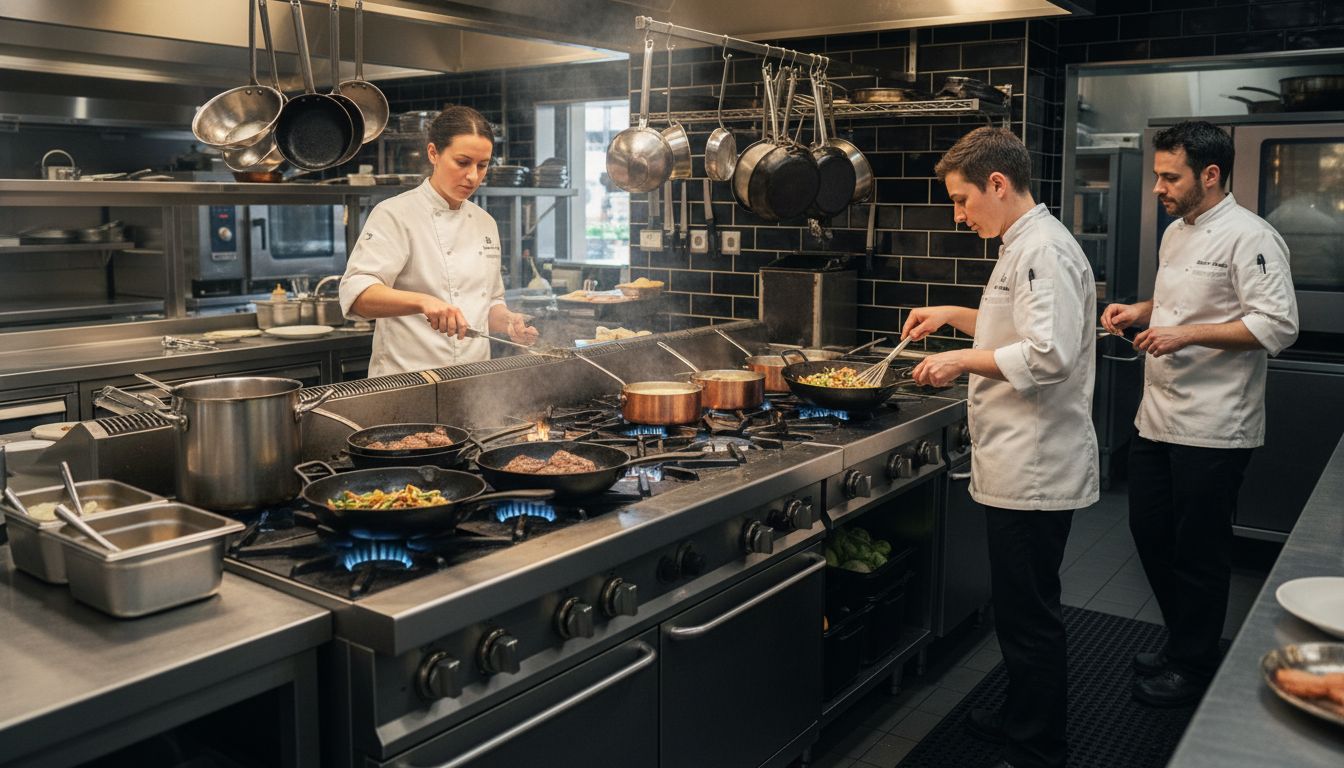
Professional chefs trust cookware that stands up to intense daily use, and over 80 percent say material choice is the most important factor in their kitchen tools. The quality of your pans and pots can make the difference between consistent results and frustration at every meal. Understanding what sets professional cookware apart helps anyone invest wisely and cook with greater confidence, turning every recipe into a chance to achieve better flavor and texture.
Table of Contents
- What Defines Professional Cookware Today
- Types of Professional Cookware Materials
- Essential Features and Construction Methods
- Professional Cookware vs. Home Cookware
- Care, Maintenance, and Common Mistakes
Key Takeaways
| Point | Details |
|---|---|
| Professional Cookware Characteristics | Modern cookware is defined by durability, exceptional heat management, and materials that minimize chemical interaction with food. |
| Material Selection | Key materials include cast iron, carbon steel, stainless steel, and copper, each contributing unique thermal properties and performance benefits. |
| Construction Methods | Professional cookware often features seamless designs and multi-layered constructions for optimal heat distribution and enhanced durability. |
| Maintenance Practices | Proper care involves strategic cleaning, mindful storage, and regular maintenance to prolong cookware life and preserve cooking performance. |
What Defines Professional Cookware Today
Professional cookware has evolved far beyond basic kitchen tools. According to Consumer Reports, these specialized cooking implements are characterized by exceptional durability, efficient heat distribution, and suitability for high-temperature cooking methods. Modern professional cookware prioritizes performance, safety, and long-term reliability.
Key characteristics of professional cookware include materials that provide superior thermal properties and minimal chemical interaction with food. As Mount Sinai notes, material selection is crucial, with professionals preferring metals like stainless steel and carbon steel that minimize chemical leaching while delivering consistent cooking performance.
The hallmarks of professional-grade cookware can be distilled into several critical attributes:
- Exceptional Heat Management: Rapid and even heat distribution
- Durability: Ability to withstand intense, repeated use
- Material Quality: Non-reactive surfaces that preserve food integrity
- Precision Engineering: Seamless construction with minimal weak points
For serious chefs and cooking enthusiasts, professional cookware represents an investment in culinary excellence. Professional Cookware Types for Every Chef isn’t just about owning expensive tools, but selecting equipment that transforms cooking from a task into an art form.
Types of Professional Cookware Materials
Professional cookware materials are the foundation of culinary performance, each offering unique characteristics that impact cooking results. According to Consumer Reports, professional kitchens primarily utilize materials like uncoated cast iron, carbon steel, and copper, each bringing distinct advantages to the cooking process.
Mount Sinai highlights that material selection involves considering both performance and potential health implications. Professional chefs typically choose from a range of materials, each with specific properties:
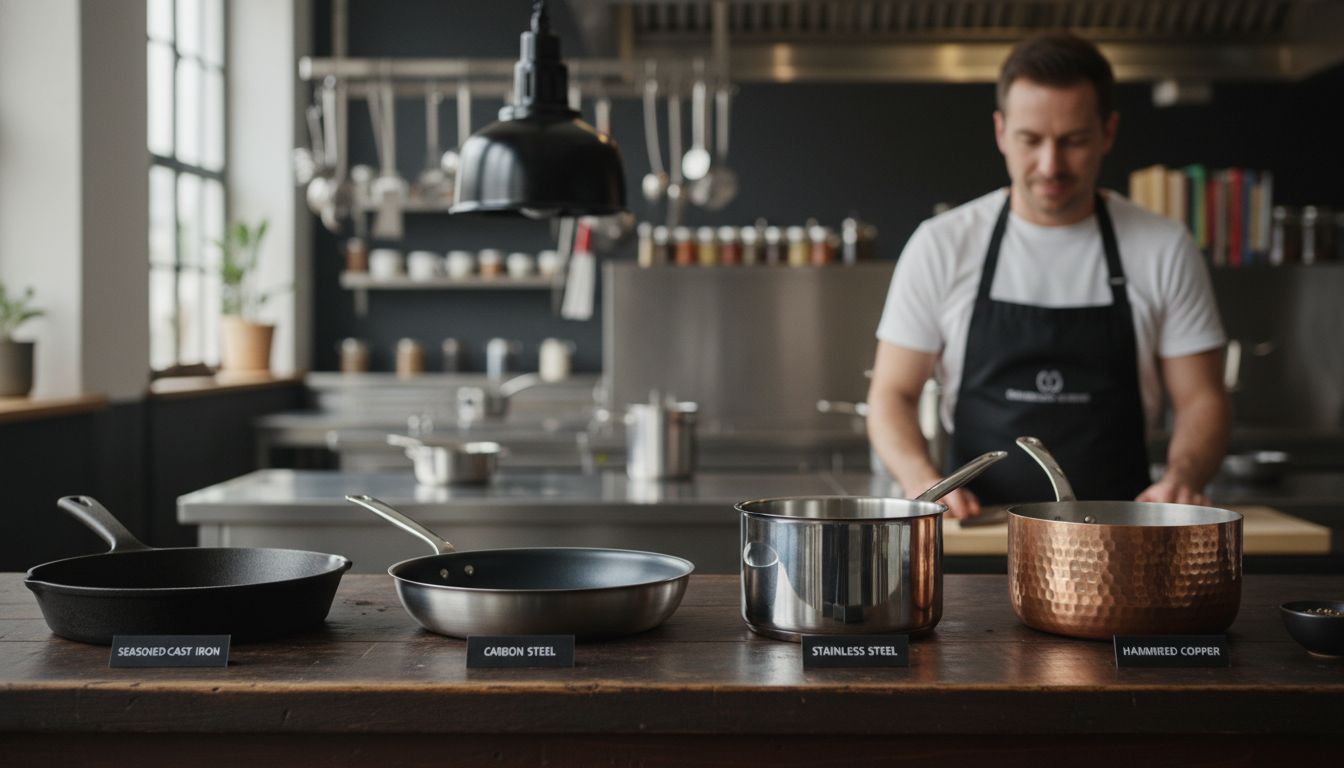
Key Professional Cookware Materials:
- Cast Iron: Exceptional heat retention, extremely durable
- Carbon Steel: Lightweight, rapid heat responsiveness
- Stainless Steel: Non-reactive, corrosion-resistant
- Copper: Superior heat distribution and temperature control
Understanding material nuances is critical.
 Different cooking techniques demand specific thermal properties, which is why professional chefs invest time in selecting the right cookware. For deeper insights into material selection, explore our guide on different cookware materials, which provides comprehensive details about choosing the perfect professional cooking surface.
Essential Features and Construction Methods
Professional cookware construction goes far beyond simple metal shaping. According to Consumer Reports, essential features include superior durability, exceptional heat distribution, and the ability to consistently withstand high cooking temperatures. The most advanced cookware leverages sophisticated multi-layered construction techniques to optimize performance.
Fruitful Kitchen reveals that professional stainless steel cookware often employs multi-ply construction, strategically combining different metal layers to enhance thermal conductivity and overall durability. These sophisticated manufacturing approaches transform ordinary cooking surfaces into precision culinary instruments.
Key Construction Features:
- Seamless Construction: Eliminates weak points and potential failure zones
- Multi-Layer Design: Combines metals for optimal heat transfer
- Precision Engineering: Ensures consistent cooking performance
- Thermal Responsiveness: Rapid and even heat distribution
For chefs seeking deeper understanding of professional cookware engineering, our guide on forged cookware provides comprehensive insights into advanced manufacturing techniques that define modern professional cooking equipment.
Professional Cookware vs. Home Cookware
The divide between professional and home cookware is more than just price tag—it’s about fundamental design philosophy. According to Consumer Reports, professional cookware is engineered for durability and high-performance cooking, utilizing robust materials like uncoated cast iron and carbon steel, while home cookware often prioritizes convenience over long-term performance.
Fruitful Kitchen highlights that professional cookware distinguishes itself through sophisticated multi-ply construction and premium materials, ensuring optimal heat distribution and exceptional longevity. Home cookware, by contrast, typically employs simpler manufacturing techniques that can compromise cooking precision and durability.
Key Differences:
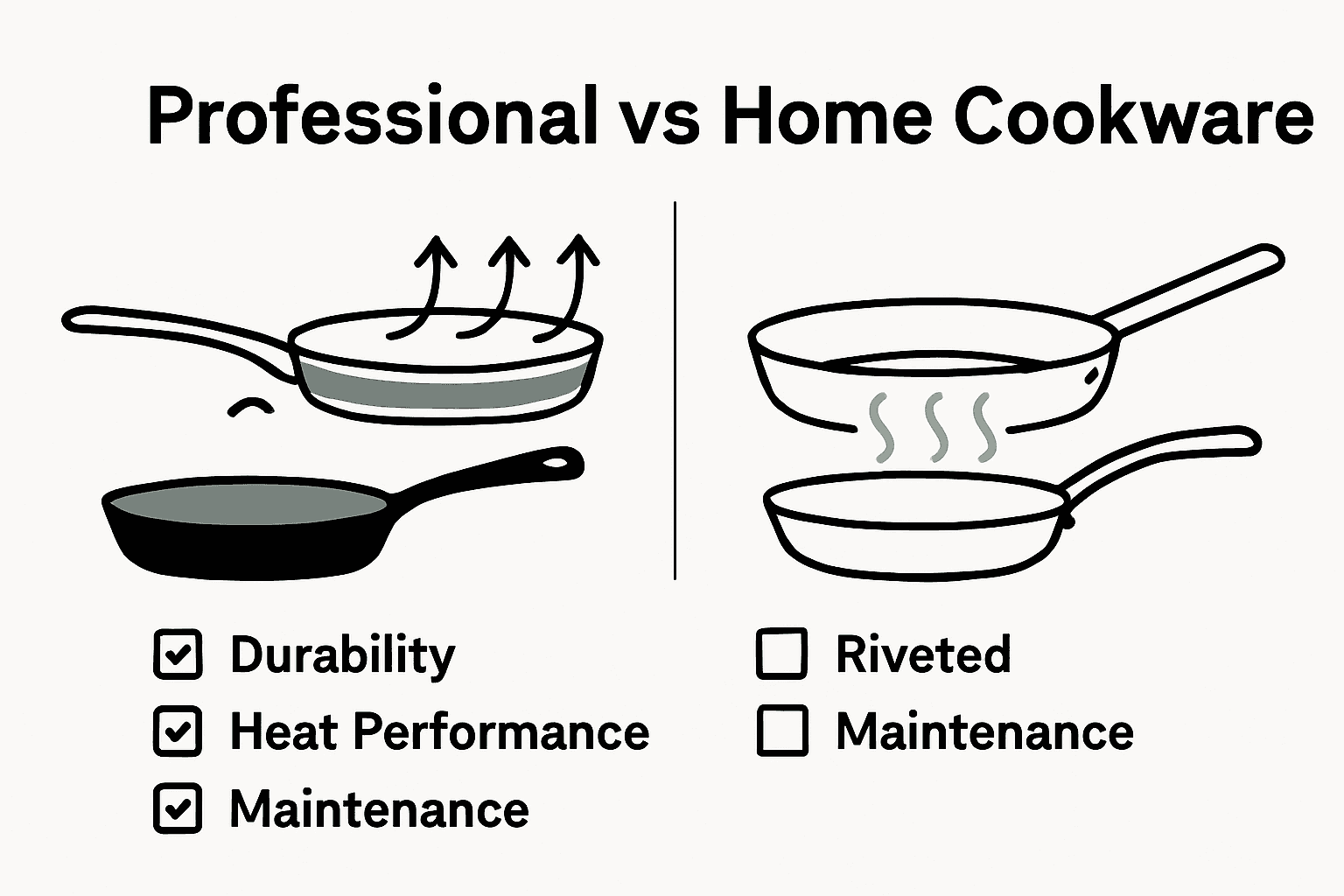
- Construction Quality: Professional = seamless, multi-layered; Home = basic, often riveted
- Material Durability: Professional = high-grade metals; Home = cost-effective alternatives
- Heat Performance: Professional = precise, responsive; Home = inconsistent
- Longevity: Professional = decades of use; Home = periodic replacement
For chefs and serious home cooks looking to elevate their kitchen arsenal, our guide to essential professional cookware types provides comprehensive insights into selecting top-tier cooking equipment that bridges the professional-home divide.
Care, Maintenance, and Common Mistakes
Maintaining professional cookware requires more than casual cleaning. According to Consumer Reports, proper care involves strategic cleaning techniques and mindful storage to prevent damage. Professional chefs understand that cookware longevity depends on consistent, careful maintenance that goes beyond simple surface cleaning.
Mount Sinai emphasizes the critical importance of selecting materials that do not compromise food safety. Maintaining cookware isn’t just about appearance—it’s about preserving cooking performance and preventing potential health risks associated with damaged or improperly maintained cooking surfaces.
Common Maintenance Mistakes:
- Improper Cleaning: Using abrasive materials that scratch surfaces
- Temperature Shock: Exposing hot pans to cold water
- Incorrect Storage: Stacking pans without protective layers
- Neglecting Seasoning: Failing to maintain protective cooking surfaces
For professional chefs seeking comprehensive insights into maintaining their cookware, our guide to carbon steel care routines offers in-depth strategies for preserving your most valuable kitchen investments.
Elevate Your Culinary Craft with Professional Carbon Steel Cookware
The article highlights the importance of durable, high-performance cookware designed for serious cooking. If you seek long-lasting pans that provide exceptional heat management, seamless construction, and a natural nonstick surface, Brass & Steel offers a solution tailored to professional standards. Our Carbon Steel Collection | Brass&Steel features pans forged from a single piece of carbon steel, reflecting the precise engineering and material quality you need to transform cooking into an art.
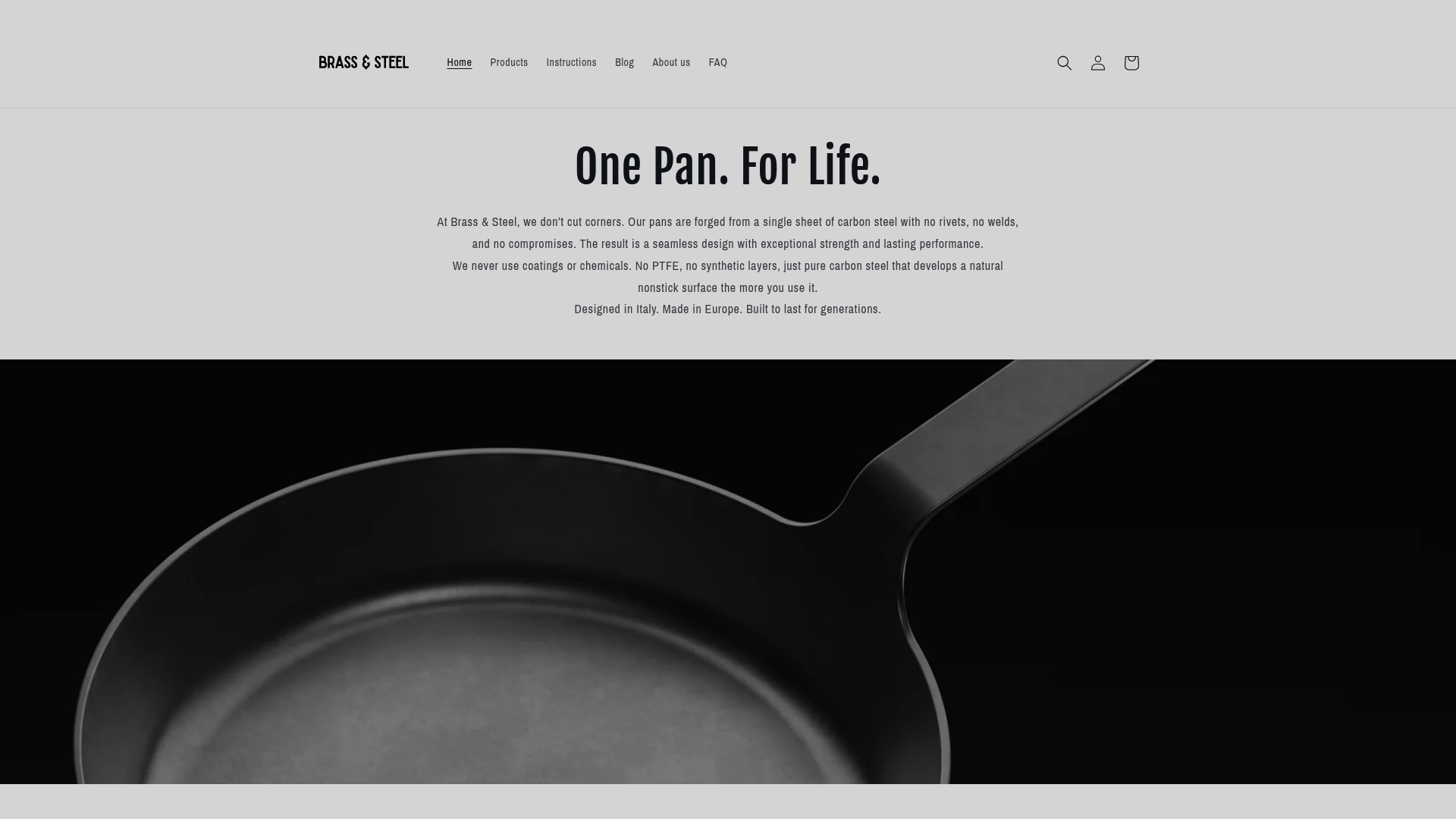
Experience cookware crafted to meet the exacting demands of professional kitchens with health-conscious design, induction compatibility and heirloom quality durability. Visit Brass & Steel today to explore our carbon steel pans and start your journey towards mastering perfect sears and flawless cooking results. Choose quality that lasts, backed by proven craftsmanship and expert care guidance.
Frequently Asked Questions
What materials are commonly used in professional cookware?
Professional cookware is typically made from materials like cast iron, carbon steel, stainless steel, and copper. Each material offers unique benefits for heat retention, durability, and temperature control.
How does professional cookware differ from home cookware?
Professional cookware is designed for durability and high performance, utilizing robust materials and advanced construction techniques like multi-ply design. In contrast, home cookware often prioritizes convenience and may use cost-effective materials, impacting cooking precision and longevity.
What are the key features of professional cookware?
Key features of professional cookware include exceptional heat management for rapid and even cooking, superior durability for prolonged use, non-reactive material surfaces to preserve food integrity, and precision engineering to minimize weak points.
How should I maintain and care for my professional cookware?
To maintain professional cookware, avoid using abrasive cleaning materials, prevent temperature shock by not exposing hot pans to cold water, ensure proper storage with protective layers, and regularly season materials like cast iron and carbon steel to keep their surfaces in optimal condition.