Forged aluminium cookware: benefits, process & key facts
TL;DR:
- Forged aluminium cookware is shaped from solid metal for greater durability and even heat.
- It offers better heat distribution, resistance to warping, and a longer lifespan than stamped pans.
- When buying, verify heavy weight, thick base, and proper forging details to ensure quality.
You probably own an aluminium pan right now. But there is a very good chance it was never truly forged. The word ‘forged’ gets thrown around freely in cookware marketing, yet the process it describes is genuinely different from how most pans are made. Forged aluminium cookware is shaped under intense pressure from solid metal, not poured into a mould or pressed from a thin sheet. That distinction changes everything: the weight, the heat behaviour, the lifespan. This guide explains exactly what forged aluminium cookware is, how it compares to the alternatives, and what to look for when you are ready to invest in something that will last.
Table of Contents
- How forged aluminium cookware is made
- Comparing forged, cast, and stamped aluminium pans
- Core benefits of forged aluminium cookware in the kitchen
- What to consider before buying forged aluminium cookware
- Why most home cooks still miss out on forged aluminium’s advantages
- Discover authentic forged cookware for your kitchen
- Frequently asked questions
Key Takeaways
| Point | Details |
|---|---|
| Forging improves durability | Forged aluminium cookware is stronger and resists warping better than stamped or cast pans. |
| Not all aluminium is equal | Most low-cost aluminium pans are not actually forged, so check labels and specifications carefully. |
| Better heat distribution | Forged aluminium provides even heat across the cooking surface for more consistent results. |
| Smart buying matters | Choosing genuine forged cookware means looking past the marketing for key quality indicators. |
How forged aluminium cookware is made
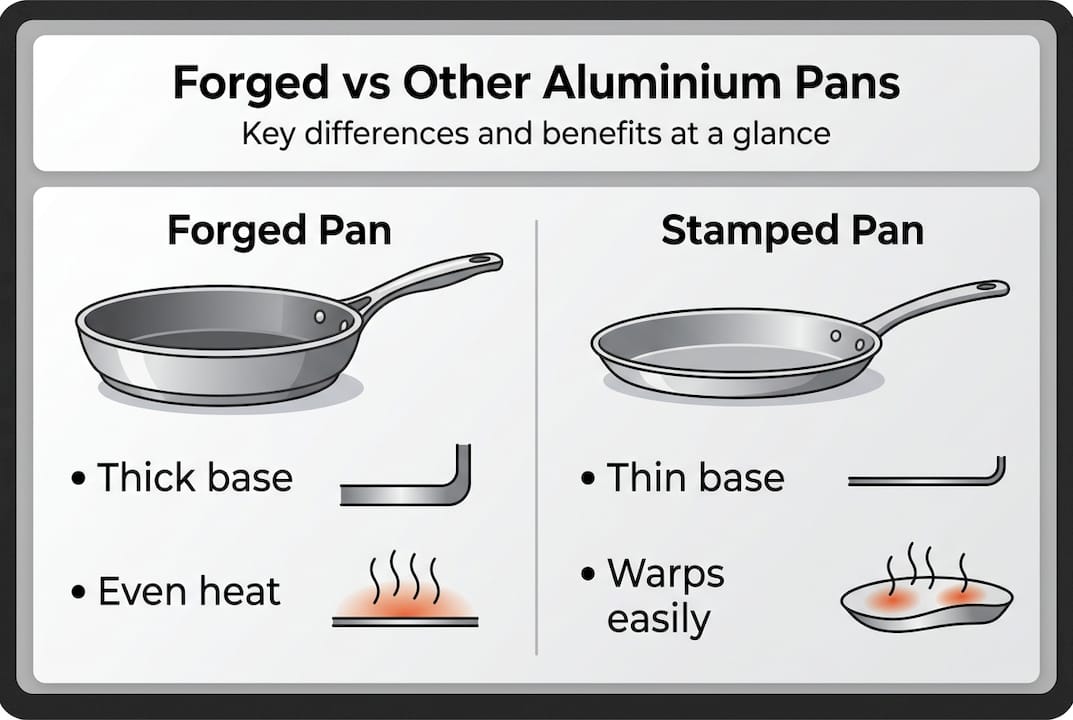
Forging, at its simplest, means shaping a solid piece of metal by applying force. For aluminium cookware, a thick disc of aluminium is heated and then pressed or hammered into shape using industrial dies. The result is a pan with a denser, more uniform structure than you would get from other methods. This is very different from casting, where molten aluminium is poured into a mould, or stamping, where a thin sheet of aluminium is pressed into shape using a punch.
As most aluminium cookware is stamped, not hot-forged, understanding the difference between forged vs stamped pans is genuinely useful before you spend money.
| Method | Process | Durability | Typical cost | Finish quality |
|---|---|---|---|---|
| Forging | Pressed from solid metal under high force | High | Higher | Dense, uniform |
| Casting | Molten metal poured into a mould | Medium | Medium | Can have air pockets |
| Stamping | Thin sheet pressed into shape | Lower | Lower | Thinner, less even |
The main steps involved in forging an aluminium pan are:
- A thick aluminium disc is cut to the correct diameter
- The disc is heated to a specific temperature to increase malleability
- Industrial presses apply force to shape the disc into a pan form
- The pan is trimmed, finished, and inspected for consistency
- A coating is applied if required
Pro Tip: A heavier base is not just a sign of quality. It actively improves cooking. More mass means the pan holds heat steadily when cold food hits the surface, which prevents temperature drops that cause sticking and uneven browning.
Comparing forged, cast, and stamped aluminium pans
Now that you know how forged aluminium is made, let’s see how it really measures up to cast and stamped pans. The differences are not just technical. They affect how the pan behaves every single time you cook.
| Feature | Forged aluminium | Cast aluminium | Stamped aluminium |
|---|---|---|---|
| Heat distribution | Excellent, very even | Good, but can have hot spots | Variable, often uneven |
| Durability | High | Medium | Lower |
| Weight | Heavier | Medium to heavy | Light |
| Price | Higher | Mid-range | Budget |
| Typical use | Professional, daily home cooking | Casseroles, slow cooking | Light everyday tasks |
As most aluminium cookware on the market is stamped, forging yields meaningfully different results in terms of pan longevity and cooking performance. You can read a full forged cookware benefits guide and also explore understanding forged cookware if you want to go deeper.
“The forging process is what separates a pan that lasts a decade from one that warps within a year. Construction method is the single biggest predictor of pan longevity.” — Cookware materials specialist
To choose the right aluminium pan for your needs, work through these steps:
- Decide how often you cook and at what heat levels
- Consider whether you need induction compatibility
- Set a realistic budget that accounts for long-term value, not just upfront cost
- Check the product weight and thickness specifications before buying
- Look for the word ‘forged’ in the technical description, not just the product name
Core benefits of forged aluminium cookware in the kitchen
Having compared the types, it’s time to spotlight the specific advantages you’ll experience in daily cooking with forged aluminium. These are not abstract engineering claims. They translate directly into better results on your hob.
The key benefits you will notice are:
- Even heat distribution across the entire base, which reduces hot spots and gives you consistent browning
- Resistance to warping, even with regular high-heat cooking, because the denser structure holds its shape
- Easier maintenance, as the smooth, uniform surface is less prone to developing rough patches over time
- Longer lifespan compared to stamped alternatives, making the higher upfront cost worthwhile over years of use
- Better responsiveness to temperature changes, so you have more control when cooking delicate dishes
The advantages for chefs who use forged cookware daily are well documented, and the same logic applies at home. It is also worth comparing aluminium vs stainless steel if you are weighing up your options across materials.
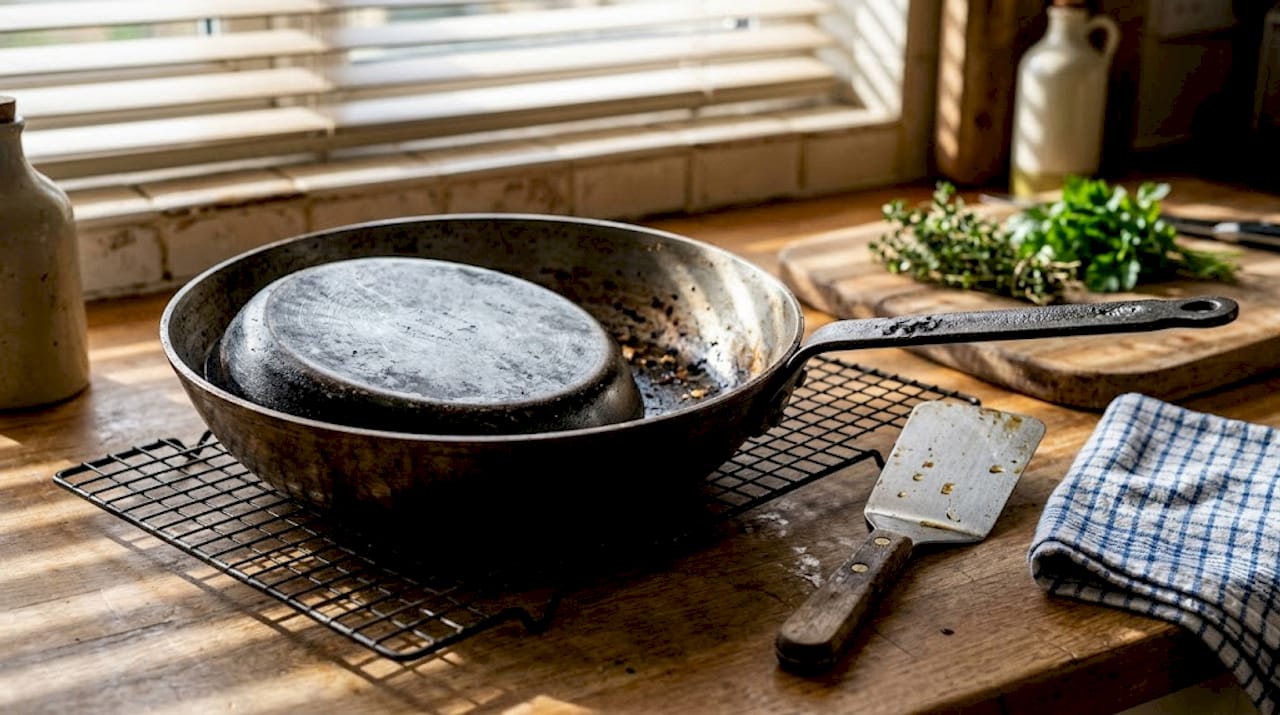
As forged aluminium cookware offers distinct performance and durability benefits for demanding kitchens, the gap between forged and non-forged pans becomes most obvious when you are cooking at high heat or handling large quantities of food.
Pro Tip: If your current aluminium pan has developed a slight wobble on the hob, or if food consistently burns in the centre but not the edges, those are clear signs you have outgrown a stamped pan. That is the moment to consider upgrading to a forged alternative.
What to consider before buying forged aluminium cookware
If you’re considering making the switch, here’s what to look for to ensure you’re investing in genuine quality. The market is full of pans labelled ‘forged’ that are not truly forged in the traditional sense, so knowing what to check protects your money.
Work through these questions before you commit to a purchase:
- What is the stated weight? A genuinely forged pan will be noticeably heavier than a stamped equivalent of the same size.
- What is the thickness of the base? Look for at least 3mm. Thinner bases are a strong indicator of stamping rather than forging.
- Does the product description use ‘forged’ in the technical specifications, not just in the product name or marketing copy?
- How is the handle attached? Riveted handles can loosen over time. Welded or single-piece construction is more reliable.
- What is the warranty? Genuine quality manufacturers back their products with meaningful guarantees.
Signs that a pan is truly forged rather than just marketed as such:
- The base is thick and uniform with no visible seams
- The pan feels dense and solid when you pick it up
- The manufacturer provides clear technical data on the forging process
- The price reflects the higher manufacturing cost
As true forging produces heavier, more durable pans, always verify product descriptions carefully. A useful starting point is reading about forged cookware explained and then reviewing the carbon steel vs aluminium comparison if you are still deciding between materials.
Be cautious with very low-priced pans that claim to be forged. Genuine forging requires expensive industrial equipment and more raw material. If the price seems too low for a forged product, it almost certainly is.
Why most home cooks still miss out on forged aluminium’s advantages
Here is something that rarely gets said plainly: the cookware industry profits from confusion. When every pan on a shelf uses words like ‘premium,’ ‘professional,’ and ‘forged,’ buyers have no reliable way to distinguish real quality from clever packaging. Most people pick up a pan, check the price, and move on. The weight, the base thickness, the construction method — these details are buried in small print if they appear at all.
The result is that genuinely forged cookware, which offers real and measurable performance differences, stays largely unknown outside professional kitchens. Home cooks who do discover it — often after one frustrating experience with a warped or uneven pan — rarely go back. The performance gap is that obvious once you have experienced it. A useful reference point is this restaurant-grade cookware comparison, which shows how professional kitchens approach the same buying decision. The lesson for home cooks is straightforward: slow down, read the specifications, and treat cookware as a long-term investment rather than a disposable item.
Discover authentic forged cookware for your kitchen
If this guide has shifted how you think about your cookware, you are already ahead of most buyers. Understanding the difference between forged, cast, and stamped aluminium means you will never be misled by a label again.
At Brass & Steel, we specialise in cookware built for serious home cooks who want performance that lasts. Our guides and product range are designed to help you make informed choices, not just fast ones. If you want to go further, the full benefits guide is a thorough next step. Explore what genuinely well-made cookware feels like, and cook with confidence from your very first use.
Frequently asked questions
Is forged aluminium better than cast aluminium?
Forged aluminium generally offers improved durability and heat distribution compared to cast, making it preferable for high-performance cooking. Cast aluminium can develop internal air pockets during production, which forging avoids entirely.
How can you tell if a pan is truly forged?
A real forged pan is heavier, has a denser structure, and usually states ‘forged’ in the technical details. Always check the weight specification and look for manufacturer notes on the construction process.
Are forged aluminium pans non-stick?
Most forged aluminium pans are coated for non-stick performance, but it is essential to check the product details for specific coatings and whether they are PTFE-free.
Does forged aluminium cookware work on induction hobs?
Some forged pans do work on induction hobs, but only those with magnetic bases. Always check for induction compatibility symbols or confirm in the product specifications before buying.
Recommended
- Forged Cookware Benefits: Complete Guide for Cooks – Brass & Steel
- Advantages of Forged Pans for Professional Chefs – Brass & Steel
- Understanding Forged Cookware Explained for Chefs & Enthusiasts – Brass & Steel
- Ceramic vs Aluminium Cookware – Performance and Safety Explained – Brass & Steel
- Edelstahl Pulverbeschichtet: Alles Wichtige Erklärt - AFUERA – outdoor steel design