Restore your carbon steel wok: rust removal simplified
TL;DR:
- Rust on a carbon steel wok indicates exposed metal caused by moisture, but it is usually surface-level and reversible. Removing rust involves scrubbing with coarse salt and a chainmail scrubber, then thoroughly drying and oiling the surface to prevent future formation. Regular heat-drying, proper storage, and minimal washing ensure your wok remains well-seasoned and rust-free for years of reliable use.
You pull your wok from the cupboard, ready to cook, and notice orange patches spreading across the surface. It is a frustrating sight, but it is not the end of your pan. Carbon steel woks are remarkably resilient, and surface rust, even when it looks alarming, is almost always reversible with the right technique. This guide walks you through exactly why rust forms, what you need to remove it safely, and how to keep it from coming back so your wok stays in excellent condition for years to come.
Table of Contents
- Why rust forms on carbon steel woks
- What you need to remove rust from your wok
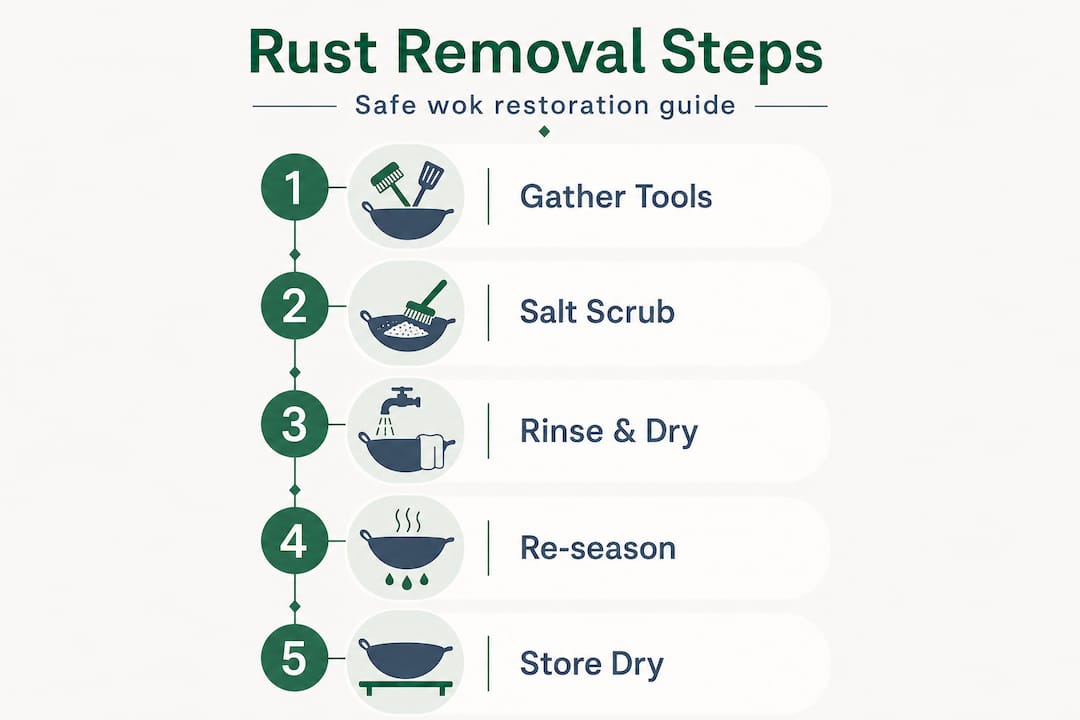
- Step-by-step guide: removing rust safely
- Troubleshooting and avoiding common mistakes
- Restoring seasoning and preventing future rust
- Why a little rust is no catastrophe: lessons from years of wok repair
- Explore more tips and premium cookware care
- Frequently asked questions
Key Takeaways
| Point | Details |
|---|---|
| Rust is reversible | With the right steps, most wok rust can be cleaned safely at home. |
| Chainmail scrubbers work best | These tools remove rust without damaging the seasoning or steel. |
| Dry and oil after each use | Proper drying and a thin oil layer prevent future rust formation. |
| Regular care matters | Consistent upkeep extends wok life and enhances cooking performance. |
| Mistakes are fixable | Even common errors can be corrected with careful cleaning and seasoning. |
Why rust forms on carbon steel woks
Understanding the cause of rust makes removal far less daunting. Carbon steel contains iron, and iron reacts with oxygen and moisture to produce iron oxide, which we call rust. The reaction is fast when conditions are right, and certain cooking habits dramatically accelerate it.
The most common culprits are straightforward:
- Leaving water on the surface after washing, even for a short time, is enough to trigger rust in humid kitchen environments.
- Soaking the wok or running it through a dishwasher strips the protective seasoned layer that keeps moisture away from bare steel.
- Cooking acidic foods such as tomatoes or citrus on an under-seasoned wok can degrade the patina and expose vulnerable metal beneath.
- Storing the wok in a damp cupboard or stacking it with other wet cookware traps moisture against the surface for hours.
- Skipping the post-cook oil wipe leaves the surface unprotected between uses.
As moisture exposure causes rust, the key prevention habit is heat-drying after every use and finishing with a thin oil layer before storage. This is worth repeating to yourself every time you cook.
Rust on a carbon steel wok is not a sign of failure. It is a sign that bare metal has been exposed to moisture. The solution is always the same: remove the rust, protect the steel, and carry on cooking.
The encouraging reality is that rust on carbon steel is surface-level in most cases. It has not compromised the structure of your wok. Once you understand that the rust sits on top of the steel rather than eating through it, removal feels like exactly what it is: a simple cleaning task. For broader guidance on preventing rust naturally at every stage of wok ownership, building good habits from the start saves you the trouble of repeated restoration.
What you need to remove rust from your wok
Armed with an understanding of rust’s origins, you will want to gather the right supplies before starting the cleaning process. The good news is that effective rust removal requires no specialist chemicals or expensive equipment. Most of what you need is already in your kitchen.
| Item | Purpose | Alternative if unavailable |
|---|---|---|
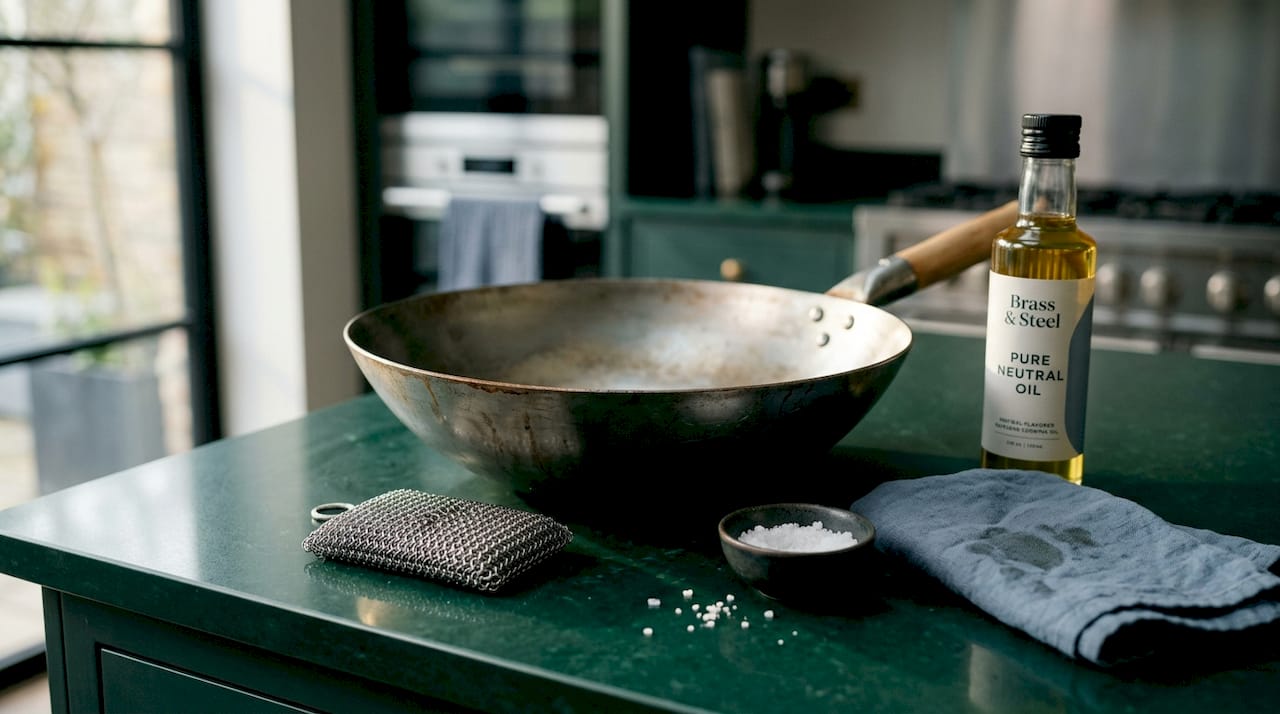
| Chainmail scrubber | Removes rust and residue without scratching deeply | Coarse salt with a cloth |
| Coarse salt | Mild abrasive for scrubbing | Fine salt in larger quantity |
| Clean dry cloths | Drying and oiling the surface | Paper kitchen towel |
| Neutral high-heat oil | Re-seasoning after cleaning | Grapeseed, sunflower, or canola |
| Heat source | Drying wok thoroughly | Hob or oven both work |
| Mild washing-up liquid | Optional initial clean | Plain warm water |
Chainmail scrubbers are recommended for carbon steel because they remove residue without deep scratching or stripping the seasoning unnecessarily. They are widely available online and last for years, making them an excellent investment for any carbon steel cook.
A few additional tips on tools and safety:
- Never use metal scouring pads such as steel wool on a carbon steel wok. They scratch far more aggressively than chainmail and can damage the underlying steel surface.
- Avoid chemical rust removers entirely. They are unnecessary for surface rust and can leave residues that are unsafe for cooking surfaces.
- Steer clear of harsh abrasive powders. They can roughen the surface and make future seasoning less effective.
- If you do not have a chainmail scrubber, a generous pour of coarse salt combined with a folded cloth gives you enough abrasion to tackle light to moderate rust safely.
Pro Tip: If your wok has older, fragile seasoning around the edges or rim, use your chainmail scrubber with lighter pressure in those areas. The goal is to lift rust, not remove every trace of patina you have built up over months of cooking.
Gathering everything before you start means you will not be hunting for supplies mid-clean, which matters because the wok needs to move quickly from scrubbing to drying to oiling. For a broader look at deep cleaning your pan in more demanding situations, that resource covers the full spectrum of intensive care approaches.
Step-by-step guide: removing rust safely
With everything ready, follow these practical steps to bring your wok surface back to its best. Work methodically and without rushing. The entire process typically takes under twenty minutes.
-
Rinse the wok with warm water. This loosens surface debris and makes the rust slightly easier to scrub. Do not use soap at this stage unless the wok is visibly greasy.
-
Add a generous pinch of coarse salt directly onto the rusted areas. The salt acts as a gentle abrasive that lifts rust without scratching the steel itself.
-
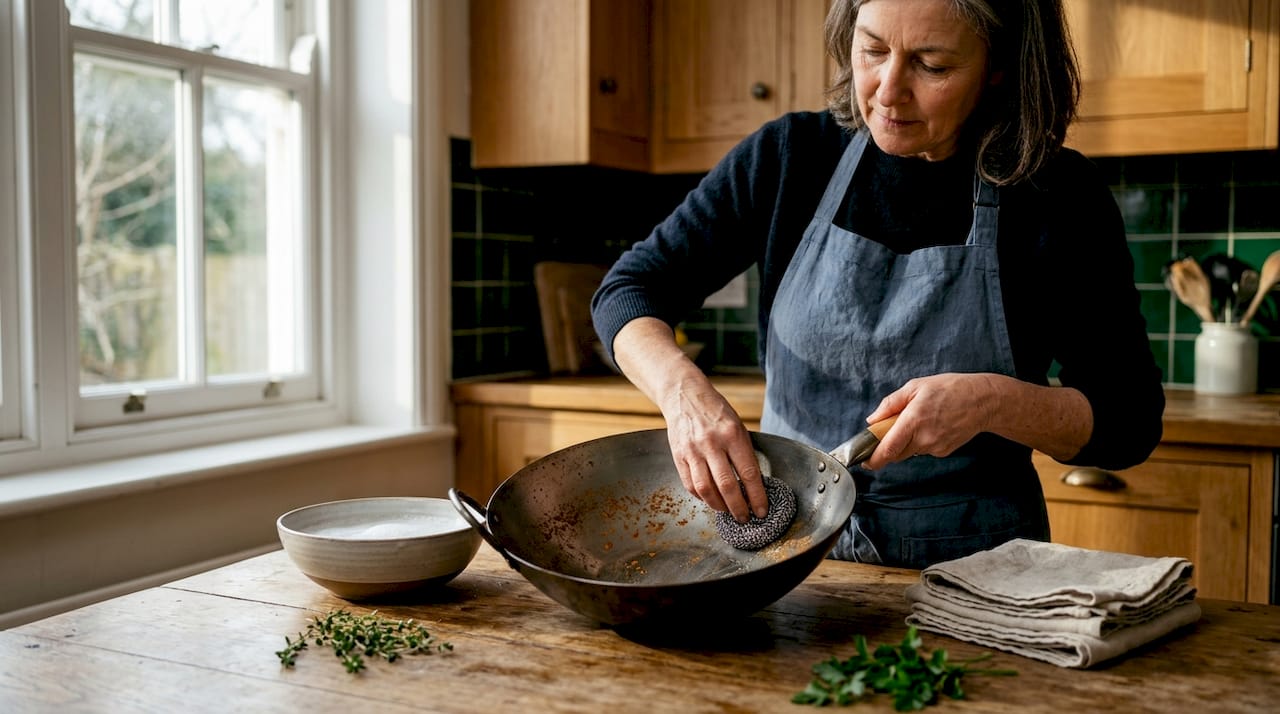
Scrub the surface firmly with your chainmail scrubber. Work in circular motions across the rusted patches and surrounding areas. You will notice orange residue transferring to the scrubber. This is the rust coming away from the surface, which is exactly what you want.
-
Rinse thoroughly with warm water and inspect the surface. If orange patches remain, repeat the salt scrub. Light rust typically disappears after one or two passes. Heavier rust may need three or four gentle rounds.
-
Place the wok on the hob over medium heat. Allow it to heat for two to three minutes until all visible moisture has evaporated. The surface should look completely dry and begin to darken slightly. This heat-drying step is critical because any remaining moisture will restart the rust process almost immediately.
-
Remove from heat and allow to cool for one minute. You want the wok warm, not scorching, when you apply oil.
-
Pour a very small amount of neutral oil (roughly half a teaspoon) onto a folded piece of kitchen towel. Wipe it across the entire interior surface in a thin, even coat. The pan should look barely oiled, not wet or greasy.
-
Wipe away any excess oil with a clean section of towel. A sticky or thick oil film will turn gummy during storage and can attract dust. Thin is the operative word here.
As noted in carbon steel care guidance, chainmail scrubbers remove residue without deep scratching, which means your underlying steel and any remaining patina stay largely intact through this process. You are not starting from scratch; you are simply cleaning the surface.
For more targeted help with stubborn cases, the effective pan rust removal guide covers heavier rust scenarios in detail, and the carbon steel restoration resource is particularly useful if you have inherited an old or heavily neglected wok that needs significant work.
Pro Tip: If rust remains after three rounds of the salt scrub, heat the dry wok on the hob for five minutes before scrubbing again. Warmth makes rust slightly easier to dislodge and helps reveal areas you may have missed. Never use aggressive scouring pads no matter how stubborn the rust appears.
Troubleshooting and avoiding common mistakes
If you notice any setbacks or persistent rust, troubleshooting can help prevent frustration and long-term damage. Most recurring rust problems share a common cause: moisture getting back onto the surface after cleaning.
| Mistake | Consequence | Solution |
|---|---|---|
| Soaking the wok in water | Strips seasoning, accelerates rust | Rinse briefly, never soak |
| Skipping heat-drying | Moisture sits on steel and rusts immediately | Always heat on hob after washing |
| Applying too much oil | Oil turns gummy and attracts moisture | Use a half-teaspoon maximum |
| Storing in a damp cupboard | Continuous moisture contact overnight | Store in a dry, ventilated spot |
| Using the dishwasher | Destroys seasoning completely | Hand-wash only, every time |
| Leaving acidic foods in the pan | Eats through patina and exposes steel | Remove food promptly after cooking |
Quick fixes for recurring rust are usually simpler than they seem:
- Dry your wok immediately after every rinse, every time without exception. This single habit eliminates the majority of rust problems.
- Re-season after any rust removal to rebuild the protective layer. Even a single stovetop seasoning round helps enormously.
- Store the wok uncovered or with a paper towel inside to absorb residual humidity, especially in damp climates.
- Cook fatty foods regularly such as stir-fried meat or eggs. These naturally strengthen the seasoning with each use.
Critical warning: Never put your carbon steel wok in a dishwasher or use metal scouring pads on its surface. Both will strip the protective seasoning completely, leaving bare steel exposed to moisture and dramatically accelerating rust. Once seasoning is stripped this way, full restoration requires significant effort.
Avoiding soaking, dishwashers, and prolonged acidic cooking without a mature patina are the three non-negotiable rules of carbon steel wok care. Follow them consistently and you will rarely face a rust problem again. For a thorough overview of all ongoing care approaches, expert care for carbon steel brings together best practices in one place.
Restoring seasoning and preventing future rust
Restoring the non-stick properties and rust resistance of your wok is just as important as removing rust initially. Once you have scrubbed away the rust and heat-dried the surface, a quick re-seasoning session protects your work and sets the wok up for its next meal.
Here is how to approach post-clean seasoning and long-term rust prevention:
- Apply a thin oil coat while the wok is still warm from the heat-drying step. Warm metal absorbs oil more readily, giving you a more even and durable base layer.
- For a proper seasoning round, heat the oiled wok on the hob over medium-high heat until it begins to smoke lightly. Allow it to cool, wipe away excess, and repeat once or twice. This polymerises the oil into a hard, protective coating rather than leaving a greasy film.
- Alternatively, use the oven method at 250°C with the wok placed upside down for thirty minutes. This bakes the oil evenly across the entire surface including the exterior.
- Store in a dry place away from steam, humidity, or contact with other wet cookware.
- Never leave the wok empty on a high flame for extended periods without oil, as this can cause surface discolouration that is difficult to recover from.
- Cook with it regularly. Carbon steel woks improve with use. Every cooking session deposits a small amount of carbonised material that strengthens the patina.
As moisture exposure is the primary cause of rust, the long-term solution is establishing a consistent post-cook routine: rinse, heat-dry, oil lightly, store dry. It takes less than five minutes and pays dividends over years of cooking. Understanding the importance of seasoning carbon steel in depth helps you see why each cooking session is also an opportunity to build resilience against rust.
Why a little rust is no catastrophe: lessons from years of wok repair
With the main cleaning tasks outlined, it is worth putting rust in its proper perspective for your ongoing cooking journey. The first time you spot rust on a well-loved wok, the instinct is often to assume something has gone fundamentally wrong. In reality, it is one of the most normal occurrences in any kitchen that uses carbon steel seriously.
Even professional kitchens, where carbon steel is the default choice precisely because of its performance, deal with surface rust. A wok left uncleaned after a busy service, stored in a kitchen with high ambient humidity, or used for acidic sauces will show rust. The chefs working with these pans are not alarmed. They scrub, they dry, they oil, and they cook again. The process takes minutes.
There is a contrarian view worth holding here: slight patina loss or surface rust is not a setback, it is evidence of genuine use. A wok that has developed a little rust and been restored has actually gained something. The re-seasoning that follows rust removal often produces a more even, better-bonded patina than the original. Restoration adds longevity rather than subtracting it.
In European home cooking culture, there is a growing appreciation for cookware that requires active care and rewards attention. Carbon steel fits squarely into that tradition. The wok you clean, re-season, and cook with for twenty years is a genuinely different object from the non-stick pan you discard after three. Viewing rust removal as a ritual of maintenance rather than an inconvenience changes your relationship with the pan entirely.
A wok that has been through dozens of cooking sessions, a few rust removals, and multiple re-seasoning rounds has accumulated what some cooks call wok hei potential. Flavour builds in the surface over time. The pan becomes more responsive, more non-stick, and more characterful. For broader guidance on mastering wok care across the full lifespan of your cookware, that resource brings together everything you need to sustain exceptional performance for decades.
Explore more tips and premium cookware care
If this guide has made rust feel manageable, you are already thinking about carbon steel the right way. Consistent care, the right tools, and a little confidence are all it takes to keep your wok performing at its best for a very long time.
At Brass & Steel, we produce carbon steel cookware that is built to last through exactly this kind of active, attentive ownership. Our pans are forged from a single piece of steel, free from PTFE, PFOA, and any synthetic coatings, which means the only thing between your food and the metal is the seasoning you build yourself. Beyond our cookware, our blog is packed with practical, experience-based guidance on everything from first-use seasoning to long-term restoration, written specifically for home cooks who want to get the most from serious kitchen tools.
Frequently asked questions
Is it safe to use a rusty carbon steel wok?
Minor surface rust should be removed before cooking, but it does not make the wok permanently unsafe. As moisture causes rust, a thorough clean and re-season will restore the wok to full use; deeply pitted rust requires more intensive restoration.
What if rust keeps returning after cleaning my wok?
Recurring rust almost always points to excess moisture remaining on the surface or damp storage conditions. Always heat-dry after washing and apply a thin oil layer before storing in a dry, ventilated spot.
Can vinegar or lemon juice remove wok rust?
Acids can loosen rust but they also degrade your seasoning, leaving bare steel vulnerable to further corrosion. Chainmail scrubbers combined with coarse salt are a safer and more effective approach that protects your existing patina.
How often should I season my carbon steel wok?
Season after any rust removal and whenever the surface looks dull, patchy, or begins to lose its non-stick quality. As a general rule, a thin oil layer applied after every use significantly reduces how often full re-seasoning becomes necessary.