Removing rust from carbon steel: effective restoration guide
TL;DR:
- Rust on carbon steel pans is surface-level and easily fixable with proper cleaning and re-seasoning.
- Key tools for rust removal include steel wool, mild soap, oil, and oven re-seasoning.
- Consistent drying, light oiling, and regular use prevent rust from recurring.
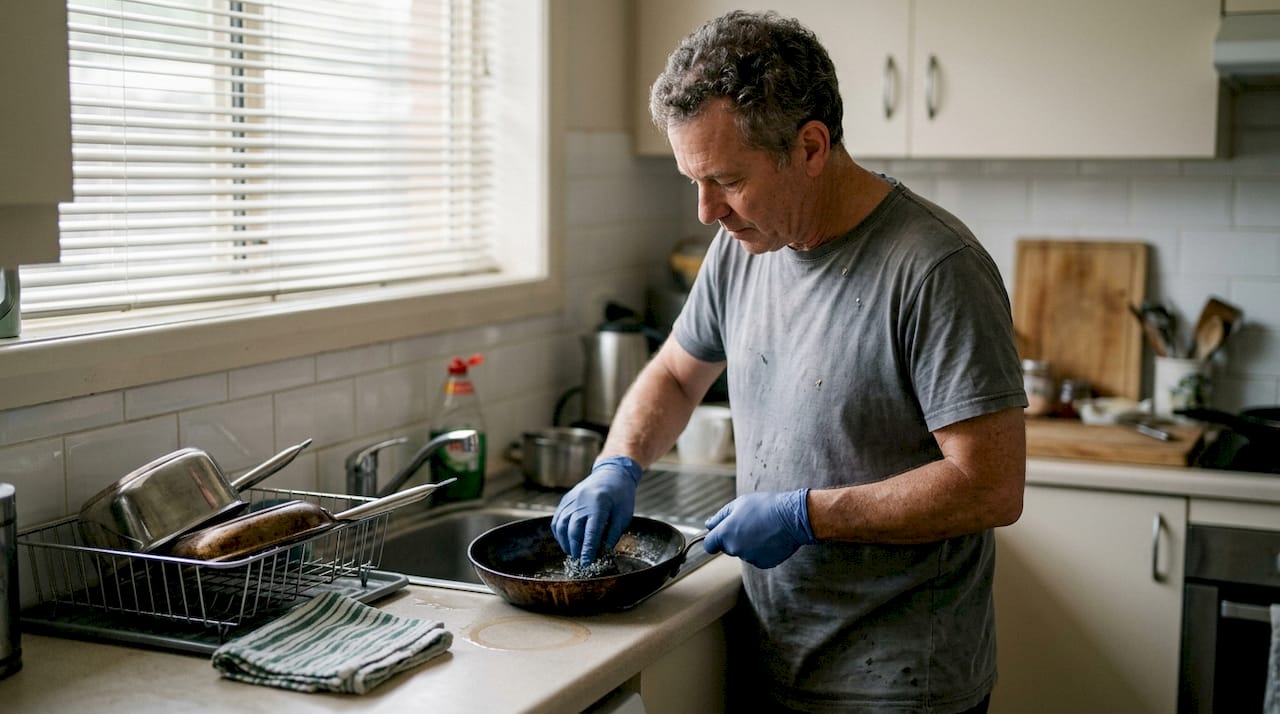
That sinking feeling when you pull out your favourite carbon steel pan and spot a patch of rust is something most serious cooks know well. It looks alarming, but it is not a death sentence for your pan. Rust on carbon steel is one of the most fixable problems in the kitchen, and restoring a pan to full performance takes less effort than you might expect. This guide walks you through exactly why rust forms, what tools you need, how to remove it step by step, and how to avoid it coming back. By the end, your pan will sear and brown just as well as the day you first seasoned it.
Table of Contents
- Understanding rust on carbon steel pans
- What you need: tools and ingredients for rust removal
- Step-by-step: removing rust from your pan
- Troubleshooting and common mistakes
- Our perspective: long-term care matters more than quick fixes
- Explore professional-grade carbon steel solutions
- Frequently asked questions
Key Takeaways
| Point | Details |
|---|---|
| Rust is reversible | With the right steps, any rusty carbon steel pan can be restored to high performance. |
| Proper tools matter | Simple tools like steel wool and neutral oil make rust removal effective and safe. |
| Seasoning is essential | Applying thin layers of oil and using your pan regularly keeps it rust-free. |
| Prevention saves time | Quick drying and oiling after use eliminate most rust problems before they start. |
Understanding rust on carbon steel pans
Rust is iron oxide, and it forms whenever bare iron or steel is exposed to moisture and oxygen for long enough. Carbon steel contains a high proportion of iron, which is precisely what gives it such excellent heat conductivity and responsiveness. That same iron content, however, makes it reactive. Unlike stainless steel, carbon steel has no chromium layer to protect it, so any gap in the seasoning or protective oil coat leaves the metal vulnerable.
The good news is that rust on a carbon steel pan is almost always surface level. It forms on the outer layer of the metal rather than eating deeply into the structure, especially when caught early. A pan left wet in a sink overnight, stored without oil in a humid kitchen, or washed and not dried properly is a prime candidate for rust spots.
Common causes of rust on carbon steel pans include:
- Leaving the pan wet or damp after washing
- Storing without a thin coat of protective oil
- Soaking in water, even briefly
- Cooking acidic foods that strip seasoning
- Humidity in storage areas, particularly in European coastal climates
Rust does affect performance. A corroded surface loses its natural nonstick quality, food sticks more easily, and you may notice a metallic taste if the rust is significant. But here is what many cooks get wrong: they assume a rusty pan is ruined. It is not.
A pan with surface rust is not a pan past its prime. It is simply a pan asking for a little attention. Once treated, it can sear and brown like new, lighter and more responsive than cast iron.
Understanding the mechanics of rust also helps you prevent it in the first place. Read our guide on preventing rust on pans to build better habits alongside restoration, and explore best carbon steel care practices for a broader picture of long-term maintenance.
What you need: tools and ingredients for rust removal
To tackle rust confidently, ensure you have the right supplies on hand before you start. Gathering everything in advance means you will not have to stop mid-process, which can leave the pan in a worse state than when you began.
Here is what you will need:
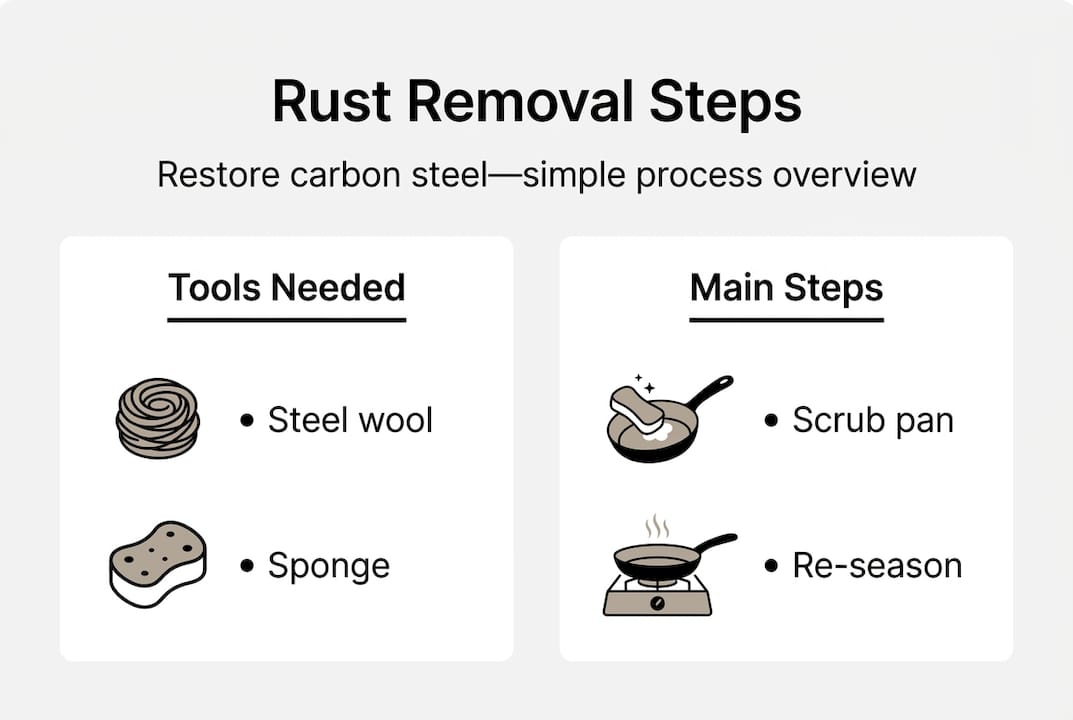
- Steel wool or a stiff scrubbing pad for removing rust mechanically
- A dry sponge or cloth for buffing lighter surface rust
- Mild dish soap for an initial clean
- Paper towels for applying and removing oil
- High-smoke-point neutral oil such as grapeseed, sunflower, or canola
- Warm water for rinsing
- An oven for re-seasoning after rust removal
| Tool or ingredient | Function |
|---|---|
| Steel wool | Scrubs away rust mechanically |
| Dry sponge | Buffs light surface rust without scratching |
| Mild dish soap | Removes grease and loose debris before scrubbing |
| Paper towels | Applies and removes oil without leaving fibres |
| Neutral oil (grapeseed, canola) | Protects metal and builds new seasoning |
| Warm water | Rinses away rust particles and soap residue |
| Oven | Polymerises oil into a durable seasoning layer |
For those without steel wool, a coarse salt scrub with a paper towel can shift light rust patches. A paste of baking soda and water also works on stubborn spots, though it requires thorough rinsing afterwards.
Set up your workspace near a sink with good ventilation. Rust particles are fine and can spread, so working on a surface you can wipe down easily is sensible. As noted by consistent manufacturer testing, these methods are reliably effective when followed correctly.
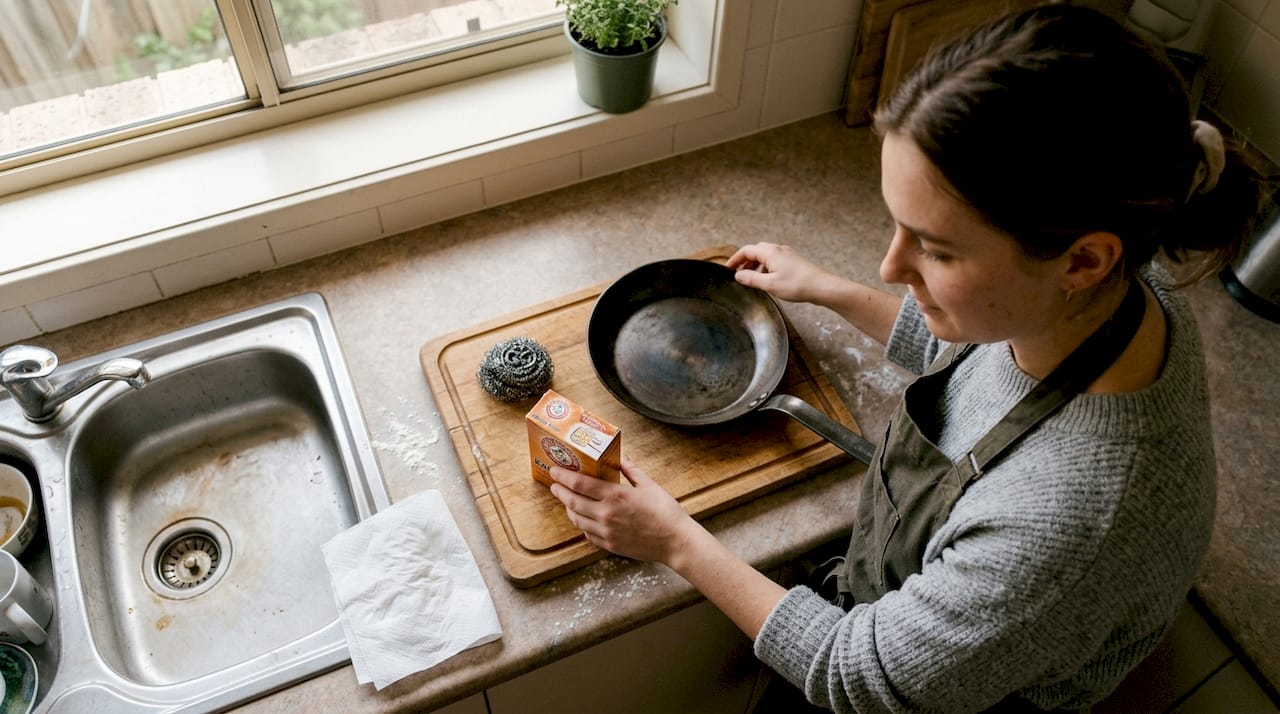
Pro Tip: Wear rubber gloves during the scrubbing stage. Steel wool can catch on skin, and keeping your hands dry throughout makes the process cleaner and more controlled.
For more intensive situations, our guide on deep cleaning methods covers additional approaches for pans that need more than a standard rust removal treatment.
Step-by-step: removing rust from your pan
With your tools and workspace ready, follow these precise steps for best results.
- Dry the pan completely. If the pan is wet, pat it dry with paper towels and place it on a low heat on the hob for one to two minutes to evaporate any remaining moisture.
- Scrub the rust. Using steel wool or a stiff pad, scrub the rusted areas firmly. Work in circular motions rather than back and forth to reduce the risk of visible scratches on the surface.
- Apply mild soap and warm water. Once the rust is lifted, wash the pan with a small amount of dish soap and warm water. This is one of the few occasions where soap is appropriate on a carbon steel pan.
- Rinse thoroughly. Remove all soap residue. Any soap left behind can interfere with re-seasoning.
- Dry immediately and completely. Use paper towels first, then place the pan on a medium heat for two to three minutes until all moisture has evaporated. Do not skip this step.
- Apply a very thin coat of oil. Put a small amount of neutral oil on a paper towel and wipe it across the entire surface, inside and out. Then wipe it back off so the pan looks almost dry. Too much oil causes sticky seasoning.
- Re-season in the oven. Preheat your oven to 250°C. Place the pan upside down on the middle rack and bake for 30 minutes. Repeat two to three times for a strong base.
Pro Tip: The circular scrubbing motion is not just aesthetic. Circular scrubbing prevents scratches that can create uneven surfaces where rust is more likely to reappear.
This process closely mirrors cast iron restoration methods using steel wool and oil, which have been trusted by professional kitchens for decades. For a more thorough walkthrough with photographs, visit our detailed rust removal guide.
| Method | Best for | Risk level | Re-seasoning needed? |
|---|---|---|---|
| Dry sponge buffing | Light surface rust | Low | Yes |
| Steel wool scrub | Moderate rust | Medium | Yes |
| Baking soda paste | Stubborn patches | Medium | Yes |
| Vinegar soak | Heavy rust | High | Yes, immediately |
Troubleshooting and common mistakes
Even with the best instructions, some snags and errors are common, but easy to overcome.
The most frequent mistake is using too much oil during re-seasoning. A thick oil coat does not polymerise properly in the oven. Instead, it stays tacky and creates a sticky, uneven surface that attracts more debris. If your pan feels sticky after re-seasoning, scrub it again with steel wool and repeat the oiling process with a much thinner coat.
Other common pitfalls include:
- Over-scrubbing with coarse steel wool, which removes good seasoning along with rust and leaves the surface too raw
- Not drying the pan fully before applying oil, which traps moisture under the new seasoning layer
- Skipping the oven re-season and relying on stovetop oiling alone, which does not build a durable patina
- Storing the pan in a damp cupboard immediately after treatment, undoing your work within days
- Using too high a heat too quickly after re-seasoning, which can cause uneven expansion and minor warping
If rust reappears within a few days of treatment, the issue is almost always storage or insufficient drying. Check where you keep your pan and whether the area is humid.
Cook often to build a durable patina. Thin oil layers and regular use are what create a resilient, rust-resistant surface. A pan used daily in a professional kitchen rarely rusts precisely because it is constantly being heated, oiled, and cooked on.
Building a resilient patina is a gradual process. Cooking fatty foods such as bacon, eggs fried in butter, or sautéed vegetables with oil actively strengthens the seasoning layer. Think of each cooking session as adding another coat of protection. For more on this, read our article on avoiding rust mistakes and our practical notes on carbon steel pan upkeep.
Our perspective: long-term care matters more than quick fixes
Rust removal is a skill worth having, but if you find yourself doing it repeatedly, the real issue is not the rust. It is the routine around the pan.
At Brass & Steel, we see two types of pan owners. The first treats restoration as the solution, scrubbing rust away and moving on. The second treats it as a signal, a prompt to look at how the pan is being stored, dried, and used. The second group almost never deals with rust twice.
Professional chefs rarely talk about rust removal because their pans simply do not rust. Not because they have better pans, but because daily use, consistent drying, and a light wipe of oil after each service have become second nature. The seasoning on a well-used professional pan is dark, almost black, and nearly impervious to moisture.
Home cooks can achieve the same result. It just takes consistency rather than intensity. You do not need to re-season every week. You need to dry properly every time and oil lightly every time. Those two habits, done reliably, make rust a rarity rather than a recurring problem. For a closer look at how professionals approach this, our guide on restaurant care secrets is worth reading.
Explore professional-grade carbon steel solutions
If you are ready to upgrade or further invest in your kitchen, the quality of your pan matters as much as how you care for it.
At Brass & Steel, our carbon steel pans are forged from a single piece of steel with no rivets or welds, which means fewer places for moisture to collect and rust to take hold. The 27 cm sauté pan at €99 and the 30 cm sauté pan at €119 are built for serious cooking, free from PTFE and PFOA, and compatible with every cooktop including induction. Starting with well-made cookware makes every care habit more effective and every cooking session more rewarding.
Frequently asked questions
Is it safe to cook with a carbon steel pan that had rust on it?
Yes, provided all rust is thoroughly removed and the pan is properly re-seasoned before use, it is completely safe. Buffing rust and re-seasoning restores the pan to a food-safe condition.
What is the fastest way to remove light rust from carbon steel?
Buffing with a dry sponge or steel wool, followed by a quick re-season in the oven, is the most efficient method for light rust patches.
How do I prevent rust from returning after cleaning?
Always dry your pan on a medium heat after washing and apply a thin oil layer to the surface before storing. This simple habit removes moisture and seals the metal.
Can vinegar or baking soda damage a carbon steel pan during rust removal?
Both can be used carefully, but they may strip seasoning along with rust. Always rinse thoroughly and re-oil immediately, much like the steel wool and oil approach used for cast iron restoration.
How often should I check my pan for rust?
Inspect your pan after each use and during any deep clean. Regular maintenance prevents rust far more effectively than periodic restoration sessions.
Recommended
- How to Remove Rust from Carbon Steel Pan Effectively – Brass & Steel
- How to Prevent Rust on a Carbon Steel Pan Easily – Brass & Steel
- How to Prevent Rust on Cookware: Step-by-Step for Carbon Steel – Brass & Steel
- How to Clean Burnt Carbon Steel Pan: Restore Its Shine – Brass & Steel
- Penetrating Oil & Rust Remover Spray 500 ml – Convoy Vibe