How to re-season a carbon steel wok: full guide
TL;DR:
- Re-seasoning a carbon steel wok involves stripping damaged oil layers and building a durable non-stick surface through multiple thin oil coats heated to polymerisation temperature. It is necessary only when rust, bare patches, stickiness, or food sticking indicate seasoning damage, and regular use gradually builds seasoning without requiring frequent re-seasoning. Proper preparation, including choosing high smoke point oils and following specific steps, ensures effective re-seasoning and long-term wok maintenance.
Re-seasoning a carbon steel wok is the process of stripping damaged or degraded oil layers and rebuilding a smooth, resilient, non-stick surface through carefully applied thin oil coats heated to polymerisation temperature. In culinary circles, this restoration is sometimes called “wok conditioning” or “patina rebuilding,” but the principle is the same: you are bonding fresh oil molecules to bare metal. Knowing how to re-season a carbon steel wok properly means your pan never becomes a write-off. With steel wool, a high-smoke-point oil such as grapeseed or canola, and a reliable heat source, you can bring even a rusty, neglected wok back to peak performance in a single afternoon.
How to re-season a carbon steel wok: when is it actually necessary?
Re-seasoning is necessary only when visible rust, large bare patches, sticky residue, or aggressive food sticking appear, signalling that the seasoning is damaged beyond what routine oiling can fix. A fully stripped and re-seasoned wok typically regains peak performance within two to three weeks of regular use. That timeline matters because it tells you re-seasoning is not an emergency repair. It is a reset, and the wok will improve steadily as you cook with it.
Here are the specific signs that tell you it is time to act:
- Rust spots that do not wipe away with a damp cloth
- Large shiny patches of bare metal where the dark patina has flaked off
- A sticky or gummy surface that resists normal hot-water cleaning
- Food sticking aggressively even when you use adequate oil
- Flaky or uneven seasoning that chips into your food
Normal use builds seasoning gradually. Every stir-fry, every sear, every oiled wipe-down adds a microscopic layer of polymerised oil to the surface. Damage, on the other hand, tends to happen suddenly: a long soak in the sink, a run through the dishwasher, or cooking a very acidic tomato sauce that strips the patina. Understanding the difference between normal wear and actual damage stops you from re-seasoning unnecessarily.
Pro Tip: If you spot a small rust patch early, you do not always need a full re-season. A baking soda paste and a firm scrub can remove minor rust without stripping the surrounding patina.
What tools and oils do you need before you start?
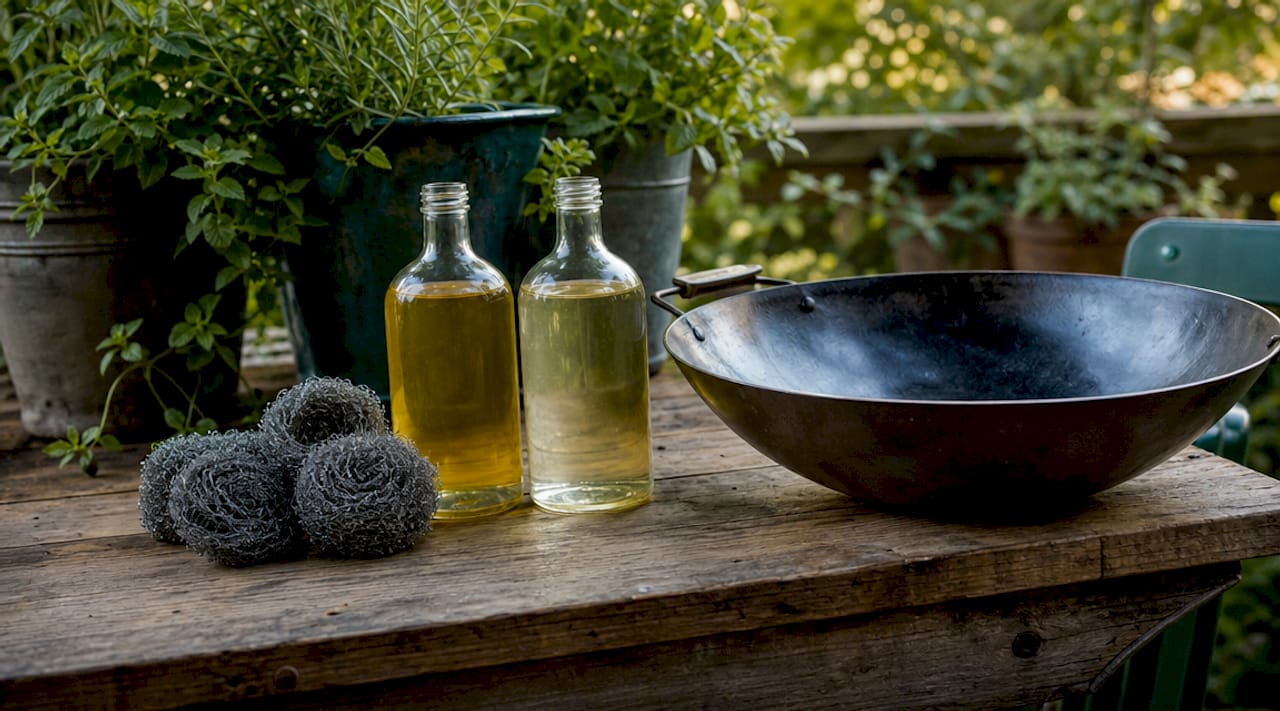
Getting your materials ready before you begin saves time and prevents mistakes mid-process. The table below covers everything you need.
| Item | Purpose |
|---|---|
| Steel wool or coarse scourer | Strips old, damaged seasoning back to bare metal |
| Mild washing-up liquid | Helps lift oil residue during the stripping stage |
| Grapeseed, canola, or avocado oil | High smoke points allow proper polymerisation |
| Paper towels or lint-free cloths | Apply and wipe oil in ultra-thin layers |
| Tongs | Hold paper towels safely when the wok is hot |
| Oven or gas/electric hob | Provides the sustained heat needed to bond oil to metal |
Grapeseed, canola, and sunflower oils are the preferred choices for seasoning because their high smoke points allow the oil to polymerise rather than simply burn off. Avocado oil works well too, and traditional lard or shortening remains a popular option for those who prefer animal fats. Avoid olive oil and butter. Their low smoke points mean they carbonise unevenly, leaving a patchy, bitter-smelling residue instead of a clean polymer bond.
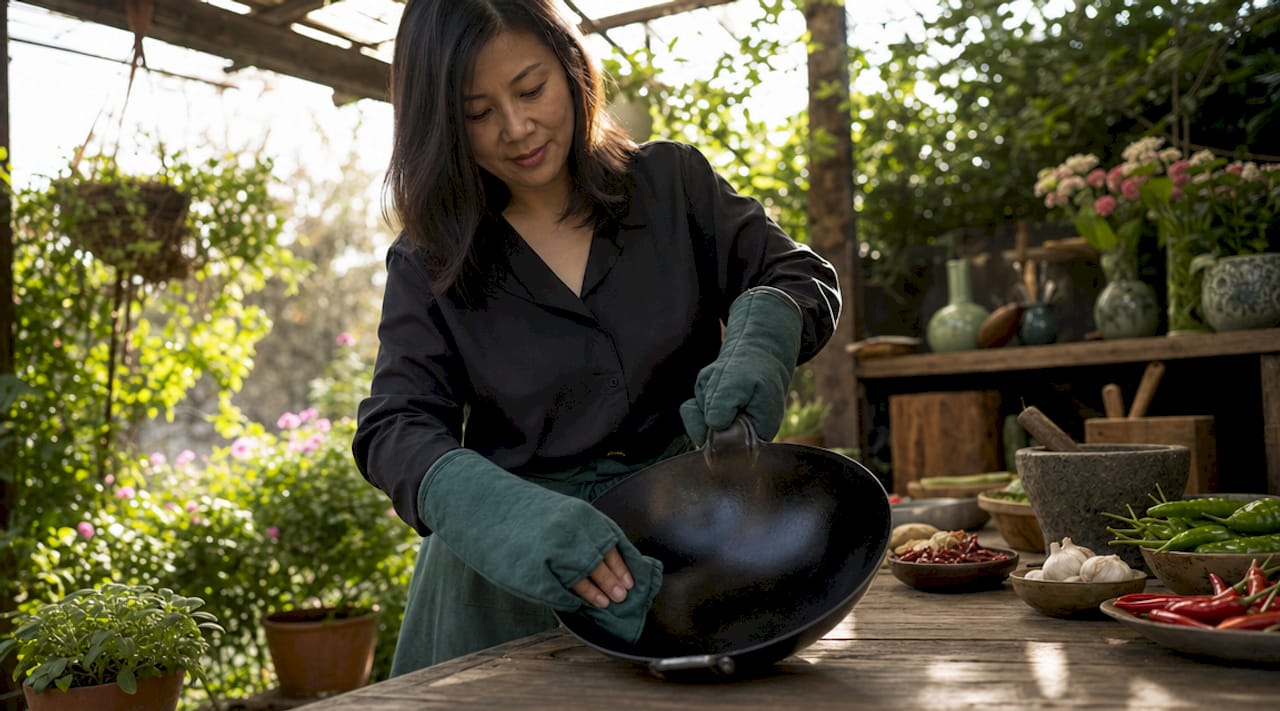
A few safety points worth noting: always handle a hot wok with a folded cloth or oven gloves, never leave oiled cookware unattended on high heat, and make sure your kitchen is well ventilated. The smoking stage of seasoning produces visible fumes, and a working extractor fan or open window makes the process far more comfortable.
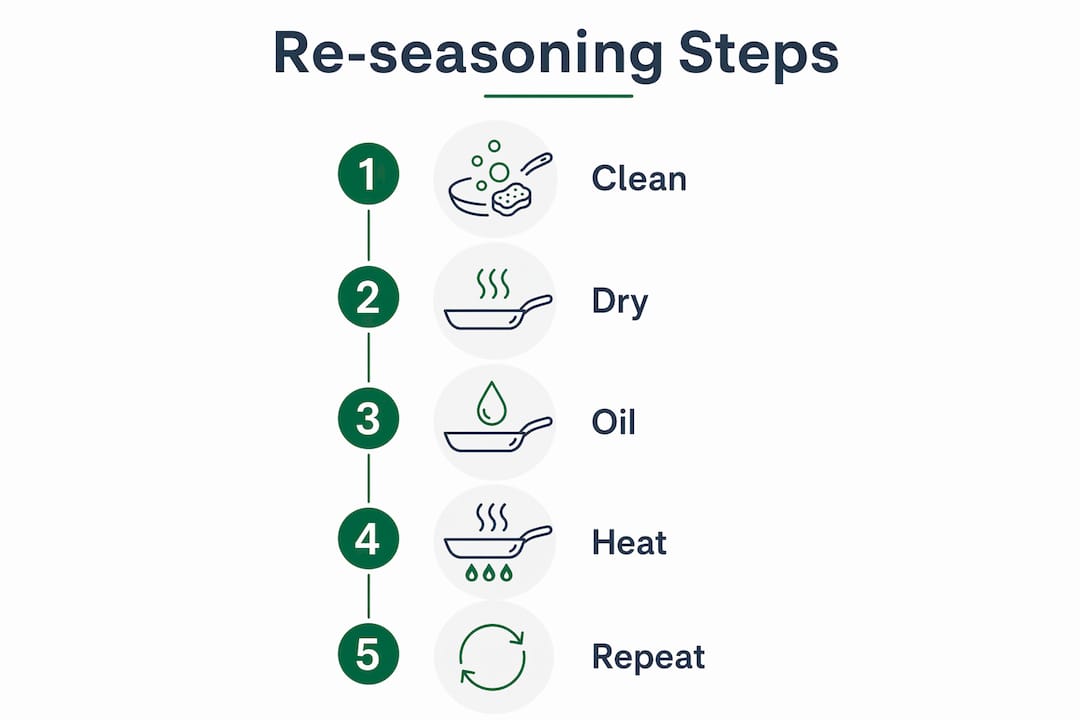
Step-by-step guide to re-seasoning your wok
Follow these steps in order. Skipping stages, particularly the drying step, is the most common reason re-seasoning fails.
-
Strip the old seasoning. Scrub the entire interior surface with steel wool and a small amount of washing-up liquid. Work in circular motions until the surface looks uniformly silver-grey with no dark patches remaining. Rinse thoroughly with hot water.
-
Dry completely on the hob. Place the wok over medium heat for three to five minutes until all visible moisture has evaporated. Any water left on the surface will cause rust within minutes on bare carbon steel, so this step is non-negotiable.
-
Apply the first oil layer. Add a few drops of your chosen oil to the wok, then use a folded paper towel held with tongs to rub it across every surface, including the sides and the exterior base. The layer should look almost dry. If the metal looks wet or shiny with oil, you have used too much.
-
Heat until the oil smokes, then cool slightly. Raise the heat to high and hold it there until the oil begins to smoke and the surface starts to darken. This is polymerisation happening in real time. Remove from heat and allow to cool for two minutes.
-
Repeat the oiling and heating cycle three to five times. Multiple ultra-thin layers heated to smoking point build a durable, even polymer coating. Each cycle deepens the colour from grey to golden-brown to a deep, even black sheen. That dark sheen is your visual confirmation that the seasoning has bonded correctly.
-
Allow to cool fully before storing or cooking. Do not rinse the wok after seasoning. Simply let it cool and it is ready to use.
Stovetop versus oven: which method works better?
Stovetop re-seasoning is quicker and gives you direct control over heat intensity, making it ideal for woks with curved bases that sit well over a gas flame. The oven method, which uses around 230°C (450°F) for one hour per cycle, delivers more uniform heat across the entire surface. This makes the oven approach better for flat-base woks or for cooks who find it difficult to rotate a wok evenly over a hob burner. Both methods produce excellent results when you apply oil in thin layers and repeat the cycle enough times.
Pro Tip: After the final heating cycle, cook a handful of sliced spring onions or a small amount of fatty pork in the wok with a little oil. This traditional Chinese technique, called “curing with aromatics,” accelerates the patina build-up and removes any residual metallic taste.
Common problems and how to fix them
Even with the best intentions, re-seasoning does not always go smoothly the first time. Here are the most frequent issues and their fixes.
-
Sticky or gummy surface. This is almost always caused by applying too much oil. Excess oil never polymerises properly and sits on the surface as a tacky layer. The fix is to scrub the sticky area with steel wool, dry the wok, and restart with a far thinner oil application.
-
Uneven seasoning with patchy colour. This comes from inconsistent heat distribution or uneven oil application. Rotate the wok more deliberately over the flame during each heating cycle, and make sure you wipe oil into the sides and rim, not just the base.
-
Rust reappearing after re-seasoning. The wok was not dried completely before the first oil layer went on, or moisture got into the storage environment. Dry the wok on the hob every single time after washing, without exception.
-
Food still sticking after re-seasoning. Three to five seasoning cycles build a foundation, but a truly non-stick surface develops over weeks of regular cooking. Cook fatty foods such as bacon, eggs, or stir-fried vegetables in the first few sessions to accelerate patina development.
Pro Tip: For minor rust spots that appear between full re-seasoning sessions, a paste of bicarbonate of soda and water applied with a cloth and left for five minutes will lift surface rust without stripping the surrounding patina. Follow immediately with a thorough dry and a thin oil coat.
How to maintain your wok so you rarely need to re-season it
The best carbon steel wok maintenance routine is one you can do in under three minutes after every cook. Prevention is far simpler than restoration, and these daily habits will keep your wok in good condition for years.
-
Clean while the wok is still warm. Hot water and a soft brush or non-abrasive sponge remove food residue easily from a warm wok. Cold water on a hot wok can cause warping, so let it cool for a minute or two first, but do not leave it to sit.
-
Never soak the wok or put it in the dishwasher. Soaking and dishwasher use strip seasoning rapidly and invite rust. Even a ten-minute soak can undo weeks of careful patina building.
-
Dry thoroughly on the hob. After rinsing, place the wok over low heat for two to three minutes until completely dry. This single habit eliminates the majority of rust problems.
-
Apply a thin oil coat before storing. While the wok is still slightly warm, wipe the interior with a few drops of oil on a paper towel. This protective layer guards against moisture during storage.
-
Avoid cooking acidic foods regularly. Tomatoes, citrus, and vinegar-based sauces are not ideal for a carbon steel wok, particularly when the seasoning is still young. Occasional use is fine, but follow it with an extra oil wipe-down. If the seasoning looks dull after an acidic cook, a single heating cycle with fresh oil will restore it without a full re-season.
-
Cook fatty foods often. Bacon, minced pork, and oily fish are your wok’s best friends. The fat renders into the surface during cooking and strengthens the patina naturally.
Key takeaways
Re-seasoning a carbon steel wok works because multiple ultra-thin layers of high-smoke-point oil, heated to polymerisation temperature and repeated three to five times, rebuild a durable, non-stick patina on bare metal.
| Point | Details |
|---|---|
| Know when to re-season | Act when you see rust, bare patches, sticky residue, or persistent food sticking. |
| Choose the right oil | Use grapeseed, canola, avocado, or sunflower oil for reliable polymerisation at high heat. |
| Apply oil in thin layers | A near-dry surface before heating prevents gummy build-up and ensures even bonding. |
| Repeat the cycle | Three to five heating cycles build a foundation; regular cooking deepens the patina over weeks. |
| Maintain daily | Wash while warm, dry on the hob, and wipe with oil after every use to avoid frequent re-seasoning. |
Re-seasoning as a ritual, not a repair
I used to treat re-seasoning as a sign that something had gone wrong. A rusty patch or a sticky surface felt like a failure. After years of cooking on carbon steel, I see it completely differently now.
Seasoning is inherently imperfect and evolving. Every stove has different hot spots. Every cook uses different oils and techniques. The patina that builds on your wok is specific to how you cook, and that is precisely what makes it interesting. My wok looks nothing like it did two years ago, and it performs far better.
What I have found is that the cooks who re-season most often are usually the ones who skip the daily maintenance steps. A three-minute routine after each cook, washing while warm, drying on the hob, and a thin oil wipe, genuinely reduces the need for full restoration to almost never. I have gone over a year between full re-seasons simply by being consistent with those basics.
The other thing worth saying is that re-seasoning, when you do need it, is satisfying. Watching a dull, patchy surface transform into a deep black sheen over five heating cycles is one of those small, tangible pleasures that makes cooking on carbon steel worth it. Treat it as part of the craft, not a chore.
— Davide
Ready to cook on carbon steel that lasts a lifetime?
A well-maintained wok is only as good as the steel it is made from. At Brass-steel, every pan is forged from a single sheet of carbon steel with no rivets or welds, which means there are no joints to trap food or weaken over time. The surface takes seasoning exceptionally well, and with the maintenance habits covered in this guide, it will only improve with age.
If you want a reliable reference to keep alongside your wok, the seasoning checklist on the Brass-steel website walks through every stage from first use to full restoration. And if you are ready to invest in cookware that genuinely rewards proper care, browse the full range of professional carbon steel pans built for serious home cooks.
FAQ
When should I re-season my carbon steel wok?
Re-season when you see visible rust, large bare metal patches, a sticky surface, or food sticking despite adequate oil. Minor dullness after cooking acidic food can usually be fixed with a single oil and heat cycle rather than a full re-season.
What is the best oil for seasoning a wok?
Grapeseed, canola, avocado, and sunflower oils are the best choices because their high smoke points allow the oil to polymerise and bond to the metal rather than burn off. Avoid olive oil and butter, as their low smoke points produce uneven, patchy results.
How many times do I need to repeat the oiling cycle?
Repeat the oiling and heating cycle three to five times to build a durable base coating. The surface should darken progressively from silver-grey to a deep, even black sheen, which confirms the seasoning has bonded correctly.
Can I re-season my wok in the oven instead of on the hob?
Yes. The oven method at around 230°C (450°F) for one hour per cycle delivers more uniform heat, which is particularly useful for flat-base woks. The stovetop method is faster and gives more direct control, making it better suited to curved-base woks over a gas flame.
How do I stop rust coming back after re-seasoning?
Dry the wok thoroughly on the hob after every wash and apply a thin oil coat before storing. Never soak the wok or put it in the dishwasher, as these habits strip seasoning and leave bare metal exposed to moisture.