How to season a steel wok: a step-by-step guide
TL;DR:
- Properly removing the factory coating and thoroughly drying a steel wok are essential first steps to ensure effective seasoning.
- Using high smoke point oils like grapeseed or canola in thin layers, repeated over multiple cycles, develops a durable, nearly non-stick surface.
If you have ever watched food glue itself to a brand-new steel wok, you already know why learning how to season a steel wok is the single most useful thing you can do before you start cooking. An unseasoned wok sticks, rusts, and fights you at every turn. A properly seasoned one turns silky, dark, and nearly non-stick after just a few sessions. This guide walks you through the whole process: the right tools, the correct oils, stovetop and oven methods, and how to keep that seasoning in great shape for years to come.
Table of Contents
- Key takeaways
- What you need before seasoning a steel wok
- How to season a steel wok on a gas stove
- Alternative methods: oven and electric stove
- Avoiding mistakes and keeping your wok seasoned
- My honest take on seasoning a wok
- Get cooking with the right carbon steel
- FAQ
Key takeaways
| Point | Details |
|---|---|
| Remove factory coating first | Scrub with hot soapy water until the water runs clear before any seasoning begins. |
| Use high smoke point oils | Grapeseed, canola, peanut, or vegetable oil work best; avoid olive oil completely. |
| Thin layers are everything | Wipe off excess oil until the surface looks almost dry before applying heat. |
| Repeat cycles build patina | Three to five seasoning rounds produce a durable, dark nonstick surface. |
| Daily care locks it in | Rinse with water, dry immediately, and apply a light oil coat after each use. |
What you need before seasoning a steel wok
Getting your tools and materials together before you start makes the whole process much smoother. Here is what you will need.
Tools checklist:
- Abrasive sponge or steel wool (for removing the factory coating)
- Paper towels and tongs (to apply oil safely while the wok is hot)
- Washing-up liquid (for the one-time initial clean only)
- Range hood or open windows for ventilation
Pro Tip: Seasoning generates smoke and a metallic smell during the high heat phases. Open a window and switch on your extractor fan before you start. This is normal and not a sign that anything is wrong.
The oil you choose matters more than most people realise. You want something with a high smoke point because you will be heating the wok well beyond what most cooking oils can handle. Here is a quick comparison:
| Oil | Smoke point | Notes |
|---|---|---|
| Peanut oil | ~230°C (446°F) | Classic choice for wok seasoning |
| Grapeseed oil | ~216°C (421°F) | Neutral flavour, widely available |
| Canola oil | ~204°C (399°F) | Budget-friendly, works well |
| Vegetable oil | ~200°C (392°F) | Easy to source, effective |
| Olive oil | ~160°C (320°F) | Too low. Do not use for seasoning |
Neutral, high smoke point oils like peanut, grapeseed, and canola are your best options. Flaxseed oil sometimes gets recommended online, but it can become sticky and brittle if you apply too much, so keep things simple and stick to the list above. For a deeper look at how these oils behave at high temperatures, the seasoning oil guide on the Brass-steel blog covers the chemistry in plain language.
How to season a steel wok on a gas stove
This is the traditional method and the most effective one for carbon steel. Gas gives you fast, direct heat that covers the curved surface of a wok properly. Follow these steps carefully.
-
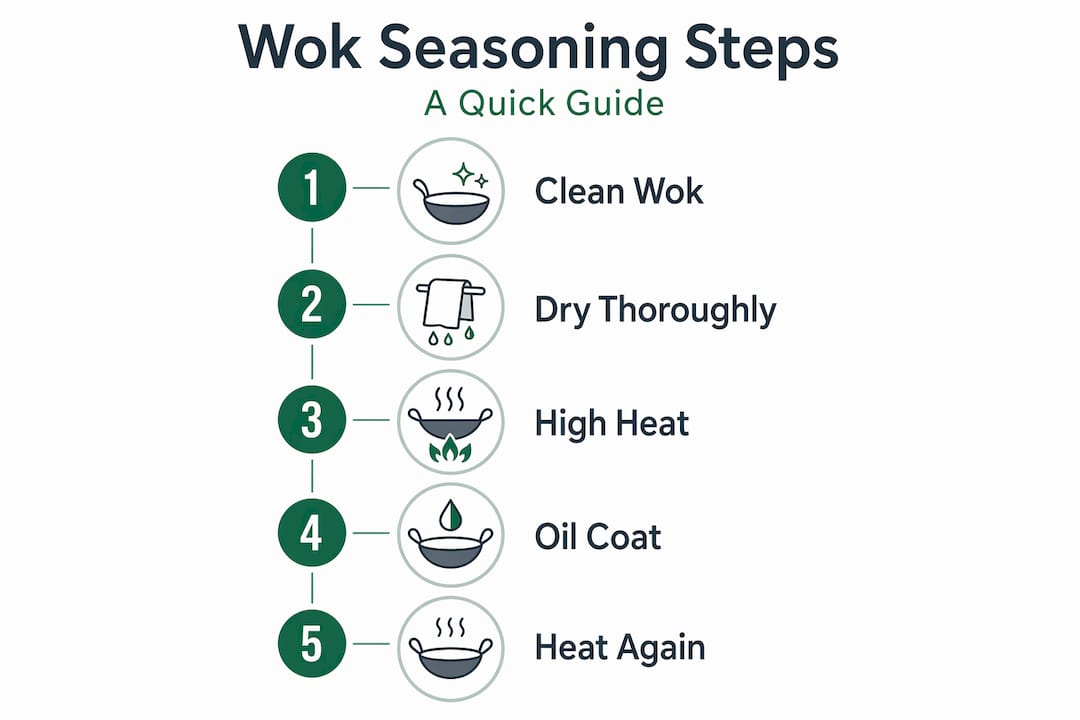
Remove the factory coating. Scrub inside and out with hot soapy water using an abrasive sponge or steel wool until the water runs completely clear and the metal feels clean. This protective coating prevents rust during shipping but will block oil from bonding to the metal if you leave it on. Dry the wok straight away and place it on low heat for about one minute to drive off any remaining moisture.
-
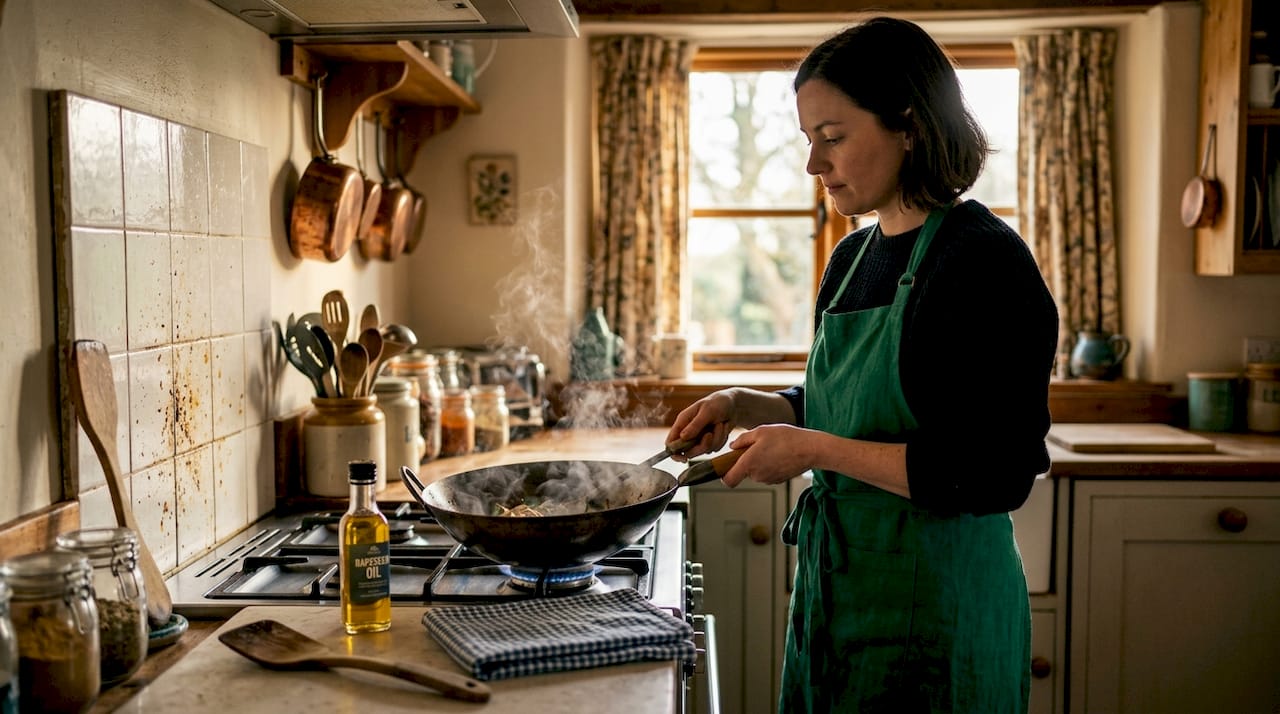
Heat the wok until it changes colour. Put the empty wok over a high gas flame. Rotating the wok during this phase helps the heat spread evenly. Over five to fifteen minutes, the steel will shift from silver to golden, then to steel blue, bronze, and finally black in places. This is called “blueing” and it opens the pores of the metal so oil can bond to the surface properly. Do not skip this step.
-
Apply a thin layer of oil. Take the wok off the heat for thirty seconds. Dip a folded paper towel into your chosen oil, grip it with tongs, and wipe a thin coat across the entire inner surface. Then keep wiping until the surface looks almost dry. This part matters enormously. Too much oil results in a sticky, uneven surface that is a nightmare to fix later.
-
Heat until the oil smokes and polymerises. Return the wok to a medium-high flame. Watch it carefully. The oil will start to smoke, then it will stop smoking and the surface will darken slightly. That darkening tells you the oil has polymerised and bonded to the metal. This takes roughly ten to fifteen minutes per cycle.
-
Repeat the oil and heat cycle. Let the wok cool for a minute, apply another thin layer of oil, wipe off the excess, and heat again. Three to five cycles build a durable patina that darkens the wok visibly with each round. Each layer adds to the one before it.
-
Cool and do your first cook. After the final cycle, let the wok cool completely. Fry something with a bit of fat in it, such as sliced spring onions, bacon, or simply some oil and aromatics. This reinforces the new seasoning and gets the surface ready for regular cooking.
Pro Tip: Do not walk away during the blueing phase. The colour changes happen quickly once the metal gets hot enough, and you want to rotate the wok so every part of the surface changes colour, including the sides and the base.
Alternative methods: oven and electric stove
Not everyone has a gas cooker, and that is completely fine. Both the oven method and electric or induction stovetop seasoning work well with a few adjustments.
Oven seasoning
Bake a thinly oiled wok upside down at 230 to 260°C for one hour, then let it cool inside the oven with the door closed. Place a sheet of foil on the rack below to catch any drips. Repeat two to three times for the best result. For a detailed walkthrough of temperatures and timing, the oven seasoning guide on Brass-steel covers each step clearly.
Benefits of oven seasoning:
- Even heat distribution around the entire wok surface
- Hands-off process once the wok is in the oven
- Less smoke in your kitchen compared to high-heat stovetop seasoning
- Excellent option for electric and induction cooker users
Pro Tip: Oven seasoning tends not to produce the dramatic blueing you get on gas, but the oil polymerisation still happens and the patina still builds. Do not judge results by colour alone. Run your finger along the surface after cooling. It should feel smooth, not tacky.
Electric and induction stoves
The stovetop method adapts to electric and induction hobs, but the process is slower. Work in sections, tilting the wok over the burner to heat the sides gradually. Induction in particular heats only the flat base directly, so you need patience to work the heat up the curved walls. Use medium to high heat settings rather than maximum to avoid uneven hotspots that can warp the metal.
Here is a quick comparison of the two main methods:
| Method | Pros | Cons |
|---|---|---|
| Gas stovetop | Fast, produces full blueing, traditional | Requires good ventilation, manual attention |
| Oven | Even coating, hands-off, less smoke | No blueing effect, slower, two to three hours total |
| Electric/induction | Accessible for most kitchens | Slower, requires sectional heating technique |
Avoiding mistakes and keeping your wok seasoned
Most seasoning problems come down to two things: a coating that was not fully removed at the start, or too much oil applied during the process. Skipping the removal of factory coating leads directly to blotchy, uneven patina that takes ages to fix.
Common mistakes to avoid:
- Using too much oil (the surface will feel sticky and look shiny rather than dark and smooth)
- Not drying the wok completely before heating (moisture causes rust patches instantly)
- Using soap after the initial clean (it strips the patina you have just built)
- Soaking the wok in water at any point
Fixing problems without starting over. If you have a sticky patch or a spot where the seasoning has worn off, you do not need to strip and redo everything. Targeted reseasoning works well for localised issues. Scrub the problem area with a non-soapy scrubber, apply a thin oil wipe to just that section, and heat until it smokes and darkens.
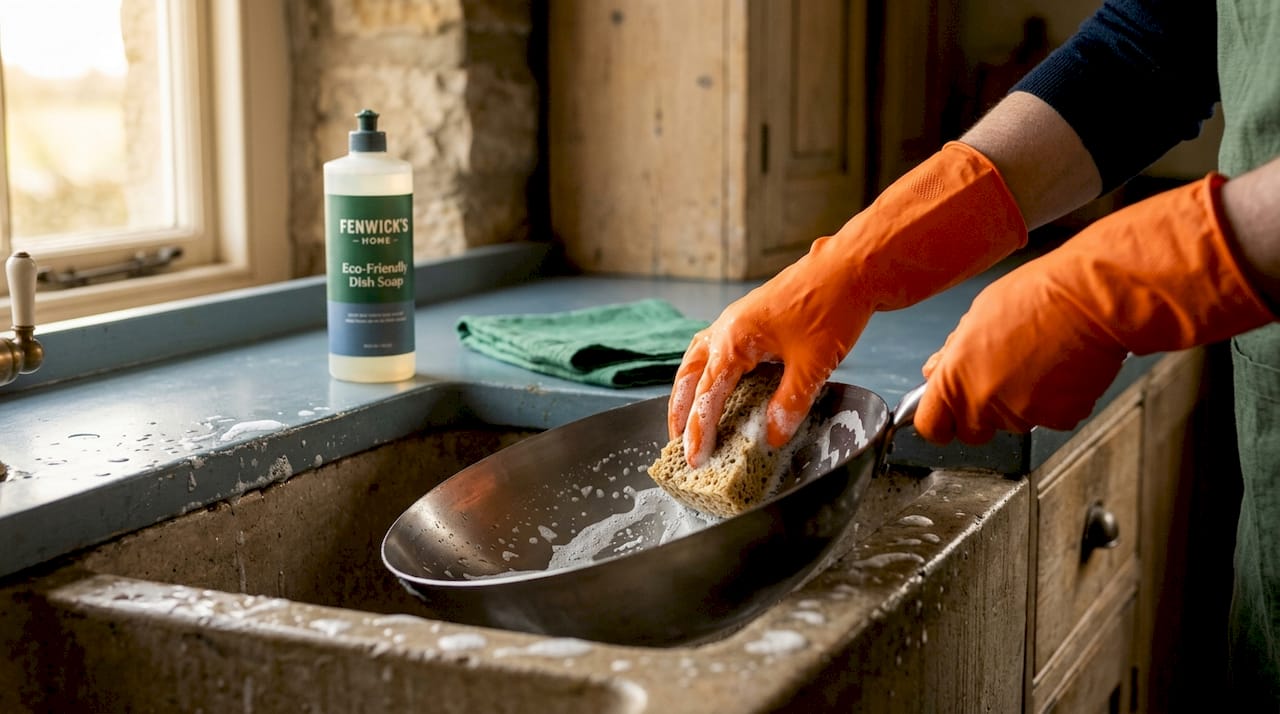
Cleaning a steel wok after cooking. Rinse with hot water while the wok is still warm. Use a soft brush or a non-abrasive sponge if there is stuck food. Never use soap once seasoning has started. Dry the wok immediately and place it on low heat for thirty seconds to make sure no moisture remains. Then wipe the inside with a tiny amount of oil on a paper towel before storing. This simple routine is the difference between a wok that ages beautifully and one that rusts between uses.
Cooking fatty foods like stir-fried pork, eggs, or fried rice regularly is the single best thing you can do to strengthen your wok’s seasoning. Each cook adds a micro-layer to the patina, which is why a well-used wok outperforms a barely-used one every time.
Pro Tip: If rust spots appear, do not panic. A quick scrub with steel wool followed by a full reseasoning cycle restores the surface completely. The rust removal guide on Brass-steel walks you through it step by step.
My honest take on seasoning a wok
I have watched a lot of home cooks rush past the first two steps of new steel wok seasoning, and it almost always comes back to bite them. The factory coating removal and the thorough drying are not glamorous, but they are where most failures actually begin. If the surface is not properly cleaned and dried, the oil has nothing clean to bond to.
The other thing I see constantly is people applying too much oil because they think “more is better.” With seasoning, it is completely the opposite. I have re-seasoned my own wok after making exactly this mistake: I ended up with a gummy, orange-peel texture that took three stripping sessions to fix. A surface that looks almost dry before heating is what you are actually aiming for.
What I find genuinely encouraging is how quickly a well-cared-for wok transforms. After just a few proper seasoning cycles and a couple of real cooking sessions, you will see the surface darken and smooth out in a way that makes a nonstick pan look ordinary. The patina that builds over months of regular use is something no factory coating can replicate. Stick with it through the first few cooks, cook fatty things often, and the wok will do the rest of the work itself.
— Davide
Get cooking with the right carbon steel
If this guide has got you thinking seriously about upgrading your cookware, Brass-steel makes carbon steel pans forged from a single piece of steel with no rivets or welds anywhere. They build the same kind of natural nonstick patina described in this guide and work on every cooker, including induction.
The carbon steel pans at Brass-steel come in 27 cm and 30 cm sizes, both free from PTFE, PFOA, and any synthetic coatings. Once seasoned using the steps above, they go from stovetop to oven without complaint. Browse the full range and find the size that suits your kitchen best.
FAQ
Can I use olive oil to season a steel wok?
No. Olive oil has too low a smoke point and will burn unevenly before it can polymerise properly. Use grapeseed, canola, peanut, or vegetable oil instead.
How many times do I need to season a new steel wok?
Three to five seasoning cycles build a solid base patina. Each cycle involves a thin oil coat, wiping off excess, and heating until the oil stops smoking.
Why is my wok sticky after seasoning?
A sticky surface means too much oil was applied before heating. Scrub the affected area with a non-soapy abrasive, then redo that section with a much thinner oil layer.
Do I need to season a steel wok after every use?
Not a full seasoning session. After each cook, rinse with hot water, dry thoroughly on low heat, and wipe with a very light coat of oil before storing. That is enough to maintain the patina.
Can I season a steel wok in the oven instead of on the hob?
Yes. Bake the thinly oiled wok upside down at 230 to 260°C for one hour, then cool inside the oven. Repeat two to three times. This method suits electric and induction kitchens particularly well.