How to Season Carbon Steel Wok for a Lasting Nonstick Finish
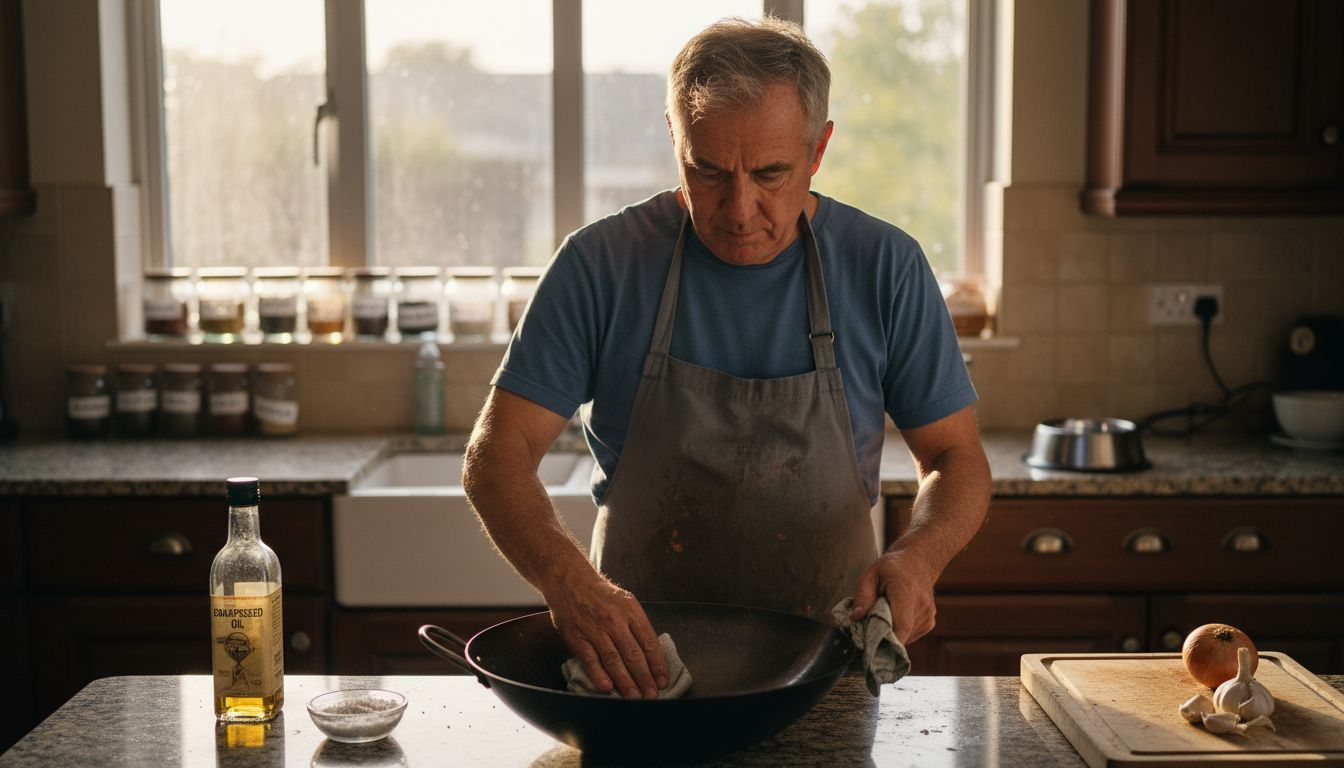
Every new carbon steel wok promises delicious results, but skipping those early cleaning and drying steps leaves factory oils and hidden moisture that ruin your seasoning efforts. For home cooks across Europe who value fresh, healthy cooking, mastering the art of wok seasoning unlocks crisp vegetables and flavourful stir-fries. Discover step-by-step methods to create a durable, nonstick patina and care routine that empowers confident, versatile cooking every night.
Table of Contents
- Step 1: Clean And Dry The New Wok Thoroughly
- Step 2: Preheat And Bake To Ensure Complete Dryness
- Step 3: Apply And Buff A Thin High-Smoke-Point Oil Layer
- Step 4: Bake Repeatedly To Build A Durable Nonstick Patina
- Step 5: Inspect And Maintain The Seasoned Surface
Quick Summary
| Key Point | Explanation |
|---|---|
| 1. Thoroughly clean the wok before seasoning | Remove all protective oils and residues using warm soapy water to prepare the surface for seasoning. |
| 2. Ensure complete dryness before applying oil | Preheat the wok to 250°C for 10 minutes to eliminate moisture that could prevent oil from bonding properly. |
| 3. Apply a very thin layer of oil | Use high smoke point oils, buff to remove excess, ensuring the surface appears matte for effective seasoning. |
| 4. Repeat oil and bake cycles for durability | Season the wok with multiple thin oil layers, baking each time to build a strong, nonstick patina. |
| 5. Regularly inspect and maintain the surface | Check for dull spots or rust after each use and apply a light coat of oil to maintain seasoning. |
Step 1: Clean and Dry the New Wok Thoroughly
Your new wok arrives with a protective coating of oil and manufacturing residues that need to come off before seasoning begins. This step removes those factory oils and any dust or debris picked up during shipping, exposing the bare metal surface ready for seasoning.
Start by using hot water and a small amount of washing-up liquid to scrub the entire wok. Use a soft cloth or non-abrasive sponge on the cooking surface, working gently but thoroughly across the interior and exterior.
What to clean:
- Interior cooking surface
- Exterior sides and bottom
- The handle and any crevices
- Both sides of the rim
Rinse completely under running water until all soap residue is gone. Pay special attention to washing away manufacturing oils and residues that can interfere with seasoning adhesion.
Once rinsed, dry the wok immediately and completely. Use a clean kitchen towel or cloth to wipe away all moisture, including hard-to-reach areas. Any leftover water will promote rust and prevent proper seasoning.
For extra insurance, place the wok on low heat for 1-2 minutes to evaporate any remaining moisture trapped in the metal. You’ll notice slight steam rising, which confirms the surface is completely dry.
A completely dry wok is essential for seasoning to bond properly to the metal surface.
After cleaning and drying, your wok is now ready for the seasoning process. The bare carbon steel should look matte and uniform, with no visible water spots or oily sheen.
Pro tip: Use a lint-free cloth when drying to avoid leaving fibres behind, which can get baked onto the pan during seasoning.
Step 2: Preheat and Bake to Ensure Complete Dryness
Now that your wok is clean, you need to ensure it’s completely dry before applying oil. Preheating the wok in the oven removes any remaining moisture trapped deep within the metal, which is crucial for proper seasoning.
Set your oven to 250°C (480°F). Place your wok directly on the middle oven rack and let it bake for 10 minutes. This gentle heat helps escape any residual moisture that may have settled into the pores of the carbon steel.
Why this matters:
- Moisture prevents seasoning oil from bonding properly
- Heat evaporates condensate from the cleaning process
- A completely dry surface ensures even seasoning coverage
- This step prevents rust formation during storage
After 10 minutes, carefully remove the wok from the oven using an oven mitt or kitchen towel. The metal will be hot, so handle it with care. You may notice a faint warmth or slight steam rising, which confirms moisture is being driven off.
Allow the wok to cool for just 2-3 minutes until it’s warm but comfortable to touch. You want it still warm when you apply oil, as the heat helps the oil spread more evenly across the surface.
A preheated wok ensures oil adheres properly and creates a stronger seasoning layer.
Once the wok reaches the right temperature, it’s ready for the next stage. Do not let it cool completely, as a cold surface will not accept the oil as effectively.
Pro tip: Keep your oven mitt nearby during preheating so you can remove the wok quickly and safely without fumbling for protection.
Step 3: Apply and Buff a Thin High-Smoke-Point Oil Layer
This is where seasoning truly begins. You’ll apply a very thin layer of oil to the warm wok, then buff it to remove excess. This creates the foundation for your nonstick patina.
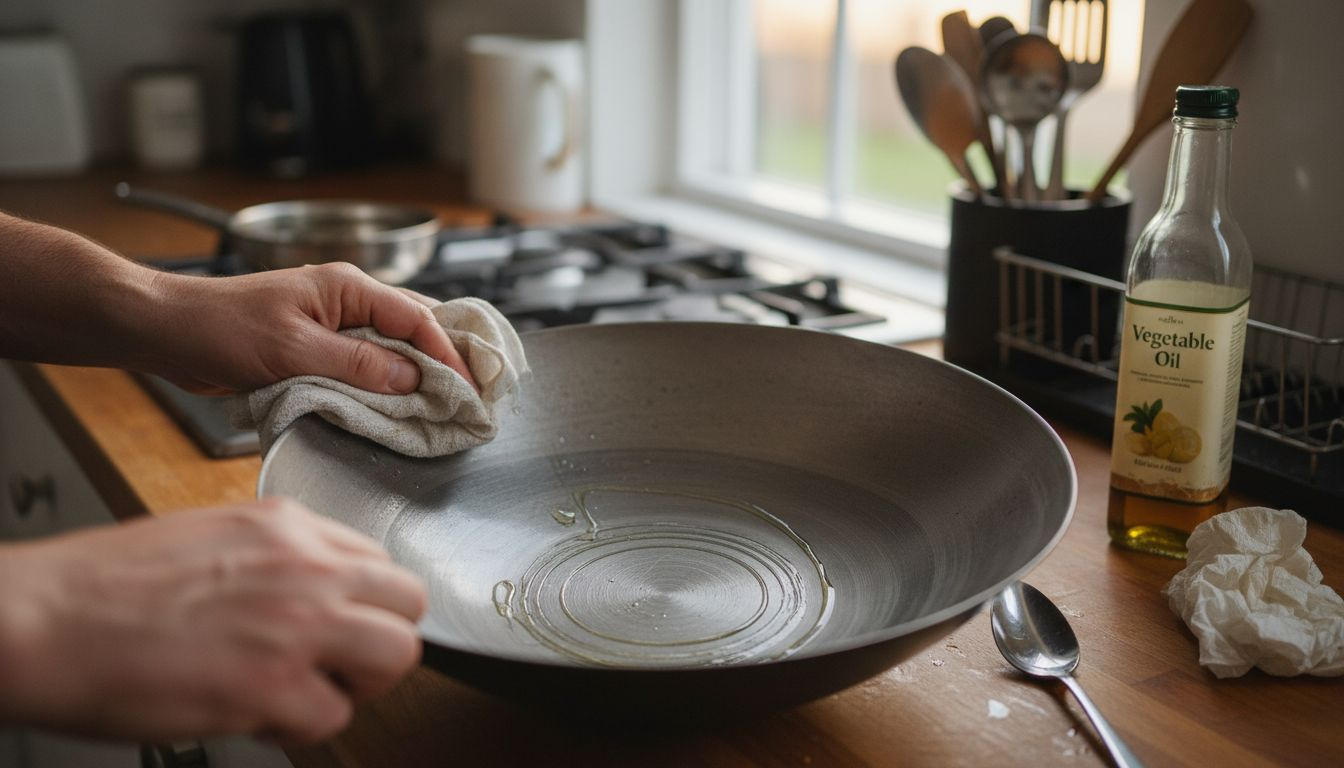
Choose an oil with a high smoke point such as grapeseed, avocado, sunflower, or canola oil. Pour approximately one teaspoon onto a clean cloth or paper towel. Do not pour oil directly onto the wok.
Here is a comparison of high-smoke-point oils ideal for seasoning a wok:
| Oil Type | Smoke Point (°C) | Flavour Impact | Availability in UK |
|---|---|---|---|
| Grapeseed | 215 | Neutral | Widely available |
| Sunflower | 230 | Mild, unnoticeable | Very common |
| Avocado | 270 | Clean, neutral | Readily available |
| Canola (Rapeseed) | 200 | Neutral, light | Common |
Using your cloth, apply the oil in circular motions across the entire cooking surface, working from the centre outwards. Cover the interior walls, the bottom, and even the exterior. The wok should look almost dry when you’re done, not shiny or wet.
Here’s the critical part. Buffing removes excess oil and distributes what remains evenly. Use a fresh cloth or kitchen roll to buff the entire surface with firm, circular motions. Buffing helps form a smooth, protective coating) and removes any pooled oil that would create sticky spots.
What to watch for:
- The wok should look matte, not glossy
- No visible oil drips or pooling anywhere
- The surface feels dry to the touch
- A faint sheen is acceptable, excessive shine is not
Once buffed, your wok is ready for the oven. The thin oil layer acts as a precursor that will polymerise during heating to form a durable nonstick surface.
Buffing excess oil prevents sticky residue and ensures even seasoning coverage across the entire wok.
Many home cooks skip the buffing step and end up with patchy seasoning. Don’t make that mistake. The extra 30 seconds spent buffing creates dramatically better results.
Pro tip: Use white or light-coloured cloths for buffing so you can see how much oil is being removed and ensure you’re not leaving any glossy patches behind.
Step 4: Bake Repeatedly to Build a Durable Nonstick Patina
One layer of seasoning won’t create a lasting nonstick finish. You need to repeat the oil and bake cycle multiple times to build a strong, durable patina. This is where patience pays off.
Return your oiled wok to the oven at 250°C (480°F). Place it upside down on the middle rack so any excess oil drips away and doesn’t pool. Bake for 30 minutes, then remove carefully and allow it to cool completely.
Once cooled, repeat the entire process. Apply a thin layer of oil with a cloth, buff away excess, and bake again at 250°C for 30 minutes. Multiple baking cycles enhance bonding and durability of the patina, creating a strong nonstick finish.
How many times to repeat:
- First seasoning: 2-3 cycles minimum
- Strong seasoning: 5-6 cycles recommended
- Professional finish: 8-10 cycles or more
Each cycle adds another layer. Seasoning involves repeatedly applying and heating thin layers of oil until a durable, polymerised fat coating forms). You’ll notice the wok gradually darkens as the patina builds. This colour change indicates successful polymerisation.
Between each cycle, cool completely before handling. You want the wok at room temperature before applying the next oil layer. This prevents oil from smoking or thinning excessively.
The difference between adequate seasoning and exceptional seasoning is simply repeating the cycles more times.
Many people stop after two or three cycles and wonder why their wok sticks. The magic happens around cycle five or six, when the patina becomes noticeably slick and resistant to sticking.
Pro tip: Season your wok on an evening when you can let it cool overnight, so you can apply another cycle in the morning without waiting around.
Step 5: Inspect and Maintain the Seasoned Surface
Your seasoning is complete, but the work doesn’t stop there. Regular inspection and maintenance keep your wok performing beautifully for years to come. A well-maintained wok gets better with age, not worse.
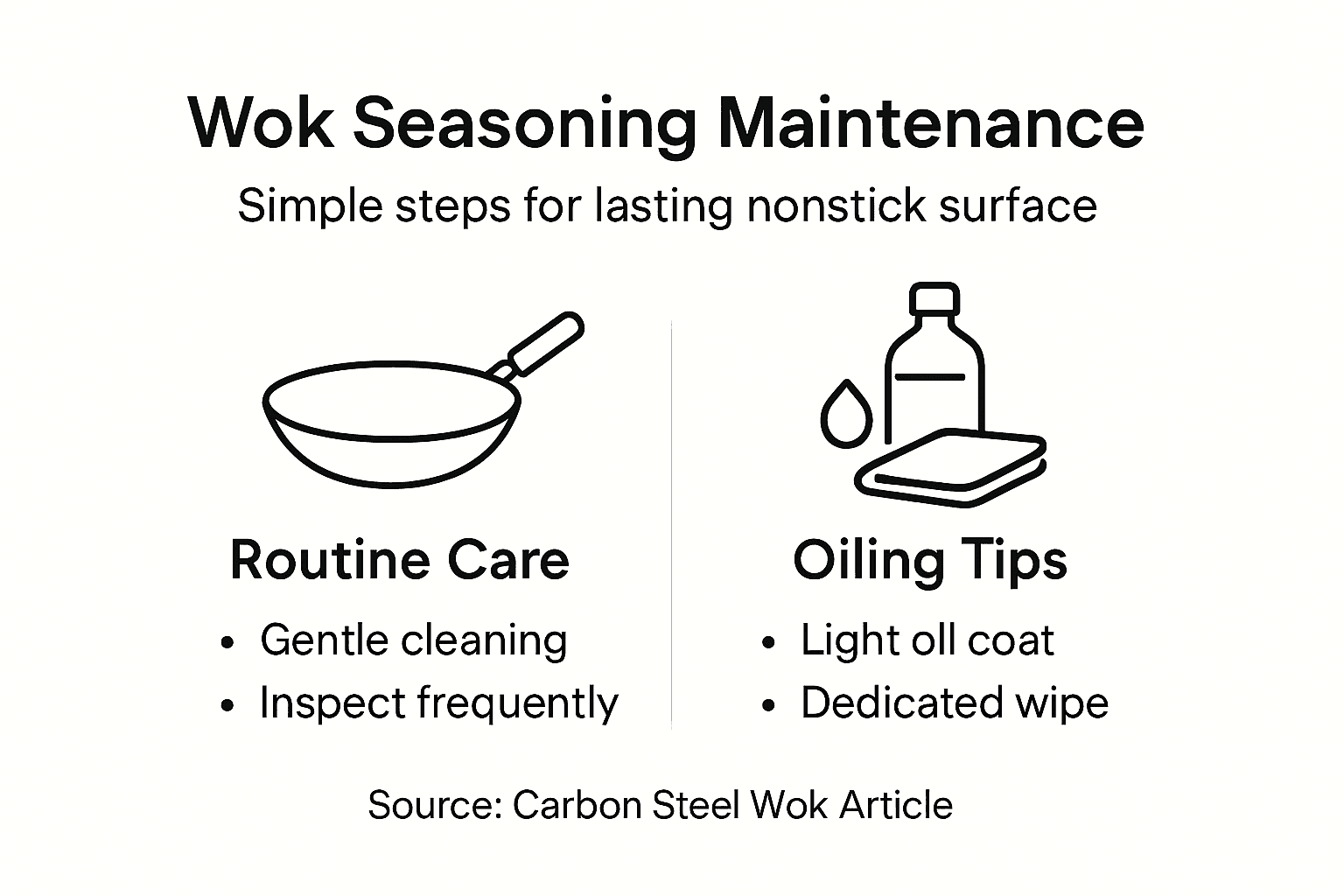
After each use, examine the cooking surface while it’s still warm. Look for any dull spots, sticky patches, or areas where the patina seems compromised. The surface should look uniformly dark and feel smooth when wiped with a dry cloth.
What to look for during inspection:
- Dull or grey areas indicating lost seasoning
- Sticky spots that resist normal wiping
- Rust specks, however small
- Any flaking or peeling patina
- Uneven colour distribution
If you spot problems, act quickly. Maintaining a seasoned cookware surface involves gentle cleaning and periodic reapplication of thin oil layers to preserve the nonstick patina) and prevent deterioration.
Below is a summary of common wok seasoning problems and their solutions:
| Issue Observed | Likely Cause | Recommended Solution |
|---|---|---|
| Sticky patches | Excess oil remaining | Buff thoroughly, rebake |
| Rust specks | Inadequate drying | Dry completely, re-season |
| Flaking surface | Over-thick oil layers | Strip old layer, start anew |
| Dull grey areas | Lost seasoning | Reapply oil, bake again |
After cleaning your wok, always apply a very light coat of oil while it’s still warm. This simple habit maintains the seasoning between uses. Wipe away excess so the surface looks dry, not shiny.
Proper maintenance of carbon steel surfaces includes avoiding prolonged exposure to moisture and occasional application of oils to prevent rust. Never soak your wok or leave it wet. Dry it immediately after washing, then oil it.
Once every few months, repeat a full seasoning cycle. Apply a thin oil layer, buff it, and bake at 250°C for 30 minutes. This refreshes worn areas and strengthens the entire patina.
A few minutes of attention after each use prevents hours of repair work later.
Your wok will develop character over time. The patina will deepen, the nonstick properties will improve, and your cooking results will become more consistent.
Pro tip: Keep a dedicated cloth specifically for oiling your wok after cooking so you develop a consistent routine and never forget this crucial maintenance step.
Elevate Your Wok Seasoning Experience with Expertly Crafted Carbon Steel Cookware
Mastering the seasoning process for your carbon steel wok is essential to achieve that lasting nonstick finish and exceptional cooking performance. If you find the steps of cleaning, preheating, oiling, buffing, and baking your wok to be a challenge or want a pan designed to maximise these results, explore the premium options at Brass and Steel. Our Carbon Steel Collection | Brass&Steel features skilfully forged single-piece pans that develop a strong natural nonstick patina with proper seasoning and care.
Start building your heirloom-quality cookware that responds beautifully to seasoning and heat. Visit our main site now to select your next pan and discover detailed care tips to maintain its perfect surface for years. Don’t settle for less when you can season smarter with cookware designed for durability and culinary precision.
Frequently Asked Questions
How do I clean my new carbon steel wok before seasoning it?
To clean your new wok, use hot water and a small amount of washing-up liquid with a soft cloth or non-abrasive sponge. Ensure you scrub all surfaces, rinsing thoroughly to remove any soap and manufacturing residues before drying completely.
What type of oil should I use for seasoning my carbon steel wok?
Choose an oil with a high smoke point, such as grapeseed, avocado, sunflower, or canola oil. Apply a very thin layer of oil to the warm wok, buffing off any excess to ensure even coverage without a glossy finish.
How many cycles of seasoning do I need for a durable nonstick finish?
For a lasting nonstick surface, repeat the seasoning process at least 2-3 cycles, ideally aiming for 5-6 cycles for a strong patina. Each additional cycle adds to the durability, so don’t rush the process for better results.
How can I maintain the seasoned surface of my wok?
Regularly inspect your wok after each use for any dull spots or sticky patches. Apply a light coat of oil while it is still warm to maintain the seasoning and refresh the surface as needed, ideally every few months.
What are the signs that my carbon steel wok needs reseasoning?
Look for dull or grey areas, sticky patches, rust specks, or any flaking on the surface. If any of these issues appear, it’s time to reseason your wok by applying oil and baking it again to restore the nonstick properties.