Season Carbon Steel Wok: 3 Cycles at 250°C for Nonstick
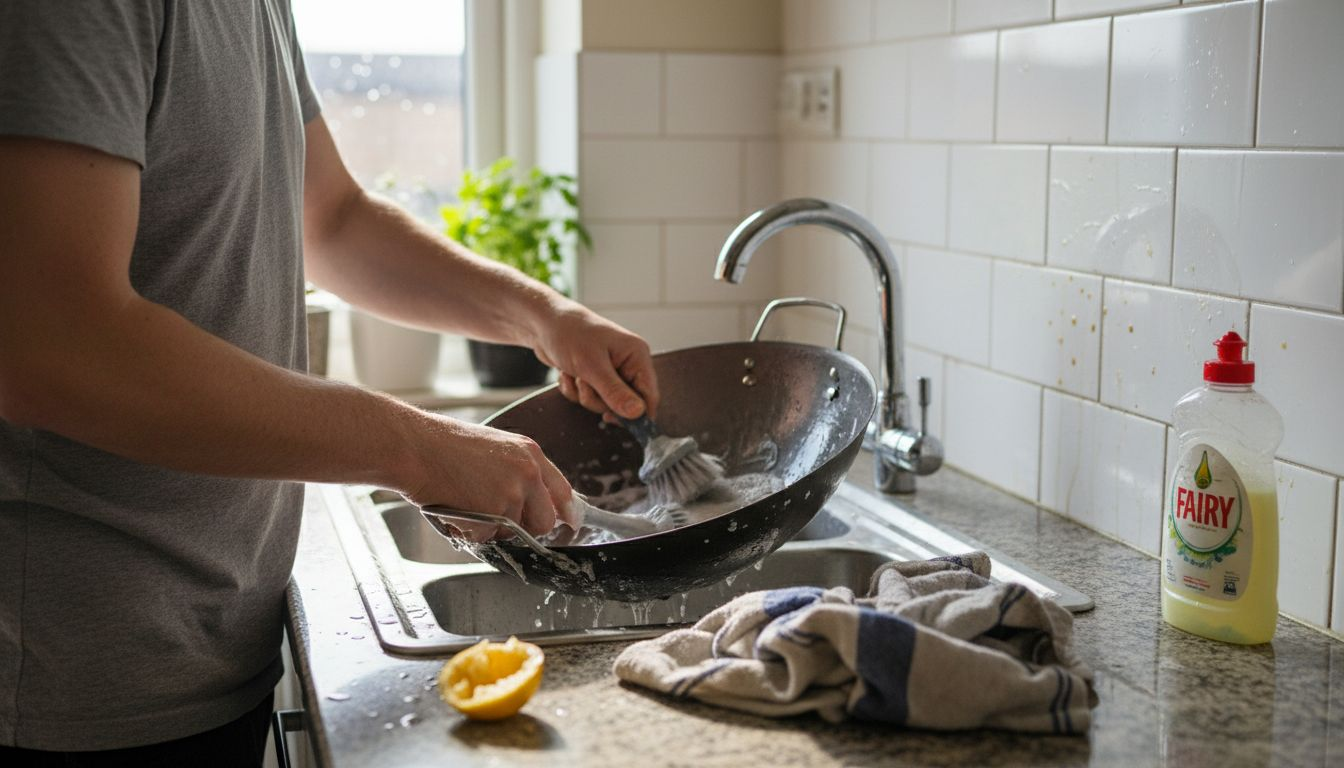
Seasoning a carbon steel wok often feels like a mystery, and poor technique leads to sticky, rusty, or uneven surfaces that ruin your cooking. The truth is multiple seasoning cycles (2–3) are necessary to build a durable, nonstick patina, and sticky or rusty wok surfaces are common problems from seasoning mistakes and are fixable. This guide walks you through a proven, stepwise approach to achieve professional-quality nonstick performance that transforms your wok into a reliable cooking companion.
Table of Contents
- Prerequisites: What You Need Before Seasoning
- Step-by-Step Seasoning Process
- Maintenance and Care for Seasoned Woks
- Troubleshooting Common Seasoning Pitfalls
- Expected Results and How to Know You’re Successful
- Explore Quality Carbon Steel Cookware and Guides
- FAQ
Key Takeaways
| Point | Details |
|---|---|
| Seasoning creates a natural nonstick layer | This polymerised oil coating improves cooking and prevents rust. |
| Use high-smoke-point oils at 250°C | Apply grapeseed, avocado, or sunflower oil thinly and bake through 2-3 cycles. |
| Maintain with proper cleaning and light oiling | Wash with warm water, dry immediately, and oil lightly after each use. |
| Common mistakes include excess oil and inadequate drying | Sticky surfaces result from too much oil; fix by scrubbing and re-seasoning thinly. |
| Success shows as a smooth dark patina | Expect a durable black coating after about 2 hours of seasoning cycles. |
Prerequisites: What You Need Before Seasoning
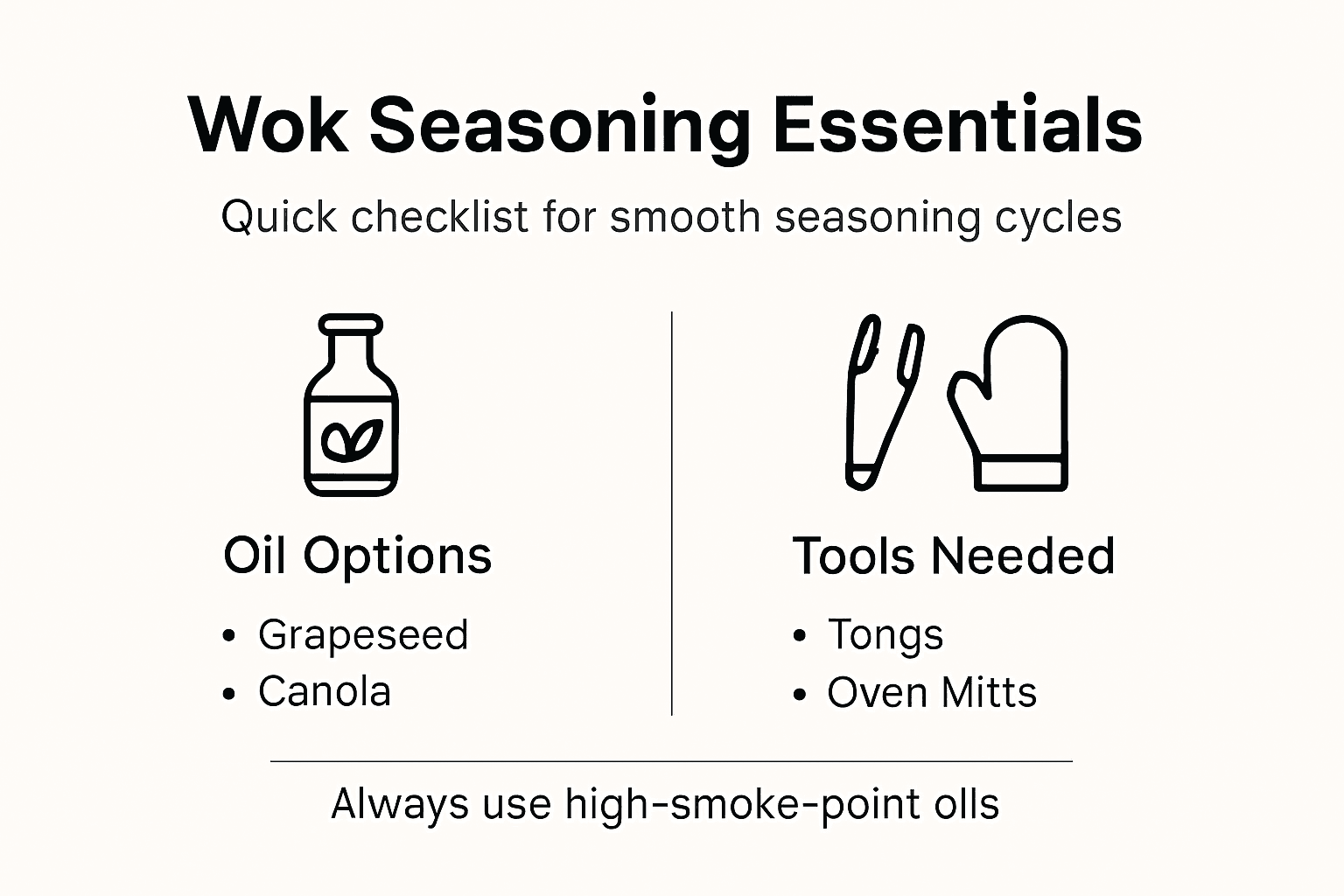
Before you begin, gather the right materials to ensure smooth, effective seasoning. Only high-smoke-point oils like grapeseed, avocado, and sunflower work well for seasoning because they polymerise without breaking down at high heat. Avoid olive oil or butter, which burn and create sticky residue.
New woks are coated with factory oils that must be washed off before seasoning. Scrub your wok thoroughly with warm soapy water to remove this protective coating. Dry it completely with a towel, then place it in a preheated oven for 10 minutes at 250°C to evaporate any remaining moisture.
You will need an oven capable of reaching 250°C (480°F) or a powerful stovetop burner. Have paper towels, tongs, and oven gloves ready for safe handling. The wok becomes extremely hot during seasoning, so good ventilation is essential to clear smoke from polymerising oil.
Pro Tip: Lay aluminium foil on the oven rack below your wok to catch any oil drips and keep your oven clean.
| Prerequisite | Details |
|---|---|
| Oil type | Grapeseed, avocado, sunflower, or canola (high smoke point) |
| Temperature | 250°C (480°F) oven or stovetop |
| Tools | Paper towels, tongs, oven gloves, aluminium foil |
| Safety | Ventilation, careful handling of hot wok |
For a comprehensive walkthrough of the oven seasoning method guide, explore detailed resources that cover every nuance. Understanding best oils for seasoning helps you avoid common pitfalls and achieve restaurant-quality results at home.
Step-by-Step Seasoning Process
With your materials ready, follow this systematic process to build a durable seasoning layer. Each step is critical for transforming raw carbon steel into a naturally nonstick cooking surface.
- Wash your new wok with warm soapy water to remove factory protective oils and any manufacturing residue.
- Dry the wok thoroughly with a towel, then place it in a preheated oven at 250°C for 10 minutes to evaporate all moisture.
- Remove the wok carefully with oven gloves. Apply a very thin layer of high-smoke-point oil using a paper towel.
- Wipe off nearly all the oil until the surface looks almost dry. Excess oil causes sticky, gummy seasoning.
- Place the wok upside down in the oven at 250°C for 30 minutes. Heat the wok to 250°C (480°F) to open metal pores for oil bonding during baking for 30 minutes.
- Let the wok cool slightly, then repeat steps 3-5 at least twice more. Repeat seasoning 2-3 times to build durable nonstick patina.
Apply ultra-thin oil layers and wipe off excess to avoid sticky seasoning. The key is less oil than you think. If the surface feels tacky after baking, you used too much.
Initial seasoning totals about 2 hours including baking and oiling cycles. This time investment pays off with years of superior cooking performance.
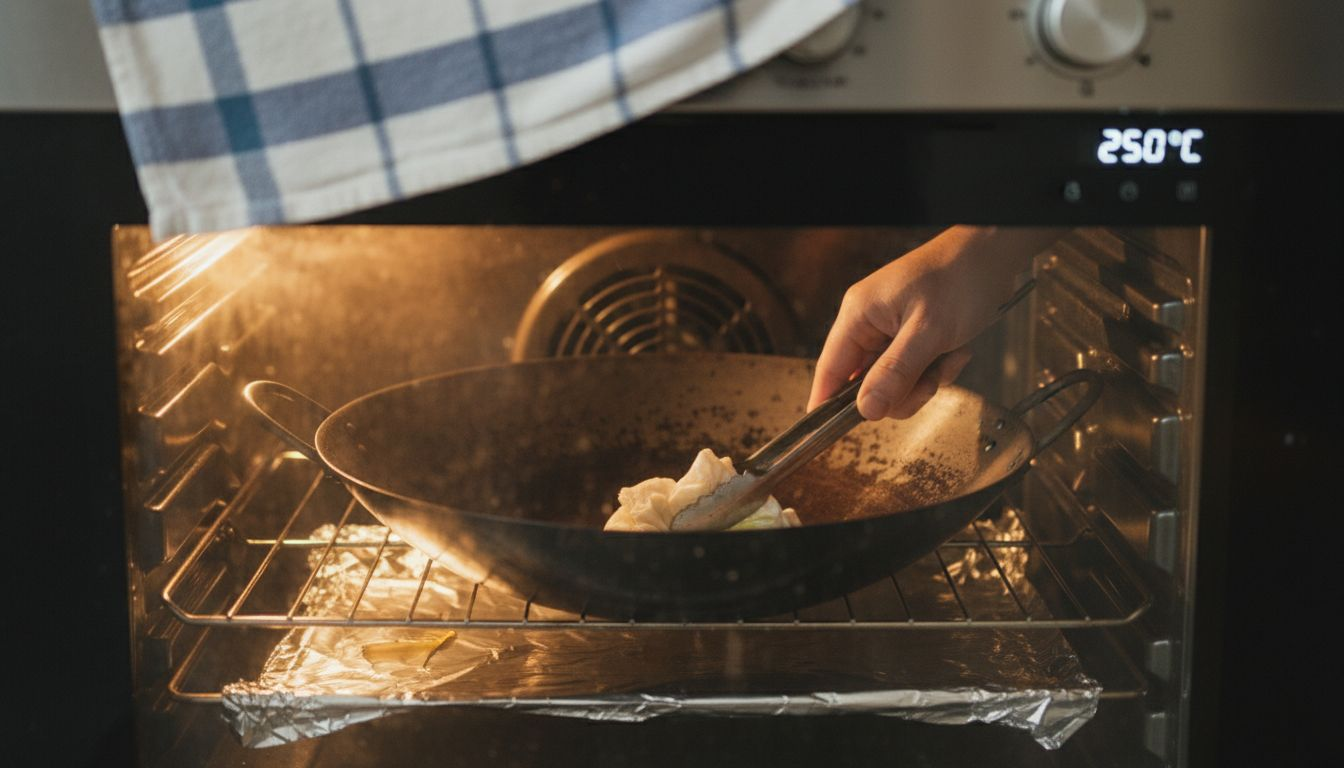
Pro Tip: Use tongs to hold the wok steady when applying oil between cycles to avoid burns and ensure even coverage.
| Step | Duration | Temperature | Key Point |
|---|---|---|---|
| Wash and dry | 5 min | Room temp | Remove factory oils completely |
| Initial drying bake | 10 min | 250°C | Evaporate all moisture |
| Oil application | 2 min | Cool enough to handle | Ultra-thin layer, wipe excess |
| Baking cycle | 30 min | 250°C | Polymerise oil into patina |
| Repeat cycles | 2-3 times | 250°C | Build durable seasoning |
For a detailed visual guide, check out this step-by-step seasoning guide and our ultimate seasoning guide to refine your technique.
Maintenance and Care for Seasoned Woks
Once seasoned, your wok needs simple but consistent care to maintain its nonstick performance. Proper maintenance protects your investment and actually improves the seasoning over time.
Clean your wok with warm water and a soft sponge or brush immediately after cooking. Avoid soap, which can strip seasoning, and never soak the wok, which promotes rust. For stubborn food residue, add water to the warm wok and gently simmer to loosen particles.
Dry the wok immediately and thoroughly after washing. Even a small amount of moisture can cause rust spots. Place the wok on low heat for a minute to ensure complete drying.
Light oiling after each use and cooking fatty foods help strengthen seasoning. Apply a thin layer of oil with a paper towel while the wok is still slightly warm. This reinforces the patina and protects against moisture.
Cook fatty foods like bacon, stir-fried meats, or oily vegetables regularly. The natural fats bond with the seasoning, creating a smoother, more durable surface. Avoid cooking acidic foods like tomatoes or vinegar-based sauces frequently, as they can strip seasoning.
Avoid sudden temperature changes that can warp your wok or crack the seasoning. Let the wok cool gradually and heat it gently at the start of cooking.
Pro Tip: Store your wok in a dry place and place a paper towel inside to absorb any ambient moisture.
- Clean with warm water only, no soap or soaking
- Dry immediately and thoroughly after every wash
- Apply a light oil coat after each use
- Cook fatty foods to naturally build seasoning
- Avoid acidic foods and sudden temperature changes
For more detailed guidance, explore how to season carbon steel wok naturally and follow our seasoning checklist. Comprehensive carbon steel maintenance tips help you avoid common errors and extend your wok’s lifespan.
Troubleshooting Common Seasoning Pitfalls
Even experienced cooks encounter seasoning problems. Recognising and fixing these issues quickly restores your wok to peak performance.
Sticky seasoning results from excess oil; scrubbing and thin oil reapplication corrects it. If your wok feels gummy or tacky, scrub it with coarse salt and a small amount of oil to remove the sticky layer. Rinse, dry, then re-season with an ultra-thin oil coat.
Rust appears when moisture contacts bare metal. If you see rust spots, scrub them away with steel wool or a scouring pad, wash, dry thoroughly, and re-season immediately. Prevention is simple: always dry your wok completely and apply a light oil layer after cleaning.
Warping happens when you expose cold carbon steel to high heat suddenly or plunge a hot wok into cold water. Always heat your wok gradually and let it cool naturally. If warping occurs, you may need to replace the wok, as severe warping affects cooking performance.
Dull or flaky seasoning signals the patina is breaking down. This happens with heavy use of acidic foods or aggressive scrubbing. Strip the old seasoning if necessary by heating the wok and scrubbing thoroughly, then re-season from scratch.
- Sticky surface: too much oil applied during seasoning
- Rust spots: inadequate drying or no protective oil layer
- Warping: thermal shock from rapid temperature changes
- Flaky coating: acidic foods or over-scrubbing
| Problem | Cause | Solution |
|---|---|---|
| Sticky, gummy surface | Excess oil during seasoning | Scrub with salt, re-season with thin oil |
| Rust spots | Moisture contact, no oil protection | Remove rust, dry fully, re-season |
| Warping | Sudden temperature changes | Heat and cool gradually; replace if severe |
| Dull or flaky patina | Acidic foods, aggressive cleaning | Strip and re-season from scratch |
For more help, visit our repair seasoning guide and learn avoiding rust on pans. External resources on how to fix sticky wok surface provide additional troubleshooting techniques.
Expected Results and How to Know You’re Successful
Recognising a well-seasoned wok helps you measure progress and maintain confidence in your technique. A proper seasoning develops a durable, dark patina with smooth nonstick feel after multiple cycles totaling about 2 hours.
Your wok should display a dark black or deep brown patina covering the entire cooking surface evenly. This colour indicates successful oil polymerisation and bonding with the metal. Light brown or blotchy areas suggest incomplete seasoning that benefits from additional cycles.
The texture should feel smooth to the touch, not sticky or rough. When cooking, food releases easily and slides across the surface with minimal oil. Eggs, a classic test, should glide without sticking if the seasoning is strong.
No rust or flaking should appear after regular cleaning and use. A properly maintained wok resists corrosion and the patina remains intact through daily cooking.
Seasoning quality improves naturally with regular use and cooking fatty foods. Each time you cook, you add microscopic layers to the patina. Over weeks and months, your wok becomes increasingly nonstick and develops a beautiful, lustrous finish.
- Dark black or brown patina coating the entire surface
- Smooth texture providing natural nonstick properties
- No rust, flaking, or sticky residue after cleaning
- Food releases easily during cooking
- Continuous improvement with regular use
For insights into why seasoning matters, read about the importance of seasoning. External resources on seasoning success indicators offer visual examples of what to expect.
Explore Quality Carbon Steel Cookware and Guides
Now that you understand how to season and maintain a carbon steel wok, explore premium options designed for serious home cooks. Brass & Steel offers expert guides and high-quality carbon steel woks that respond beautifully to proper seasoning techniques.
Our single-piece forged construction eliminates rivets and welds, creating smooth surfaces that season evenly and clean effortlessly. Each wok is crafted in Poland with precision engineering, combining durability with superior heat performance. Whether you are mastering stir-fries or perfecting seared proteins, the right wok makes all the difference.
Discover detailed resources on how to season carbon steel wok naturally to deepen your understanding. Learn versatile techniques in our carbon steel pan uses guide and explore foundational knowledge in carbon steel pan essentials. These guides support your seasoning journey and help you unlock the full potential of carbon steel cookware.
FAQ
How often should I re-season my carbon steel wok?
Re-season lightly after about every 5 to 10 uses or whenever the surface feels sticky, dull, or food begins sticking. Maintenance with light oiling after each use usually reduces the need for frequent full seasoning. Regular cooking with fatty foods naturally reinforces the patina. For ongoing care, visit season your carbon steel wok.
Can I use olive oil for seasoning my carbon steel wok?
No, olive oil has a low smoke point and is not recommended for seasoning carbon steel cookware. It breaks down at high heat, leaving sticky residue instead of a durable patina. Use grapeseed, avocado, or sunflower oil instead for best results. Check oil recommendations for seasoning for more details.
Is it safe to season a wok in a home oven?
Yes, it is safe if you follow careful steps: use proper ventilation, avoid oil buildup, and monitor oven temperature closely. Open windows or turn on an exhaust fan to clear smoke from polymerising oil. Wear oven mitts and handle the wok carefully to prevent burns. For detailed safety tips, see oven seasoning safely.
How long does the initial seasoning process take?
Initial seasoning takes about 2 hours including repeated baking and oiling cycles. This includes washing, drying, applying thin oil layers, and baking 2 to 3 times at 250°C. Patience during seasoning ensures a strong, durable nonstick coating that lasts for years. Learn more about initial seasoning duration.