Cookware without synthetic coatings: your full guide
TL;DR:
- Many cookware options such as stainless steel, cast iron, carbon steel, and pure ceramic are free of synthetic coatings and offer durable, chemical-free performance. Proper heat control and seasoning techniques help achieve natural nonstick results without relying on artificial layers, making these materials safe and effective for various cooking needs. Choosing the right coating-free cookware depends on your cooking habits, maintenance preferences, and safety priorities, with each material providing unique advantages for different kitchen tasks.
Most people assume nonstick means a pan coated in something synthetic. That assumption is understandable, but it leaves out an entire category of cookware without synthetic coatings that performs brilliantly, lasts for decades, and gives you nothing to worry about chemically. Carbon steel, cast iron, stainless steel, and pure ceramic all cook beautifully without a single artificial layer. If you have been putting off switching because you are not sure what actually works, this guide will clear that up. You will know exactly what each material does, how to look after it, and which one fits the way you cook.
Table of Contents
- Key takeaways
- What cookware without synthetic coatings actually means
- Health and safety: what you actually need to worry about
- How to get natural nonstick results and keep your pans in shape
- Cost, durability, and which material is worth it
- Choosing the right option for how you cook
- My honest take on switching to coating-free cookware
- Brass-steel carbon steel pans: no coatings, serious performance
- FAQ
Key takeaways
| Point | Details |
|---|---|
| Four core materials to know | Stainless steel, cast iron, carbon steel, and pure ceramic are the main coating-free choices available. |
| Heat control matters more than coatings | Proper preheating and seasoning give you natural nonstick results without any synthetic layer. |
| Not all “ceramic” cookware is coating-free | Ceramic-coated pans still have a synthetic layer; only solid ceramic cookware is truly free of coatings. |
| Metal migration drops with use | Stainless steel releases minimal metals after initial seasoning, making it safe for long-term use. |
| Match the material to how you cook | High-heat searing suits carbon steel and cast iron; daily ease suits stainless steel; pure ceramic suits slow, gentle cooking. |
What cookware without synthetic coatings actually means
When people talk about avoiding coatings, they usually mean PTFE (polytetrafluoroethylene, sold as Teflon) and PFAS-related chemistry. The good news is that coating-free choices are well established: pure ceramic, stainless steel, cast iron, and carbon steel. Each one relies on the base material itself rather than a surface layer applied on top.
Here is a quick comparison so you can see the differences at a glance.
| Material | Natural nonstick | Heat tolerance | Weight | Maintenance level |
|---|---|---|---|---|
| Stainless steel | Technique-dependent | Very high | Moderate | Low |
| Cast iron | Yes (seasoned) | Very high | Heavy | Moderate |
| Carbon steel | Yes (seasoned) | Very high | Light to moderate | Moderate |
| Pure ceramic | Moderate | High | Moderate to heavy | Low to moderate |
Stainless steel is tough, non-reactive, and resistant to warping. It does not need seasoning. Food can stick if you skip proper preheating, but once you understand the technique, stainless steel pots and uncoated frying pans in this material become genuinely versatile healthy cooking tools.
Cast iron is the original coating-free workhorse. It builds a natural nonstick patina through seasoning, tolerates very high oven temperatures, and can last for generations with minimal investment. The weight puts some people off, but the heat retention is unmatched for tasks like cornbread or a long braise.
Carbon steel sits between cast iron and stainless steel. It seasons like cast iron but weighs considerably less, heats and cools faster, and responds better to adjustments on the hob. Professional kitchens have used it for sautéing and searing for over a century. It is, arguably, the most practical of the coating-free options for everyday cooking.
Pure ceramic cookware, such as the kind made entirely from natural minerals, is 100% PFAS-free and FDA-approved with no heavy-metal hazards. It offers gentle, even heat distribution and is easy to clean. It is more fragile than metal options and better suited to low and medium heat cooking.
Health and safety: what you actually need to worry about
There is a lot of noise around cookware safety, and most of it is either overblown or misdirected. Here is a clearer picture.
PTFE coatings, under normal cooking conditions, release negligible amounts of chemicals according to the FDA and Germany’s BfR. The real concern arises when a coated pan is overheated above 360°C (680°F), at which point hazardous fumes can form. Most hobs never reach that temperature in normal cooking, but leaving an empty coated pan on high heat for several minutes can get you there quickly.
Ceramic-coated cookware is marketed as a safer alternative, but the nuance matters. Ceramic coatings can decompose when overheated, releasing organic polymers. So “ceramic nonstick” does not mean the same thing as truly coating-free cookware. If ultimate chemical safety is the goal, solid-base materials are the more reliable route.
“The safest approach to avoid synthetic coatings is to choose cookware where no coating is relied on for nonstick performance. That means stainless steel, cast iron, carbon steel, and pure ceramic.”
For metal cookware, the concern often raised is nickel and chromium from stainless steel. A 2020 study on metal migration found that higher release occurs in the first few uses, with a stabilising protective surface forming over time. In practice, you cook off that initial phase quickly, and ongoing leaching becomes minimal.
Pro Tip: Avoid leaving an empty stainless steel or carbon steel pan on maximum heat. Not only does it accelerate wear, but thermal stress can warp lighter pans over time.
The point is not that you must fear your existing cookware. It is that choosing coating-free pans removes the overheating variable entirely. You are working with the material itself, not managing the limits of a coating applied on top.
How to get natural nonstick results and keep your pans in shape
The biggest complaint people have when switching to coating-free cookware is sticking. Almost every case of sticking comes down to skipping steps, not to the material being inadequate. Natural nonstick performance relies on preheating and, for cast iron and carbon steel, seasoning.
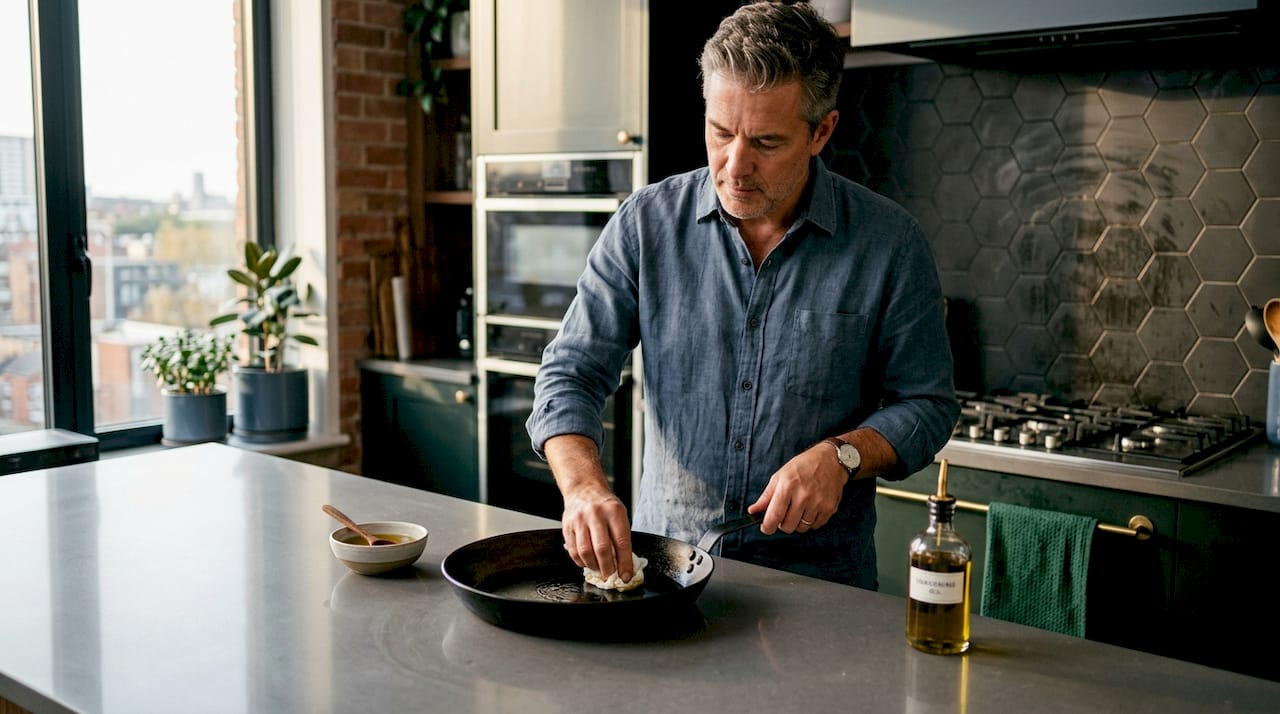
Here is how to season a carbon steel or cast iron pan for the first time:
- Wash the pan with warm, soapy water to remove any protective oil coating from shipping.
- Dry it completely, either with a cloth or briefly in the oven at low heat.
- Preheat your oven to 250°C (480°F) and bake the pan for 10 minutes to make certain all moisture has gone.
- Apply a very thin coat of a high-smoke-point oil, such as grapeseed, avocado, or sunflower oil.
- Wipe off nearly all of it. The pan should look almost dry, not visibly oily.
- Place the pan upside down in the oven and bake for 30 minutes.
- Repeat this process two to three times to build a solid base.
Each cook you do with fatty foods after that strengthens the seasoning further. A well-seasoned carbon steel pan develops a natural nonstick surface over months that rivals synthetic coatings for most tasks.
For stainless steel, the technique is different. No seasoning is needed, but preheating properly is non-negotiable. Let the pan heat until a drop of water skitters across the surface in small beads rather than evaporating immediately. Add your oil then, wait a moment, and add your food. This creates the thermal barrier that stops protein from bonding to the metal.
Pro Tip: For stainless steel pots and pans, use the “mercury ball” test. Drop a few drops of water into your preheated pan. If they bead up and roll around, the pan is ready. If they spread and steam, wait another thirty seconds.
Ongoing maintenance for carbon steel and cast iron comes down to three habits: dry the pan immediately after washing, apply a thin layer of oil after each use, and avoid soaking in water. For stainless steel, you can use a dishwasher occasionally, though hand washing preserves the finish better. For avoiding rust on carbon steel, dryness after washing is the single most important habit to build.
Cost, durability, and which material is worth it
The best cookware options in the coating-free category vary significantly in upfront cost and how long they last.
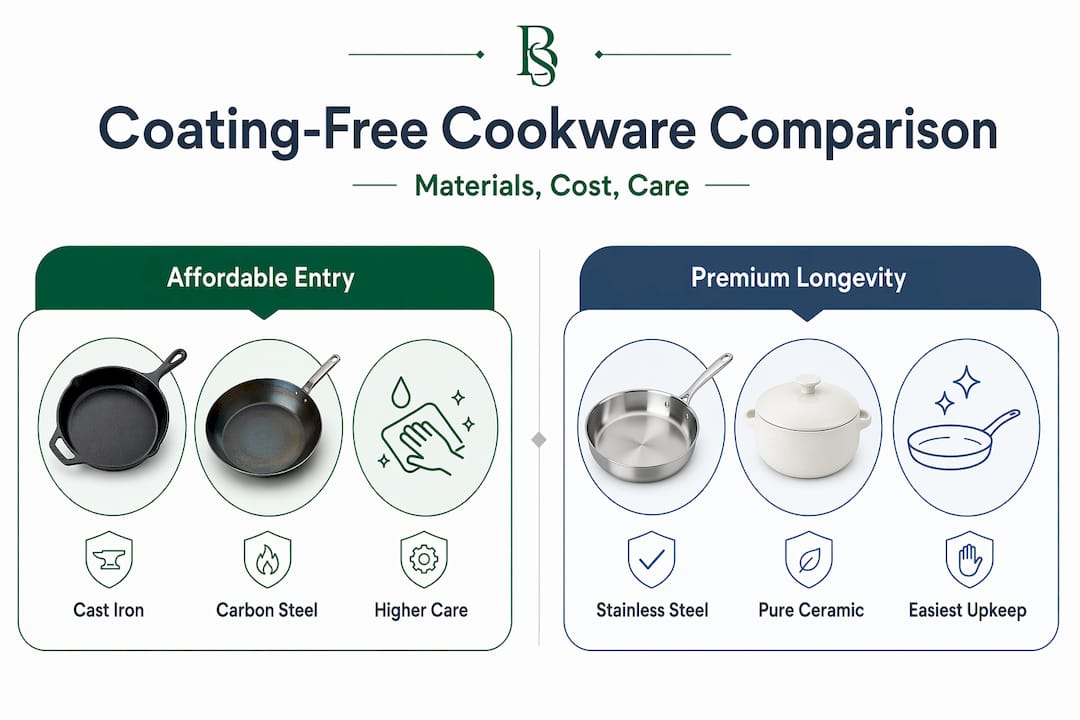
Cast iron is the affordable entry point into non-toxic cookware, with quality pans available for under £30. They genuinely last a lifetime and can be passed down. The trade-off is weight and the time needed to season and maintain them properly.
Stainless steel sits in the mid-to-high range. A quality tri-ply pan will cost more upfront but requires almost no maintenance and performs reliably for twenty or more years. It is a strong choice for people who want capable, low-fuss cookware.
Carbon steel falls between the two on price and punches well above its weight in performance. A well-made carbon steel sauté pan gives you searing capability, oven compatibility, and induction use, all without a coating. The weight is lighter than cast iron, and responsiveness to heat changes is noticeably faster.
Pure ceramic cookware tends to be more expensive than cast iron and requires careful handling to avoid chipping. It is chemically the cleanest option and easy to clean, but more fragile than the metal alternatives.
A few things to weigh up before you decide:
- Cast iron: low cost, very durable, heavy, excellent heat retention, needs seasoning.
- Stainless steel: moderate to high cost, very durable, lightweight, no seasoning, technique-dependent nonstick.
- Carbon steel: moderate cost, very durable, lighter than cast iron, fast heat response, needs seasoning.
- Pure ceramic: higher cost, more fragile, best for low and medium heat, no seasoning required.
Choosing the right option for how you cook
There is no single best material. The right choice depends on your cooking habits, how much time you want to put into maintenance, and what health priorities matter most to you.
If you do a lot of high-heat searing, stir-frying, or want a pan that goes from hob to oven without fuss, carbon steel is worth serious consideration. It is the format most professional kitchens rely on precisely because it handles extreme heat, builds a natural nonstick surface, and is lighter than cast iron.
If you want a set that does everything with minimal care, stainless steel pots for soups, sauces, and boiling combined with a carbon steel pan for searing covers most of what a kitchen needs.
If chemical safety is the absolute priority and you rarely cook above medium heat, pure ceramic is worth the investment. Just keep it away from sudden temperature changes and use wooden or silicone utensils to avoid chipping.
A few practical points for integrating new cookware into your existing kitchen:
- Start with one pan, not a full set. One carbon steel sauté pan or one stainless steel frying pan gives you a feel for the material before committing further.
- Give yourself a two-week adjustment period. Technique-dependent cookware rewards practice.
- Keep your old pans for tasks that genuinely require them, such as eggs in the early stages before a carbon steel pan is fully seasoned.
- If you are unsure whether your current “ceramic” pan is truly coating-free, check the manufacturer’s description carefully. Look for “100% ceramic” rather than “ceramic-coated.”
My honest take on switching to coating-free cookware
I have cooked with all four material types over the years, and the honest truth is that switching felt harder than it actually was. The first week with a carbon steel pan was genuinely frustrating. Things stuck. I used too much oil. I seasoned unevenly the first time. Then something clicked around day ten, the patina started building, and the pan became the one I reached for every single morning.
What most articles get wrong is framing this as a health decision first and a cooking decision second. In my experience, it is both equally. A well-seasoned carbon steel pan sears a piece of fish better than any coated pan I have used. Stainless steel gives you a fond for building sauces that coated pans cannot match. The health benefits are real, but the cooking performance is what keeps you using these pans every day.
The one thing I would tell anyone starting out is to resist buying a full set immediately. Pick one pan, learn it properly, and let the results convince you. Also, do not be put off by the manufacturing details when choosing carbon steel. Construction quality makes a noticeable difference to how evenly the pan heats and how the seasoning develops. A pan forged from a single piece of steel, with no rivets or welded joints, behaves very differently to a cheaper pressed alternative.
— Davide
Brass-steel carbon steel pans: no coatings, serious performance
If carbon steel is where you want to start, Brass-steel makes it straightforward. Every pan in the Brass-steel range is forged from a single sheet of carbon steel in Jarocin, Poland, with no rivets, no welds, and no synthetic coatings of any kind. The 27 cm and 30 cm sauté pans are built to be used hard in professional and home kitchens alike, with 3mm and 4mm thickness options depending on how much heat mass you want. They work on every cooktop including induction, and the natural seasoning you build over time is yours to keep. These are pans designed to get better with every use, not degrade. If you are ready to cook without compromise, Brass-steel is a strong place to begin.
FAQ
What materials count as cookware without synthetic coatings?
The main options are stainless steel, cast iron, carbon steel, and pure ceramic. These rely on the base material itself rather than any applied coating for cooking performance.
Is ceramic nonstick cookware the same as coating-free ceramic?
No. Ceramic-coated pans have a synthetic ceramic layer applied over a metal base, which can degrade with heat. Only solid, all-ceramic cookware is truly coating-free.
Does carbon steel need seasoning to be non-toxic?
Carbon steel is non-toxic whether seasoned or not. Seasoning is about building a natural nonstick surface, not about safety. The material itself contains no synthetic chemicals.
How long does it take to build a natural nonstick surface on carbon steel?
A usable base develops after two to three initial seasoning sessions in the oven. Full nonstick performance usually builds over the first two to four weeks of regular cooking.
Can I use stainless steel pots and pans without anything sticking?
Yes, with correct preheating. Heat the pan until water droplets bead and skitter across the surface, then add oil and food. This technique prevents sticking on stainless steel without any coating.