Carbon steel pan sizes: a complete guide for home cooks
TL;DR:
- Choosing the correct carbon steel pan size is essential for achieving optimal cooking results and controlling heat distribution. Smaller pans respond quickly and are ideal for single servings, while larger sizes accommodate family meals and batch cooking with even heat. Matching pan size to your hob and food volume enhances performance, consistency, and overall culinary quality.
Choosing a pan often comes down to whatever fits on the shelf, but that approach quietly sabotages your cooking more than almost any other kitchen decision. The size of your carbon steel pan dictates how well your steak browns, whether your omelette folds neatly, and if your family-sized stew ever reaches a proper simmer. This guide breaks down exactly how carbon steel pan sizes work, what each diameter does best, and how to match the right pan to your hob, your household, and the food you actually want to cook.
Table of Contents
- Why does pan size matter in the kitchen?
- Standard carbon steel pan sizes and what they do best
- How to choose the right pan size for your cooking
- Carbon steel pans vs other materials: does size selection change?
- Getting the most from each pan: size-related tips and techniques
- The real secret: why pan size is a cook’s quiet advantage
- Discover your ideal carbon steel pan
- Frequently asked questions
Key Takeaways
| Point | Details |
|---|---|
| Pan size impacts results | Choosing the right pan size ensures even cooking and perfect browning every time. |
| Standard sizes suit most needs | European cooks rely on 24cm and 28cm pans for everyday versatility and family meals. |
| Material matters for size | Carbon steel’s lightness and heat properties make it ideal across all sizes from small to large. |
| Smart pan ownership | Owning both a small and a large carbon steel pan covers nearly all home cooking scenarios. |
Why does pan size matter in the kitchen?
Pan size is not simply about fitting more food. It is about controlling the environment inside the pan, and that environment determines the quality of your results. When you crowd too many chicken thighs into a small pan, the moisture they release has nowhere to go. Instead of browning, the meat steams. The surface never caramelises. That is the difference between a pale, soft piece of chicken and one with a deep, golden crust.
The opposite problem is just as real. Drop two eggs into a 32cm pan and the egg white spreads thin and overcooks at the edges before the yolk has had a chance to set. A large pan on a small burner also creates hot spots in the centre and cool zones at the rim, making even sautéing almost impossible.
Here is what goes wrong with mismatched pan sizes:
- Overcrowding traps steam and prevents the Maillard reaction, the process that creates browning and flavour.
- Oversized pans spread heat unevenly across areas where there is no food, causing uneven cooking and wasted energy.
- Wrong depth relative to volume means sauces reduce too quickly in shallow pans or take too long in deep ones.
- Incorrect base diameter on induction hobs can cause the cooktop to switch off or perform poorly.
Understanding cookware materials explained is a useful starting point, but even the finest material cannot rescue a poorly sized pan. Carbon steel is highly versatile and valued by professional chefs for its responsiveness and ability to handle a wide range of pan sizes and tasks, which is precisely why matching size to task matters so much with this material.
“The right pan size is not a preference. It is a technique. Every professional kitchen treats it that way.”
Standard carbon steel pan sizes and what they do best
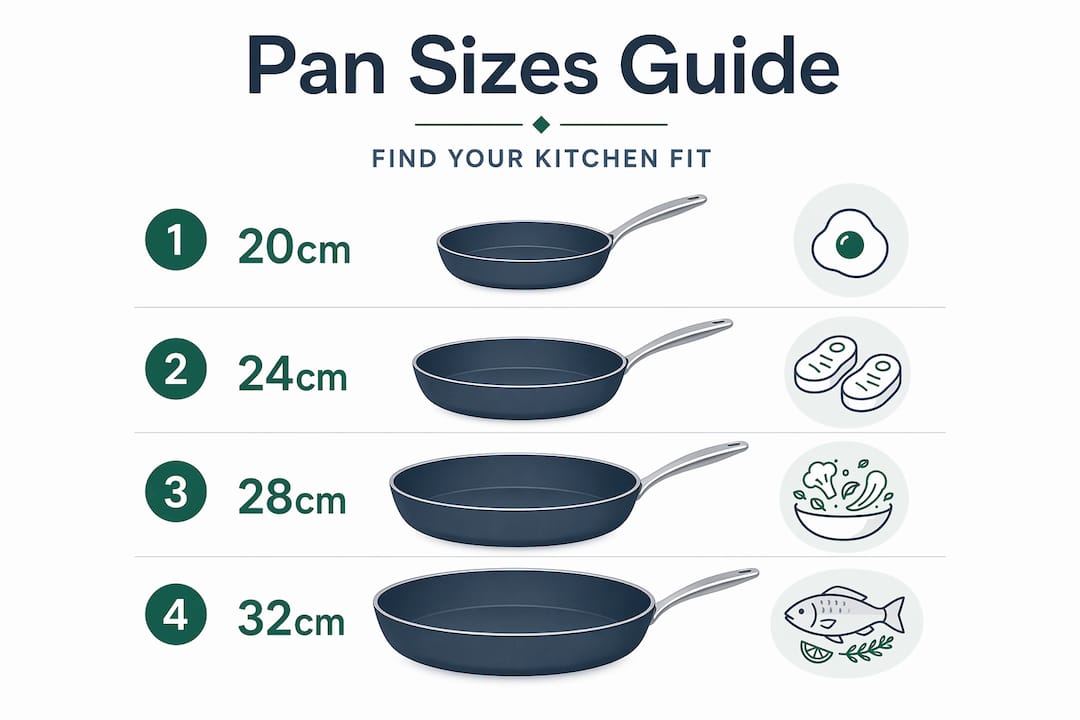
European kitchens typically stock carbon steel pans in 20cm, 24cm, 28cm and 32cm sizes, each ideal for specific types of meals and quantities. Understanding what each size truly excels at helps you stop guessing and start cooking with intention.
| Pan size | Ideal for | Household size | Key feature |
|---|---|---|---|
| 20cm | Omelettes, fried eggs, sauces | 1 person | Fast heat-up, nimble |
| 24cm | Everyday meals, steaks, vegetables | 1 to 2 people | Most versatile size |
| 28cm | Stir-fries, crêpes, sautéed greens | 2 to 4 people | Great all-rounder |
| 30cm | Family meals, large cuts of meat | 4 to 6 people | High capacity |
| 32cm | Batch cooking, paellas, whole fish | 4+ people | Maximum surface area |
The 20cm pan is the specialist tool of the group. It heats up in seconds, responds immediately to temperature changes, and is perfect for single-portion cooking. Scrambled eggs, one-person omelettes, and pan sauces come out beautifully. It is also the easiest carbon steel pan to season and maintain because of its compact surface.
The 24cm pan is where most cooks should start. It handles two steaks side by side, a two-egg omelette with room to fold, a generous portion of sautéed courgettes, and even a crêpe if the sides are low enough. This is the pan that lives on the hob permanently in most European kitchens.
At 28cm, you gain meaningful surface area without the weight becoming unwieldy. Stir-frying vegetables for three or four people, browning a batch of sausages, or cooking a couple of large chicken breasts all become much easier. The carbon steel pan recommendations available for this size reflect how popular it is across different households.
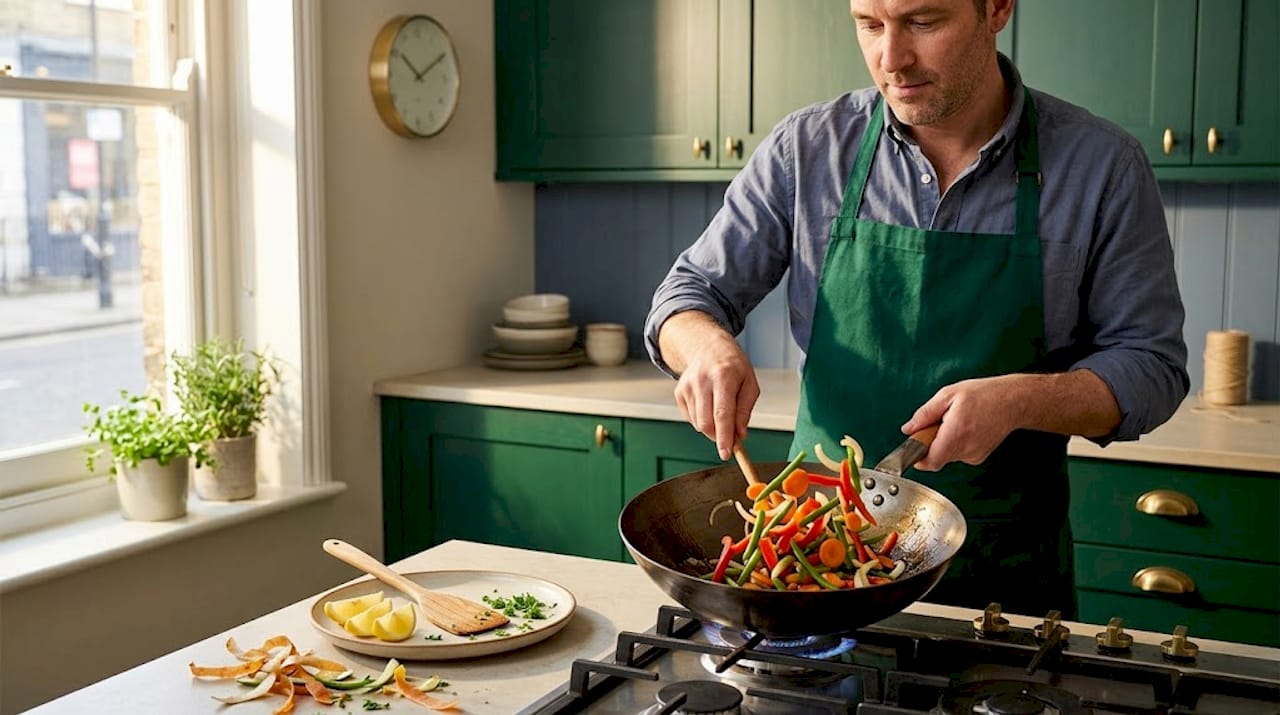
The 30cm and 32cm sizes are where family cooking truly opens up. A whole sea bream lies flat. A paella for six fits comfortably. Batch cooking for the week becomes practical rather than a juggling act. The chef pan size comparison is worth reading if you cook at this scale regularly.
Pro tip: When evaluating carbon steel pans, always check the depth alongside the diameter. A 28cm pan with higher sides can double as a braise, while the same diameter with low sides is better suited to crêpes and omelettes. The same measurement on the outside does not always mean the same cooking capacity inside.
The ideal dishes for each size, at a glance:
- 20cm: Fried eggs, single omelettes, hollandaise sauce, toasted spices
- 24cm: Steak for two, ratatouille, shakshuka, sautéed mushrooms
- 28cm: Stir-fried noodles, chicken thighs, roasted peppers, frittata
- 32cm: Whole fish, paella, large frittata, batch-fried potatoes
How to choose the right pan size for your cooking
Knowing the range available is one thing. Choosing the right one for your actual life is another. Home cooks should match pan size to both the hob and the recipe for best results, and owning two sizes covers most culinary needs. Here is how to think it through step by step.
-
Audit your cooking habits. Write down the five dishes you make most often. Do they involve searing single proteins, sautéing vegetables for a crowd, making egg dishes, or slow-building sauces? This tells you whether a smaller, more responsive pan serves you better or whether you need the surface area of a larger one.
-
Measure your hob burners. The base of the pan should match your largest burner as closely as possible. On induction hobs in particular, a pan that is significantly larger than the cooking zone will have a cool perimeter. On gas, a very small burner under a 32cm pan creates intense heat at the centre and weak heat at the edges.
-
Think about who you are cooking for. The rule of thumb is simple: a 24cm pan handles one to two portions, a 28cm handles two to four, and a 30cm to 32cm handles four or more. If your household changes in size regularly, plan for the largest number.
-
Consider storage and weight. A 32cm carbon steel pan at 3mm or 4mm thickness is genuinely heavy. Be honest about whether you will use it enthusiastically or whether it will stay at the back of the cupboard. A pan you actually reach for beats a theoretically perfect one you rarely touch.
-
Start with two pans if possible. A 24cm and a 28cm or 30cm combination covers almost every cooking scenario imaginable. One is quick and nimble, the other handles volume. Good kitchen knife types follow the same logic: a small knife for detail work, a larger one for bulk. Pans work the same way.
Pro tip: If you are choosing the best pan for the first time in carbon steel, start with the 27cm size. It sits right between the most popular diameters and suits both everyday cooking and slightly larger meals without feeling too large on a standard European hob.
Carbon steel pans vs other materials: does size selection change?
The core logic of matching pan size to your recipe holds across all materials. But the material does change how you experience each size in a meaningful way. Carbon steel pans are lighter than similar-sized cast iron and deliver faster heat response, which directly affects how safely and comfortably you handle each size, especially larger ones.
| Material | Weight (28cm approx.) | Heat response | Best size range | Oven safe |
|---|---|---|---|---|
| Carbon steel | Medium (approx. 1.8kg) | Fast | All sizes | Yes |
| Cast iron | Heavy (approx. 3.5kg) | Slow | 24cm to 28cm | Yes |
| Stainless steel | Light to medium | Medium | All sizes | Yes |
Here is what those differences mean in practice:
- Cast iron at 32cm becomes very difficult to lift and manoeuvre safely, particularly when full of food and hot. Carbon steel at the same diameter is noticeably easier to handle.
- Stainless steel heats quickly but does not retain heat as well as carbon steel, which matters when you add cold food to a hot pan and need the temperature to recover fast.
- Carbon steel at any size will respond immediately when you turn the heat up or down. Cast iron at larger sizes takes minutes to adjust. This makes carbon steel vs stainless steel a genuinely different cooking experience at the same diameter.
For high-heat searing, carbon steel at 24cm to 30cm outperforms the alternatives because it reaches the required temperature quickly and maintains it when a cold cut of meat lands in the pan. The natural seasoned surface also means you need far less oil than stainless steel, particularly in a pan that has been used regularly.
Getting the most from each pan: size-related tips and techniques
Owning the right size is only half the story. Using it correctly is what turns a good pan into an indispensable one. These habits apply across every size of carbon steel pan and have a real impact on results.
- Always preheat properly. A cold carbon steel pan, regardless of size, will cause food to stick and cook unevenly. Place it over medium heat for two to three minutes before adding oil or food. Larger pans need slightly longer to reach temperature across their full surface.
- Avoid thermal shock on large pans. Pouring cold water into a very hot 30cm or 32cm pan can cause warping. Allow the pan to cool before cleaning, or use warm water rather than cold.
- Season consistently across the full surface. When re-seasoning, ensure the oil is applied thinly right to the edge of the cooking surface. Larger pans sometimes get neglected at the rim, which leads to uneven patina development over time.
- Store pans of different sizes carefully. Stack them with a cloth or pan protector between each one to prevent the seasoning on one scratching the surface of another. Hanging is even better if your kitchen allows it.
Simple upgrades and good habits maximise the performance and lifespan of carbon steel pans, regardless of size. The investment in proper carbon steel pan care pays back every time you cook.
Pro tip: Regular seasoning is even more important for large pans because they spend more time cooking high-volume, high-moisture dishes. A 30cm pan used for stir-fries will have its seasoning challenged more frequently than a 20cm egg pan. Build the habit of applying a very thin layer of high-smoke-point oil after every wash and dry.
The real secret: why pan size is a cook’s quiet advantage
Professional kitchens carry multiple sizes of every pan for a very deliberate reason. It is not excess. It is precision. A chef reaching for a pan during service does not think about which one looks right. They know immediately which diameter suits the task, because they have cooked the same dish dozens of times and felt the difference in the results.
Most home cooks never reach that level of awareness about their own equipment. They buy one or two pans and adapt every recipe to fit them. That adaptation is almost always a compromise, and it shows up as unevenly cooked food, frustrating results, and the vague sense that something is wrong with the recipe rather than the tool.
The thing is, pan size knowledge is not complicated once you pay attention to it. After a few weeks of deliberately choosing the right size for each dish, the correct choice becomes automatic. You stop crowding a 24cm pan with a full bag of spinach and reach instead for the 28cm. You stop using a large pan for two fried eggs and enjoy the control of a smaller one. These are small shifts, but the improvement in your food is immediate and real.
The insights from what professional chefs use make clear that carbon steel is the preferred material for this kind of precision cooking across multiple sizes. Its weight and responsiveness at every diameter make it easier to develop the intuitive relationship between pan and result that all good cooking depends on. If you are serious about improving your cooking, start by taking pan size as seriously as you take your recipes.
Discover your ideal carbon steel pan
The right pan size, paired with quality carbon steel, changes how every meal turns out. At Brass & Steel, we make carbon steel sauté pans forged from a single piece of steel, free from rivets, coatings, and compromise. Our 27cm pan is the ideal everyday companion, while the 30cm pan handles everything a busy family kitchen can throw at it.
Both sizes are compatible with all hob types including induction, oven-safe, and built to last a lifetime with proper seasoning and care. Whether you are cooking for one or feeding a table of six, visit brass-steel.com to explore our full range and find the pan that suits the way you cook. Your kitchen deserves tools that match your ambition.
Frequently asked questions
What is the most versatile pan size for European home kitchens?
A 24cm carbon steel pan is widely regarded as the most versatile, and European kitchen standards confirm it suits a broad range of everyday meals for one to two people.
Can a smaller pan size affect cooking quality?
Yes, overcrowding a small pan traps steam and prevents proper browning. Carbon steel is valued by professional chefs precisely because its responsiveness makes the consequences of size mistakes more obvious and avoidable.
Do I need a different pan size for induction vs gas hobs?
The base of the pan should match the burner size on any hob type, but matching pan size to the hob and recipe follows the same logic regardless of whether your energy source is induction, gas, or electric.
Are carbon steel pans heavier or lighter than cast iron in the same size?
Carbon steel pans are lighter than cast iron at the same diameter. Faster heat response and lower weight make carbon steel easier to handle and more practical across a wider range of sizes.
What is the best way to care for large carbon steel pans?
Large pans should be preheated gently, never soaked in water, and re-seasoned regularly. Good habits and simple maintenance maximise performance and lifespan for every size of carbon steel pan.