Stainless steel cookware: pros, cons and expert tips

TL;DR:
- Stainless steel cookware is highly durable, resistant to rust, scratches, and corrosion.
- It offers versatile cooking performance, ideal for searing, braising, and oven use.
- Proper technique is essential to prevent sticking; quality pans are an investment that lasts decades.
Stainless steel cookware divides opinion like few other kitchen tools. Some cooks swear by it for its sleek look and professional results; others abandon it after one frustrating session of scrambled eggs welded to the base. The truth sits somewhere more interesting than either camp admits. Understanding what stainless steel actually does well, where it genuinely struggles, and which techniques unlock its potential will help you decide whether it belongs in your kitchen. This article walks through durability, cooking performance, health considerations, and the honest drawbacks, so you can make a fully informed choice.
Table of Contents
- Durability and construction: why stainless steel lasts
- Cooking performance and versatility in the kitchen
- Health, safety and chemical concerns
- Drawbacks and practical challenges of stainless steel
- Our take: when stainless steel cookware really shines (and when it doesn’t)
- Explore premium cookware that suits your cooking style
- Frequently asked questions
Key Takeaways
| Point | Details |
|---|---|
| Highly durable | Stainless steel pans can last for decades with proper care, resisting rust and scratches. |
| Versatile cooking | They handle high heat, are oven safe, and work on all hob types including induction. |
| Clean and safe | Stainless steel is non-reactive, making it suitable for acidic foods and health-focused kitchens. |
| Technique matters | Avoiding food sticking requires correct preheating and cooking methods. |
| Worth the investment | Although the initial cost is high, the longevity and performance make it a smart buy for dedicated cooks. |
Durability and construction: why stainless steel lasts
Stainless steel earns its reputation for longevity through chemistry. The material contains at least 10.5% chromium, which reacts with oxygen to form a thin, invisible oxide layer on the surface. That layer is what makes the steel resist rust, corrosion, and surface scratching without any coating or treatment. According to Martha Stewart, stainless steel cookware is highly durable and long-lasting, often lasting decades with proper care. That is not marketing language. A well-made stainless pan bought today could still be in your kitchen in 2050.
Most quality pans use multi-ply construction, bonding layers of stainless steel with an aluminium or copper core. This matters because stainless steel alone conducts heat unevenly. The inner core does the thermal heavy lifting, while the outer stainless layers provide structure and durability. Cheaper single-ply pans skip this and show hot spots almost immediately. A good cookware buying guide will always point you towards at least three-ply construction for everyday use.
Here is a quick look at how common stainless steel grades compare:
| Grade | Chromium content | Nickel content | Best for |
|---|---|---|---|
| 18/10 | 18% | 10% | Premium cookware, high corrosion resistance |
| 18/8 | 18% | 8% | Mid-range cookware, good durability |
| 18/0 | 18% | 0% | Induction-specific, less corrosion resistant |
The stainless steel benefits that matter most in daily use include:
- Resistance to rust and corrosion, even with regular washing
- Scratch resistance that survives metal utensils
- No reactive coating to chip, peel, or degrade over time
- Structural stability that resists warping under high heat
- Dishwasher compatibility in most quality models
Pro Tip: Avoid soaking stainless pans in salty water for extended periods. Salt accelerates pitting, a form of localised corrosion that creates tiny craters in the surface. Rinse promptly after cooking salty dishes and your pan will stay pristine for years. You can also explore seasoning stainless pans as an additional step to improve the cooking surface over time.
For cooks who want durable stainless pans that genuinely last a lifetime, the investment in a quality multi-ply set pays back many times over compared to replacing cheaper pans every few years.
Cooking performance and versatility in the kitchen
Once you understand the solid build of stainless steel, its true versatility in the kitchen becomes clear. These pans handle an enormous range of cooking tasks without complaint. Quality stainless cookware is versatile for high-heat searing, browning, braising, and oven use at temperatures exceeding 260°C, and it works on every cooktop including induction.
The secret to consistent performance lies in the core. Multi-ply construction with an aluminium or copper core delivers even heat distribution and quick responsiveness to temperature changes. When you turn the flame down, a three-ply or five-ply pan adjusts fast. That control is what professional cooks rely on when building sauces or searing proteins to order.
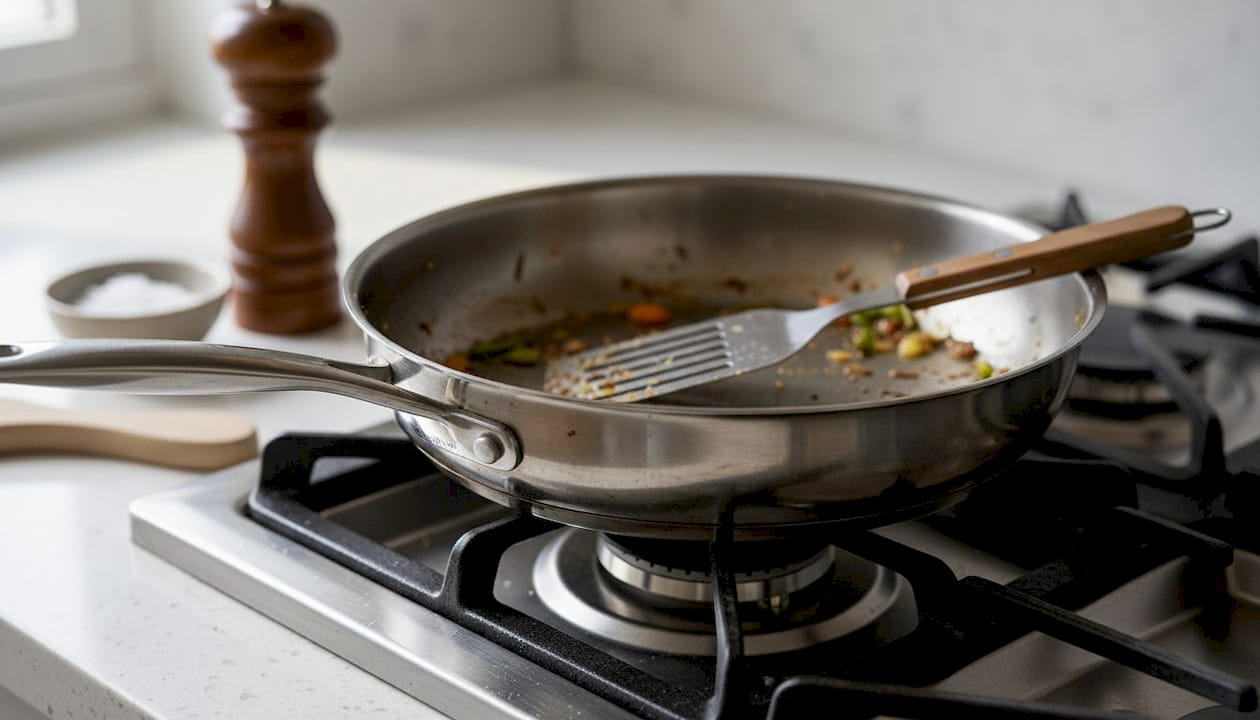
Here is how stainless steel compares to other popular materials for everyday cooking tasks:
| Cooking task | Stainless steel | Non-stick | Cast iron |
|---|---|---|---|
| High-heat searing | Excellent | Poor | Excellent |
| Delicate eggs | Challenging | Excellent | Moderate |
| Braising and sauces | Excellent | Moderate | Good |
| Oven use | Excellent | Limited | Excellent |
| Induction compatibility | Yes | Varies | Yes |
| Weight | Moderate | Light | Heavy |
For a deeper look at how materials stack up, the aluminium vs stainless comparison is worth reading before you buy.
The meal types where stainless steel genuinely excels include:
- Pan sauces and deglazing, where the fond (the browned bits left after searing) adds deep flavour
- Searing steaks, chicken thighs, and fish fillets at high heat
- Braised dishes that start on the hob and finish in the oven
- Pasta sauces with tomato or citrus, which would react with reactive metals
- Roasting vegetables that need caramelisation and colour
For anyone curious about how stainless compares to carbon steel specifically, the carbon vs stainless steel pans guide breaks down the practical differences in detail. Both materials have genuine strengths, and the right choice depends on your cooking style. Reviews of top stainless steel pans consistently highlight the same point: technique matters as much as the pan itself.
Health, safety and chemical concerns
Durability and performance are not everything. Health safety is often at the top of every cook’s list, and stainless steel has a strong story to tell here. Its surface is non-reactive and safe for acidic foods like tomatoes or citrus, meaning it will not leach metallic flavours or compounds into your food under normal cooking conditions.
The more nuanced question is about nickel and chromium leaching. Both metals are present in stainless steel, and small amounts can migrate into food, particularly with new pans, acidic ingredients, and long cooking times. Research shows minimal nickel and chromium leaching under typical use, though levels are higher with new pans and prolonged cooking of acidic dishes. Importantly, leaching decreases significantly after the first several uses as the surface stabilises.
For context, studies have measured up to 88 micrograms of nickel per serving after repeated cooking cycles in new pans. That figure sounds alarming until you compare it to the tolerable daily intake set by health authorities, which sits well above what any realistic cooking session would produce. For most people, this is not a concern worth losing sleep over.
“Stainless steel is generally considered a safe material for cooking. The levels of metals that may leach into food are well below the thresholds that health authorities consider harmful for the general population.”
That said, a small number of people with confirmed nickel sensitivity should exercise caution, particularly when cooking acidic foods for long periods in a brand-new pan.
Here is when stainless steel is the healthiest cookware choice:
- When you want to avoid PTFE, PFOA, or any synthetic coating
- When cooking acidic dishes that would react with cast iron or carbon steel
- When you need a surface that does not degrade or flake with age
- When you are cooking for children and want chemical-free assurance
For those interested in alternatives that are equally free from coatings, carbon steel safety is another topic worth exploring, particularly for cooks who want a naturally seasoned surface.
Drawbacks and practical challenges of stainless steel
No pan is perfect, so let us examine where stainless steel may fall short and how to handle those drawbacks honestly.
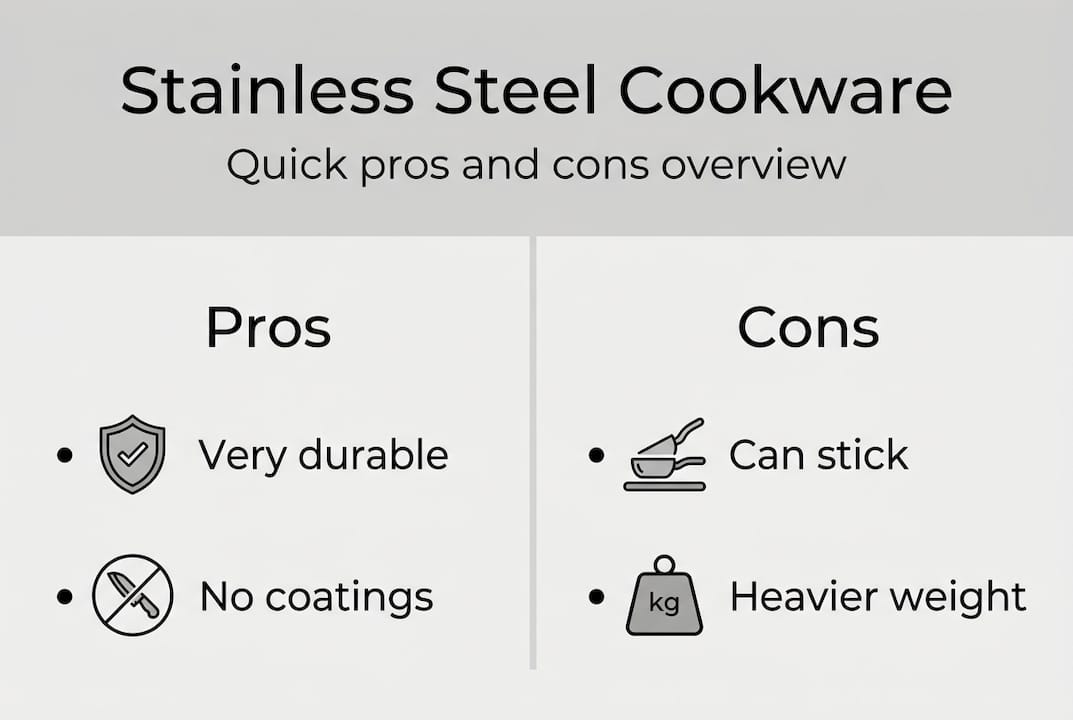
The most common complaint is food sticking. Sticking occurs without proper preheating and adequate oil, and it requires understanding the Leidenfrost effect: the point at which a drop of water skitters across the surface rather than evaporating instantly. That is your signal the pan is ready. Skip this step and proteins bond to the steel surface almost immediately. It is a technique issue, not a flaw in the material.
The main drawbacks of stainless steel cookware are:
- Sticking risk without correct preheating and oiling technique
- Weight from multi-ply construction, which can be harder to handle for some cooks
- Higher upfront cost for quality multi-ply sets compared to single-material pans
- Discolouration from high heat, which does not affect performance but can be off-putting
- Learning curve that frustrates cooks expecting instant non-stick results
Pro Tip: To prevent sticking, heat your empty pan over medium heat for two to three minutes. Add oil and let it shimmer before adding food. For proteins, press them gently onto the surface and leave them alone. They will release naturally once a proper sear has formed. Forcing them early is the single biggest cause of sticking.
On cost, a quality three-ply stainless set represents a real investment upfront. But measured against a lifespan of twenty or thirty years, the annual cost is remarkably low. Compare that to replacing non-stick pans every two to four years and the maths shift considerably. The steel vs non-stick guide covers this value equation in detail if you want to run the numbers for your own kitchen.
Our take: when stainless steel cookware really shines (and when it doesn’t)
Having mapped out all sides, here is our honest perspective from years of kitchen experience. The fear around sticking is largely overblown. Professional kitchens use stainless steel almost exclusively, not because chefs enjoy difficulty, but because the material rewards skill and delivers results that coated pans simply cannot match. A proper sear, a glossy pan sauce, a beautifully braised dish: these come from stainless.
Where stainless genuinely struggles is with cooks who want zero learning curve and minimal cleanup above all else. If you are cooking scrambled eggs at 6am and want them done in two minutes with no fuss, a non-stick pan wins that specific battle. Stainless is not the right tool for every job, and there is no shame in acknowledging that.
What professional cooks do differently is simple: they respect the preheat. That single habit eliminates 80% of the sticking problems home cooks experience. Adapt that one behaviour and stainless steel transforms from frustrating to indispensable. For those exploring the full landscape of professional-grade options, the cookware for restaurants guide offers a useful broader view. If you are patient and willing to invest a little time in learning, the payoff is real: longevity, versatility, and a pan that genuinely improves your cooking.
Explore premium cookware that suits your cooking style
If this article has helped you see stainless steel in a new light, the next step is finding cookware that matches your ambitions in the kitchen. At Brass & Steel, we craft carbon steel pans forged from a single piece of steel, with no rivets, no coatings, and no compromises. They share many of the health and durability benefits of stainless steel while adding a naturally seasoned surface that only gets better with use.
Whether you are drawn to stainless or curious about carbon steel as a complementary option, our guide to choosing stainless steel cookware will help you match the right material to your cooking style. Explore our full range and find the pan that will serve your kitchen for decades.
Frequently asked questions
Is stainless steel cookware really non-toxic and safe?
Yes, stainless steel is considered non-toxic and safe for most people. Nickel and chromium leaching is minimal under typical cooking conditions, though those with nickel sensitivity should take extra care with new pans and acidic foods.
How do you keep food from sticking in stainless steel pans?
Preheat the pan thoroughly before adding oil, then wait for the oil to shimmer before adding food. Proper preheating and oiling is the key technique that prevents sticking in stainless steel.
Are stainless steel pans better than non-stick for health?
Stainless steel is widely regarded as a healthier option because it carries no PFAS or chemical coatings. It is an ideal health-conscious alternative to non-stick cookware, though it requires more technique to use well.
Is stainless steel heavier than other types of cookware?
Yes, quality stainless steel pans tend to be heavier than aluminium or non-stick options. The heavier weight from multi-ply construction is a trade-off for the superior durability and cooking performance these pans deliver.
Recommended
- Cookware Stainless Steel: Making the Right Choice – Brass & Steel
- Stainless steel vs non-stick cookware: A practical guide – Brass & Steel
- Carbon Steel Cookware Pros and Cons: Essential Insights – Brass & Steel
- 7 Essential Pros and Cons of Steel Cookware Explained – Brass & Steel
- Why install cladding in kitchens: Cut cleaning time 70% in 2026