Cookware Stainless Steel: Making the Right Choice

Choosing cookware for a European kitchen often means weighing durability and health benefits against cooking performance and taste. Many passionate home cooks and demanding chefs are turning to stainless steel’s metallurgical complexity for its corrosion resistance, non-reactive surface, and ability to withstand high heat without the risk of toxic coatings. Understanding what makes stainless steel unique helps unravel its reputation as a reliable, long-lasting choice for safe, sophisticated food preparation.
Table of Contents
- Stainless Steel Cookware Defined And Debunked
- Major Types And Essential Qualities
- Performance, Cooking Methods, And Benefits
- Safety, Maintenance, And Lifespan Insights
- Comparing Stainless Steel To Other Materials
Key Takeaways
| Point | Details |
|---|---|
| Understanding Composition | Stainless steel’s durability and performance stem from its alloy composition, primarily iron, chromium, and often nickel, with different grades offering varied advantages. |
| Cooking Versatility | Stainless steel cookware allows for diverse cooking methods, ensuring exceptional heat distribution and precise temperature control across various techniques. |
| Maintenance for Longevity | To enhance the lifespan of stainless steel cookware, it is crucial to follow proper maintenance practices, such as hand washing and avoiding abrasive materials. |
| Superior Safety Profile | The non-reactive nature of stainless steel cookware prevents metallic taste transfer and chemical reactions with food, making it a hygienic choice for food preparation. |
Stainless Steel Cookware Defined and Debunked
Stainless steel cookware represents a sophisticated kitchen material engineered for durability and performance. Scientific alloy composition reveals its complex nature: primarily iron, with critical additions of chromium and often nickel to enhance its remarkable properties.
The fundamental characteristics of stainless steel cookware include several key attributes:
- Corrosion resistance superior to traditional metal cookware
- Non-reactive surface preventing metallic taste transfer
- High-temperature tolerance for versatile cooking methods
- Long-lasting durability with proper maintenance
- Hygienic material that resists bacterial growth
Understanding stainless steel’s composition helps demystify its widespread culinary applications. Chromium content ensures robust corrosion protection, creating a microscopic protective layer that prevents rust and degradation. This scientific engineering means stainless steel transcends mere cookware material—it represents an intelligent design for safe, reliable food preparation.
Metallurgical Complexity
Contrary to popular misconceptions, stainless steel isn’t a single uniform material. Different grades offer varying performance levels, typically categorised by their chromium, nickel, and molybdenum percentages. Professional chefs and serious home cooks often prefer 18/10 stainless steel, which contains 18% chromium and 10% nickel, providing optimal corrosion resistance and durability.
Here’s a quick reference comparing stainless steel grades commonly found in cookware:
| Stainless Steel Grade | Chromium (%) | Nickel (%) | Typical Uses |
|---|---|---|---|
| 18/10 | 18 | 10 | Premium cookware, professional kitchens |
| 18/8 | 18 | 8 | General household cookware |
| 18/0 | 18 | 0 | Budget and induction-compatible cookware |
| 304 | 17-19 | 8-10 | Versatile kitchen and industrial applications |
Pro tip: When purchasing stainless steel cookware, always check the grade and composition to ensure you’re selecting a high-quality, long-lasting kitchen investment.
Major Types and Essential Qualities
Stainless steel cookware comes in several sophisticated configurations, each designed to enhance cooking performance. Multi-layered construction techniques reveal the nuanced engineering behind modern culinary tools, offering chefs and home cooks unprecedented cooking precision.
The primary types of stainless steel cookware include:
- Single-ply cookware: Constructed from a single layer of stainless steel
- Tri-ply cookware: Features three metal layers for superior heat distribution
- Multi-ply cookware: Complex layering with multiple metal compositions
- Copper-core stainless steel: Incorporates copper for enhanced heat responsiveness
- Aluminium-core stainless steel: Provides rapid and even heat conduction
Essential Qualities
Each stainless steel cookware type offers distinct performance characteristics. Professional-grade options prioritise heat conductivity, durability, and non-reactive surfaces. The core qualities discerning cooks seek include:
- Exceptional rust resistance
- Uniform heat distribution
- Non-reactive cooking surface
- Long-term durability
- Easy maintenance and cleaning
High-quality stainless steel cookware transforms cooking from a basic task to a precise culinary art.
Metallurgical Considerations
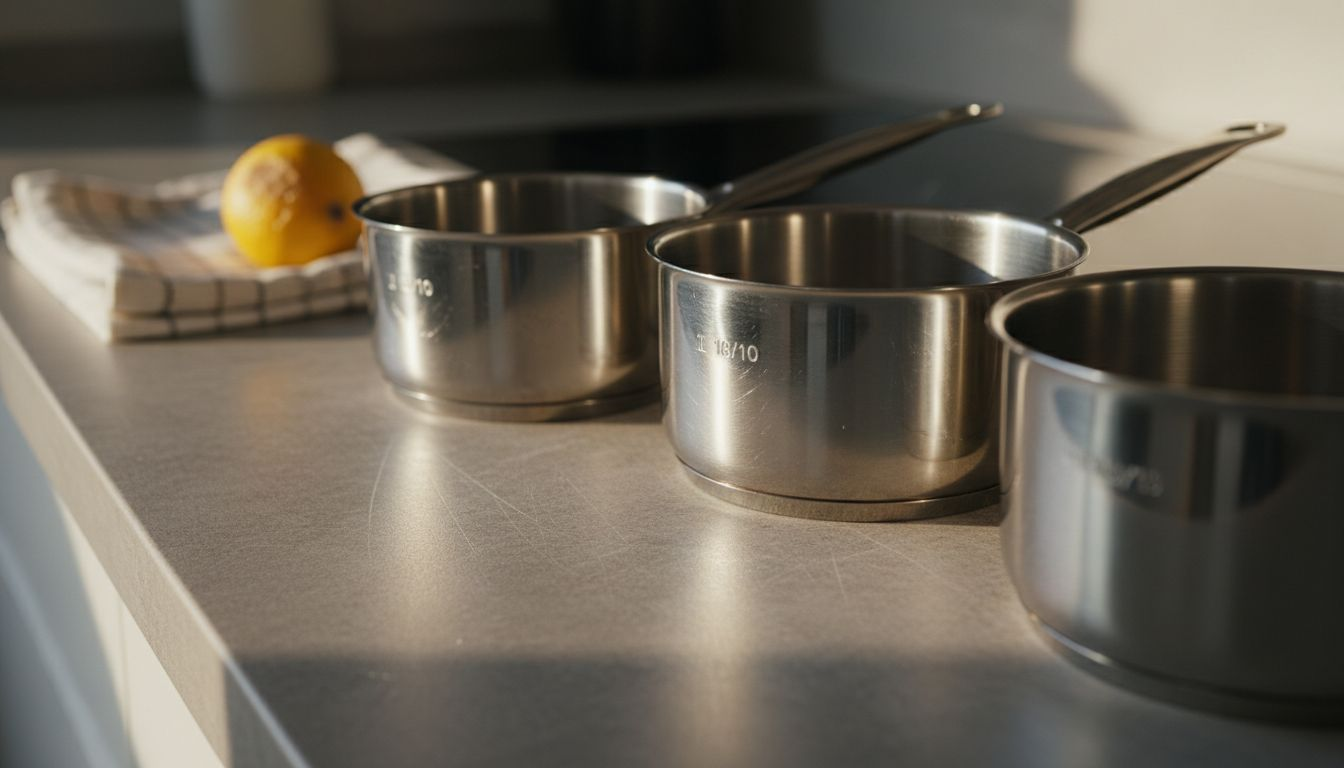
The composition of stainless steel determines its performance. Higher-grade variants like 18/10 stainless steel contain more chromium and nickel, ensuring superior corrosion resistance and a polished appearance. These metallurgical nuances significantly impact cooking performance and longevity.
Pro tip: When selecting stainless steel cookware, prioritise multi-layered constructions with high-grade alloy percentages for optimal cooking results.
Performance, Cooking Methods, and Benefits
Stainless steel cookware stands as a pinnacle of culinary engineering, offering exceptional cooking performance across diverse cooking techniques. Its remarkable versatility allows chefs to execute everything from delicate simmering to intense high-heat searing with remarkable precision.
The key performance characteristics include:
- Extraordinary heat distribution
- Superior temperature control
- Ability to achieve professional-level browning
- Compatibility with multiple cooking surfaces
- Resistance to warping and degradation
Cooking Method Mastery
Unique cooking methods become possible with high-quality stainless steel cookware. Professional chefs appreciate its ability to develop complex flavour profiles through techniques like:
- Professional searing
- High-temperature caramelisation
- Precise temperature-controlled reductions
- Even slow-cooking techniques
- Direct oven-to-stovetop transitions
Stainless steel transforms cooking from a basic necessity to a sophisticated culinary art form.
Health and Practical Benefits
Beyond performance, stainless steel offers significant practical advantages. Its non-reactive surface prevents metallic flavour transfer, while the robust construction eliminates concerns about toxic coating degradation. The material’s inherent durability means investing in quality stainless steel cookware provides long-term value and consistent cooking performance.
Pro tip: Select stainless steel cookware with multi-ply construction to maximise heat distribution and ensure optimal cooking results across various techniques.
Safety, Maintenance, and Lifespan Insights
Stainless steel cookware represents a pinnacle of culinary safety, offering exceptional hygienic properties that distinguish it from alternative cooking materials. Its non-reactive surface ensures food remains pure, without absorbing metallic tastes or potentially harmful chemical interactions.
Key safety characteristics include:
- Complete non-reactivity with acidic and alkaline foods
- Resistance to bacterial growth
- No toxic coating degradation
- Prevention of metallic ion leaching
- Compatibility with diverse cooking ingredients
Maintenance Best Practices
Proper care dramatically extends the lifespan of stainless steel cookware. Professional chefs recommend specific maintenance techniques to preserve its pristine condition:
- Hand wash with mild detergent
- Avoid harsh abrasive cleaning materials
- Dry immediately after washing
- Store in dry, well-ventilated spaces
- Polish occasionally to maintain shine
Thoughtful maintenance transforms stainless steel cookware from a kitchen tool into a generational culinary investment.
Longevity and Performance
With meticulous care, high-quality stainless steel cookware can last decades. Its robust construction resists warping, corrosion, and performance degradation, making it a superior long-term investment for serious home cooks and professional chefs alike. Multi-ply constructions offer additional durability, with layers designed to distribute heat evenly and resist structural breakdown.
Pro tip: Invest in professional-grade stainless steel cookware and commit to consistent, gentle maintenance to ensure your cookware remains a reliable kitchen companion for generations.
Comparing Stainless Steel to Other Materials
Stainless steel emerges as a superior cookware material when comprehensively compared to alternatives, offering unprecedented performance and durability across various cooking scenarios. Its unique metallurgical composition provides distinct advantages that set it apart from traditional cookware materials.
Comparative material characteristics include:
- Cast Iron: Heavy, requires seasoning, excellent heat retention
- Non-stick: Convenient, limited lifespan, potential chemical leaching
- Ceramic: Attractive, fragile, uneven heat distribution
- Aluminum: Lightweight, rapid heat conductor, prone to warping
- Copper: Expensive, high heat responsiveness, requires significant maintenance
Performance Benchmarks
Stainless steel distinguishes itself through several critical performance metrics:
- Superior corrosion resistance
- Non-reactive cooking surface
- Exceptional durability
- Minimal maintenance requirements
- Safe across diverse cooking temperatures
Professional chefs consistently choose stainless steel for its reliability and versatility in high-performance kitchen environments.
Health and Environmental Considerations
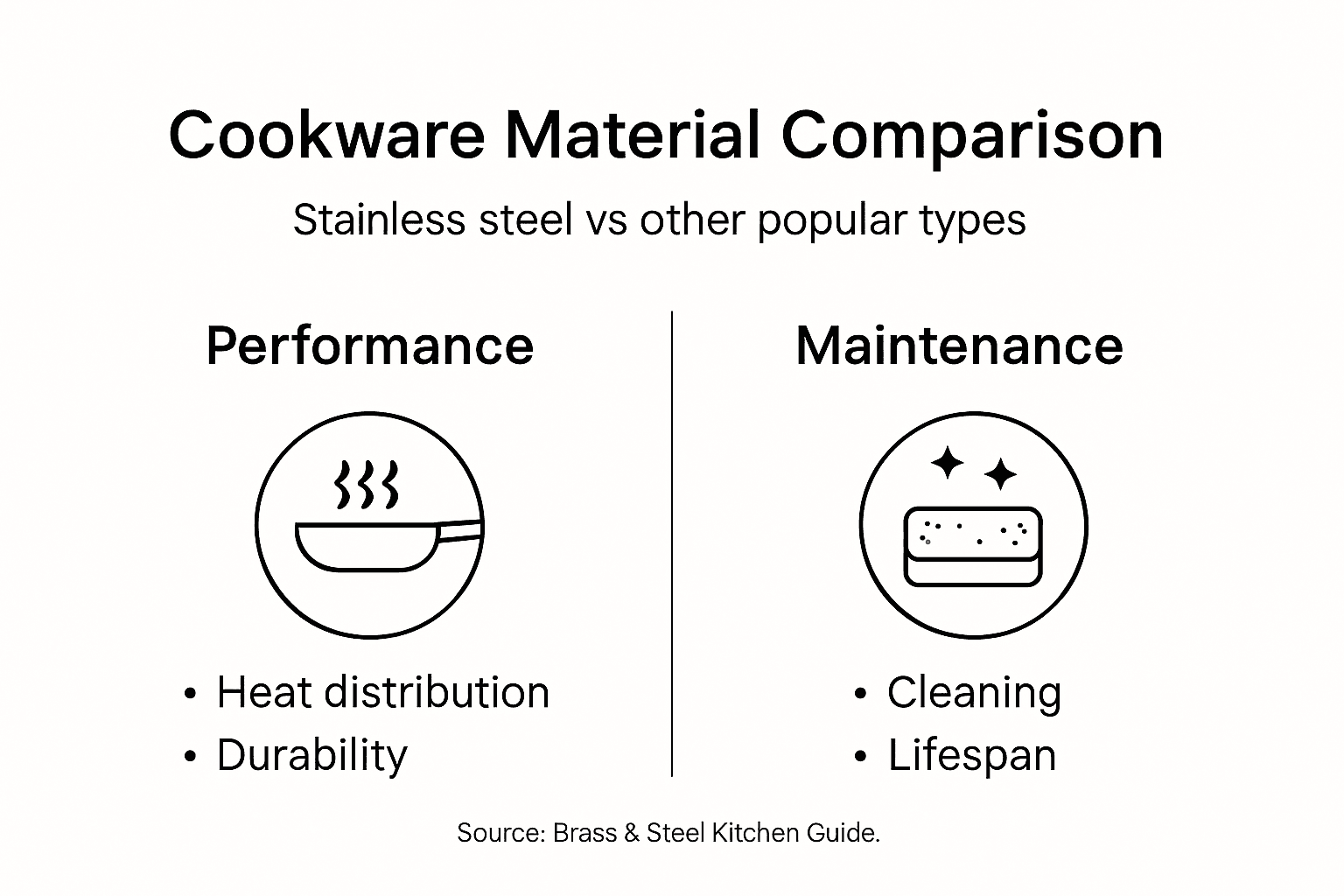
The table below summarises how major cookware materials differ on practical and safety features:
| Material | Safety Profile | Maintenance Demands | Heat Distribution |
|---|---|---|---|
| Stainless Steel | Non-reactive, hygienic | Easy, occasional polish | Even, reliable |
| Cast Iron | May leach iron, heavy | Requires seasoning | Outstanding retention |
| Non-stick | Potential chemical risk | Avoid abrasive cleaning | Moderate, uneven |
| Copper | Reactive, needs lining | Frequent polishing | Rapid and precise |
| Aluminium | May react with foods | Prone to warping | Fast but inconsistent |
Beyond cooking performance, scientific analysis reveals stainless steel’s sustainability as a premier cookware material. Its inert composition prevents chemical interactions with food, maintains nutrient integrity, and offers minimal environmental impact compared to synthetic alternatives.
Pro tip: Invest in high-quality, multi-ply stainless steel cookware to ensure consistent cooking performance and long-term kitchen reliability.
Elevate Your Cooking Experience with Expertly Crafted Carbon Steel Cookware
Choosing the right cookware is vital to unlocking your kitchen’s full potential. While stainless steel offers durability and non-reactive surfaces, many serious cooks seek cookware that delivers unmatched heat performance, natural nonstick abilities, and lasting quality. If your goal is to transform everyday cooking into a precise culinary art, understanding the limitations and benefits of various materials is essential.
At Brass & Steel, we bridge the gap between metallurgical excellence and chef-level performance with our Carbon Steel Collection | Brass&Steel. Our cookware is forged from a single piece of carbon steel, eliminating weak points like rivets to ensure exceptional durability. The natural nonstick surface develops through seasoning, offering a safe, PTFE-free alternative for professional results. Experience superior heat retention and responsiveness that complements the qualities of stainless steel while providing enhanced cooking control.
Discover how our heirloom-quality pans can become your kitchen’s trusted companion for searing, sautéing, and oven use. Visit Brass & Steel today to explore the craftsmanship behind every pan. Find the perfect fit for your cooking style among our New arrivals – Brass & Steel and complement your set with premium Accessories – Brass & Steel. Take the next step now to elevate your culinary creations with cookware designed to last a lifetime.
Frequently Asked Questions
What are the main benefits of using stainless steel cookware?
Stainless steel cookware offers exceptional durability, corrosion resistance, and a non-reactive surface that prevents metallic taste transfer. It is also compatible with various cooking methods and provides long-lasting performance when properly maintained.
How do I choose the right grade of stainless steel cookware?
When selecting stainless steel cookware, look for high-grade alloys like 18/10 or 18/8, which offer optimal corrosion resistance and durability. Always check the chromium and nickel content to ensure you’re making a quality investment.
How should I maintain my stainless steel cookware for longevity?
To extend the lifespan of stainless steel cookware, hand wash with mild detergent, avoid abrasive cleaners, dry immediately after washing, and store in dry areas. Regular polishing can also help maintain its shine.
How does stainless steel cookware compare to other materials like cast iron and non-stick?
Stainless steel boasts superior corrosion resistance, a non-reactive cooking surface, and exceptional durability compared to cast iron and non-stick options. While cast iron retains heat well and non-stick offers convenience, stainless steel requires minimal maintenance and provides reliable performance across various cooking temperatures.
Recommended
- Stainless Steel vs Ceramic Cookware – Which Suits Serious Cooks? – Brass & Steel
- Cast Iron vs Stainless – Choosing Your Kitchen Essential – Brass & Steel
- Aluminium vs Stainless Steel vs Ceramic – Choosing Cookware Wisely – Brass & Steel
- Carbon Steel vs Stainless Steel Cookware – What Every Chef Needs to Kn – Brass & Steel