Seasoning build-up on cookware: what it is and how to manage it
TL;DR:
- Seasoning build-up is a durable, protective oil layer on cookware formed through polymerisation at high heat. Proper technique involves applying thin oil coats and regular maintenance to prevent sticky, flaky residues and black flakes. Consistent care and correct re-seasoning can restore problematic coatings, ensuring long-lasting non-stick surfaces.
Seasoning build-up is defined as the accumulation of polymerised oil layers on cookware that form a durable, plastic-like coating bonded to the metal surface. This protective film, known in culinary science as a polymerised fat patina, shields carbon steel and cast iron from rust while creating a naturally non-stick cooking surface. Understanding what is seasoning build-up, and how to manage it, is the difference between a pan that performs for decades and one that turns sticky, flaky, or dull within months. The good news is that with the right habits, you can build a coating that only gets better with every meal.
What is seasoning build-up and how does it form?
Seasoning build-up forms through a chemical process called polymerisation. When you heat a cooking oil past its smoke point, the fat molecules break apart and bond together into long, hard chains. Those chains grip the metal surface and cure into a solid film. America’s Test Kitchen describes seasoning as a durable, non-stick layer created specifically through this polymerisation of heated fats. Each time you cook with oil and apply heat, you add another micro-thin layer on top of the last.
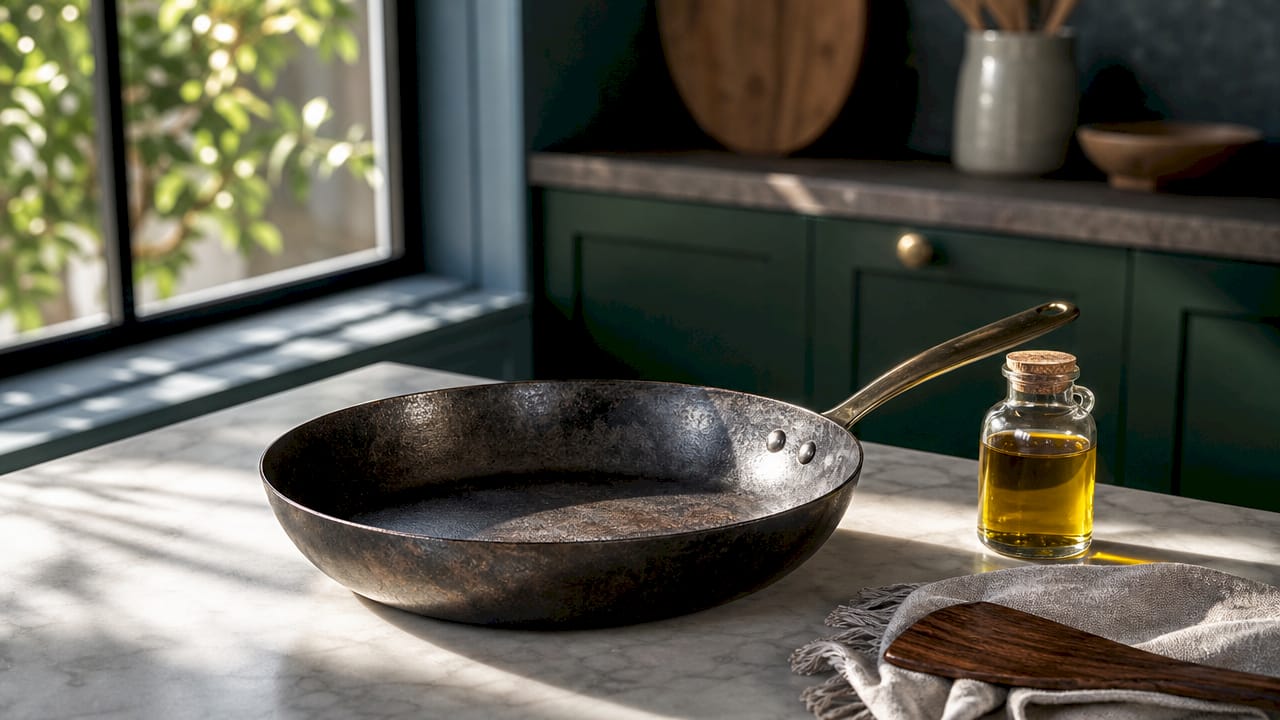
The metal surface matters here. Carbon steel has a slightly porous texture at a microscopic level. Polymerised oil fills those pores and anchors itself firmly. Over time, repeated layers build a coating that is genuinely tough. A single seasoning session gives you a starting point. Months of regular cooking give you a surface that rivals any factory coating.
The oil you choose has a direct impact on how well the coating forms. High smoke point oils polymerise more reliably because they reach the required temperature without burning into carbon before the chemical reaction completes. The table below compares common options.
| Oil | Smoke point | Polymerisation quality |
|---|---|---|
| Grapeseed | 216°C (420°F) | Excellent, thin and hard film |
| Refined sunflower | 232°C (450°F) | Very good, widely available |
| Avocado (refined) | 270°C (520°F) | Excellent, very stable at high heat |
| Canola | 204°C (400°F) | Good, affordable everyday option |
| Olive oil (extra virgin) | 160°C (320°F) | Poor, burns before polymerising fully |
Avoid olive oil and animal fats for seasoning. They smoke too early and leave a sticky, semi-cured residue rather than a hard film. Stick to the best oils for seasoning listed above for reliable results.
Pro Tip: Apply your oil, then wipe the pan with a clean cloth until it looks almost completely dry. If you can see a sheen of oil, you have used too much.
What are the signs of bad seasoning build-up?
Problematic seasoning build-up has clear warning signs. A sticky or gummy surface is the most common. Excess build-up creates sticky, gummy residues or brittle, flaky surfaces that peel during cooking. Both problems trace back to the same root cause: oil that did not fully polymerise.
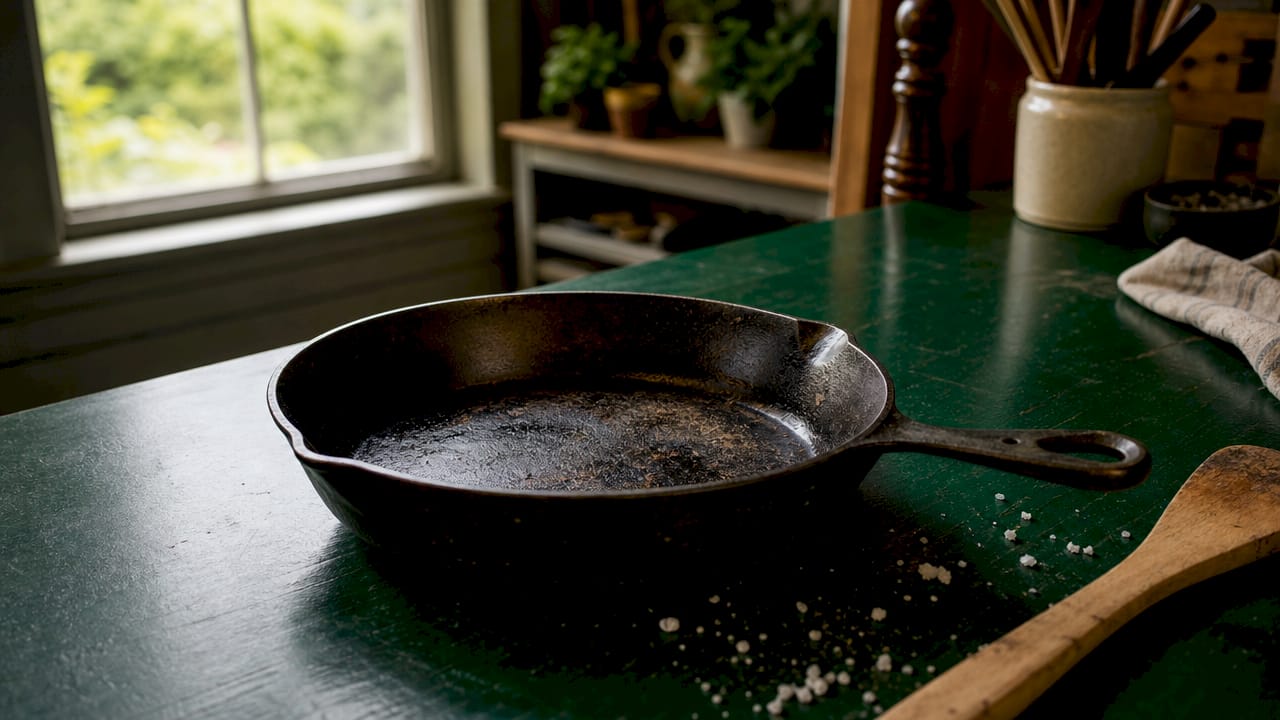
Black flakes appearing in your food are another red flag. Black flakes are bits of built-up seasoning or carbon deposits breaking loose from thick, uneven layers. They come from applying too much oil at once, burning residue without cleaning it off, or skipping the early stages of building an even base coat.
The most common mistakes that lead to bad seasoning are:
- Applying oil too thickly, leaving visible pools on the surface
- Using low oven temperatures that cannot complete polymerisation
- Skipping the cooling stage between seasoning coats
- Neglecting to clean the pan after cooking, letting grease carbonise
- Using oils with low smoke points that burn before curing
Sticky seasoning results from incomplete polymerisation caused by too much oil, low temperatures, or insufficient heating time. The fix is not complicated, but it does require stripping back the problem layers and starting fresh with the correct technique.
Pro Tip: Run your finger across a cool pan. A well-seasoned surface feels smooth and slightly silky. A tacky or rubbery feel means the oil did not cure properly.
How do you maintain healthy seasoning build-up day to day?
Good daily habits prevent the problems above from ever taking hold. The routine is simple and takes less than five minutes after cooking. Optimal seasoning maintenance includes cleaning with warm water, drying over heat, and applying a very thin oil layer after each use. That three-step habit stops the “gunk cycle” where neglected grease carbonises and undermines the coating beneath it.
Follow these steps after every cook:
- Rinse the pan with warm water while it is still slightly warm. A small amount of mild soap is fine and will not strip a well-established seasoning layer.
- Scrub off any food residue with a stiff brush or a non-scratch pad. Do not soak the pan.
- Dry the pan immediately and thoroughly. Place it on a low heat for one to two minutes to drive off all moisture.
- Apply a tiny amount of high smoke point oil. Use a folded cloth or kitchen paper to wipe it across the entire surface.
- Wipe off the excess until the pan looks nearly dry. Visible pools of oil cause tacky spots that require scrubbing later.
- Store the pan in a dry place, ideally with airflow around it.
Cooking fatty foods regularly also strengthens the coating. Bacon, sausages, and skin-on chicken thighs all deposit fat into the surface as they cook. This is one of the best ways to build seasoning naturally without any extra effort. Think of every meal as a maintenance session.
How do you clean and remove problematic seasoning build-up?
When seasoning has gone wrong, the most reliable fix is to strip it back and start again. Trying to season over a flaky or sticky base layer just adds more problems on top. The goal is to get back to clean, bare metal before rebuilding.
The table below compares the main methods for removing old seasoning.
| Method | How it works | Best for | Drawback |
|---|---|---|---|
| Scrubbing with coarse salt | Abrasive mechanical removal | Light sticky patches | Labour-intensive for thick build-up |
| Oven self-clean cycle | High heat burns off all organic material | Heavy carbon deposits | Very high temperatures, check pan tolerance |
| Chainmail scrubber with hot water | Physical removal without chemicals | Moderate flaky layers | Requires effort on stubborn spots |
| Baking soda paste | Mild alkali loosens carbonised residue | Localised problem areas | Multiple applications needed |
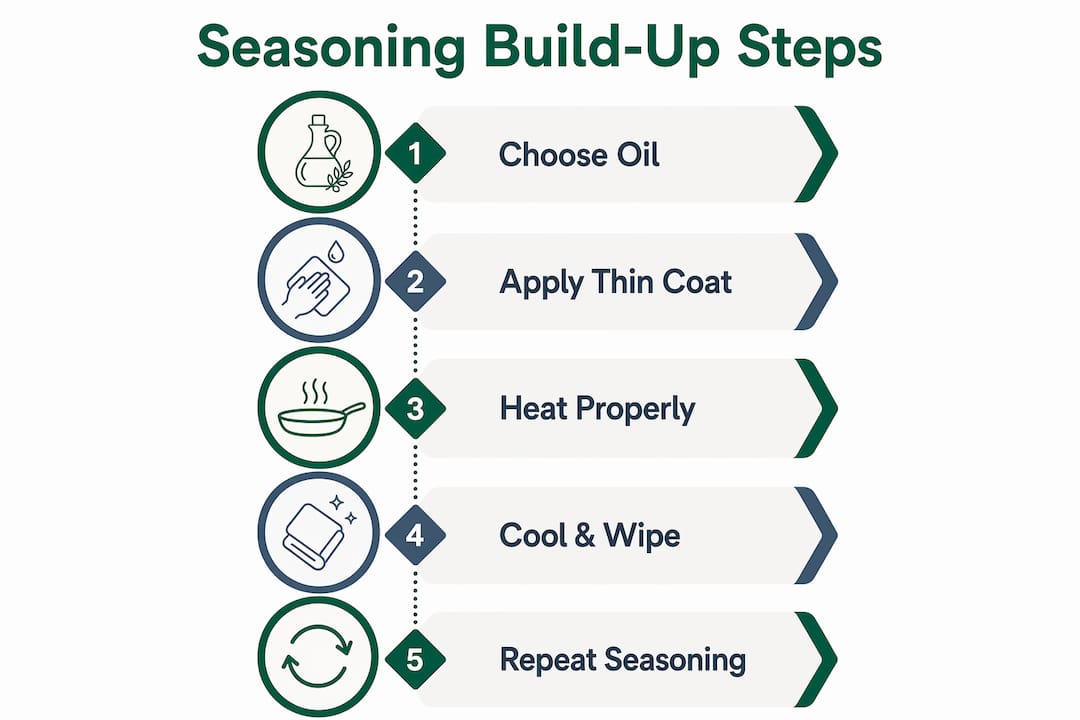
Once the surface is clean and dry, re-season using thin, consistent coats. Re-seasoning involves applying 5–7 thin oil coats baked at 450°F with cooling in between, gradually building a durable coating from clean bare metal. Consistency in technique produces better results than thick, uneven layers. For a full walkthrough, the Brass-steel guide on repairing damaged seasoning covers each step in detail.
Common myths about seasoning build-up
The biggest myth is that seasoning is a permanent finish. It is not. Seasoning is a dynamic surface that changes with use and requires periodic care. Treating it like a factory coating leads to neglect, and neglect leads to the sticky, flaky problems described above.
The second myth is that a mottled or uneven appearance means something has gone wrong. Uneven, brown patches are completely normal and often indicate a healthy, active coating. A pan that looks perfectly uniform and jet black is usually either brand new or has been over-seasoned with thick layers.
“Seasoning is a living surface fluctuating with each use, needing periodic maintenance like cooking high-fat foods. A mottled, uneven appearance often indicates a healthy seasoning layer, not a damaged one. Users should view seasoning as evolving, requiring periodic care and realistic expectations about appearance.” — Mr Cast Iron
Sticky seasoning is also reversible. It signals incomplete polymerisation rather than permanent damage. Apply consistent heat at the correct temperature and the semi-cured film will either cure fully or scrub off cleanly. Neither outcome is a disaster.
Key takeaways
Seasoning build-up is a polymerised fat coating that protects cookware and improves with consistent, correct care using thin oil layers and proper heat.
| Point | Details |
|---|---|
| Polymerisation is the foundation | Oils heated past their smoke point bond to metal and cure into a hard, protective film. |
| Thin oil layers are non-negotiable | Wipe the pan until it looks almost dry before heating to avoid sticky, semi-cured residue. |
| Sticky seasoning is fixable | Incomplete polymerisation is reversible by stripping the layer and re-seasoning with correct technique. |
| Daily care prevents major problems | Warm water, heat drying, and a micro-thin oil coat after each use stops the gunk cycle before it starts. |
| Appearance does not equal quality | Mottled, uneven patches are normal and often indicate a healthy, working seasoning layer. |
Seasoning as a relationship, not a project
I used to treat seasoning like a one-time job. Season the pan, tick the box, move on. That mindset caused me more sticky pans and flaky coatings than I care to admit. The shift that actually changed things was stopping to think of seasoning as something I maintain rather than something I complete.
The first time I stripped a pan back to bare metal and started again, I was convinced I had ruined it. Three weeks later, after cooking bacon and eggs most mornings, it was the smoothest surface I had ever cooked on. That experience taught me more than any guide did. Patience with the process matters more than perfection in any single session.
New cooks often make the same mistake I did: applying too much oil because more feels like more. It is the opposite. A whisper-thin coat, properly heated, beats a thick coat every time. If your pan feels sticky right now, do not panic. Strip it, start fresh, and cook fatty foods for a week. The coating will come back better than before.
Seasoning rewards consistency. A pan used and cared for daily will always outperform one that sits in a cupboard between occasional uses. Cook in it, clean it properly, and let time do the rest.
— Davide
Carbon steel cookware built for the seasoning process
Brass-steel designs carbon steel pans specifically to support the seasoning process from the very first use. The single-piece forged construction means no rivets or welds to trap grease, which makes cleaning and re-seasoning straightforward every time.
The Brass-steel 27 cm and 30 cm carbon steel sauté pans are free from PTFE and PFOA, so the seasoning layer you build is the only coating your food ever touches. Both pans work on all cooktops, including induction, and go straight from hob to oven. If you want to put the advice in this article into practice on cookware built to last a lifetime, the full range and care guides are at brass-steel.com.
FAQ
What is seasoning build-up on a pan?
Seasoning build-up is the accumulation of polymerised oil layers on cookware that form a hard, protective, non-stick coating. It develops through repeated heating of thin oil coats past their smoke point, bonding permanently to the metal surface.
Is seasoning build-up harmful?
Healthy seasoning build-up is completely safe and non-toxic. Problems arise only when layers are excessive or poorly cured, causing flaking or sticky residue, which is a performance issue rather than a health risk.
What causes sticky seasoning build-up?
Sticky seasoning is caused by incomplete polymerisation from applying too much oil, using too low a temperature, or not heating the pan long enough. The oil semi-cures into a tacky film instead of a hard coating.
How do you remove bad seasoning build-up?
Strip the old seasoning using a coarse scrubber, a baking soda paste, or an oven self-clean cycle, then re-season with 5–7 thin oil coats baked at the correct temperature with cooling between each coat.
How do you prevent seasoning build-up from going wrong?
Apply only a whisper-thin oil layer after each use, wipe off all excess until the pan looks nearly dry, and always dry the pan fully over heat before storing. Cooking fatty foods regularly also reinforces the coating naturally.