Rust prevention in cookware: essential carbon steel guide

Carbon steel cookware offers unmatched heat responsiveness and natural nonstick performance, yet many European home cooks and culinary professionals struggle with rust formation due to misunderstood maintenance routines. Rust appears not from inherent material flaws but from inadequate seasoning and daily care practices. This guide delivers science-backed techniques to prevent rust on carbon steel, from building durable polymerised oil layers to implementing daily routines that eliminate over 90% of corrosion risks. You’ll learn removal methods for existing rust, identify scenarios requiring alternative cookware, and master the habits that keep your pans performing for decades.
Table of Contents
- Key takeaways
- Understanding rust and seasoning in carbon steel cookware
- Daily care routines to minimise rust risk effectively
- Addressing rust: removal techniques and challenging scenarios
- Comparing carbon steel with alternative cookware for rust resistance
- Explore expert carbon steel cookware and care resources
- Frequently asked questions about rust prevention in cookware
Key Takeaways
| Point | Details |
|---|---|
| Polymerised seasoning barrier | A polymerised oil seasoning layer forms a hard protective coating that blocks moisture contact and reduces rust risk. |
| Daily rust defence | Daily cleaning with hot water and a soft sponge, thorough drying and a thin oil wipe prevent over 90% rust risk when performed after each use. |
| Oil choice matters | Choose grapeseed or flaxseed oils with high polyunsaturated content, with canola or sunflower as affordable alternatives, and avoid olive oil and animal fats for better polymerisation. |
| Thin coats and heat | Apply an extremely thin oil film across all surfaces, buff off excess until nearly dry, then heat at 250°C for 30 minutes and repeat 2 to 3 times for robust protection. |
| Upside down seasoning | Season the pan upside down in the oven to prevent oil pooling that can cause uneven coating and reduce rust protection. |
Understanding rust and seasoning in carbon steel cookware
Rust forms when iron in carbon steel reacts with oxygen and moisture, creating iron oxide on exposed metal surfaces. Unlike stainless steel with chromium protection, bare carbon steel remains vulnerable to oxidation without intervention. The primary rust prevention method is building and maintaining a polymerised oil seasoning layer that blocks moisture contact.
Polymerisation transforms liquid oils into a hard, protective coating through heat. When you heat high-smoke point oils like grapeseed, canola, or avocado oil to 215-260°C, their fatty acid molecules break down and recombine into tough polymer chains that bond to the metal surface. This process creates a barrier that repels water whilst providing nonstick cooking performance.
The chemistry behind effective seasoning:
- High-polyunsaturated oils polymerise more completely than saturated fats
- Multiple thin layers build stronger protection than single thick applications
- Temperatures between 420-500°F trigger optimal polymerisation reactions
- Each heating cycle cross-links polymer chains for increased durability
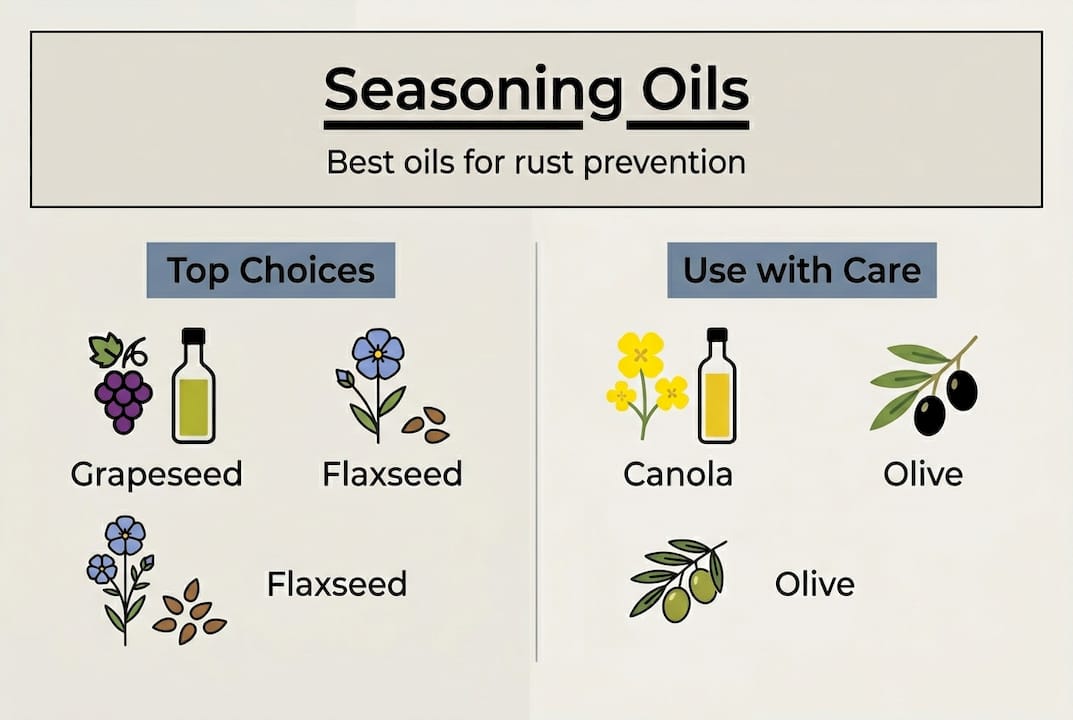
Choosing the right oil matters significantly. Grapeseed and flaxseed oils contain high levels of polyunsaturated fatty acids that form particularly durable seasoning. Canola and sunflower oils work well as affordable alternatives. Avoid olive oil and animal fats, which contain too many saturated fats to polymerise effectively.
Applying seasoning requires precision. Wipe an extremely thin oil coat across all surfaces, then buff away excess until the pan appears nearly dry. Too much oil creates sticky, uneven patches rather than smooth protection. Heat the pan in a 250°C oven for 30 minutes, allowing complete polymerisation. Repeat this process 2-3 times initially to establish robust rust defence.
Pro Tip: Season your pan upside down in the oven to prevent oil pooling, which causes uneven coating and sticky spots that compromise rust protection.
Well-maintained seasoning transforms carbon steel from rust-prone to remarkably durable. The dark patina that develops over months of cooking represents countless polymerised layers that shield the metal beneath. This natural protection requires no synthetic coatings and improves with use, making seasoning a carbon steel pan both practical and performance-enhancing.
Daily care routines to minimise rust risk effectively
Consistent maintenance habits eliminate most rust formation before it starts. Daily cleaning with hot water and soft sponge, thorough drying, applying thin oil wipe prevents 90%+ rust risk when performed correctly after each use. These simple steps take under five minutes but deliver outsized protection.
Your post-cooking routine should follow this sequence:
- Clean the pan whilst still warm using hot water and a soft sponge or brush
- Avoid soap, which strips seasoning oils and exposes bare metal to moisture
- Dry immediately with a clean towel, removing all visible water droplets
- Place the pan on low heat for 2-3 minutes to evaporate residual moisture
- Apply a thin oil wipe whilst the pan remains warm, buffing away excess
- Store in a dry, well-ventilated location away from humidity sources
Timing matters critically in rust prevention. Water left on carbon steel begins oxidation within minutes, particularly in humid environments common across coastal and northern Europe. Drying immediately after washing stops this process before rust gains foothold. The stovetop drying step ensures moisture trapped in microscopic surface irregularities evaporates completely.
Oiling whilst the pan stays warm allows better oil penetration and distribution. The metal’s heat helps oil flow into tiny surface pores, creating more complete coverage. Use just enough oil to create a thin sheen, then wipe thoroughly. Excess oil attracts dust and creates sticky residue rather than protective coating.
Storage environment influences rust formation significantly. Humidity accelerates corrosion, making proper storage essential in damp climates. Store pans hanging when possible, allowing air circulation around all surfaces. If stacking is necessary, place paper towels between pans to absorb moisture and prevent metal-to-metal contact that can damage seasoning.
Pro Tip: Keep a dedicated oil bottle and cloth near your cooktop for quick post-cooking maintenance, making the protective oil wipe automatic rather than an afterthought.
European climate variations demand adapted care. Coastal regions with salt air require more frequent oiling. Northern areas with indoor heating and low winter humidity may need less intensive maintenance. Monitor your pans for early rust signs and adjust routines accordingly.
Following best practices for carbon steel care becomes second nature within weeks. The time invested in proper daily maintenance pays dividends through decades of rust-free performance. Many cooks find these rituals meditative, a moment of care for tools that deliver exceptional cooking results.
Addressing rust: removal techniques and challenging scenarios
Even well-maintained pans occasionally develop rust from extended storage, acidic food contact, or maintenance lapses. Light surface rust appears as small orange-brown spots and removes easily. Moderate rust shows flaky patches requiring more aggressive treatment. Vinegar soak and scrubbing removes rust effectively; re-seasoning required to restore protection.
Rust removal follows a straightforward process. Mix equal parts white vinegar and water in a container large enough to submerge affected areas. Soak for 15-60 minutes depending on rust severity, checking progress every 15 minutes. The acetic acid in vinegar dissolves iron oxide without damaging underlying metal. Once rust loosens, scrub with coarse salt and a scouring pad, using circular motions to lift remaining oxidation.
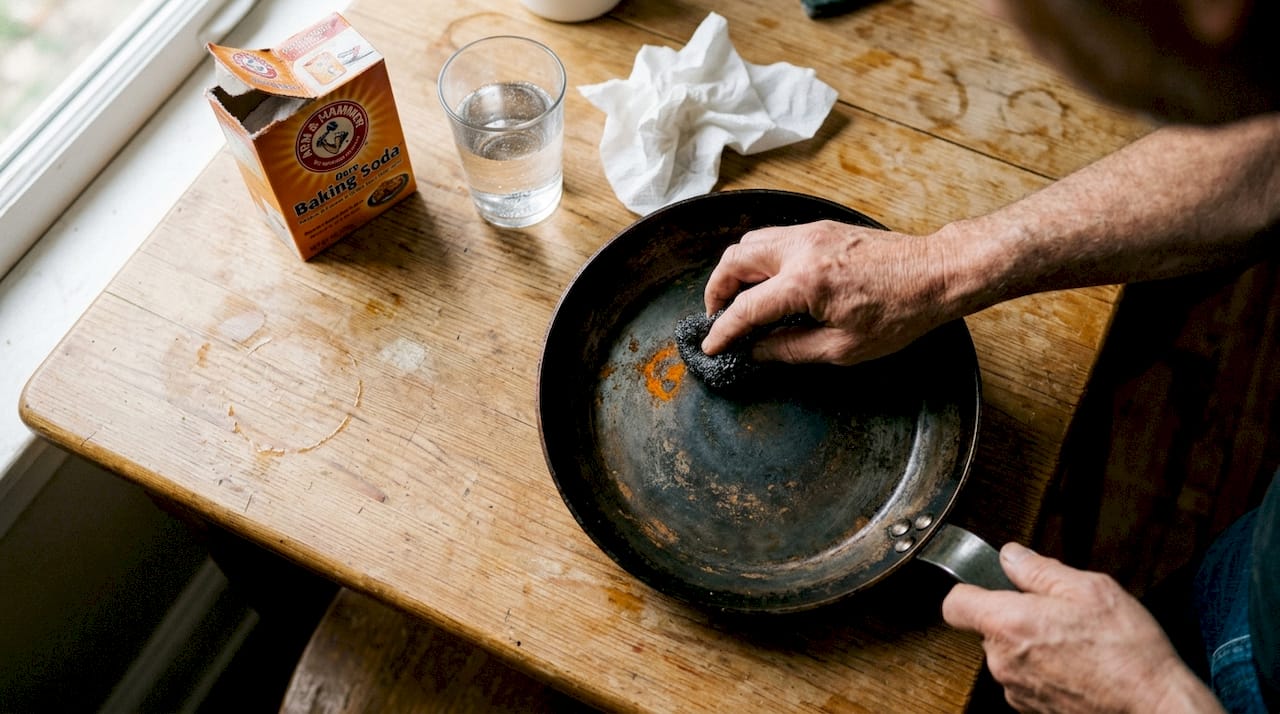
For stubborn rust, create a paste from baking soda and water. Apply to affected areas and scrub with steel wool, applying moderate pressure. This mechanical action removes rust the vinegar soak loosened. Rinse thoroughly with hot water, then dry immediately and completely to prevent new rust formation during the re-seasoning process.
Immediate re-seasoning after rust removal is non-negotiable. The metal surface you’ve just exposed sits completely vulnerable to new oxidation. Follow the complete seasoning process: apply thin oil coat, heat to polymerisation temperature, repeat 2-3 times. This rebuilds the protective barrier and restores nonstick performance.
Certain cooking scenarios accelerate seasoning degradation and rust risk:
- Acidic ingredients like tomatoes, citrus, and vinegar-based sauces erode seasoning
- Extended simmering of acidic foods leaches iron and damages protection
- Deglazing with wine or citrus juice repeatedly wears seasoning in specific areas
- High-humidity storage without proper oiling allows moisture penetration
Avoid prolonged contact with acids like tomato and lemon which erode seasoning faster, particularly in poorly-seasoned pans. For recipes requiring extended acid contact, enameled cast iron or stainless steel provides better material choices. Carbon steel excels at high-heat searing and sautéing but struggles with acidic braises and sauces.
| Scenario | Risk level | Recommended action |
|---|---|---|
| Light surface rust | Low | Vinegar soak, scrub, re-season |
| Moderate flaking rust | Medium | Extended vinegar soak, steel wool, multiple seasoning layers |
| Acidic cooking | High | Use alternative cookware or limit contact time |
| Humid storage | Medium | Increase oiling frequency, improve ventilation |
Thermal shock from rapid temperature changes can crack seasoning, creating pathways for moisture to reach bare metal. Avoid placing hot pans under cold water or moving cold pans to high heat without gradual warming. These stresses compromise your protective layer and invite rust formation.
Pro Tip: If you must cook acidic foods in carbon steel, limit contact to under 20 minutes and re-season immediately afterwards to repair any seasoning damage before rust develops.
Understanding these edge cases helps you deploy carbon steel strategically whilst protecting your investment through appropriate care and material selection.
Comparing carbon steel with alternative cookware for rust resistance
Enameled cast iron and stainless steel have superior corrosion resistance to bare carbon steel, making material selection crucial for specific cooking applications. Each material offers distinct advantages and limitations regarding rust prevention and maintenance requirements.
Enameled cast iron features a glass coating fused to cast iron at high temperatures, creating an impervious barrier against moisture and acids. This coating eliminates rust concerns entirely whilst providing excellent heat retention. However, enameled surfaces can chip from impact, and the coating prevents seasoning development. These pans work brilliantly for acidic braises and stews but lack the responsiveness and nonstick properties of seasoned carbon steel.
Stainless steel contains chromium, which forms a passive oxide layer that self-heals when scratched, providing inherent corrosion resistance. Food sticks more readily to stainless surfaces without added fats, and the material responds less quickly to temperature changes than carbon steel. Stainless steel suits acidic cooking and requires minimal maintenance but delivers different cooking performance characteristics.
Carbon steel relies entirely on seasoning for rust protection. Seasoning mitigates rust but acids leach iron which may exceed FDA limits if unmaintained, particularly relevant for professional kitchens serving vulnerable populations. Well-maintained seasoning prevents this leaching whilst providing exceptional heat response and natural nonstick performance.
| Material | Rust resistance | Maintenance level | Best applications |
|---|---|---|---|
| Carbon steel | Low (requires seasoning) | High | High-heat searing, sautéing, stir-frying |
| Enameled cast iron | Excellent | Low | Acidic braises, stews, slow cooking |
| Stainless steel | Excellent | Low | Acidic sauces, deglazing, boiling |
| Bare cast iron | Low (requires seasoning) | High | Baking, roasting, even-heat applications |
Choosing appropriate cookware depends on cooking style and maintenance willingness. Professional chefs often maintain multiple material types, deploying each for optimal applications. Home cooks with limited storage might prioritise versatility, accepting higher maintenance for carbon steel’s performance benefits or choosing enameled options for lower-maintenance cooking.
Carbon steel remains preferred for heat responsiveness and develops superior nonstick properties through use, but this performance requires consistent care. The material suits cooks who enjoy maintenance rituals and appreciate how tools improve with attention. Those seeking minimal-maintenance solutions or frequently cooking acidic dishes benefit from alternative materials.
Pro Tip: Build a strategic cookware collection with carbon steel for daily searing and sautéing, stainless steel for acidic sauces, and enameled cast iron for braises, matching each material to tasks where it excels.
Understanding material limitations prevents frustration and extends cookware lifespan. Carbon steel delivers exceptional performance within its optimal use cases but requires realistic expectations about maintenance needs and application boundaries.
Explore expert carbon steel cookware and care resources
Mastering rust prevention transforms carbon steel from temperamental to reliable, but having the right tools and guidance accelerates your success. Brass & Steel manufactures single-piece forged carbon steel pans optimised for seasoning retention and rust resistance, combining Polish engineering precision with Italian design sensibility.
Our 27 cm and 30 cm sauté pans feature 3mm and 4mm thickness respectively, providing thermal mass that maintains seasoning integrity through repeated heating cycles. The seamless construction eliminates rivets where moisture can collect, reducing rust risk points. Each pan ships with detailed care instructions developed through extensive testing in European kitchens.
Brass & Steel offers comprehensive guides covering seasoning techniques, daily maintenance routines, and troubleshooting common issues. These resources translate technical knowledge into practical steps, helping you build confidence in carbon steel care. Whether you’re transitioning from nonstick cookware or refining existing skills, expert guidance shortens your learning curve and prevents costly mistakes.
Frequently asked questions about rust prevention in cookware
How often should I re-season my carbon steel cookware to prevent rust?
Re-season every 3-4 months during normal use, or immediately after rust removal, deep cleaning, or cooking acidic foods. Frequent light oiling after each use maintains seasoning between full re-seasoning sessions. Monitor your pan’s appearance; dull or patchy areas indicate seasoning wear requiring attention before rust develops.
Can I cook acidic foods like tomato or lemon dishes in carbon steel pans?
Avoid prolonged cooking of acidic foods, which erode seasoning and expose bare metal to corrosion. Brief contact under 20 minutes causes minimal damage if you re-season afterwards. For tomato sauces, braises, or citrus-heavy dishes requiring extended cooking, use enameled cast iron or stainless steel to prevent seasoning degradation and potential iron leaching.
What is the best way to store carbon steel cookware to prevent rust?
Store pans completely dry in well-ventilated spaces, ideally hanging to maximise air circulation around all surfaces. Apply a thin oil coating after drying to create an additional moisture barrier. Avoid enclosed cabinets in humid climates, and place paper towels between stacked pans to absorb residual moisture and prevent seasoning damage from metal contact.
How can I tell if my pan has seasoning damage or rust?
Seasoning wear appears as dull, uneven patina or sticky patches where polymerisation failed. Rust shows as distinct orange-brown spots or flaky areas that feel rough to touch. Seasoning damage requires touch-up oiling and heating; rust demands complete removal through vinegar soaking and scrubbing, followed by full re-seasoning to restore protection.
Which oils are best for seasoning carbon steel pans to prevent rust?
Grapeseed and flaxseed oils offer optimal polymerisation due to high polyunsaturated fatty acid content, creating the most durable rust barriers. Canola and sunflower oils provide excellent, affordable alternatives. Apply extremely thin layers and heat to 250°C for complete polymerisation. Avoid olive oil and animal fats, which contain excessive saturated fats that prevent proper polymer formation.