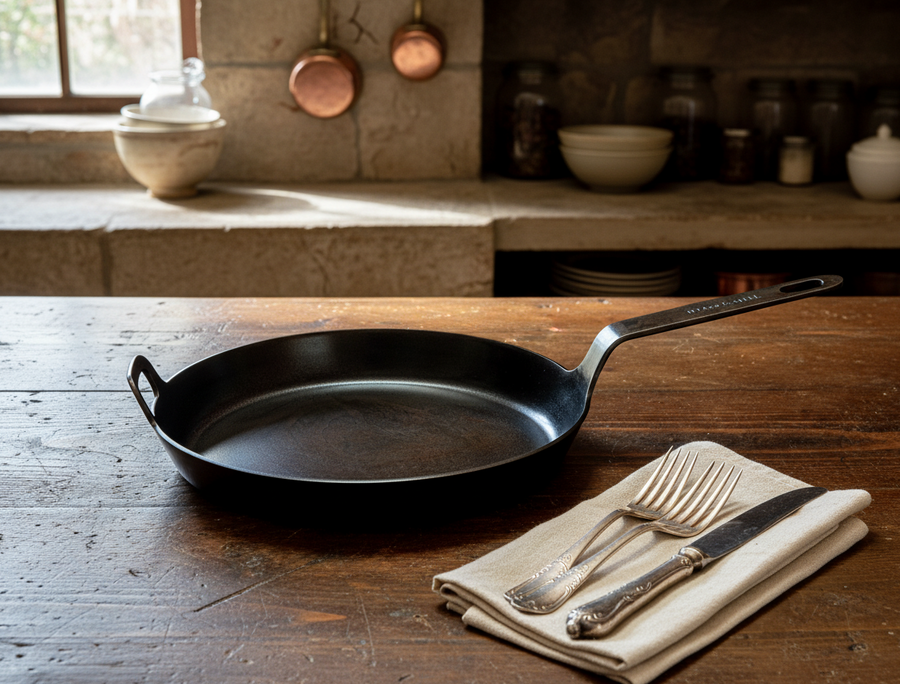
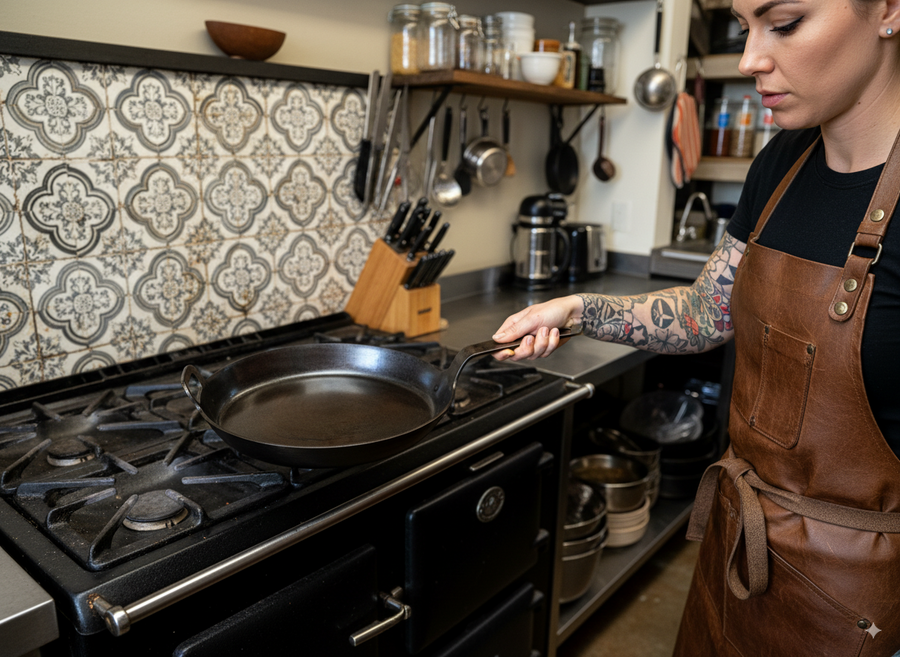
Complete Guide to Rust Prevention for Pans
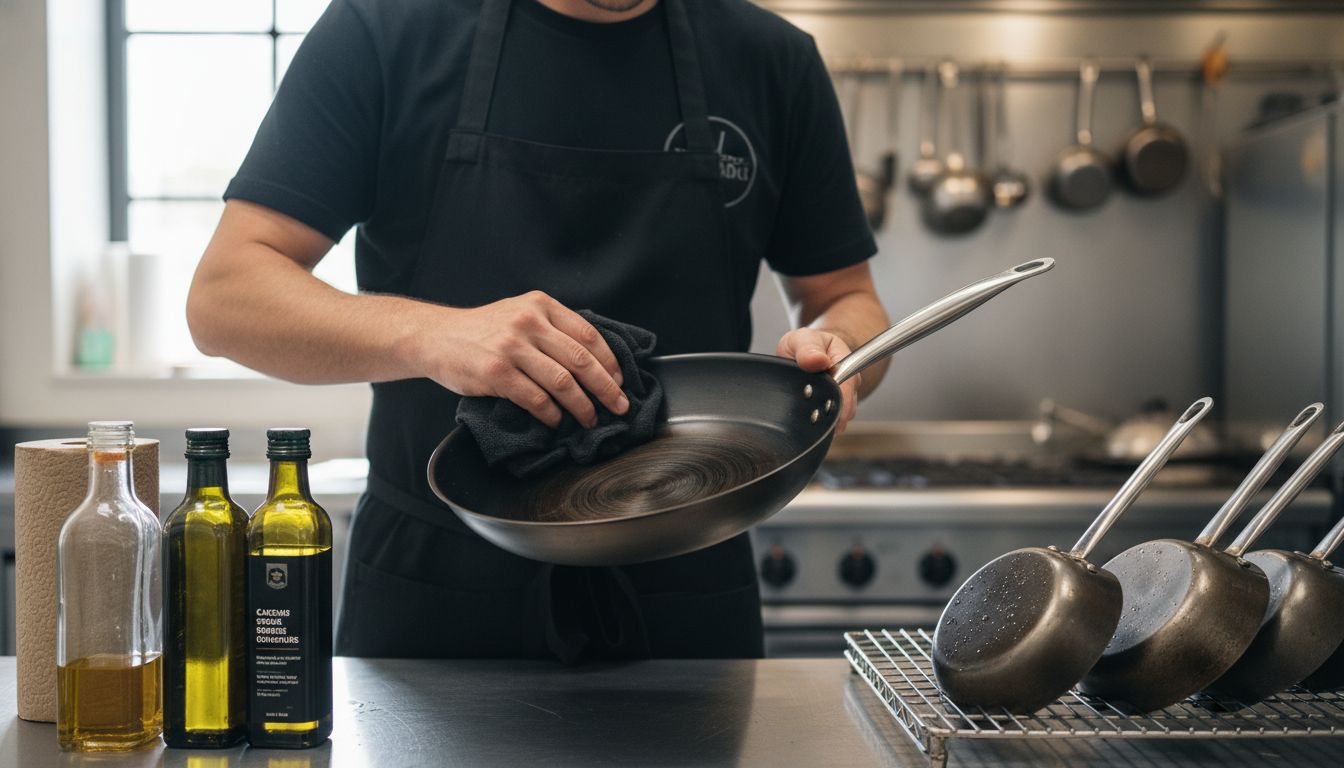
Even a single drop of water left on a carbon steel pan can spark rust formation that undermines its strength and performance. For cooks who love the speed and flavor that carbon steel delivers, rust is more than a nuisance. It quietly erodes your favorite pan and can cut its lifespan short. Understanding what triggers rust and how to prevent it allows you to protect your cookware, ensuring that every meal starts with the perfect surface.
Table of Contents
- Understanding Rust Formation on Pans
- Key Differences: Carbon Steel Vs Other Cookware
- Seasoning Techniques To Prevent Rust
- Proper Cleaning And Daily Maintenance
- Common Pan Rust Mistakes To Avoid
Key Takeaways
| Point | Details |
|---|---|
| Rust Prevention | Understanding moisture exposure, humidity, and improper storage can significantly reduce rust formation on carbon steel pans. |
| Cookware Advantages | Carbon steel offers superior heat conductivity and develops a natural nonstick surface through seasoning, unlike nonstick or cast iron options. |
| Seasoning Importance | Regular seasoning with high smoke-point oils creates a protective layer that prevents rust and enhances cooking performance. |
| Maintenance Practices | Gentle cleaning, thorough drying, and immediate oil application after use are crucial for long-lasting carbon steel cookware. |
Understanding Rust Formation on Pans
Rust formation is a complex chemical process that transforms iron and steel surfaces through oxidation. According to research from ijrar, iron reacts directly with oxygen to create iron(III) oxide, commonly known as rust. This natural phenomenon occurs when metal surfaces are exposed to moisture and oxygen, triggering an electrochemical reaction that gradually deteriorates the material.
The corrosion process begins subtly. As arxiv highlights, corrosive particles initiate microscopic pit formations on metal surfaces. These tiny pits serve as initial entry points for oxidation, progressively expanding and weakening the pan’s structural integrity. In carbon steel cookware, factors like humidity, temperature variations, and improper storage significantly accelerate rust development.
Rust Formation Triggers:
- Direct moisture exposure
- High humidity environments
- Prolonged water contact
- Salt or acidic residue
- Temperature fluctuations
- Insufficient drying after cleaning
Preventing rust requires understanding these fundamental chemical interactions. By implementing proper care techniques, such as thorough drying, light oiling, and careful storage, you can effectively protect your carbon steel pans from oxidation. Learn more about preventing rust in our comprehensive guide on carbon steel pan maintenance.
Key Differences: Carbon Steel vs Other Cookware
Carbon steel cookware stands apart from traditional cooking surfaces in several critical aspects. According to Prudent Reviews, carbon steel is uniquely composed of 99% iron and 1% carbon, offering a distinct material composition that sets it apart from other cookware types. Unlike nonstick pans with synthetic coatings, carbon steel develops a natural nonstick surface through seasoning, creating a more durable and health-conscious cooking option.
Cookware Comparison:
- Nonstick Pans: Synthetic coating, limited lifespan
- Cast Iron: Heavy, slower heat response
- Stainless Steel: Less natural nonstick properties
- Carbon Steel: Natural seasoning, quick heat distribution
The primary advantage of carbon steel lies in its ability to develop a protective patina over time. As you cook, the pan’s surface transforms, creating a naturally nonstick layer that improves with each use. This process is fundamentally different from other cookware materials that rely on artificial coatings or treatments. Learn more about the unique properties of carbon steel in our comprehensive guide.
Unlike alternative cookware options, carbon steel offers exceptional heat conductivity and durability. Professional chefs often prefer it for its responsiveness and ability to create perfect sears.
 The material’s lightweight nature combined with its incredible heat retention makes it a superior choice for both home cooks and professional kitchens seeking a versatile, long-lasting cooking surface.
Seasoning Techniques to Prevent Rust
Seasoning is a critical process in preventing rust and creating a protective layer on carbon steel cookware. According to Wikipedia, seasoning involves applying fat or oil and heating it to form a polymerized protective layer that not only prevents rust but also improves cooking performance. This technique transforms the raw metal surface into a durable, naturally nonstick cooking platform.
Essential Seasoning Oils:
- Grapeseed oil
- Avocado oil
- Canola oil
- Sunflower oil
- Refined coconut oil
The seasoning process works by creating a molecular bond between the oil and the pan’s surface. When heated, the oil undergoes polymerization, creating a hard, protective coating that acts as a barrier against moisture and oxygen. This natural protective layer is far more effective than synthetic coatings, developing strength and resilience with each cooking session. Discover our comprehensive guide to perfecting your carbon steel pan seasoning.
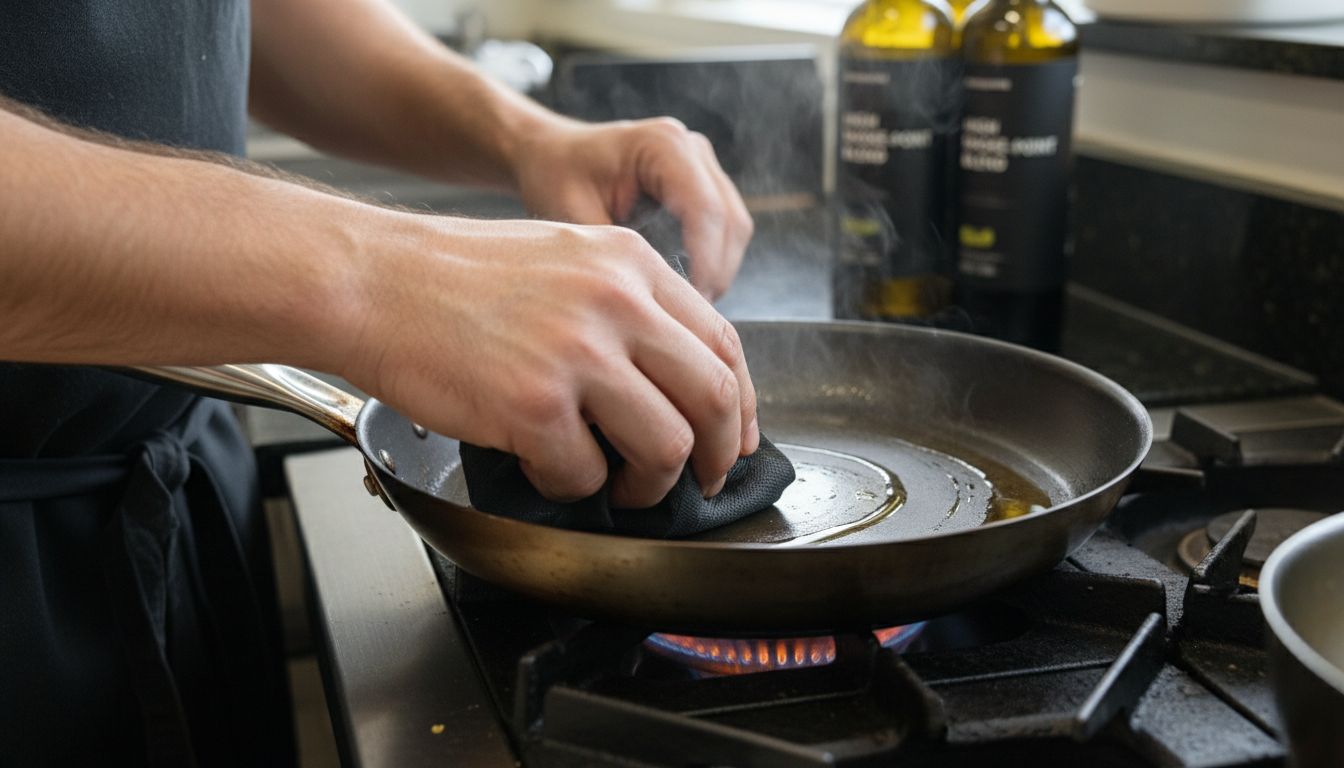
To maintain this protective layer, consistent care is crucial. After each use, apply a light coat of high smoke-point oil, which helps reinforce the seasoning and prevents rust formation. Avoid using soap or abrasive cleaning materials that could strip away the carefully developed protective patina. With proper technique, your carbon steel pan will develop a beautiful, dark seasoning that not only prevents rust but also enhances your cooking experience.
Proper Cleaning and Daily Maintenance
Maintaining a carbon steel pan requires a delicate balance of careful cleaning and strategic preservation. According to Prudent Reviews, the key to prolonging your pan’s lifespan is adopting specific maintenance techniques that protect its seasoned surface and prevent rust formation. Handwashing with minimal water and avoiding abrasive cleaning materials are crucial first steps in preserving your cookware’s integrity.
Recommended Cleaning Practices:
- Use warm water, not hot
- Clean immediately after cooking
- Avoid harsh detergents
- Dry thoroughly after washing
- Use soft cloth or paper towel
- Apply light oil after drying
Professional chefs understand that proper maintenance is about more than just cleaning. After each use, gently wipe the pan with a soft cloth and apply a thin layer of high smoke-point oil, which helps reinforce the protective seasoning and creates a barrier against moisture. Learn more about carbon steel care routines for lasting performance.
Consistent, gentle care transforms your carbon steel pan from a simple cooking tool into a long-lasting kitchen companion. By treating the pan with respect and understanding its unique maintenance needs, you’ll develop a naturally nonstick surface that improves with every meal, preventing rust and ensuring optimal cooking performance for years to come.
Common Pan Rust Mistakes to Avoid
Carbon steel cookware is sensitive to maintenance practices, and even small errors can lead to rapid rust formation. According to Prudent Reviews, several common mistakes can significantly compromise your pan’s longevity, including improper cleaning techniques, neglecting seasoning, and using metal utensils that damage the protective surface.
Critical Rust-Inducing Mistakes:
- Soaking pan in water
- Using harsh metal scrubbers
- Storing in humid environments
- Incomplete drying after washing
- Neglecting regular seasoning
- Using acidic foods before solid seasoning
One of the most frequent errors is leaving your carbon steel pan wet or storing it in a moisture-prone area. Water is rust’s primary catalyst, and even brief exposure can start the oxidation process. Professional chefs understand that immediate drying and light oiling after washing are not optional but essential maintenance steps. Explore our comprehensive guide on maintaining carbon steel pans to prevent rust and warping.
Maintaining your carbon steel pan requires mindful practices and consistent attention. By avoiding these common mistakes and treating your cookware with respect, you’ll create a durable, naturally nonstick surface that resists rust and provides exceptional cooking performance for years. Remember, prevention is always easier than restoration when it comes to carbon steel cookware.
Protect Your Investment with Expert Carbon Steel Pan Care
Rust can quietly ruin your cookware and spoil your cooking experience. This guide shows how crucial proper seasoning and maintenance are for preserving your pan’s natural nonstick surface and preventing damage from moisture and oxidation. At Brass & Steel, we craft high-quality carbon steel pans designed for durability and performance, making rust prevention easier and more effective, even for serious home cooks.
Discover our premium range in the Carbon Steel Collection | Brass&Steel where each pan is forged from a single piece of carbon steel to eliminate weak points where rust can start. 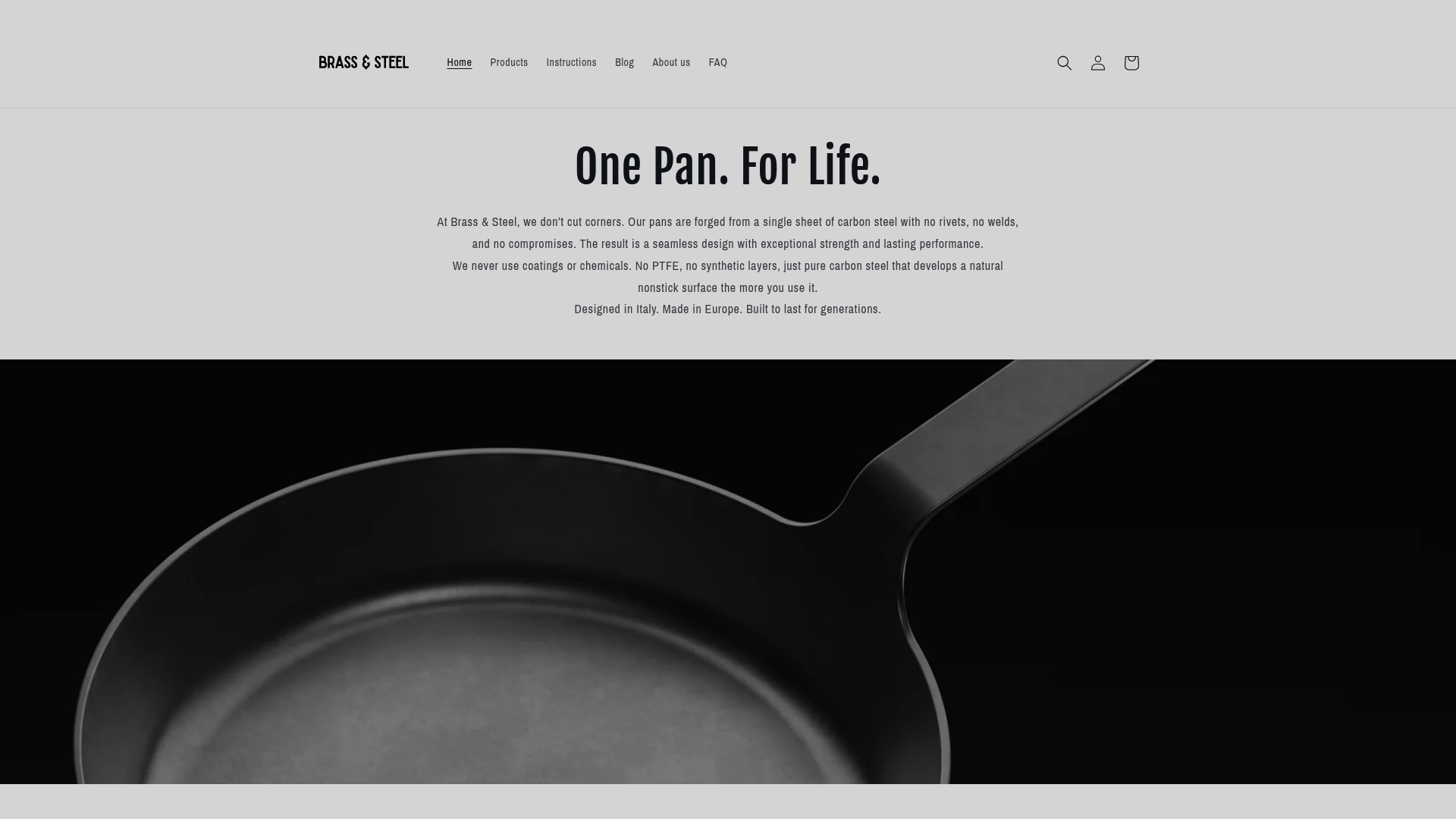
Take control of your kitchen performance by choosing heirloom-quality cookware that responds beautifully to seasoning and gentle care. Visit us at Brass & Steel and explore our New arrivals to get started on a rust-free cooking journey today.
Frequently Asked Questions
What causes rust to form on carbon steel pans?
Rust forms on carbon steel pans primarily due to oxidation, which occurs when iron reacts with moisture and oxygen. Factors such as prolonged exposure to water, high humidity, and temperature fluctuations can accelerate this process.
How can I effectively prevent rust on my carbon steel pans?
To prevent rust, ensure thorough drying of your pans, apply a light coat of oil after each use, and store them in a dry environment. Regular seasoning also creates a protective layer that helps ward off rust.
What are the essential steps for seasoning a carbon steel pan?
To season a carbon steel pan, apply a thin layer of high smoke-point oil to the surface, heat the pan until the oil begins to smoke, and let it cool. Repeat this process multiple times to build a durable nonstick patina.
What cleaning practices should I follow to maintain my carbon steel pans?
Clean your carbon steel pans with warm water immediately after use, avoiding harsh detergents and abrasive scrubbers. Dry them thoroughly and apply a light layer of oil to protect the surface and prevent rust.