Pan design for chefs explained: the complete guide
TL;DR:
- Pan design controls heat, moisture, and ergonomics to improve cooking results in professional kitchens. Matching shape, material, and handle features to specific tasks enhances consistency and efficiency.
Pan design is the deliberate engineering of shape, material, and construction to control heat distribution, moisture evaporation, and handling for professional cooking. Most chefs learn this through trial and error, but understanding the principles directly shortens that curve. The industry term is cookware engineering, and it covers everything from thermal mass to handle attachment. Get these fundamentals right and you gain repeatable results, faster service, and less wasted food. This guide covers pan design for chefs explained in full, from geometry to material science to ergonomics.
How does pan shape affect cooking outcomes?
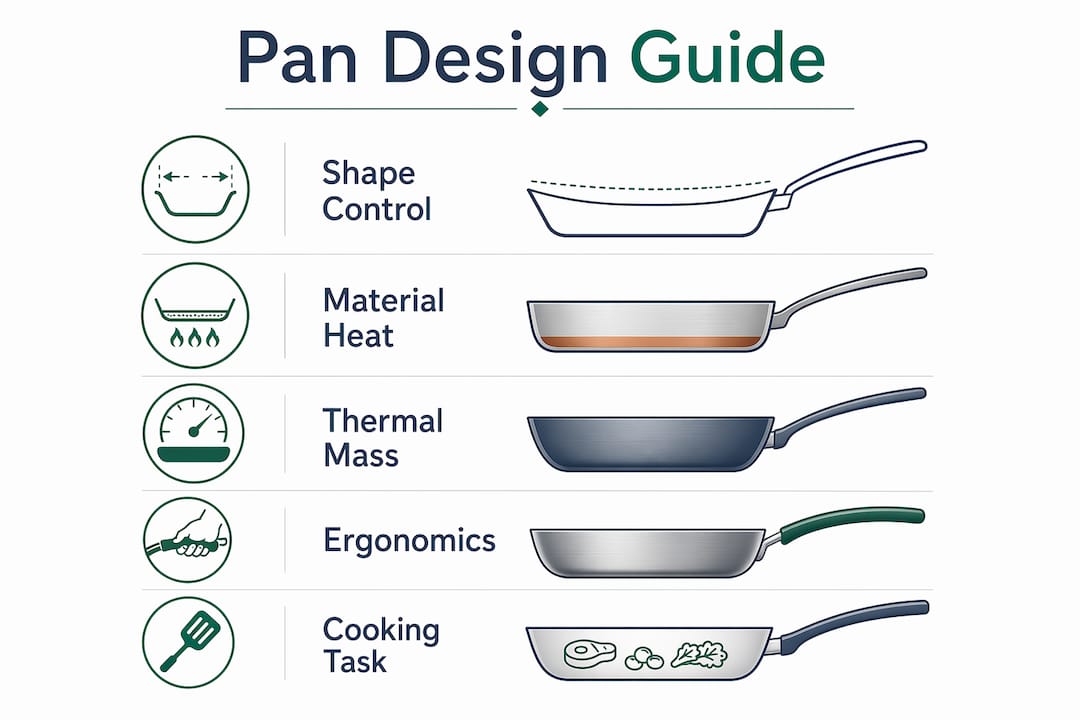
Pan shape controls evaporation rate and browning efficiency by exposing more or less liquid surface to air. This is the most underused variable in professional kitchens. Chefs adjust seasoning and heat constantly, yet the pan sitting on the stove is doing most of the moisture management work already.
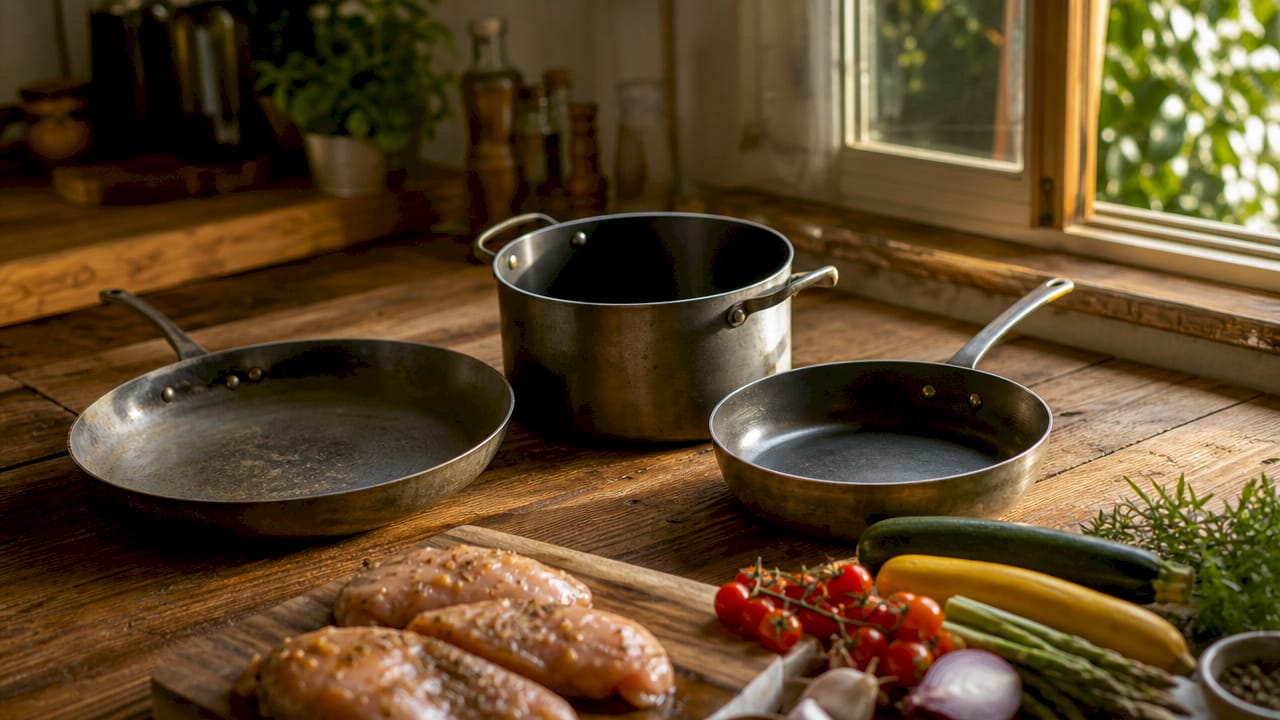
Wide, shallow pans push moisture away from the food surface quickly. That rapid evaporation is what creates the Maillard reaction and gives you a proper brown crust rather than a grey, steamed exterior. A skillet or sauté pan with a large flat base is the correct tool for searing proteins, reducing sauces, and getting colour on vegetables.
Tall, narrow pans with lids do the opposite. Lids trap steam, increase humidity inside the pan, and slow evaporation dramatically. That is exactly what you want for braising, poaching, and simmering. Using a wide sauté pan for a braise wastes energy and dries out the liquid too fast.
The three shapes every professional kitchen needs are:
- Skillet or frying pan: wide base, sloped sides, no lid. Best for searing, frying, and tossing.
- Sauté pan: wide base, straight sides, often with a lid. Best for sautéing, pan sauces, and shallow braising.
- Saucepan: narrow base, tall sides, lid included. Best for stocks, sauces, and simmering.
Pro Tip: If your proteins are steaming rather than browning, the pan is overcrowded. The fix is not higher heat. Use a wider pan or cook in smaller batches to restore evaporation surface.
Consider pan design as a moisture management tool. Controlling evaporation mechanically through pan shape and batch size is often more effective than adjusting ingredients or seasoning for browning. That insight alone changes how you approach mise en place.
What pan materials actually do to heat performance
Thermal mass is the amount of heat energy a pan holds at a given temperature. It determines how quickly the pan recovers after you add cold food. A 1.5 kg cast-iron skillet holds roughly four times the thermal energy of a 400 g aluminium pan at the same temperature. That difference means the cast-iron pan barely drops in temperature when you lay a cold steak on it, while the aluminium pan dips sharply and takes time to recover.
Here is how the main materials compare for professional use:
| Material | Heat retention | Heat responsiveness | Weight | Best use |
|---|---|---|---|---|
| Cast iron | Very high | Slow | Heavy | Searing, oven cooking |
| Carbon steel | High | Fast | Medium | Searing, sautéing, all-round |
| Aluminium | Low | Very fast | Light | Delicate sauces, quick cooking |
| Stainless steel | Medium | Medium | Medium | Durability, acidic foods |
| Clad (multi-layer) | Medium to high | Medium to fast | Medium | High-volume, even heat |
Clad pans combine stainless steel exteriors with aluminium or copper cores to reduce hot spots and improve heat distribution. That construction is popular in high-volume kitchens because it delivers consistent results across the full cooking surface. The trade-off is cost and weight.
Carbon steel sits between cast iron and aluminium in every category. It heats faster than cast iron, holds more heat than aluminium, and responds quickly to temperature changes. Pan thickness and construction directly balance responsiveness and heat retention. Too thin and the pan scorches easily. Too thick and it responds slowly, which makes precise sautéing difficult.
Pro Tip: For searing, choose a pan with higher thermal mass. For quick sautéing and tossing, choose a lighter pan with faster heat response. Trying to do both with one pan is a compromise that costs you precision.
Pan engineering aims to minimise hot spots through layered metal construction. In practice, this means a clad pan with an aluminium core distributes heat more evenly than a single-metal pan of the same weight. For a busy service, that repeatability matters more than any single performance peak.
Which pan features matter most for professional kitchens?
Ergonomics in cookware engineering covers handle design, pan balance, and cooking surface geometry. Expert chefs prefer pans with wide, flat cooking surfaces that balance manoeuvrability and sufficient food contact area. A pan that is too small for the task forces you to cook in multiple batches. A pan that is too large becomes unwieldy on a crowded pass.
Handle attachment is a detail that separates professional-grade pans from domestic ones. Welded handles offer more durability and fewer cleaning challenges than riveted handles, which can loosen over time and trap food debris in the joints. In a high-volume kitchen, a loose handle is a safety issue and a hygiene problem. Welded or single-piece construction removes both risks.
Key ergonomic features to assess when choosing a pan:
- Handle length and angle: longer handles keep your hand further from the heat source. A slight upward angle reduces wrist strain during tossing.
- Pan weight at service: a 3 kg pan is manageable when cold, but after a four-hour service it causes fatigue. Match weight to the task and the cook.
- Cooking surface width: wider surfaces improve food contact and tossing efficiency. Sloped sides on a skillet make it easier to flip food cleanly.
- Surface texture and seasoning: carbon steel pans develop a naturally slick seasoning over time, improving food release without synthetic coatings. A well-seasoned carbon steel pan performs comparably to a coated nonstick pan, with far greater heat tolerance.
Ergonomics plays a significant role in how chefs interact with their cookware over long shifts. A pan that fits the hand well and balances correctly reduces errors and physical strain. That is not a luxury consideration. It is a performance one. For guidance on building and maintaining a carbon steel surface, the seasoned steel surface guide from Brass-steel covers the process in full.
How to match a pan to the task and heat source
Choosing cookware depends on the heat-and-moisture geometry tailored to particular dishes. No single pan fits all purposes. The right approach is to match the pan’s thermal properties and shape to the specific cooking task and the heat source available.
- Searing proteins: use a heavy pan with high thermal mass, such as a carbon steel or cast-iron sauté pan. Preheat it fully before adding the protein. The stable heat prevents the pan from cooling and ensures a consistent crust across the whole surface.
- Sautéing vegetables and quick turnovers: use a lighter pan with faster heat response. Lighter pans with attentive heat control are preferred for responsive sautéing, where you need to adjust temperature quickly as ingredients go in and out.
- Braising and simmering: use a pan with a lid and tall sides. The lid traps steam and maintains a humid environment. A wide sauté pan with a matching lid works well for shallow braises.
- Delicate proteins and eggs: use a lighter pan with a well-seasoned or coated surface. Thin aluminium or seasoned carbon steel gives you the control needed for low-heat, precise cooking.
- Induction cooktops: use pans with a flat, magnetic base. Carbon steel and cast iron both work on induction. Clad pans with stainless steel exteriors are also induction-compatible. Aluminium alone does not work on induction without a bonded base.
Matching cookware material and design to specific tasks enhances culinary results and kitchen efficiency. For wok cookery, rounded pans with oil convection and a tossing motion allow extremely fast, even cooking on a high-heat surface. The pan shape drives the technique, not the other way around.
Batch size is another variable that chefs underestimate. Overcrowding a pan drops the surface temperature and traps steam, turning a sear into a braise. The fix is a wider pan or a second pan running in parallel, not higher heat. Understanding this connection between pan geometry and batch management is one of the clearest applications of cookware engineering in a live service.
For a full breakdown of material, form, and compatibility decisions, the professional cookware checklist from Brass-steel is a practical reference.
Key takeaways
Pan design directly determines cooking outcomes by controlling heat retention, moisture evaporation, and ergonomic handling, and matching the right pan to each task is the most reliable way to improve consistency in a professional kitchen.
| Point | Details |
|---|---|
| Shape controls moisture | Wide, shallow pans brown food faster; tall pans with lids trap steam for braising. |
| Thermal mass drives sear quality | Heavier pans recover heat faster after adding cold food, producing better crusts. |
| Material choice is task-specific | Carbon steel suits all-round use; cast iron for searing; aluminium for delicate, quick cooking. |
| Welded handles outperform riveted | Welded or single-piece construction improves durability and hygiene in high-volume kitchens. |
| Batch size is a pan design variable | Overcrowding drops surface temperature and causes steaming regardless of heat source. |
Why most chefs get pan design backwards
Most chefs I have worked alongside reach for higher heat when food is not browning. The real problem is almost always the pan. Either it is too small for the batch, the wrong shape for the task, or it lacks the thermal mass to hold temperature when cold protein hits the surface.
The misconception I see most often is treating pan weight as a proxy for quality. Heavy pans are not universally better. A 3 kg cast-iron skillet is outstanding for searing a thick ribeye, but it is a liability for a quick vegetable sauté where you need to adjust heat fast and toss the pan. Choosing the wrong thermal mass for the task costs you precision and adds fatigue.
The other underrated factor is evaporation control. Chefs adjust seasoning, timing, and flame constantly, but rarely think about the pan’s geometry as a moisture management tool. Switching from a saucepan to a wide sauté pan for a reduction can cut the time in half without touching the heat. That is pan design working for you, not against you.
My honest advice: build your pan selection around three variables first. Shape for moisture control, thermal mass for heat stability, and handle design for the length of your service. Everything else is secondary. For chefs thinking about making the switch to uncoated carbon steel, the safe use guide from Brass-steel is worth reading before your first service with a new pan.
— Davide
Brass-steel carbon steel pans for professional kitchens
Brass-steel makes carbon steel sauté pans forged from a single piece of steel, which removes the rivets and welds that cause hygiene problems and handle failure in busy kitchens. The 27 cm pan at 3 mm thickness weighs around 2 kg, suited to everyday searing and sautéing. The 30 cm pan at 4 mm thickness weighs around 3 kg and is built for larger batches and high-volume professional use.
Both pans are free from PTFE and PFOA, work on all cooktops including induction, and build a natural nonstick patina through seasoning. If you are ready to move away from coated cookware, the Brass-steel carbon steel range is a practical starting point for professional kitchens that need durability and performance without synthetic coatings.
FAQ
What is the most important factor in pan design for chefs?
Shape and thermal mass are the two most critical factors. Shape controls moisture evaporation and browning, while thermal mass determines how well the pan holds temperature when cold food is added.
Why do professional chefs prefer carbon steel pans?
Carbon steel offers a balance of high heat retention, fast responsiveness, and a natural nonstick seasoning that builds over time. It outperforms coated nonstick pans in heat tolerance and durability.
Does pan thickness affect cooking performance?
Yes. Thinner pans overheat and scorch easily, while very thick pans respond slowly to temperature changes. A 3–4 mm carbon steel pan gives a good balance of responsiveness and heat retention for most professional tasks.
Are welded handles better than riveted handles in professional kitchens?
Welded handles are more durable and easier to clean than riveted handles, which can loosen and trap food debris over time. In high-volume kitchens, welded or single-piece construction is the more practical choice.
How do I choose between a skillet and a sauté pan?
Use a skillet for searing, frying, and tossing, where sloped sides and a wide base give you manoeuvrability. Use a sauté pan for pan sauces, sautéing, and shallow braising, where straight sides and a lid give you better moisture control.