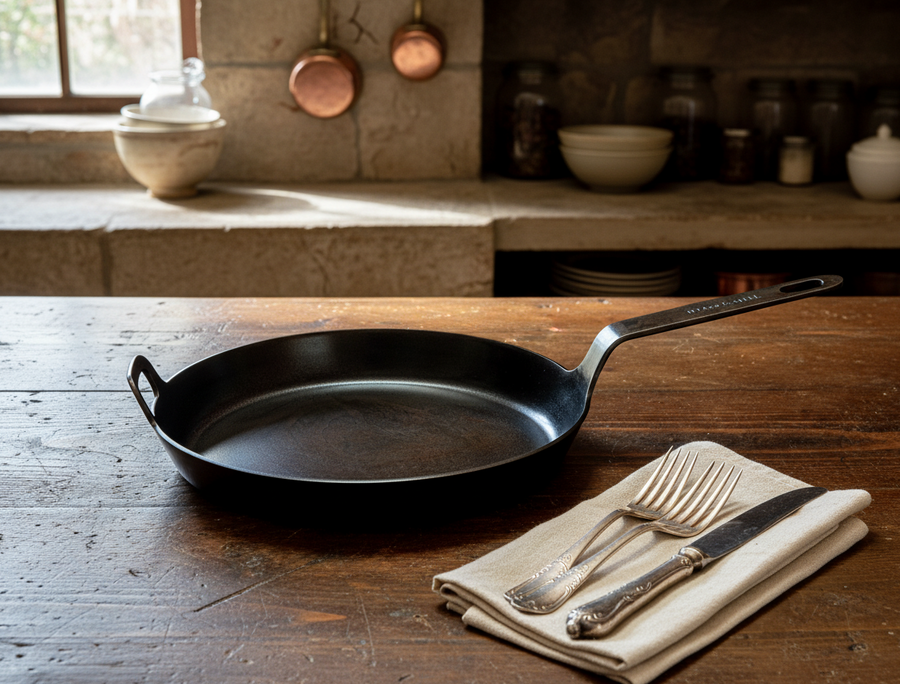
How to Use Carbon Steel Safely for Professional Results
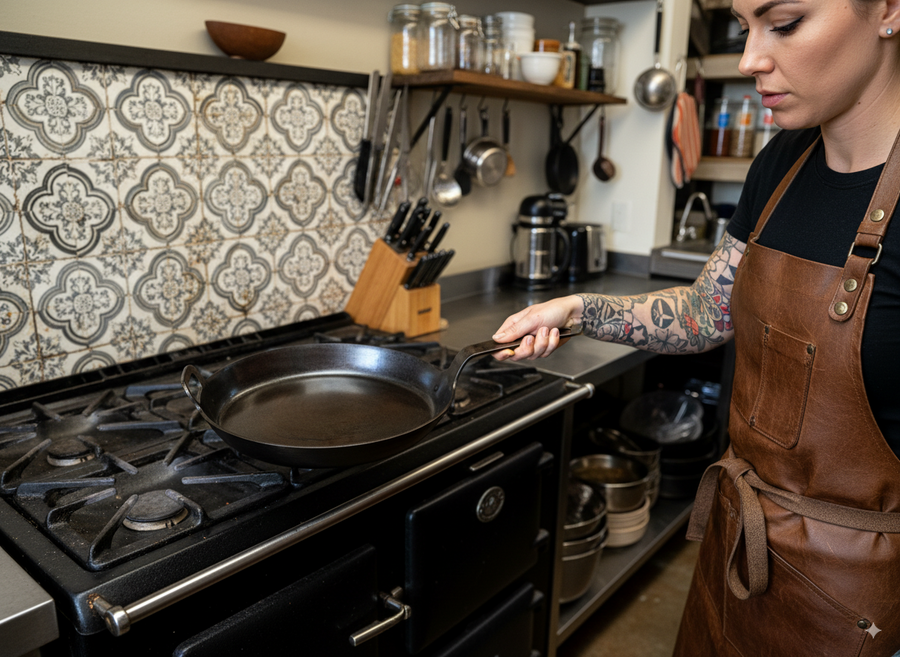
Most British kitchens are switching to carbon steel pans for their unbeatable heat control and cleaner cooking. Studies show that properly seasoned cookware reduces food sticking by over 80 percent compared to untreated pans. For European home cooks and chefs striving for healthier meals, safe preparation and regular maintenance are essential. This guide reveals proven steps to protect your investment and elevate everyday cooking results.
Table of Contents
- Step 1: Prepare The Pan For Safe Initial Use
- Step 2: Season The Surface For Natural Nonstick Protection
- Step 3: Apply Best Practices For Safe Daily Cooking
- Step 4: Maintain The Pan To Ensure Lasting Safety
- Step 5: Check Seasoning And Cookware Condition Regularly
Quick Summary
| Key Point | Explanation |
|---|---|
| 1. Prepare the pan properly | Thoroughly wash and dry the pan to remove factory coatings before adding a seasoning layer. |
| 2. Use appropriate oils for seasoning | Select oils with high smoke points for effective seasoning and to create a durable nonstick layer. |
| 3. Maintain proper cleaning practices | Clean with hot water and avoid harsh detergents to preserve the seasoning and prevent rust. |
| 4. Regularly inspect the seasoning layer | Monitor for signs of wear or damage to the seasoning and re-season when necessary for optimal performance. |
| 5. Establish a storage routine | Store the pan in a cool, dry place with good air circulation to avoid moisture accumulation and rust formation. |
Step 1: Prepare the pan for safe initial use
Safe carbon steel pan preparation begins with removing protective factory coatings and creating a durable cooking surface. This crucial first step transforms your raw pan into a reliable cooking companion by preventing rust and building a natural nonstick layer).
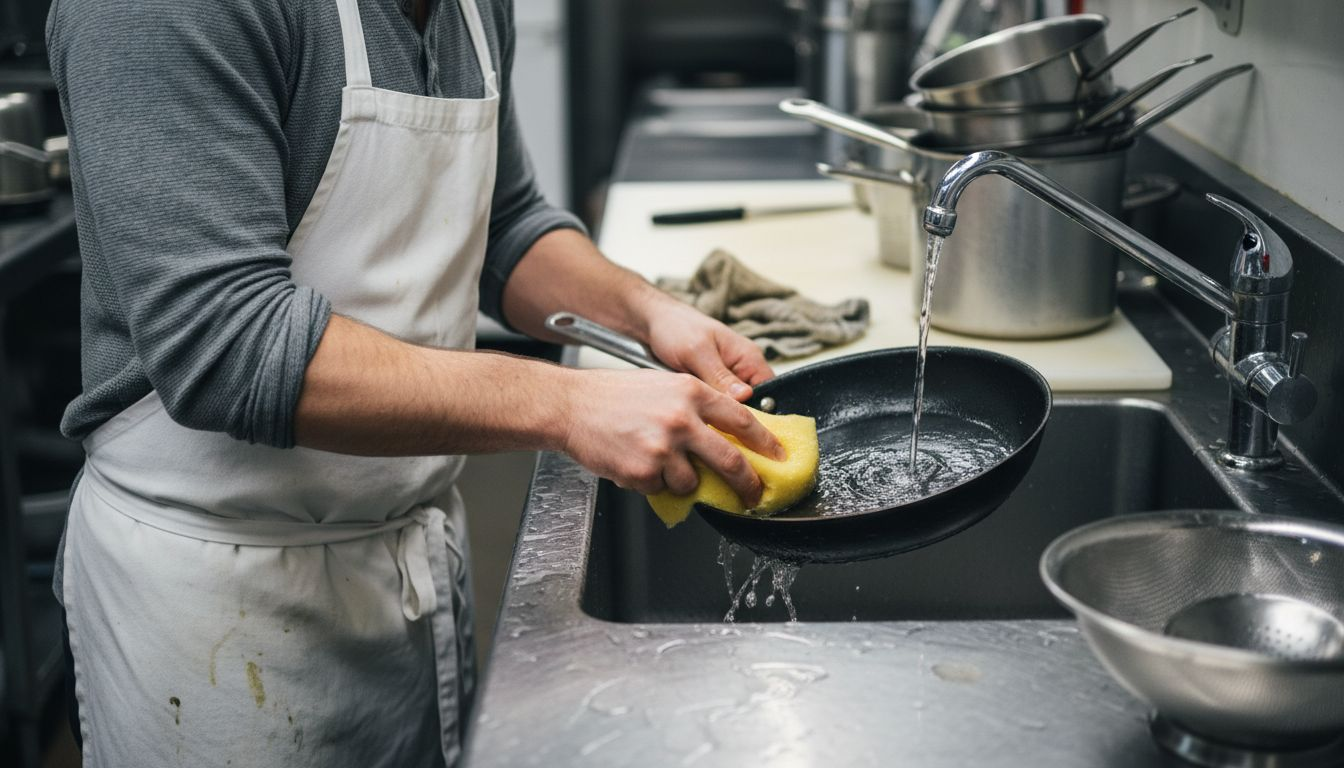
Start by thoroughly washing your new pan with warm water and a soft sponge to remove any factory residues or protective oils. Dry the pan completely using a clean kitchen towel or paper towels, ensuring no moisture remains. The goal is to create a pristine surface ready for seasoning. Pay careful attention to drying every nook and cranny to prevent potential rust formation.
Next, prepare for the initial seasoning by selecting a high smoke point oil like grapeseed or sunflower oil. Using a clean cloth or paper towel, apply an extremely thin layer across the entire pan surface. Your coating should be so light that the pan looks almost dry. This thin layer will polymerise during heating, creating a protective barrier that guards against rust and develops a natural nonstick surface.
Expert Tip: Select oils with high smoke points above 230°C to ensure successful and even seasoning of your carbon steel cookware.
Here’s a quick reference for suitable oils and their characteristics when seasoning carbon steel cookware:
| Oil Type | Smoke Point | Advantages | Notes |
|---|---|---|---|
| Grapeseed | 230°C | Neutral flavour, high smoke | Excellent for initial layer |
| Sunflower | 232°C | Widely available, light | Produces even seasoning |
| Avocado | 271°C | Very high smoke point | Good for repeated cycles |
| Flaxseed | 225°C | Creates hard coating | Can flake if applied thick |
Step 2: Season the surface for natural nonstick protection
Transforming your carbon steel pan into a professional cooking tool requires creating a robust seasoning layer that provides natural nonstick performance. Seasoning involves carefully polymerising oil into a protective surface) that guards against rust and enhances cooking capabilities.
Preheat your oven to 230°C and place the pan upside down on the centre rack. This positioning allows excess oil to drip away while ensuring even heat distribution. Select a high smoke point oil like grapeseed or avocado oil and apply an extremely thin layer using a clean cloth. Your coating should be so minimal that the pan appears almost dry this prevents pooling and ensures an even seasoning.
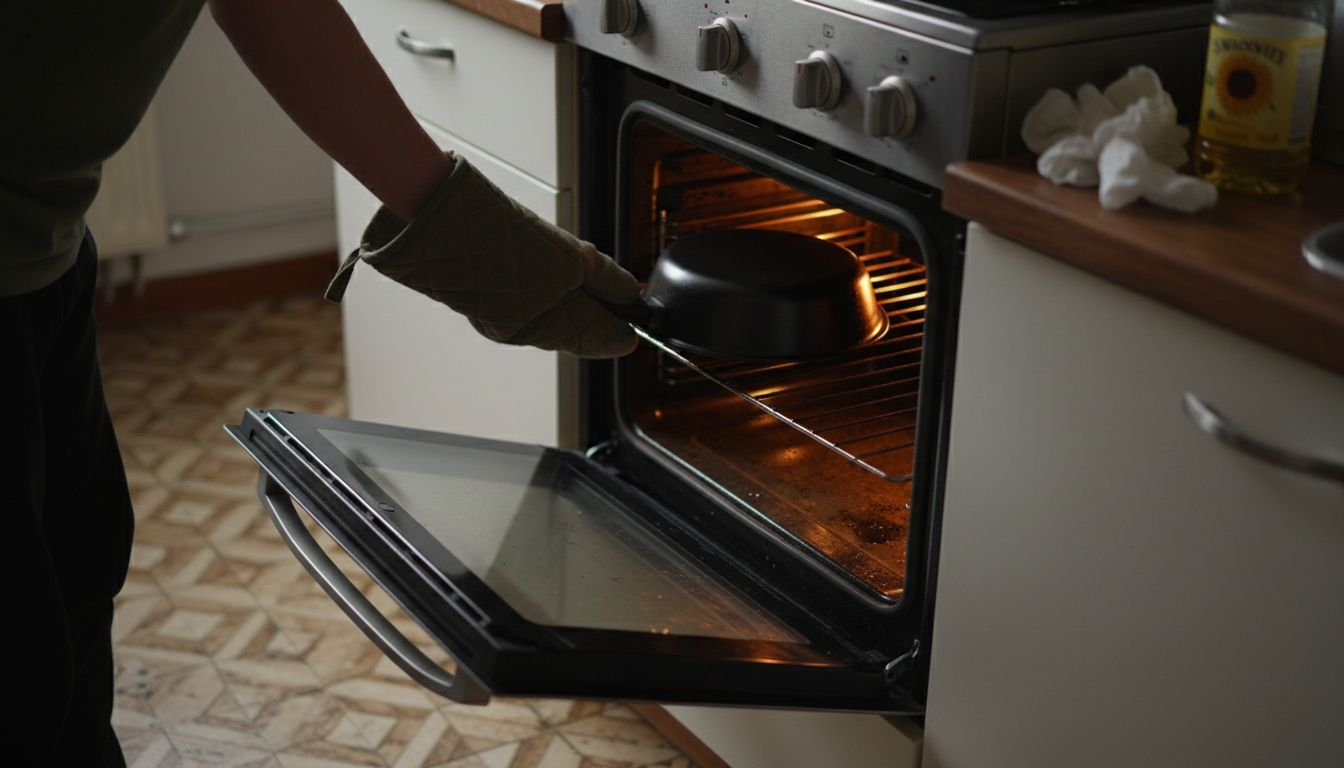
Complete multiple heating cycles to build a durable seasoning. Each 30 minute heating session helps polymerise the oil molecules into a tough protective layer. After each cycle allow the pan to cool completely before applying another ultra thin oil layer. Consistent seasoning will gradually develop a dark smooth surface that improves with every cooking session.
Expert Tip: Avoid thick oil applications and opt for multiple thin layers to achieve a smooth consistent seasoning that will last for years.
Step 3: Apply best practices for safe daily cooking
Mastering carbon steel cookware requires understanding how to protect both your pan and your food during daily cooking. A well maintained carbon steel pan delivers exceptional cooking performance while ensuring long term durability and safety.
Choose utensils carefully to preserve your pan seasoning. Wooden or silicone spatulas work best as they prevent scratching the delicate protective layer. When cooking, maintain moderate heat levels and avoid sudden temperature changes that could damage the pan or compromise its seasoning. Always use a food thermometer to confirm proper cooking temperatures particularly when preparing meats to guarantee food safety.
Clean your carbon steel pan using gentle techniques. Rinse with hot water and use a soft sponge without harsh detergents. Thoroughly dry the pan after each use and apply a thin layer of oil to maintain the protective seasoning. This simple maintenance routine prevents rust and keeps your cookware in optimal condition for years of professional cooking.
Expert Tip: Keep a dedicated soft cloth near your cooking area to quickly dry and oil your carbon steel pan after each use.
Step 4: Maintain the pan to ensure lasting safety
Preserving your carbon steel pan requires consistent care and attention to prevent corrosion and maintain its protective seasoning layer. A well maintained pan not only performs better but also extends the life of your cookware significantly.
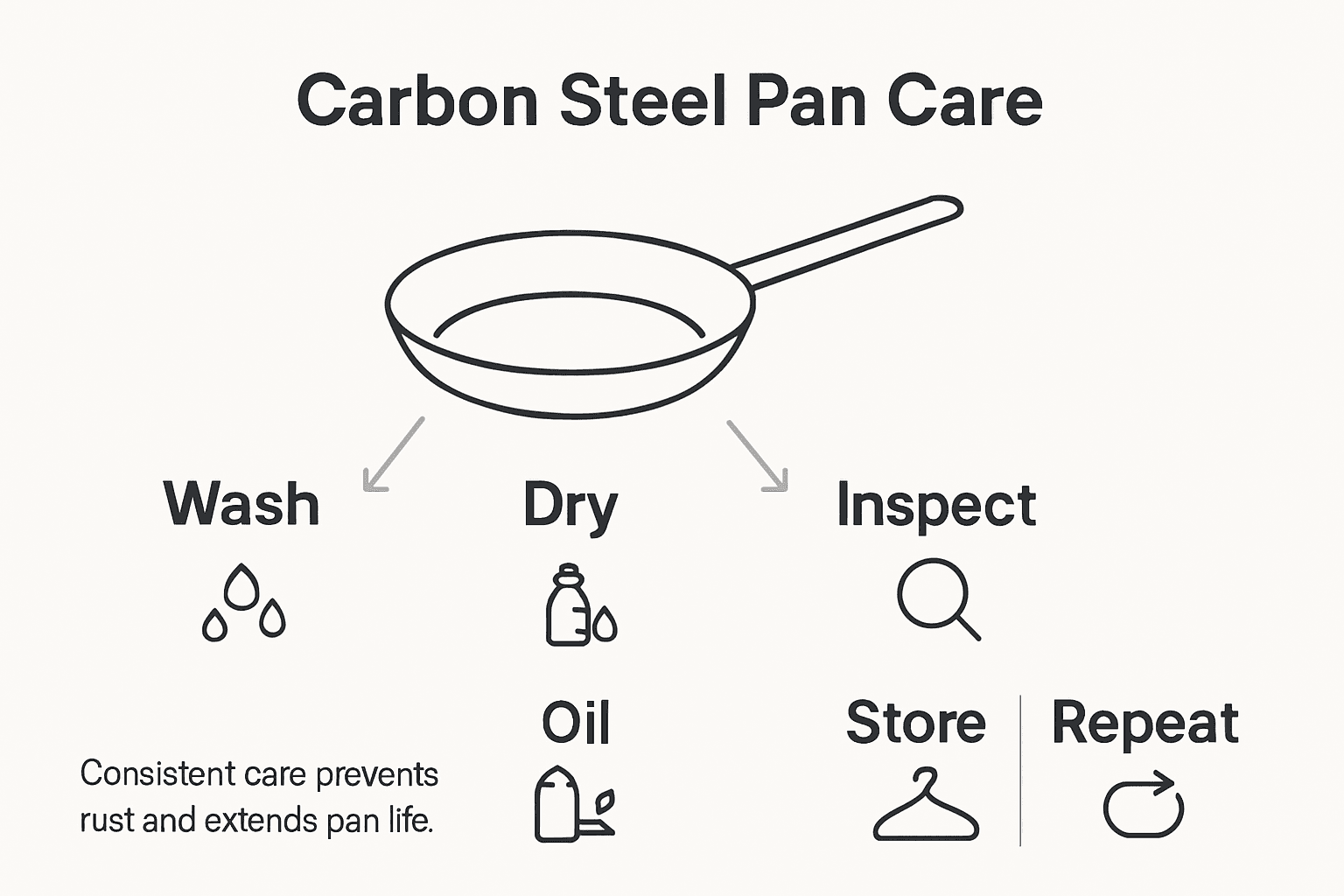
After each cooking session clean your pan promptly using hot water and a soft sponge or brush. Avoid harsh detergents or abrasive scrubbers that could damage the seasoning. Dry the pan thoroughly immediately after washing to prevent rust formation. A clean kitchen towel or paper towel works perfectly for this purpose. Once dry apply a thin layer of high smoke point oil to reinforce the protective coating and keep the surface smooth.
Store your carbon steel pan in a cool dry place with good air circulation. Avoid storing it in humid environments or stacking heavy items on top of it. Periodically check the seasoning layer and re season the pan if you notice any dull patches or signs of wear. This routine maintenance ensures your pan remains safe hygienic and ready for professional level cooking.
Expert Tip: Hang your carbon steel pan or store it on a rack to promote air circulation and prevent moisture accumulation.
Below is a summary of essential maintenance tasks and their benefits for carbon steel pans:
| Task | Frequency | Benefit | Common Mistake |
|---|---|---|---|
| Dry thoroughly | After each use | Prevents rust formation | Leaving moisture on surface |
| Light oil application | After cleaning | Maintains nonstick coating | Using too much oil |
| Inspect seasoning | Monthly | Detects wear early | Ignoring dull patches |
| Re-season if needed | As required | Restores protection | Skipping damaged areas |
Step 5: Check seasoning and cookware condition regularly
Maintaining the safety and performance of your carbon steel cookware requires vigilant monitoring of its surface condition and seasoning integrity). Regular inspection helps prevent potential cooking hazards and ensures your pan continues to deliver exceptional culinary results.
Inspect your pan closely after each cooking session for signs of wear or damage. Look for dullness in the seasoning layer rust patches or areas where the protective coating seems thin or flaking. Pay special attention to the pan surface feeling rough or uneven which could indicate the seasoning needs restoration. When you notice these warning signs clean the pan thoroughly and prepare to re season to maintain its protective layer.
To re season the pan remove any rust or damaged seasoning using a gentle scrubbing technique. Apply a thin layer of high smoke point oil and heat the pan in the oven to rebuild the protective coating. Consistent maintenance not only extends the life of your carbon steel cookware but also ensures safe and reliable cooking performance every time you use it.
Expert Tip: Keep a dedicated carbon steel inspection journal to track your pan maintenance schedule and note any changes in its condition.
Elevate Your Cooking with Expertly Crafted Carbon Steel Pans
Mastering the safe use of carbon steel cookware means investing in quality that complements proper care and seasoning. If you have experienced challenges like uneven seasoning, rust risks, or unsure how to maintain your pan for professional results, Brass & Steel offers a solution tailored to your needs. Our Carbon Steel Collection | Brass&Steel features high-performance sauté pans forged from a single carbon steel sheet that build a natural nonstick surface safely over time through proper seasoning techniques.
Step up your culinary game with dependable, heirloom-quality pans designed in Italy and crafted in Poland. Our cookware is free from harmful coatings and compatible with induction, making them a healthy and durable choice for every cook. Discover how combining your knowledge with our professional carbon steel pans delivers lasting performance and safe, natural nonstick cooking. Visit Brass & Steel today and begin your journey towards expert-level results with cookware you can trust.
Frequently Asked Questions
How do I prepare my carbon steel pan for first use?
To prepare your carbon steel pan for first use, wash it thoroughly with warm water and a soft sponge to remove factory coatings. Dry it completely and apply a very thin layer of high smoke point oil, ensuring it appears almost dry before seasoning it in the oven.
What oils are best for seasoning carbon steel cookware?
The best oils for seasoning carbon steel cookware have high smoke points, such as grapeseed, sunflower, or avocado oil. Select one of these oils, and apply an extremely thin layer to ensure even polymerisation during the seasoning process.
How can I maintain my carbon steel pan to prevent rust?
To prevent rust on your carbon steel pan, dry it thoroughly after each use and apply a thin layer of oil. This simple maintenance routine should be performed every time you clean the pan to keep it in optimal condition.
What should I look for when inspecting the seasoning of my carbon steel pan?
When inspecting your carbon steel pan, look for signs of wear such as dullness, rust patches, or flaking of the seasoning layer. If you notice any of these signs, it’s essential to clean the pan and re-season it to restore its protective coating.
How often should I re-season my carbon steel cookware?
You should re-season your carbon steel cookware as needed, typically when you notice dull patches or signs of wear in the seasoning layer. Consistent inspection and maintenance can help extend the life of your pan, aiming to check the seasoning monthly for best results.
What utensils should I use to protect my carbon steel pan?
To protect your carbon steel pan, use wooden or silicone utensils that won’t scratch the seasoning. Avoid metal utensils which can damage the delicate protective layer and compromise its nonstick performance.