How to care for a carbon steel wok: the full guide
TL;DR:
- Proper care of a carbon steel wok involves regular cleaning, thorough drying, and light oiling to prevent rust and maintain the seasoning. Following correct procedures before first use, after daily cooking, and during storage ensures the wok builds a durable, nonstick patina over time. Mistakes like soaking, using harsh abrasives, or storing with a lid can damage the wok and require re-seasoning.
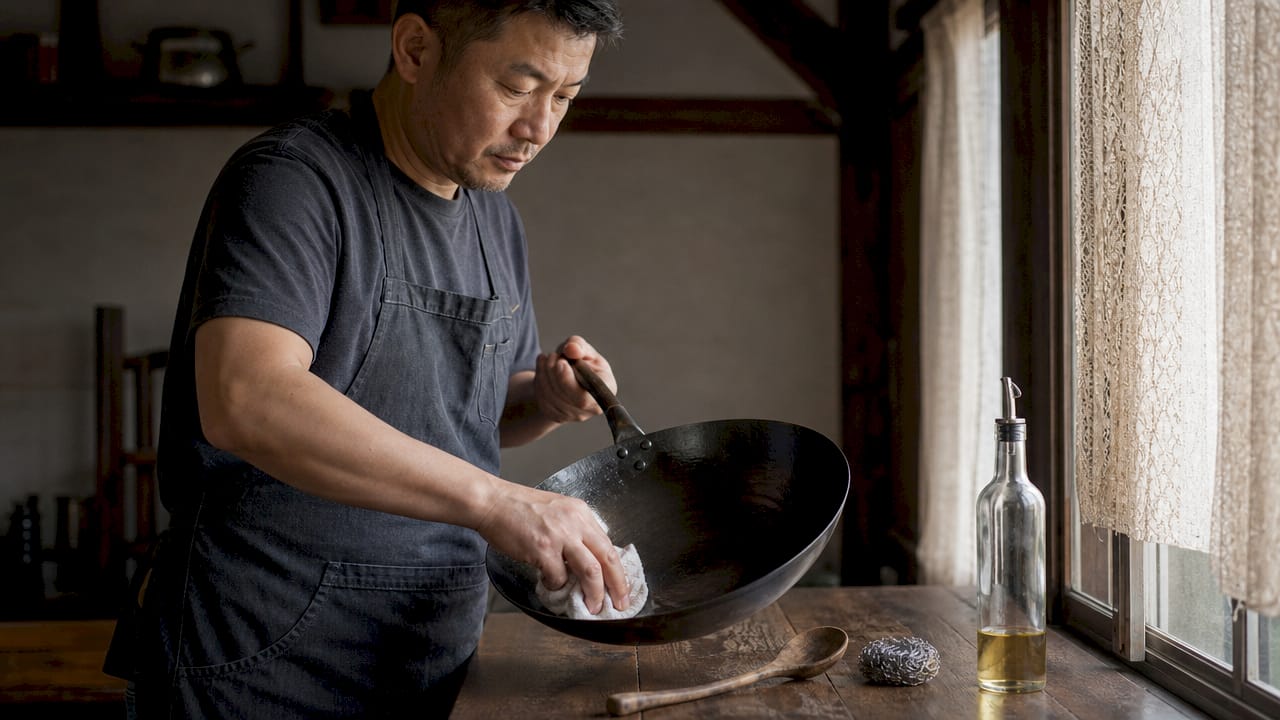
Carbon steel wok care is the process of maintaining its seasoning and protecting it from rust to ensure lasting cooking performance. The seasoning, known in professional cookware circles as a polymerised oil patina, is what gives your wok its natural nonstick surface. Get the care right and your wok improves with every cook. Get it wrong and you are fighting rust and sticky patches every time you light the hob.
How to care for a carbon steel wok before the first use
A new carbon steel wok arrives coated in a protective factory oil. That coating stops rust during shipping, but you must remove it before seasoning. Skipping this step means your first seasoning layer bonds to grease rather than bare metal, and it will flake off quickly.
Follow these steps before your first cook:
- Scrub the wok with hot, soapy water and a stiff brush to remove the factory oil completely.
- Rinse thoroughly and place the wok on a high flame until it starts to smoke. This burns off any remaining residue.
- Remove from the heat and let it cool slightly. Apply a very thin layer of a high-smoke-point oil such as grapeseed, avocado, sunflower, or canola.
- Return the wok to medium-high heat and let the oil smoke and polymerise for two to three minutes.
- Wipe out any excess oil with a folded piece of kitchen paper.
- Repeat the oiling and heating process two to three more times to build a solid base layer.
Oils like grapeseed and avocado work well because their high smoke points allow the oil to bond to the steel before it burns off entirely. Avoid olive oil and animal fats for seasoning. They have lower smoke points and leave a sticky, uneven residue that is difficult to correct.
Pro Tip: Apply far less oil than you think you need. After coating the surface, wipe it back with kitchen paper until the wok looks almost dry. That near-invisible film is exactly what you want. Too much oil is the single most common cause of a sticky, patchy patina.
Pre-seasoned woks still require the same care steps of warming, cleaning, drying, and oiling. The factory seasoning is a starting point, not a finished surface.
How should you clean a carbon steel wok after daily use?
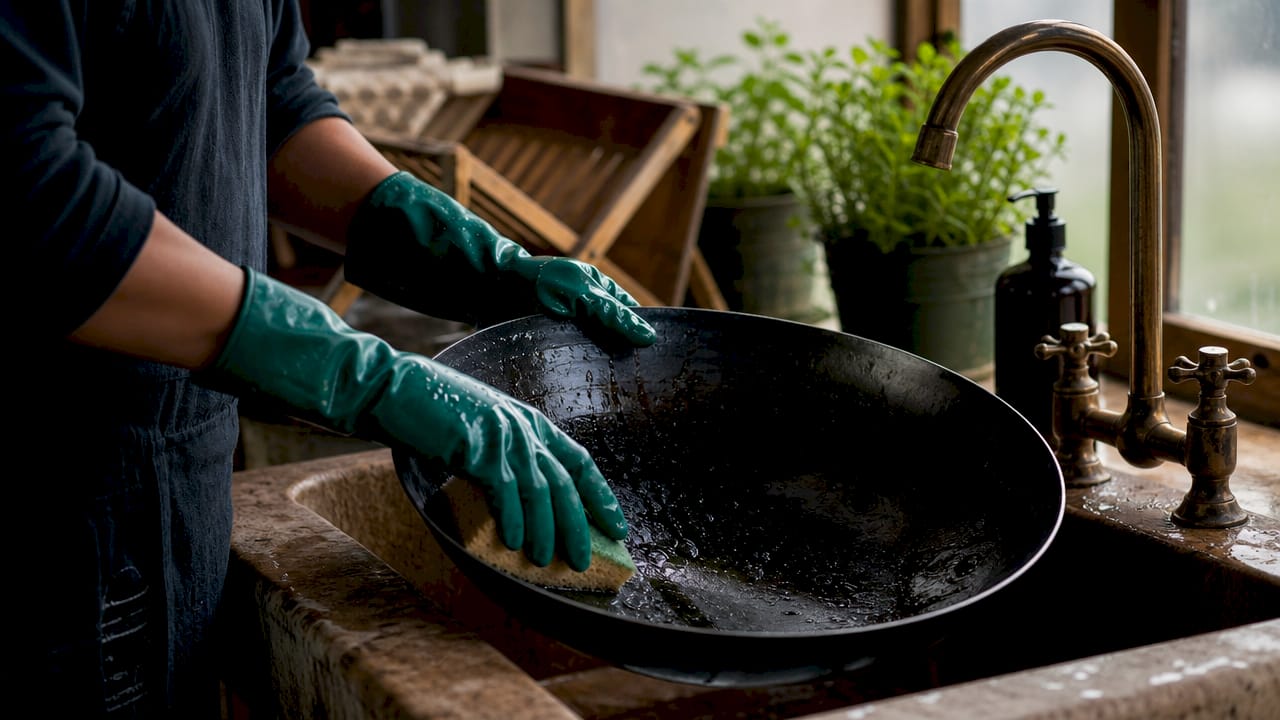
The goal of daily cleaning is to remove food residue without stripping the patina you have worked to build. The method is simpler than most people expect.
- Rinse the wok while it is still warm. Warm metal releases food far more easily than cold metal.
- Use hot water and a bamboo brush or soft sponge. Scrub gently in circular motions.
- For stuck-on food, add a small amount of water to the wok and bring it to a boil on the hob. The residue lifts within seconds.
- Alternatively, use a tablespoon of coarse salt as a gentle abrasive. Scrub with a folded piece of kitchen paper, then rinse.
- Avoid soaking the wok in water. Prolonged water contact strips the seasoning and promotes rust.
- Never put a carbon steel wok in the dishwasher. Dishwasher detergents are alkaline and will strip the patina entirely.
- Avoid steel wool or harsh abrasive pads for routine cleaning. Reserve those for rust rescue only.
The soap question confuses a lot of home cooks. A tiny drop of mild soap is acceptable for occasional use when you need to cut through stubborn grease. The key word is occasional. Follow it immediately with thorough heat-drying and a light re-oiling, and your seasoning will be fine.
Pro Tip: Never pour cold water into a screaming hot wok. The sudden temperature change can warp the metal permanently. Let the wok cool for a minute or two before rinsing, or use warm water from the start.
What are the best drying and oiling practices after cleaning?
Moisture is the enemy of carbon steel. Even a small amount of water left on the surface will cause rust within hours, particularly in a humid kitchen. Drying properly after every wash is non-negotiable.
- Place the clean wok on the hob over medium-high heat.
- Watch the surface carefully. Any water droplets will evaporate quickly. Heat-drying takes less than one minute over medium-high heat to fully remove moisture.
- Look for a uniform grey colour across the surface. That tells you the wok is bone dry.
- Remove from the heat and let it cool for thirty seconds.
- Apply a tiny amount of neutral, high-smoke-point oil, such as grapeseed or canola, using a folded piece of kitchen paper.
- Wipe the entire interior surface, then wipe again to remove any excess. The surface should feel smooth, not slick.
Heating to around 250°C before oiling ensures oil bonds properly and moisture is fully removed. That temperature is the point at which polymerisation begins, meaning the oil actually fuses to the steel rather than sitting on top of it.
The minimal oil layer should never feel sticky or wet. If it does, you have used too much. Excess oil attracts dust, burns unevenly on the next cook, and creates the patchy, gummy surface that frustrates so many home cooks.
Pro Tip: Store your wok in a dry spot immediately after oiling. A wok left in a damp kitchen without a protective oil layer will develop surface rust overnight, especially in winter when condensation is common.
Which mistakes should you avoid with carbon steel wok maintenance?
Most wok problems trace back to a handful of repeated errors. Knowing what they are saves you from a full re-seasoning job.
- Soaking overnight. Leaving water in the wok, even for an hour, is enough to cause rust. Always clean and dry immediately after cooking.
- Dishwasher use. This strips the patina completely. There are no exceptions to this rule.
- Over-oiling after cleaning. A thick oil coat does not protect better. It creates a sticky surface and attracts dust between uses.
- Air-drying only. Leaving the wok to drip-dry on a rack is not sufficient. You must heat-dry it on the hob every single time.
- Cooking acidic foods too early. Tomatoes, citrus, and vinegar-based sauces dissolve a young patina. Wait until your seasoning is well established, typically after several weeks of regular cooking, before introducing acidic ingredients.
- Using abrasive tools routinely. Steel wool and metal scourers are for rust rescue, not daily cleaning. Using them regularly removes the patina layer by layer.
Rescuing a rusty wok is straightforward: scrub with steel wool to remove all rust, then re-season from scratch with two to three full oil cycles. Treat it as a rare intervention, not a regular habit. A wok that needs rescuing every month is a wok that is not being dried properly after washing.
The biggest misconception in carbon steel wok care is the idea that soap is always forbidden. Correct drying after washing is far more critical to wok longevity than avoiding soap entirely. A well-dried, lightly oiled wok will outlast a soap-free but poorly dried one every time.
How do you store a carbon steel wok to prevent rust?
Proper storage protects the patina between uses and keeps rust from forming in a humid kitchen environment.
- Hang the wok on a wall hook or pot rack if possible. Hanging maximises air circulation and prevents moisture from pooling on the surface.
- If you must stack it with other pans, place a clean paper towel or folded dishcloth between the wok and any metal surface. Hanging woks or using separators minimises oxidation risk significantly.
- Never store the wok with a tight-fitting lid. Lids trap moisture inside and create the perfect conditions for rust.
- Keep the wok in a dry, well-ventilated cupboard or open shelf. Avoid storing it under the sink or near a steam source.
- Do not stack other heavy pans directly inside the wok. The weight can scratch the seasoning and the contact points trap moisture.
A wok stored correctly, dry, lightly oiled, and with good airflow, will hold its seasoning for weeks between uses without any additional attention.
Key takeaways
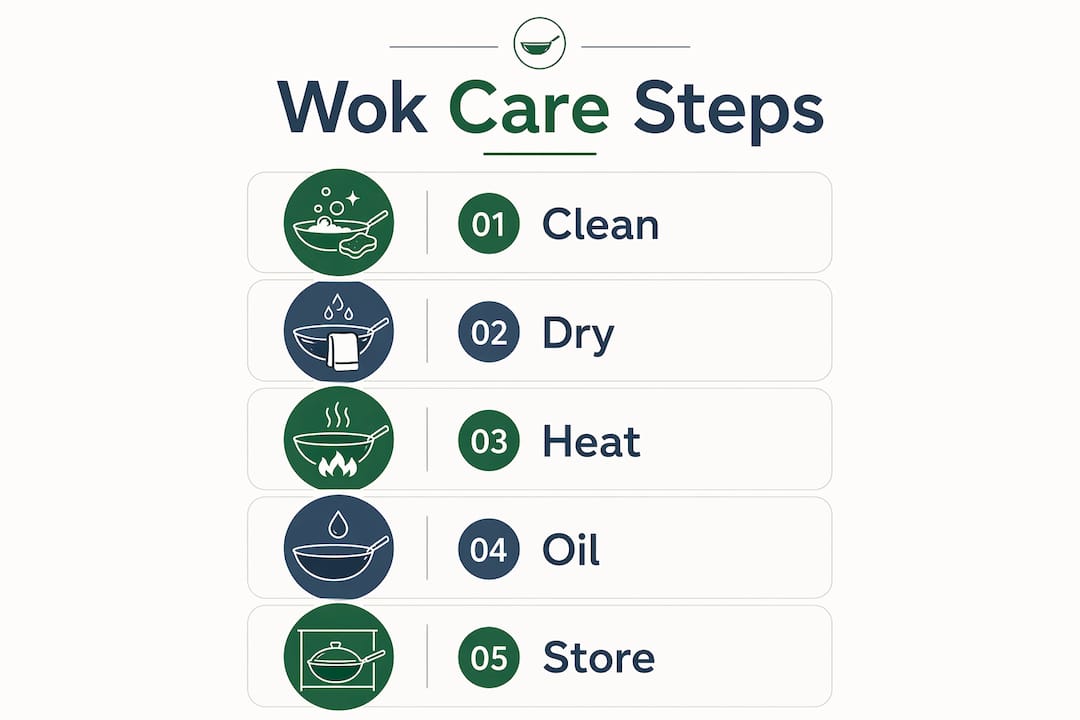
Caring for a carbon steel wok comes down to one principle: keep it dry, keep it lightly oiled, and cook in it regularly to build a stronger patina over time.
| Point | Details |
|---|---|
| Season before first use | Remove factory oil, then repeat the oil-and-heat cycle two to three times to build a base patina. |
| Clean while warm | Rinse with hot water and a soft brush immediately after cooking; never soak or use a dishwasher. |
| Heat-dry every time | Place on the hob over medium-high heat until fully dry before applying any oil. |
| Oil sparingly | Wipe a near-invisible layer of grapeseed or canola oil after drying; excess oil causes sticky patches. |
| Store with airflow | Hang the wok or use paper towel separators; avoid tight lids and damp storage spots. |
What I have learned from cooking with carbon steel every day
The wok is a living surface. That is the framing that changed how I approach carbon steel care entirely. The patina is not a coating applied once and preserved forever. It builds, darkens, and improves every time you cook something fatty at high heat. A wok that looks a little uneven or blotchy after a few months is not a problem. It is evidence of use.
The cooks who struggle most with carbon steel are the ones who treat it like a delicate antique. They avoid soap entirely, they panic at the first sign of a light spot, and they re-season obsessively. The wok does not need that level of anxiety. It needs consistent, simple habits: clean it warm, dry it on the hob, wipe it with a little oil, and put it away dry.
The seasoning improves through regular cooking rather than through perfect technique. Stir-frying vegetables, searing meat, and cooking eggs all contribute to a darker, more resilient patina. The wok rewards you for using it. That is the part no care guide can fully convey until you experience it yourself.
— Davide
Carbon steel cookware from Brass-steel
Brass-steel makes carbon steel cookware forged from a single piece of steel, with no rivets and no synthetic coatings. Every pan is free from PTFE and PFOA, and builds a natural nonstick surface through seasoning. If you are looking for a wok or sauté pan that will last decades with the right care, the Brass-steel cookware range is worth a look. The site also carries in-depth guides on carbon steel wok maintenance and preventing rust on carbon steel, written for home cooks who want practical answers rather than vague advice.
FAQ
How do I season a carbon steel wok for the first time?
Scrub off the factory oil with hot soapy water, heat the wok until it smokes, then apply a very thin layer of grapeseed or avocado oil and heat again. Repeat the oiling and heating cycle two to three times to build a solid base seasoning.
Can I use soap to clean a carbon steel wok?
A small amount of mild soap is acceptable occasionally, provided you heat-dry the wok immediately afterwards and apply a light coat of oil. Correct drying matters far more than avoiding soap entirely.
Why does my carbon steel wok feel sticky after seasoning?
A sticky surface means too much oil was applied during seasoning or maintenance. Scrub the surface with coarse salt or a stiff brush, rinse, heat-dry thoroughly, and re-season using a near-invisible film of oil rather than a visible coat.
How do I stop my carbon steel wok from rusting?
Heat-dry the wok on the hob after every wash, apply a thin layer of neutral oil before storing, and keep it in a dry spot with good airflow. Never leave water sitting in the wok or store it with a tight lid.
Does a pre-seasoned wok still need the same care?
Pre-seasoned woks require the same ongoing maintenance as unseasoned ones. The factory seasoning is a starting layer only, and regular cleaning, drying, and oiling are still needed to preserve and build the patina.