Carbon steel wok maintenance: a practical guide
TL;DR:
- Proper maintenance of a carbon steel wok involves regular cleaning, thorough drying, and frequent seasoning to build a durable non-stick surface. Using high-smoke-point oils like grapeseed or canola is essential for creating and maintaining the patina, while avoiding harsh soaps and excess oil prevents damage. Consistent care, proper storage, and early rust removal ensure the wok’s longevity and excellent cooking performance.
Carbon steel wok maintenance is the practice of cleaning, drying, seasoning, and storing your wok correctly to build a natural non-stick patina and prevent rust. Unlike coated cookware, a carbon steel wok gets better the more you use it. The patina you build through consistent care is what gives the wok its non-stick character, its flavour, and its longevity. Get the routine right and your wok will outlast any pan in your kitchen.
What tools and oils do you need for carbon steel wok maintenance?
The right kit makes caring for carbon steel cookware straightforward. You do not need anything expensive, but the wrong tools will strip your seasoning in one wash.
Cleaning tools you need:
- A bamboo brush or soft bristle brush for daily rinsing
- A non-abrasive sponge for light scrubbing
- A clean dry cloth or paper towels for drying
- A chain mail scrubber for stubborn stuck food (use sparingly)
Oils for seasoning:
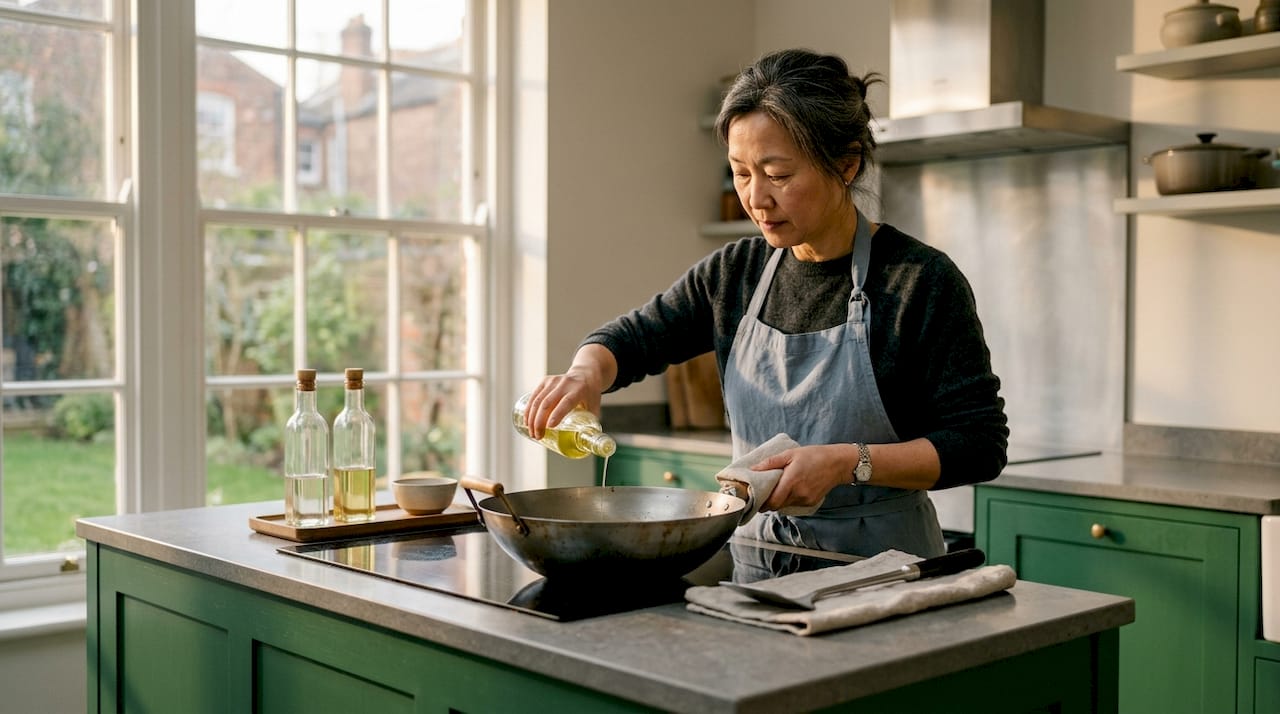
The best oils for seasoning are grapeseed, avocado, sunflower, and canola. These oils have high smoke points, which means they polymerise properly at high heat and bond to the steel surface. That bond is what creates the patina. Olive oil, butter, and animal fats are chemically unstable at the temperatures needed for seasoning. They go rancid, turn sticky, and produce a patina that flakes rather than builds.
Choosing the right oil profoundly affects the longevity and performance of your wok’s patina. A cheap vegetable oil with a low smoke point will cost you far more in re-seasoning time than a bottle of grapeseed oil.
Pro Tip: Always season in a well-ventilated kitchen or with an extractor fan running. The process produces smoke, and that is normal. It means the oil is bonding to the steel.
How do you clean and dry your carbon steel wok correctly?
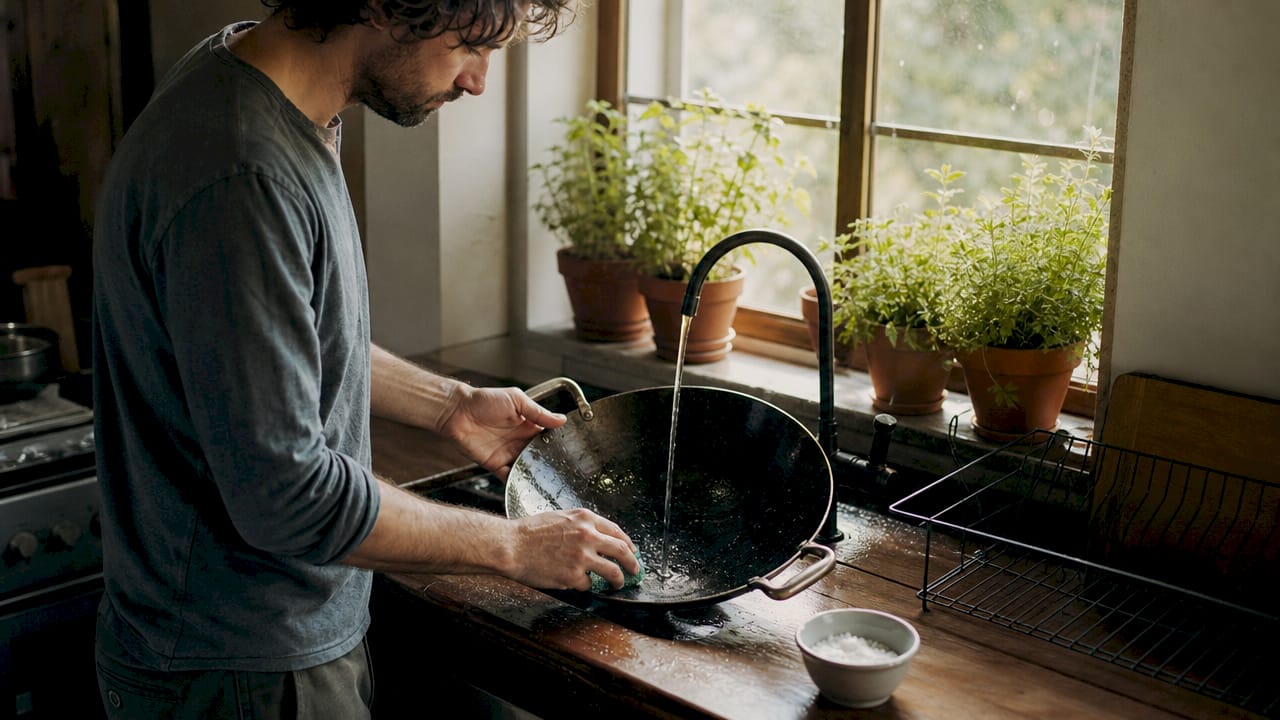
Proper daily cleaning is the foundation of good wok care. The goal is to remove food residue without stripping the seasoning you have worked to build.
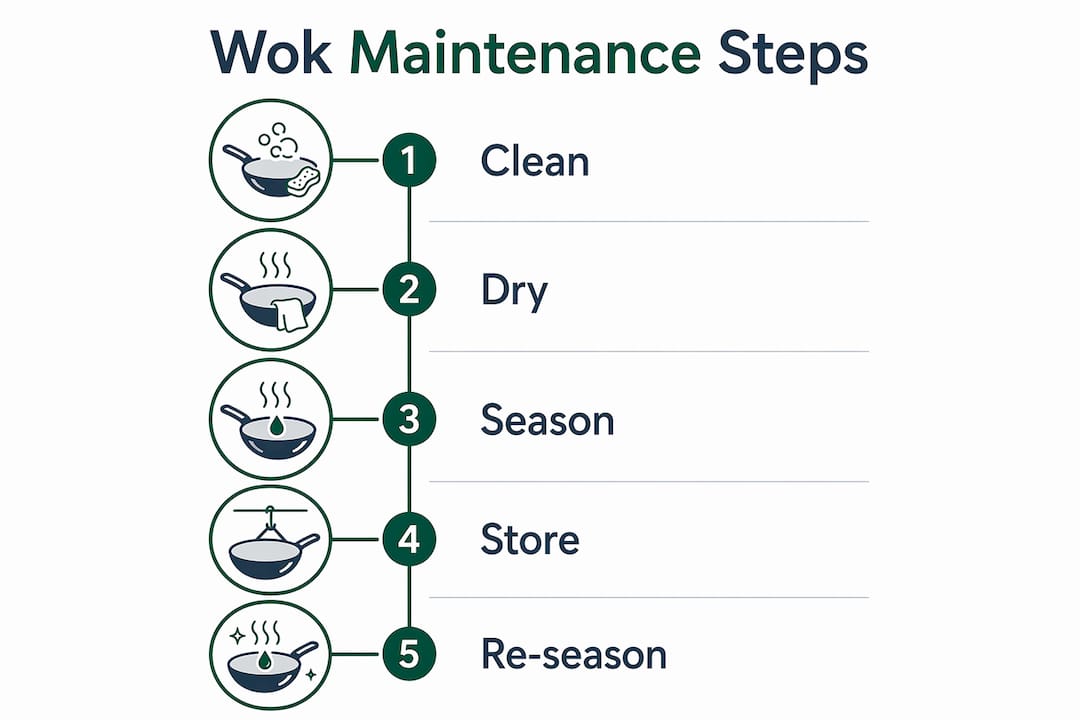
- Rinse immediately after cooking. Use hot water in the 60–71°C range (140–160°F). Hot water loosens food without needing soap or scrubbing. Do this while the wok is still warm from cooking.
- Scrub gently with a bamboo brush. Work in circular motions to lift any stuck bits. Avoid steel wool or abrasive pads at this stage. They scratch the patina and expose bare metal.
- Skip the soap unless you really need it. Soap use should be limited to removing strong odours or stains. If you do use a small amount of mild dish soap, re-oil and heat the wok immediately afterwards to restore the seasoning layer.
- Dry with a cloth first. Pat the wok dry thoroughly with a clean cloth or paper towel. Do not leave it to air dry on a rack.
- Heat dry on the hob. Place the wok over medium-high heat for 30–60 seconds. Any residual moisture will evaporate. You will see the surface change colour slightly as it heats. That is the patina responding to heat, which is exactly what you want.
- Apply a micro-thin layer of oil. While the wok is still warm, add a few drops of grapeseed or canola oil and wipe it across the entire surface with a folded paper towel. The wok should look almost dry, not greasy.
Any residual moisture on carbon steel will cause rust within hours. The heat-drying step is not optional.
Pro Tip: If you see orange spots forming on the surface, that is rust starting. Catch it early by scrubbing with a non-abrasive pad, then re-season immediately. Early rust is easy to fix. Neglected rust is not.
How do you season and re-season your wok for lasting non-stick performance?
Seasoning is a constantly evolving process, not a one-time event. Every time you cook with oil in your wok, you add another microscopic layer to the patina. Over months and years, that patina darkens, hardens, and becomes genuinely non-stick. The Brass-steel step-by-step seasoning guide covers the initial process in full detail, but here is what ongoing seasoning looks like in practice.
Signs your wok needs re-seasoning:
- Food is sticking where it did not before
- The surface looks dull, grey, or patchy
- You can see rust spots or light-coloured bare metal
- The surface feels sticky even after cleaning
How to re-season your wok:
- Wash the wok with warm soapy water to strip any old, damaged seasoning. Rinse and dry fully.
- Heat the wok over medium-high heat until it is very hot. You are looking for the surface to start turning a blue or grey colour.
- Add a very thin layer of high-smoke-point oil. Wipe it across the entire surface, inside and out, with a folded paper towel held with tongs.
- Keep heating until the oil smokes and the surface darkens. This is the polymerisation process at work.
- Remove from heat, let it cool slightly, then repeat the oiling and heating process two or three more times.
The sizzle test is a reliable way to check your wok is ready for cooking. Preheat the wok until a drop of water dances and evaporates instantly on contact. That reaction happens at around 200°C, which is the temperature at which food releases cleanly from a well-seasoned surface. If water just sits and steams, the wok is not hot enough yet.
Cooking fatty foods like bacon, fried rice, or stir-fried vegetables with plenty of oil actively strengthens the patina. The more you cook, the better the wok performs. You can find a full re-seasoning checklist on the Brass-steel blog if you want a structured approach.
What are common mistakes in carbon steel wok maintenance?
Most wok problems come from a handful of avoidable habits. Recognising them early saves you a lot of re-seasoning work.
- Using the wrong oil. Olive oil and butter break down at high heat and leave a sticky, rancid coating. Stick to grapeseed, avocado, sunflower, or canola every time.
- Washing with harsh soap too often. Dish soap strips seasoning. A bamboo brush and hot water handle the vast majority of cleaning needs without touching the patina.
- Leaving the wok wet. This is the single most common cause of rust. Always heat dry after washing. Never leave a carbon steel wok to drip dry.
- Applying too much oil when seasoning. A thick layer of oil does not mean better seasoning. It means a sticky, gummy surface that never properly hardens. The wok should look almost dry after you wipe the oil on.
- Ignoring early rust. Small rust spots are easy to fix. Removing rust involves soaking in warm water, gentle scrubbing with a non-abrasive pad, and then re-seasoning immediately to restore the patina. Leave rust too long and it spreads under the seasoning layer.
- Storing in a damp cupboard. Moisture in storage undoes all your maintenance work overnight.
Pro Tip: After re-seasoning, cook something fatty as your first meal. Scrambled eggs or fried rice works well. It adds a cooking layer on top of the seasoning layer and beds everything in properly.
How should you store your carbon steel wok to protect it long-term?
Storage is the part of wok care that most home cooks overlook. A well-seasoned wok can develop rust overnight if stored in the wrong conditions.
- Store in a dry, well-ventilated area away from steam sources like the kettle or dishwasher.
- Place a folded paper towel or clean cloth inside the wok to absorb any residual moisture.
- Avoid stacking other pans directly inside the wok without padding. Metal on metal scratches the patina.
- In humid climates, place a moisture absorber packet in the cupboard near the wok.
- If storing for more than a few weeks, apply a thin layer of oil across the entire surface before putting it away.
Storage in dry, ventilated areas is the single most important factor in protecting your patina between uses. The table below summarises the key storage conditions at a glance.
| Storage condition | Why it matters |
|---|---|
| Dry, ventilated cupboard | Prevents moisture build-up that causes rust |
| Paper towel inside wok | Absorbs any residual moisture after storage |
| Padding between stacked pans | Protects the patina from scratches |
| Thin oil coat for long storage | Seals the surface against humidity |
| Moisture absorber in humid climates | Reduces ambient moisture that corrodes bare steel |
Key takeaways
Consistent carbon steel wok care, covering cleaning, drying, seasoning, and storage, is what builds a non-stick patina that improves with every use.
| Point | Details |
|---|---|
| Heat dry after every wash | Residual moisture causes rust within hours on bare carbon steel. |
| Use high-smoke-point oils only | Grapeseed, avocado, and canola polymerise correctly; olive oil and butter do not. |
| Season little and often | Each cook adds a layer to the patina; consistency matters more than single deep-seasoning sessions. |
| Store dry with padding | A ventilated cupboard and a paper towel inside the wok prevent rust between uses. |
| Fix rust early | Small spots scrub off easily; neglected rust spreads under the patina and requires full re-seasoning. |
What I have learned from years of cooking with carbon steel
The thing nobody tells you when you first get a carbon steel wok is that the first month is the hardest. The seasoning is thin, food sticks more than you expect, and it is tempting to reach for the soap and start over. My honest advice is to resist that urge completely.
The cooks who get the best results are the ones who treat maintenance as part of cooking, not a chore after it. Rinse, heat dry, wipe with oil. That three-step habit takes about ninety seconds and it is the difference between a wok that lasts a lifetime and one that rusts in a drawer.
I have also seen home cooks make the oil mistake repeatedly. They think more oil means better seasoning. The opposite is true. A thick oil coat never fully polymerises. It stays tacky, picks up debris, and eventually has to be stripped and started again. Thin layers, repeated often, are what build a hard, dark, genuinely non-stick surface.
The payoff is real. A well-maintained carbon steel wok after a year of regular use cooks better than any coated pan on the market. Eggs slide, rice fries without sticking, and the wok develops a character that is entirely your own. That is worth the ninety seconds after every meal.
— Davide
Brass-steel carbon steel cookware and care resources
Brass-steel makes carbon steel cookware forged from a single piece of steel, with no rivets, no coatings, and no PTFE or PFOA. The design means there are no weak points to trap food or corrode over time, which makes maintenance genuinely easier.
If you want to go deeper on any part of the care routine, the Brass-steel blog covers best practices for carbon steel care in detail, from first seasoning through to long-term storage. You can also browse the full carbon steel cookware range to find the right pan for your kitchen. Whether you are cooking for one or feeding a family, there is a size and weight that fits the way you cook.
FAQ
How often should I season my carbon steel wok?
Season your wok after every wash by applying a micro-thin layer of high-smoke-point oil while the surface is still warm. A full re-seasoning session is only needed when you notice sticking, rust, or dull patches on the surface.
Can I use soap to clean my carbon steel wok?
Mild dish soap is acceptable occasionally for removing strong odours or stains, but it strips seasoning. After using soap, re-oil and heat the wok immediately to restore the protective layer.
What causes a sticky surface on a carbon steel wok?
A sticky surface is almost always caused by applying too much oil during seasoning. Scrub the surface with a non-abrasive pad, then re-season using only a very thin coat of oil, wiping away any excess before heating.
How do I remove rust from my carbon steel wok?
Soak the affected area in warm water, then scrub gently with a non-abrasive pad to lift the rust. Dry the wok thoroughly over heat and re-season immediately to restore the patina.
What is the best oil for seasoning a carbon steel wok?
Grapeseed, avocado, sunflower, and canola oils are the best choices because their high smoke points allow them to polymerise and bond to the steel surface correctly. Avoid olive oil, butter, and animal fats.