How to buy cookware that actually lasts
TL;DR:
- Most home cooks realize their cookware fails midway through preparing meals, leading to uneven heat and food sticking. A core set of three high-quality pieces—skillet, saucepan, and stockpot—cover most daily needs, with material choice tailored to cooking techniques. Investing in fewer, better-quality items and properly maintaining them results in longer-lasting cookware and improved cooking outcomes.
Most home cooks only realise their cookware is letting them down halfway through cooking a meal. Food sticks to the base, heat spreads unevenly, and a pan bought two years ago already looks like it belongs in the bin. When you decide to buy cookware, the sheer range of materials, brands, and price points makes choosing feel genuinely overwhelming. This guide cuts through that noise. You’ll learn which pieces to prioritise, how to read quality markers, what materials actually mean for your cooking, and where to spend and where to save.
Table of Contents
- Key takeaways
- The cookware pieces you actually need
- Cookware materials: what they actually mean
- How to spot genuinely high quality cookware
- Where to buy cookware and how to look after it
- Your step-by-step cookware buying checklist
- My honest take on buying cookware
- Why Brass-steel is worth your attention
- FAQ
Key takeaways
| Point | Details |
|---|---|
| Three pieces cover most cooking | A skillet, a saucepan, and a stockpot handle 80% of daily tasks for most households. |
| Material should match technique | Choose carbon steel or cast iron for searing, stainless steel for everyday use, and nonstick only for delicate foods. |
| Quality over quantity always wins | Fewer high-quality pieces outperform large sets full of items you never use. |
| Nonstick pans are consumables | Replace them every few years and never overheat them. PFOA-free does not mean fully safe. |
| Maintenance extends lifespan | Proper care, seasoning, and storage keep good cookware performing for decades. |
The cookware pieces you actually need
Before you start comparing brands or browsing cookware online deals, get clear on what you genuinely need in your kitchen. Most cooks own far more than they use.
A core set of three pieces covers the vast majority of everyday cooking:
- A 10 to 12 inch skillet or sauté pan. This is your most-used pan. Frying eggs, searing chicken, browning mince, sautéing vegetables. If you only ever buy one piece of cookware, make it this.
- A 3 to 4 quart saucepan. For sauces, grains, blanching vegetables, and reheating soups. The size works for one to four people without taking over your hob.
- A 6 to 8 quart stockpot or Dutch oven. Pasta, stock, large stews, batch cooking. A good Dutch oven doubles as a casserole dish and goes straight from hob to oven.
Size matters more than people think. A solo cook or couple rarely needs a 30 cm pan for everyday use. A family of four will frustrate themselves with a pan that is too small to fit a whole chicken breast without crowding.
Beyond those three, specialist pieces like a wok, a cast iron griddle, or a small milk pan are worth adding only if you cook specific dishes regularly. Don’t buy them speculatively.
Pro Tip: Buy your skillet first, use it for a month, then decide what you actually reach for and what’s missing. You’ll make far better decisions about the rest of your set.
Cookware materials: what they actually mean
This is where most buyers get lost. Marketing language is designed to sell pans, not to help you cook. Here is what the main materials actually do.
Stainless steel
Stainless steel is the best all-around material for most home cooks. It handles high heat, goes in the dishwasher, doesn’t react with acidic foods, and lasts decades without special care. The downside is that cheap stainless steel spreads heat poorly. Look for tri-ply construction with an aluminium or copper core running up the sides of the pan, not just the base. That core is what gives you even heat.
Cast iron and carbon steel
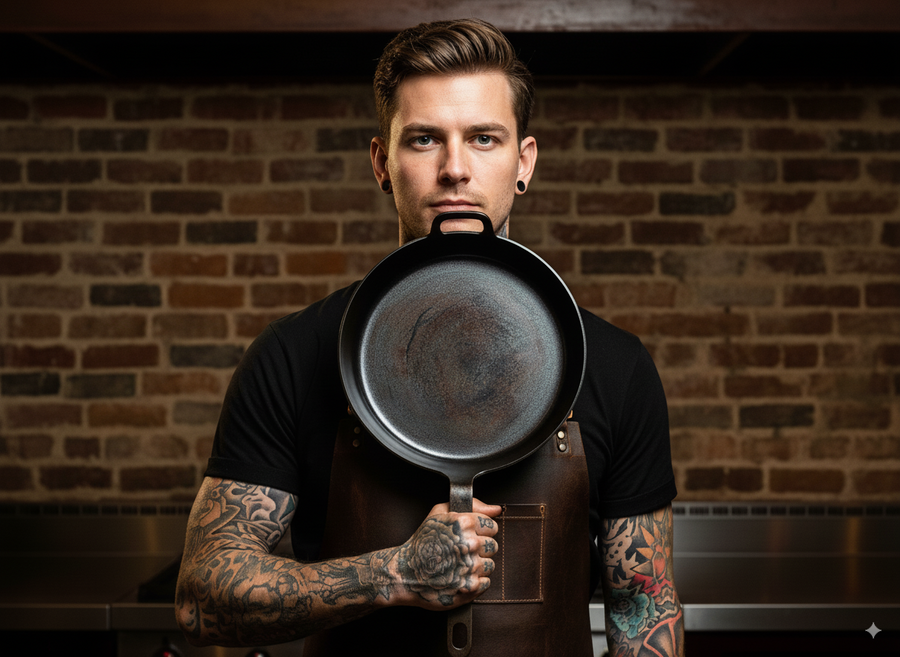
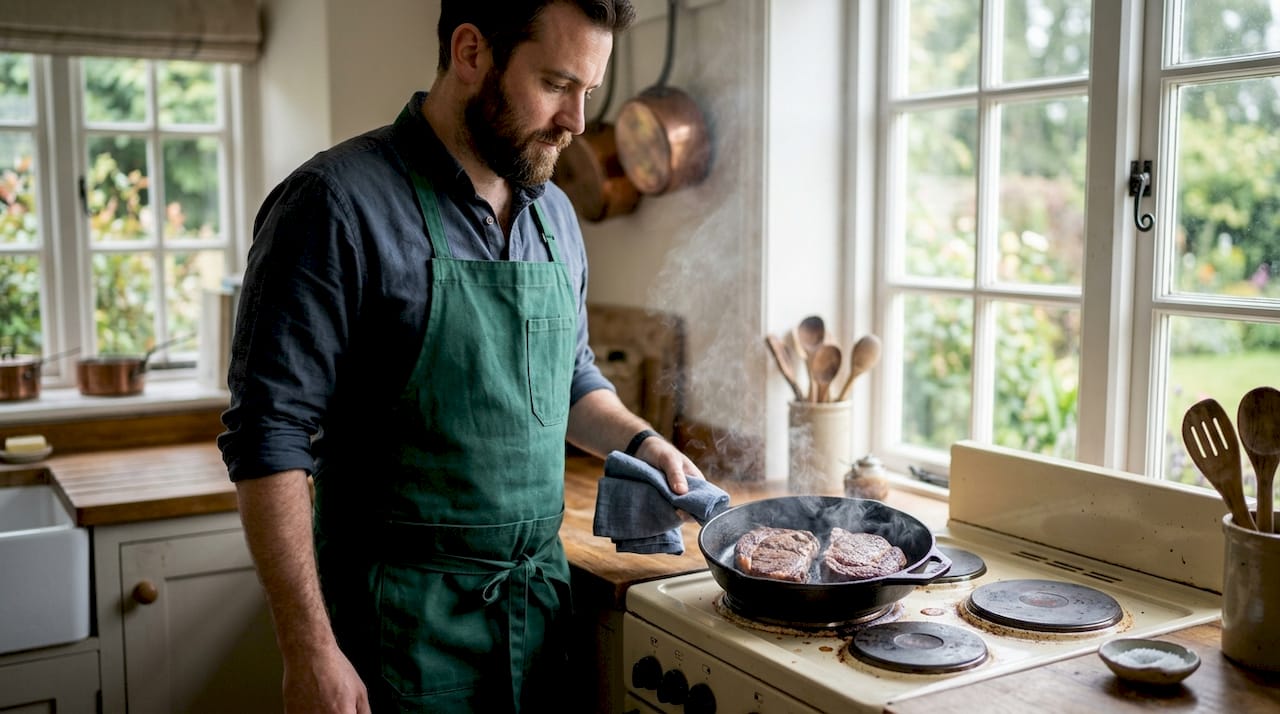
Both materials are excellent for high-heat searing, oven use, and building a natural nonstick surface over time. Cast iron is heavier and slower to heat but holds temperature very well once it gets there. Carbon steel pans are lighter and more responsive to heat changes, making them the preferred choice in professional kitchens for tasks like searing, stir-frying, and crêpe making. Both require seasoning and a little more attention than stainless steel, but they reward that care with a lifespan measured in generations, not years.
Nonstick (PTFE-based)
Nonstick kitchen pans are genuinely useful for eggs, fish, and anything delicate that would otherwise stick. The problem is that PTFE coatings begin to degrade above 260°C, releasing fumes harmful enough to kill birds and potentially affect human health. More concerning, 79% of nonstick pans still contain PFAS, and a “PFOA-free” label does not mean the pan is free from all harmful chemicals. Treat nonstick as a limited-use tool, not a workhorse.
Ceramic-coated
Ceramic coatings offer a PFAS-free alternative to traditional nonstick. They work well when new but tend to lose their release properties faster than manufacturers suggest. They are a reasonable choice for low-heat cooking, but don’t expect the same longevity as uncoated pans.
Enamelled cast iron
Enamelled cast iron is superb for braising, soups, and slow cooking. It doesn’t need seasoning, handles acidic ingredients well, and looks good on the table. It’s expensive upfront but genuinely lasts a lifetime if treated with care.
| Material | Heat performance | Maintenance | Lifespan | Best for |
|---|---|---|---|---|
| Stainless steel | Even (tri-ply) | Low | 20+ years | Everyday cooking |
| Carbon steel | Excellent | Medium (seasoning) | Lifetime | Searing, high heat |
| Cast iron | Slow but steady | Medium (seasoning) | Lifetime | Braising, frying |
| PTFE nonstick | Good at low heat | Low | 2 to 5 years | Eggs, fish |
| Ceramic coated | Moderate | Low to medium | 1 to 3 years | Light cooking |
| Enamelled cast iron | Excellent | Low | Lifetime | Soups, stews |
Pro Tip: If you want to move away from nonstick but aren’t ready for cast iron, carbon steel is the middle ground. It’s lighter, seasons beautifully, and becomes naturally nonstick over time without any synthetic coatings.
How to spot genuinely high quality cookware
The difference between a pan that lasts 20 years and one that warps after six months often comes down to a few construction details. Here’s what to look for before you buy.
- Base thickness. Thin bases create hot spots and warp under high heat. For stainless steel, you want at least 3mm. For carbon steel, 3 to 4mm is the sweet spot between responsiveness and durability.
- Multi-ply construction. For stainless steel, a full aluminium or copper core running up the sides of the pan is a sign of real quality. Impact-bonded bases (aluminium disc on the bottom only) are cheaper and perform worse.
- Handle attachment. Riveted handles are strong but create crevices where food collects. Welded or, better still, single-piece forged pans eliminate that problem entirely. A pan with no joints at all is a legitimate quality marker.
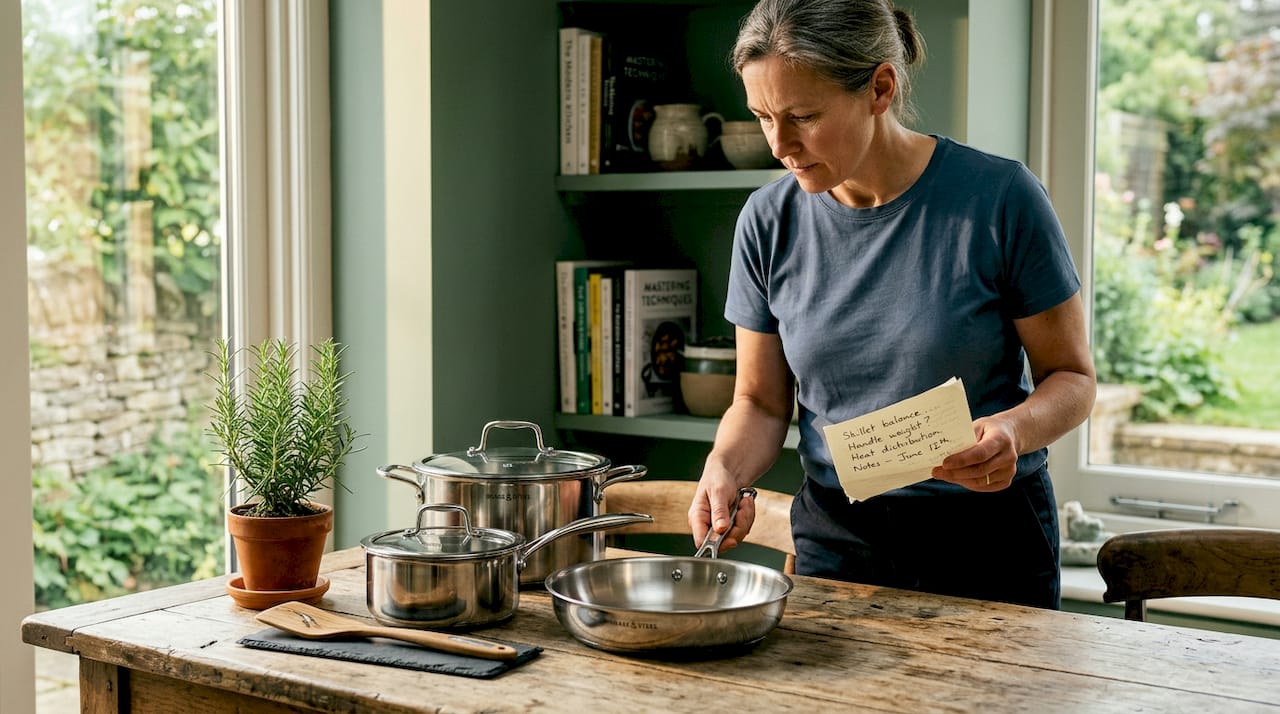
- Weight and balance. Pick it up. A quality pan feels substantial but not unwieldy. If it tips forward when empty, cooking with it will frustrate you every day.
- Brand reputation and warranty. A manufacturer that offers a long warranty on an uncoated pan is telling you something meaningful about their confidence in the product.
A large cookware set at a discount price is almost always a compromise. You get the sizes you use and several you’ll never touch. Investing in fewer, better pieces gives you more cooking joy and better results for the same outlay.
When reading reviews, focus on feedback from people who’ve used the pan for more than a year. First impressions are unreliable. Long-term owners will tell you whether the handle loosened, the base warped, or the seasoning held.
Understanding what makes cookware built to last is worth your time before you spend anything. The details behind heirloom quality construction explain why some pans survive three generations and others don’t survive three years.
Where to buy cookware and how to look after it
Choosing where to shop
You can find high quality cookware in specialist kitchen shops, department stores, and reputable online retailers. Each has trade-offs. Physical shops let you handle the pan before buying, which is genuinely useful. Online shopping gives you access to a wider range and often better cookware online deals, especially from smaller manufacturers who don’t sell through retail chains.
Wherever you shop, buy direct from the brand where possible, or from a retailer with a clear returns policy. Cookware is heavy and awkward to return, so knowing the process before you buy saves frustration.
Budgeting realistically
Expensive does not always mean better. Some well-marketed best cookware sets charge a premium for design and packaging rather than performance. But genuinely cheap pans are a false economy. A pan that warps, scratches, or loses its coating in a year costs you more in the long run than one bought once and kept for decades.
A reasonable starting budget for a quality skillet from a reputable maker is £60 to £120. Affordable cooking pots in the saucepan category can be found for £40 to £80 without sacrificing quality. The stockpot or Dutch oven is the place to spend a little more, around £80 to £200, because it does heavy work and you want it to last.
Maintaining your cookware properly
- Season carbon steel and cast iron pans before first use, and keep building that seasoning with regular cooking of fatty foods.
- Clean nonstick pans with a soft sponge and warm water. Never use metal utensils or the dishwasher.
- Dry all pans thoroughly after washing. Moisture is the enemy of both carbon steel and cast iron.
- Store pans with a cloth or paper between stacked pieces to protect surfaces.
- Replace scratched or damaged nonstick pans immediately. The coating breaks down and particles end up in your food.
- Re-season carbon steel or cast iron if the surface looks dull or food starts to stick more than usual.
Pro Tip: Good cookware care is far cheaper than replacing pans. The ten minutes you spend drying and lightly oiling a carbon steel pan after use keeps it performing for decades.
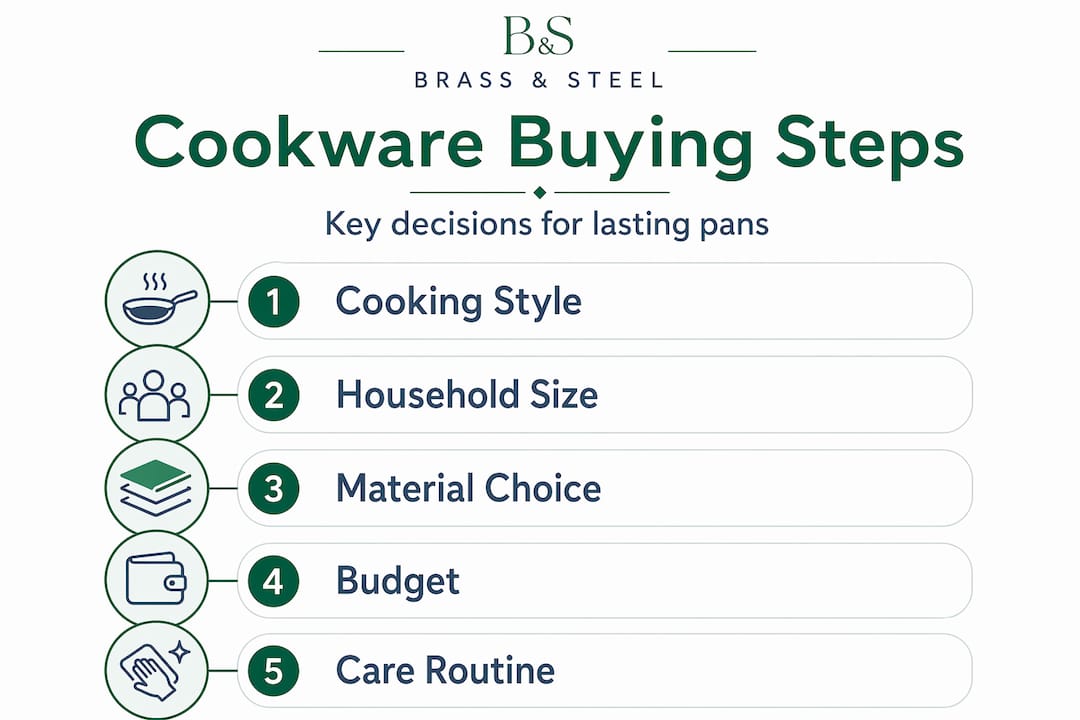
Your step-by-step cookware buying checklist
Use this before you spend a penny.
- Assess your cooking style. Do you sear, simmer, braise, or mostly reheat? Your most common techniques dictate which materials and sizes you actually need.
- Set a realistic budget. Decide your total spend before you browse. It stops you from being swayed by marketing.
- Choose your core three. Skillet, saucepan, stockpot. Pick these first and resist adding extras until you know you need them.
- Match material to technique. Use the table in the materials section above. Don’t buy based on brand names or packaging claims alone.
- Check construction quality. Base thickness, core material, handle attachment. Read reviews from long-term users, not just initial impressions.
- Verify the seller. Buy from a brand or retailer with a clear returns policy and genuine customer support.
- Plan your maintenance routine. Know before you buy whether you’re willing to season a pan regularly. If not, an uncoated pan will disappoint you.
| Step | What to decide |
|---|---|
| Cooking style | Techniques, frequency, household size |
| Budget | Total spend, priority pieces first |
| Core pieces | Skillet, saucepan, stockpot or Dutch oven |
| Material | Matched to your cooking techniques |
| Quality check | Construction, reviews, warranty |
| Seller | Returns policy, direct brand or trusted retailer |
| Care plan | Seasoning, cleaning, storage routine |
My honest take on buying cookware
I’ve seen people spend three times more on a set of matching pans than they needed to, and I’ve watched others spend almost nothing on a single great skillet and transform their cooking overnight. The set approach is almost always the wrong one. You end up with cooking pots in sizes you never use and a false sense of being well-equipped.
The material question is where I’ve changed my mind most over the years. I used to think nonstick was the sensible, easy choice for most home cooks. I don’t think that anymore. The health picture around PFAS in nonstick pans is troubling enough that I wouldn’t recommend it as a primary pan. A seasoned carbon steel pan takes a few weeks of regular cooking to break in properly, but once it does, it genuinely outperforms nonstick for most tasks and doesn’t carry the same safety concerns.
What I’d tell any home cook is this: start with one excellent skillet, learn to cook in it properly, and add pieces only when a specific gap becomes obvious. You’ll spend less, cook better, and not end up with a cupboard full of pans you ignore.
— Davide
Why Brass-steel is worth your attention
If you’ve decided that carbon steel is the direction you want to go, Brass-steel makes some of the most thoughtfully engineered pans available for home cooks.
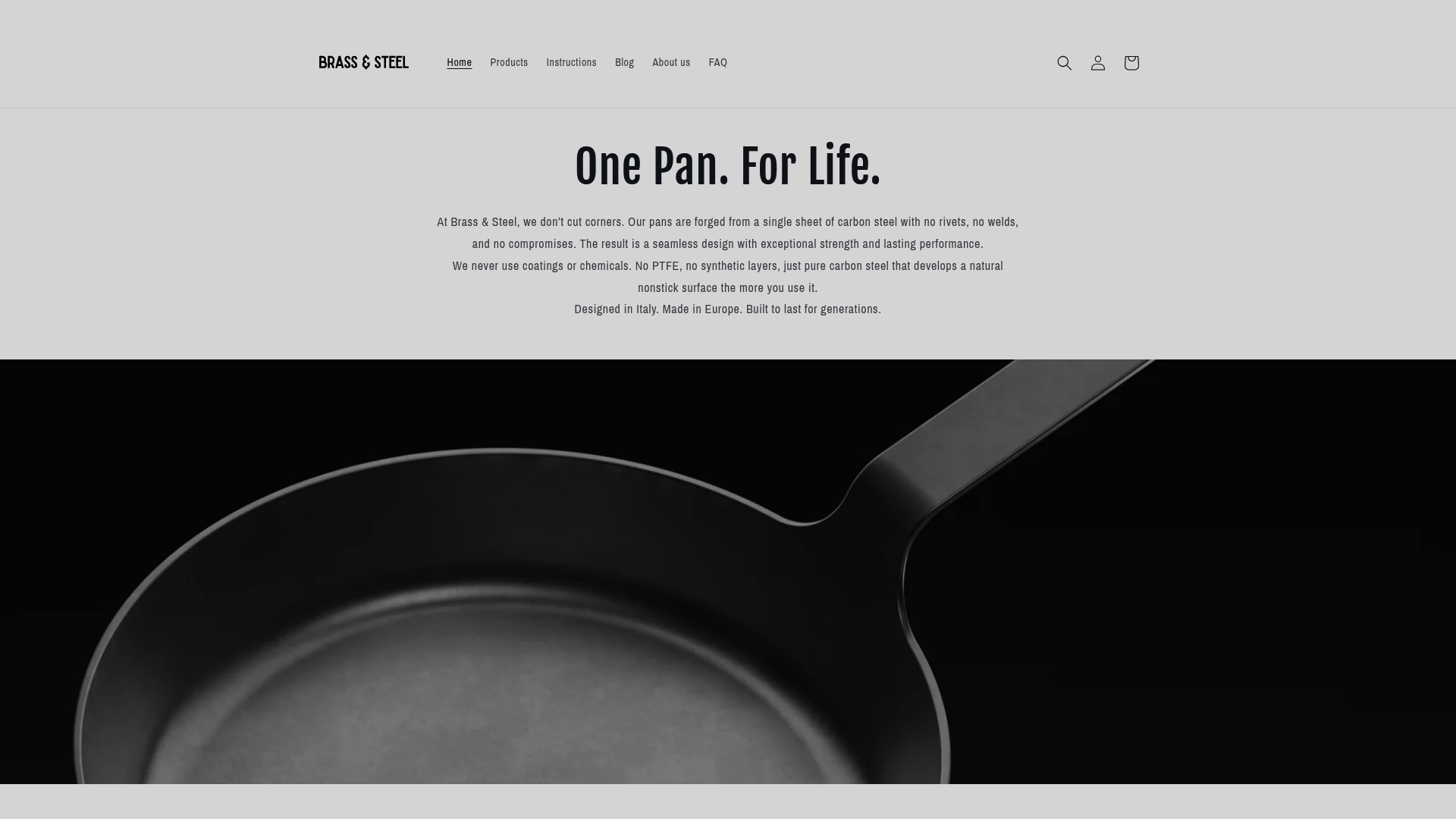
Each pan is forged from a single piece of carbon steel, which means no rivets, no welds, and no weak points where the handle eventually loosens. The 27 cm sauté pan at €99 handles everyday tasks beautifully. The 30 cm version at €119 is built for larger meals and serious home cooking. Both are free from PTFE, PFOA, and any synthetic coatings, work on all cooktops including induction, and develop a natural nonstick surface that improves with every use. For anyone looking for top rated kitchenware that genuinely lasts, they are worth considering before any large set from a supermarket brand.
Pairing great cookware with quality kitchen knives is the other upgrade most home cooks don’t regret.
FAQ
What are the three must-have pieces of cookware?
A 10 to 12 inch skillet, a 3 to 4 quart saucepan, and a 6 to 8 quart stockpot or Dutch oven cover most daily cooking tasks for the majority of households.
Is PFOA-free nonstick cookware safe?
Not necessarily. Most nonstick pans still contain PFAS, and PFOA-free labelling only means one specific chemical has been removed, not all of them.
Where is the best place to buy cookware?
Buy direct from the brand or a reputable specialist retailer with a clear returns policy. Specialist shops let you handle pans before buying, while online stores often offer better deals from smaller quality manufacturers.
How long should good cookware last?
Uncoated pans made from carbon steel, cast iron, or stainless steel can last decades with proper care. Nonstick coatings should be considered consumables and replaced every two to five years, sooner if the surface is scratched or damaged.
Is it worth buying a full cookware set?
Usually not. Fewer high-quality pieces outperform large sets where several items never leave the cupboard. Buy your core three first, then add specialist pieces only when you identify a genuine need.