Nonstick vs Stainless Steel vs Ceramic – Which Pan Lasts Longer?
Most british kitchens feature nonstick or stainless steel pans, yet a growing number of home cooks across Europe are discovering the unmatched health and durability benefits of carbon steel cookware. With studies showing that nonstick pans can lose effectiveness within just five years, many are rethinking their choices for long-term kitchen performance and safer cooking. Learn how carbon steel could change the way you cook, offering a healthier alternative without sacrificing convenience or flavor.
Table of Contents
- Defining Nonstick, Stainless Steel, and Ceramic Cookware
- Types and Core Materials Explained
- Heat Performance and Cooking Suitability
- Durability, Maintenance, and Lifespan
- Health Impacts and Safety Considerations
- Cost, Value, and Best Use Cases
Key Takeaways
| Point | Details |
|---|---|
| Cookware Material Matters | The choice between nonstick, stainless steel, and ceramic cookware impacts cooking performance and maintenance. Consider your cooking style and needs when selecting materials. |
| Heat Management is Key | Each cookware type has specific temperature tolerances; stainless steel excels at high heat, while nonstick is suited for moderate cooking. Understand these limits to enhance your culinary outcomes. |
| Durability Influences Value | Stainless steel offers the longest lifespan and durability, while nonstick has the shortest. Investing in robust materials can save costs over time. |
| Health Considerations are Essential | Select cookware based on safety; ceramic offers a non-toxic option, while nonstick can pose health risks if overheated. Prioritise materials that align with health-conscious cooking. |
Defining Nonstick, Stainless Steel, and Ceramic Cookware
Cookware materials significantly impact cooking performance, durability, and food preparation experience. Understanding the fundamental characteristics of nonstick, stainless steel, and ceramic cookware helps home cooks make informed purchasing decisions.
Nonstick cookware typically features polytetrafluoroethylene (PTFE) coatings that prevent food from adhering to the cooking surface. These coatings, most commonly known by the brand name Teflon, create a smooth layer that allows foods to slide easily during cooking. However, traditional nonstick pans can have durability challenges, with coating degradation occurring more quickly compared to other materials.
Stainless steel cookware represents a robust alternative, constructed from metal alloys primarily containing iron and chromium. These pans are renowned for exceptional durability, corrosion resistance, and the ability to withstand high cooking temperatures. Unlike nonstick surfaces, stainless steel requires proper technique to prevent food from sticking, often necessitating adequate oil or fat for successful cooking.
Ceramic cookware offers a naturally nonstick surface without relying on synthetic chemical coatings. Ceramic materials provide a non-toxic cooking surface that performs well at lower to medium cooking temperatures. These pans are often praised for their aesthetic appeal and health-conscious design, appealing to cooks seeking alternatives to traditional nonstick technologies.
Pro tip: When selecting cookware, consider your typical cooking temperatures and maintenance preferences to choose the most suitable material for your kitchen.
Types and Core Materials Explained
Understanding the core materials and construction techniques of cookware is essential for selecting the most appropriate cooking tools. Each material brings unique characteristics that dramatically influence cooking performance, heat distribution, and overall kitchen experience.
Nonstick coatings represent a complex technological innovation, featuring two primary formulation types: fluoropolymer-based and silicone-based coatings. These specialised layers are typically applied to aluminum or stainless steel bases, creating a smooth surface that prevents food adhesion. The coating process involves precise layering techniques designed to ensure optimal bonding and durability.
Stainless steel cookware utilises sophisticated metal alloy compositions, strategically combining elements like chromium and nickel to enhance performance. These multilayered constructions often incorporate cores of copper or aluminum to improve heat distribution while maintaining the corrosion-resistant exterior that stainless steel is renowned for. The result is a robust cooking surface capable of withstanding high temperatures and providing consistent heating.
Ceramic cookware emerges as a fascinating alternative, constructed from inorganic compounds predominantly based on silica. These materials undergo high-temperature firing processes that transform them into durable, heat-resistant surfaces. Ceramic coatings can be applied directly to metal substrates, offering a naturally non-toxic cooking surface that appeals to health-conscious home cooks seeking alternatives to traditional synthetic nonstick technologies.
Pro tip: When selecting cookware, examine the core material and coating construction to ensure it matches your specific cooking techniques and maintenance capabilities.
Heat Performance and Cooking Suitability
Cookware heat performance directly influences cooking outcomes, making material selection crucial for culinary success. Different materials respond uniquely to temperature variations, affecting everything from searing capabilities to delicate food preparation.
Stainless steel pans excel in high-temperature cooking scenarios, offering exceptional browning and searing capabilities. These robust cooking surfaces tolerate intense heat while providing consistent temperature distribution, making them ideal for professional and home kitchen techniques that demand precise thermal control. However, users must master technique to prevent food sticking, often requiring appropriate oil quantities and temperature management.
Nonstick cookware performs optimally at moderate temperatures, particularly for delicate foods requiring minimal oil. These coatings can degrade if overheated, potentially releasing harmful substances, limiting their versatility compared to more heat-resistant materials. Their primary advantage lies in effortless food release and simplified cleaning, making them suitable for eggs, fish, and other fragile ingredients that might otherwise adhere to cooking surfaces.
Ceramic cookware presents a balanced approach, providing good heat distribution and resistance at lower to moderate temperatures. These pans are particularly well-suited for gentle cooking methods like sautéing and preparing dishes requiring consistent, even heating. Their natural non-toxic surface appeals to health-conscious cooks seeking alternatives to synthetic nonstick technologies, though they may lack the extreme heat tolerance of stainless steel or cast iron options.
Pro tip: Match your cookware to specific cooking techniques by understanding each material’s temperature limitations and performance characteristics.
Durability, Maintenance, and Lifespan
Cookware durability represents a critical investment consideration for home cooks and professional chefs alike. Understanding how different materials withstand daily use and maintenance requirements can significantly impact long-term cooking performance and overall kitchen expenses.
Nonstick cookware demonstrates the shortest lifespan, typically lasting between three to five years. These pans require exceptionally gentle care, demanding users avoid metal utensils, high heat exposure, and abrasive cleaning techniques. The delicate coating becomes progressively vulnerable to scratching and degradation, which can compromise both cooking performance and food safety.
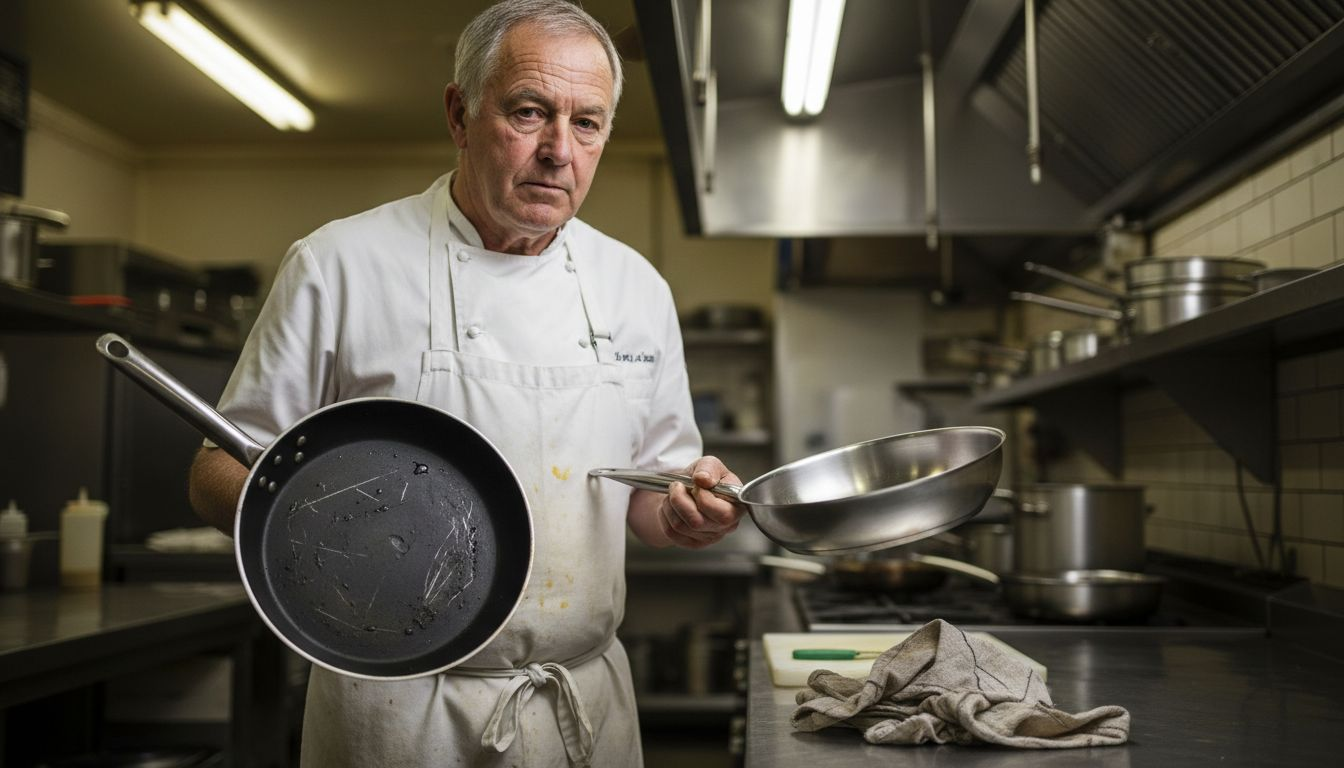
Stainless steel cookware emerges as a remarkably robust option, capable of withstanding extensive use with minimal deterioration. These pans resist rust, maintain structural integrity, and remain dishwasher-safe, making them an excellent long-term kitchen investment. Professional chefs and home cooking enthusiasts appreciate stainless steel’s resilience, as proper maintenance can extend their usable lifespan considerably, often spanning decades with appropriate care.
Ceramic cookware occupies an interesting middle ground in durability, offering better longevity than traditional nonstick surfaces while requiring careful handling. These pans are susceptible to thermal shock and surface cracking, necessitating mindful temperature management and gentle cleaning techniques. Their natural non-toxic surface provides an attractive alternative for health-conscious cooks, though their performance demands more attentive maintenance compared to stainless steel counterparts.
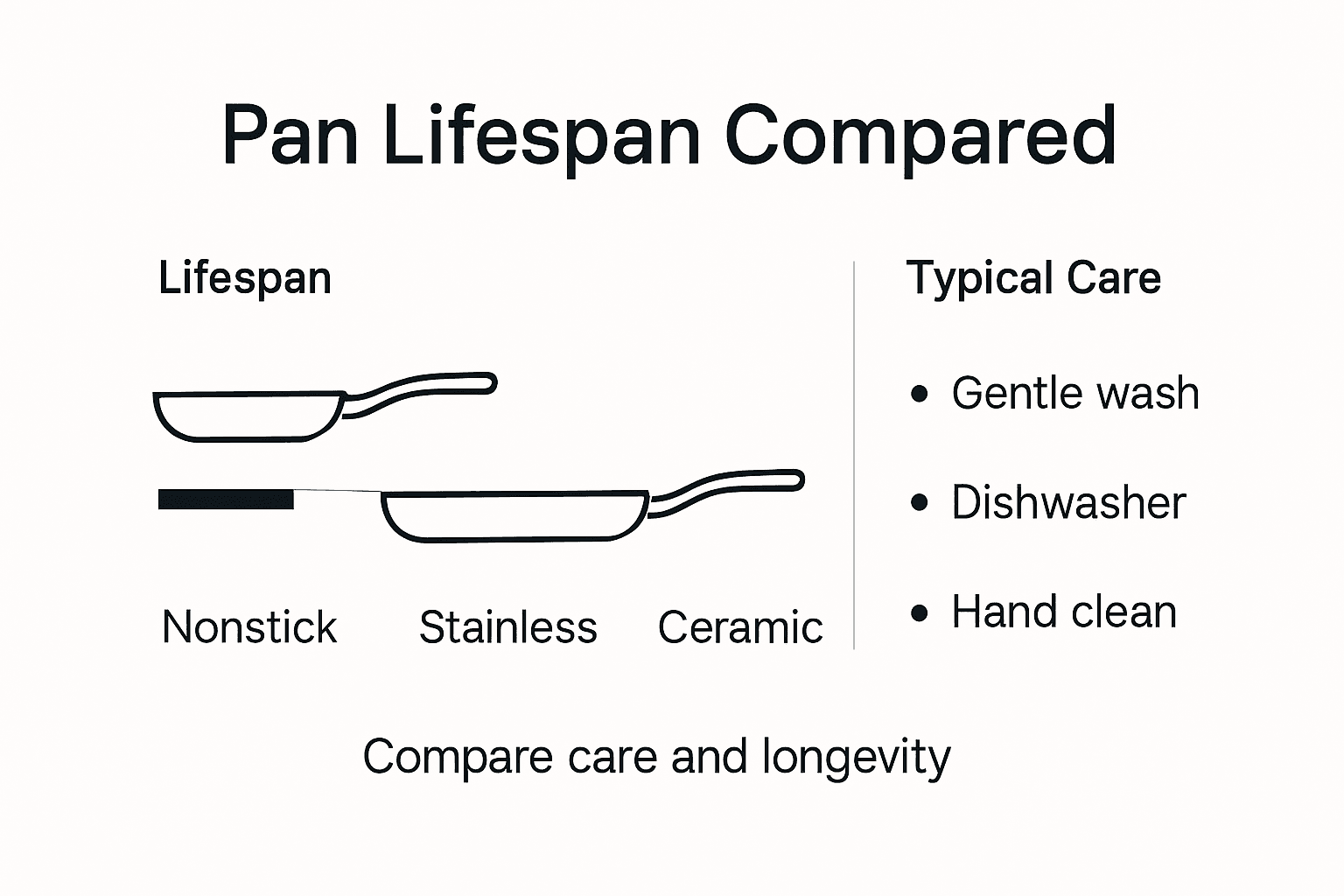
Here’s a quick comparison of key characteristics for nonstick, stainless steel, and ceramic cookware:
| Material Type | Heat Tolerance | Typical Lifespan | Cleaning and Care |
|---|---|---|---|
| Nonstick | Moderate only | 3-5 years | Hand wash; avoid abrasives |
| Stainless Steel | Very high | Decades | Dishwasher-safe, low upkeep |
| Ceramic | Low to moderate | 5-10 years | Gentle wash, avoid shock |
Pro tip: Invest in high-quality cooking utensils made from soft materials like silicone or wooden implements to preserve your cookware’s surface and extend its operational lifespan.
Health Impacts and Safety Considerations
Health and safety considerations represent a critical factor in selecting cookware, with modern consumers increasingly prioritising materials that minimise potential chemical exposure and support long-term wellness.
Nonstick cookware presents significant health concerns, particularly regarding persistent ‘forever chemicals’ known as PFAS. Traditional PTFE coatings can release harmful chemical compounds when overheated, potentially introducing toxic substances into food preparation environments. These synthetic coatings may degrade over time, increasing the risk of chemical leaching and compromising both cooking safety and personal health.
Stainless steel cookware emerges as a comparatively safe option, offering a stable and non-reactive cooking surface. High-quality stainless steel compositions are generally considered non-toxic, though individuals with specific metal sensitivities should carefully review alloy compositions. The material’s inherent resistance to chemical interactions and minimal metal migration makes it an attractive choice for health-conscious home cooks seeking reliable, low-risk cooking equipment.
Ceramic cookware represents an increasingly popular alternative, providing a naturally non-toxic cooking surface free from synthetic chemical treatments. These pans offer significant health advantages when manufactured without heavy metals like lead or cadmium in their glazing. Their inorganic composition and minimal chemical processing appeal to consumers seeking transparent, environmentally responsible cookware solutions that prioritise food safety and minimal environmental impact.
For quick reference, here are health and safety considerations for each cookware type:
| Cookware Type | Main Safety Concern | Chemical Exposure Risk | Health-Conscious Benefit |
|---|---|---|---|
| Nonstick | PFAS release if overheated | High if damaged | Easy cleaning, low fat use |
| Stainless Steel | Metal sensitivity (rare) | Very low | Non-reactive, safe alloys |
| Ceramic | Quality of glazing materials | Minimal if lead-free | Naturally non-toxic surface |
Pro tip: Always verify manufacturer specifications and independent testing certifications when selecting cookware to ensure maximum safety and minimal chemical exposure.
Cost, Value, and Best Use Cases
Selecting cookware represents a nuanced financial decision where initial cost, long-term performance, and specific cooking requirements intersect. Understanding the economic and practical implications of different materials helps home cooks make informed investments.
Nonstick cookware offers the most affordable initial investment, making it attractive for budget-conscious consumers. These pans excel in preparing delicate foods like eggs and pancakes, providing effortless food release and quick cleaning. However, their shorter lifespan means frequent replacements, ultimately increasing long-term expenses and environmental impact. Ideal for casual home cooks seeking convenience and low upfront costs, nonstick pans work best for low to medium-heat cooking scenarios.
Stainless steel cookware represents a more substantial initial investment but delivers exceptional long-term value. These versatile pans are preferred by professional chefs and serious home cooks for their durability, ability to handle multiple cooking techniques, and minimal replacement requirements. Stainless steel excels in high-heat applications like searing, browning, and deglazing, making them ideal for complex cooking methods that demand precise temperature control and robust performance.
Ceramic cookware occupies a balanced position in the cookware market, offering a mid-range price point with unique advantages. These pans appeal to health-conscious consumers seeking non-toxic cooking surfaces suitable for moderate-heat preparations. While slightly more expensive than nonstick options, ceramic cookware provides a chemical-free alternative that supports gentle cooking techniques and meets the growing demand for transparent, environmentally responsible kitchen tools.
Pro tip: Calculate your cookware’s true cost by considering not just the purchase price, but also expected lifespan, replacement frequency, and performance capabilities across different cooking scenarios.
Discover Durable, Natural Nonstick Cookware That Lasts
Choosing between nonstick, stainless steel, and ceramic pans can feel overwhelming, especially when you want a pan that outlasts the rest without compromising health or performance. If you struggle with short-lived coatings or pans that require special care, consider the unmatched durability and natural nonstick properties of carbon steel. Unlike traditional nonstick coatings that degrade within a few years, carbon steel develops a safe, seasoned patina that improves with use, offering a healthier, PTFE-free cooking surface designed for serious cooks.
Explore our Carbon Steel Collection | Brass&Steel to find high-quality pans forged from a single sheet for seamless strength and excellent heat retention. Whether you want a 27 cm carbon steel pan for everyday cooking or a larger 30 cm model for family meals, our pans combine performance and heirloom-quality durability. Ready to upgrade your kitchen with cookware that performs and lasts? Visit https://brass-steel.com and browse our New arrivals – Brass & Steel to begin your journey to professional, health-conscious cooking today.
Frequently Asked Questions
How long does nonstick cookware typically last?
Nonstick cookware usually lasts between three to five years, depending on usage and care. Proper maintenance is essential to prolong its lifespan.
What are the key advantages of stainless steel cookware?
Stainless steel cookware is known for its exceptional durability, resistance to rust, and ability to endure high cooking temperatures. With proper care, it can last for decades, making it a worthwhile investment.
Is ceramic cookware durable compared to nonstick and stainless steel?
Ceramic cookware is generally more durable than traditional nonstick options but requires careful handling to avoid thermal shock and surface cracking. Its lifespan typically ranges from five to ten years.
Can nonstick cookware be used for high-temperature cooking?
No, nonstick cookware performs best at moderate temperatures. Overheating can degrade the coating, potentially releasing harmful substances, thus limiting its versatility compared to stainless steel cookware.