Best pans for induction cooktops: top carbon steel picks
TL;DR:
- Carbon steel pans are ideal for induction due to their magnetic properties and flat, even bases.
- The De Buyer Mineral B Pro is a professional-grade, heavy, durable pan suited for searing and long-term use.
- Mauviel M’Steel offers a lighter, faster-heating alternative, perfect for home cooks prioritizing agility.
Choosing the right pan for an induction cooktop is more nuanced than it first appears. Not every pan heats evenly, responds quickly, or survives the daily rigours of serious cooking. Carbon steel has earned its place at the top of the list for both professional chefs and dedicated home cooks across Europe, and for good reason. It is magnetic, responsive, and builds a natural nonstick surface over time. This guide walks you through the key evaluation criteria, two of the most respected French options on the market, a direct comparison, and what we have learned from working with carbon steel on induction every day.
Table of Contents
- How to evaluate carbon steel pans for induction cooktops
- De Buyer Mineral B Pro: A professional’s staple
- Mauviel M’Steel: French durability meets finesse
- De Buyer vs Mauviel: Side-by-side comparison
- Our perspective: Why mastering carbon steel pays off on induction
- Find your perfect induction-ready pan
- Frequently asked questions
Key Takeaways
| Point | Details |
|---|---|
| Choose the right gauge | Thicker carbon steel pans heat more evenly and resist warping on induction cooktops. |
| Seasoning is essential | Properly seasoned pans develop natural nonstick qualities and last for years. |
| Top brands perform best | French names like De Buyer and Mauviel lead for induction compatibility and durability. |
| Match pan to your habits | Consider pan weight, handle type, and oven safety to find your perfect kitchen fit. |
How to evaluate carbon steel pans for induction cooktops
Not all carbon steel pans perform equally on induction. The cooktop generates heat by creating a magnetic field, so the pan’s base must be sufficiently magnetic and flat to make consistent contact with the surface. A warped or uneven base breaks that contact and creates hot spots, which ruins a sear and frustrates even experienced cooks.
When evaluating any carbon steel pan for induction use, focus on these core qualities:
- Gauge (thickness): Thicker gauges (2.5–3mm) provide better heat retention for searing but need proper maintenance to prevent rust. Thinner pans heat faster but are more prone to warping under high induction power.
- Base flatness: A perfectly flat base ensures maximum contact with the induction surface. Even slight concavity reduces efficiency.
- Handle material: Stainless steel handles stay cooler on the stovetop and are oven safe, which matters if you finish dishes under a grill or in the oven. Riveted handles can trap grease; seamless designs are easier to clean.
- Brand reputation and quality control: Consistent steel composition and forging quality affect how evenly a pan heats and how long it lasts.
- Seasoning readiness: A pan that arrives pre-treated with beeswax or a light oil coating is easier to season from the start.
For using carbon steel on induction, always start at a moderate power setting. Induction heats fast, and an empty cold pan brought up too quickly can warp. This is especially true for thinner gauges.
Good carbon steel care tips also apply from day one. Dry the pan immediately after washing, oil it lightly, and never leave it wet. The seasoning patina that prevents sticking is built gradually, and neglecting early care sets you back.
For a broader look at induction-compatible materials, the induction pan guide from Prudent Reviews covers cast iron, stainless, and carbon steel side by side.
Pro Tip: Hold a fridge magnet to the base of any pan you are considering. If it sticks firmly, the pan will work on induction. A weak pull usually means the steel alloy is not magnetic enough for reliable performance.
With the basics of what makes a great induction pan in mind, let’s examine stand-out options trusted in European kitchens.
De Buyer Mineral B Pro: A professional’s staple
Now that you know what to look for, it’s time to explore the lead contender trusted by top chefs. De Buyer has been crafting cookware in France since 1830, and the Mineral B Pro is the brand’s answer to professional induction cooking. It is a fixture in restaurant kitchens across Europe, and it earns that status through consistent performance rather than marketing.
The pan is made from 2.5–3mm carbon steel, which sits in the sweet spot for heat retention without becoming unmanageable. The De Buyer Mineral B Pro is a top high-quality, durable carbon steel frying pan fully compatible with induction cooktops, featuring an oven-safe stainless steel handle, ideal for searing and professional use in Europe.
Key features at a glance:
- Stainless steel handle: Stays relatively cool on the stovetop and is fully oven safe, making it practical for finishing steaks or frittatas.
- Beeswax factory coating: Protects against rust during shipping and gives you a head start on seasoning.
- No buzzing on induction: The thick, flat base maintains full contact with the induction surface, eliminating the rattling noise that plagues thinner pans.
- No rivets: The handle is welded, reducing grease traps and making cleaning straightforward.
The 2.5–3mm warp-resistant steel delivers steady, even searing that thinner alternatives simply cannot match. Once seasoned properly, the surface releases eggs, fish, and delicate proteins with minimal effort.
“After years of testing carbon steel pans, the Mineral B Pro remains the benchmark for induction performance. It heats evenly, sears without sticking, and the handle stays manageable even during long service.” — expert pan tests
For maintenance, follow a proper seasoning for De Buyer routine from the first use. Avoid cooking acidic foods such as tomatoes or wine-based sauces until the patina is well established, typically after several weeks of regular use.
Pros: Exceptional durability, superior heat retention, oven safe, no noise on induction. Cons: Heavier than some alternatives, requires patience to build seasoning, higher price point.
Mauviel M’Steel: French durability meets finesse
If you’re after slightly more finesse and a lighter touch, Mauviel presents an attractive option. Mauviel has been producing cookware in Normandy since 1830 as well, and the M’Steel line brings a slightly different philosophy to carbon steel cooking.
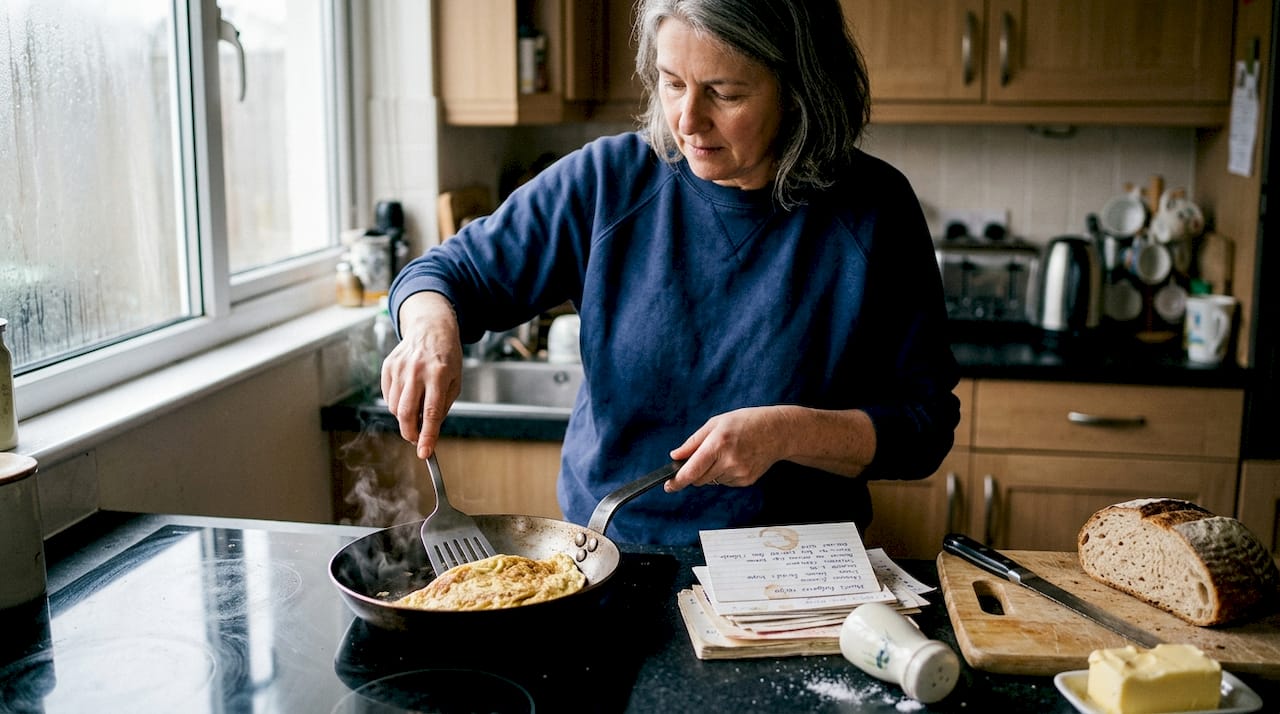
The Mauviel M’Steel is a durable French carbon steel pan (2–2.5mm thick) compatible with induction, praised in tests for easy food release and searing when seasoned. That thinner gauge translates directly into a lighter pan that preheats noticeably faster than the De Buyer.
Key features at a glance:
- Lighter weight: Easier to handle for cooks who toss vegetables or flip crêpes regularly.
- Fast preheating: Reaches cooking temperature quickly, which suits busy weeknight cooking.
- Beeswax coating: Factory applied for rust protection and early seasoning support.
- Oven safe to 350°C (680°F): Handles high-heat finishing without issue.
- Effortless food release: Once seasoned, the surface is remarkably slick for a pan without any synthetic coating.
Pro Tip: Because the M’Steel preheats quickly, use a lower induction setting than you think you need. Let the pan warm for 90 seconds before adding oil. This prevents uneven hot spots and gives you more control over browning.
For seasoning Mauviel pans, the thinner gauge means the seasoning layers bond slightly faster, which is encouraging for those new to carbon steel. However, the thinner steel is also more sensitive to acidic foods, so avoid tomatoes and citrus until the patina is dark and well established. Reviewing best care practices before your first cook will save you frustration later.
The M’Steel suits home cooks who prioritise agility over mass, and anyone transitioning from lightweight nonstick pans who finds heavier cast iron or thick carbon steel intimidating.
Pros: Lighter, faster preheating, excellent food release, good value. Cons: Less heat retention than thicker pans, more sensitive to warping under very high induction power.
De Buyer vs Mauviel: Side-by-side comparison
With two of the most respected carbon steel options compared, it’s easier to see which fits your needs. French brands like De Buyer and Mauviel dominate for European culinary professionals due to craftsmanship, induction compatibility, and durability. Here is how they stack up directly.
| Feature | De Buyer Mineral B Pro | Mauviel M’Steel |
|---|---|---|
| Gauge | 2.5–3mm | 2–2.5mm |
| Weight | Heavier | Lighter |
| Handle | Stainless, oven safe | Steel, oven safe |
| Oven safe | Yes | Yes (to 350°C) |
| Beeswax coating | Yes | Yes |
| Heat retention | Excellent | Good |
| Best for | Pro searing, restaurant use | Home cooking, agility |
| Induction noise | None | Minimal |
Choose the De Buyer Mineral B Pro if:
- You sear proteins regularly and want maximum crust formation.
- You work in a professional or semi-professional kitchen.
- You want a pan that doubles as a heavy-duty oven vessel.
- Long-term durability matters more than weight.
Choose the Mauviel M’Steel if:
- You prefer a lighter pan for everyday home cooking.
- You are new to carbon steel and want faster results.
- Speed of preheating is a priority.
- You cook smaller portions or delicate foods frequently.
It is worth noting that other French brands such as Matfer Bourgeat also produce respected carbon steel pans. Matfer’s Bourgeat line is popular in professional kitchens and worth considering if you want a third option. Understanding pan manufacturing details helps you appreciate why these differences in gauge and construction matter in practice.
Our perspective: Why mastering carbon steel pays off on induction
Comparing specs only goes so far. Here is what we have learned hands-on about truly mastering carbon steel on induction.
Most people who struggle with carbon steel on induction make the same mistake: they treat it like a nonstick pan and expect immediate results. Carbon steel is lighter and faster than cast iron for both professionals and home cooks, and it outperforms stainless for high-heat Maillard reaction cooking, but it requires a genuine learning curve.
The contrarian truth is that a lighter pan like the Mauviel is often better for learning induction technique. Its responsiveness forces you to pay attention to heat levels, which builds skill faster than a forgiving thick pan that masks your mistakes.
Seasoning is not a chore. It is a craft. Each cook adds a layer. Each fatty protein strengthens the patina. The pan you use in five years will perform better than the one you seasoned last week, and that is genuinely satisfying.
Pro Tip: Do not chase a perfectly black pan on day one. A blotchy, uneven patina is completely normal for the first month. Cook with it anyway. The colour evens out with use.
The most overlooked mistake? Neglecting the pan immediately after cooking. Leaving it on the hob with residual moisture, or soaking it in the sink, strips seasoning faster than anything else. For perfecting technique and avoiding rust, the five minutes after cooking matter as much as the seasoning session itself.
Find your perfect induction-ready pan
Ready to upgrade your kitchen? Find the right tools and guidance below.
At Brass & Steel, we build carbon steel pans from a single forged piece of steel, with no rivets, no welds, and no synthetic coatings. Our 27 cm and 30 cm sauté pans are fully induction compatible and designed for cooks who take their kit seriously.
Browse the full range at the Brass & Steel shop and explore our continuously updated guides on seasoning, care, and induction technique. If you are still weighing your options, our article on more induction cookware picks covers additional choices for every kitchen setup. Expert guidance is always available for those navigating tricky induction configurations or transitioning from nonstick for the first time.
Frequently asked questions
Why do carbon steel pans work well on induction cooktops?
Carbon steel is highly magnetic, which allows induction cooktops to generate heat efficiently and evenly through the base. Strong induction compatibility means less energy waste and more consistent cooking temperatures.
How should I season my carbon steel pan for best results on induction?
Apply a very thin layer of high-smoke-point oil, wipe off the excess until the pan looks almost dry, then heat it gradually through several rounds to build a nonstick patina. All carbon steel pans require this seasoning process before they perform at their best.
Can I use carbon steel pans in the oven as well as on induction?
Yes, most quality carbon steel pans are oven safe, particularly those with stainless steel handles. The De Buyer Mineral B Pro features an oven-safe stainless steel handle that makes it especially versatile for stovetop-to-oven cooking.
What’s the main difference between carbon steel and cast iron for induction cooking?
Carbon steel heats and cools faster than cast iron, giving you more precise control on induction, but it requires more consistent care to maintain its seasoning over time.
Are there any foods I should avoid cooking in a seasoned carbon steel pan?
Avoid acidic foods such as tomatoes, citrus, and wine-based sauces in a newly seasoned pan, as acidic foods strip seasoning and can leave metallic flavours in your dish. Wait until the patina is dark and well established before introducing them.