What makes a pan warp-resistant: a cook's guide
TL;DR:
- Thicker bases and fully clad construction help pans resist warping by distributing heat evenly and increasing rigidity. Proper habits such as gradual preheating, matching burner size, and avoiding rapid cooling prevent thermal stress that causes deformation. Material choice and careful use are essential for long-lasting, warp-resistant cookware.
You place a cold chicken breast into a screaming-hot pan and hear a metallic pop. Then the pan starts rocking. That sound is your cookware warping, and it has nothing to do with how expensive the pan was. Understanding what makes a pan warp-resistant is really about knowing how metal behaves under heat, and once you understand that, you will stop blaming the brand and start making smarter choices about materials, thickness, and how you actually use the thing.
Table of Contents
- Key takeaways
- Why pans warp in the first place
- Materials and construction that resist warping
- How to prevent pan warping through good habits
- Spotting early signs of warping
- My honest take on warp resistance
- Why Brass-steel pans are built to last
- FAQ
Key takeaways
| Point | Details |
|---|---|
| Thickness matters most | Thicker bases distribute heat evenly and resist the stress that causes warping. |
| Thermal shock is the main culprit | Placing a hot pan under cold water creates uneven contraction that permanently bends the base. |
| Match pan size to burner | Using a burner much smaller than your pan concentrates heat in the centre and warps the base over time. |
| Carbon steel needs gradual heat | On induction especially, always start low and increase heat slowly to avoid localised hot spots. |
| Small habits extend pan life | Letting a pan cool naturally and drying it immediately after washing prevents most warping and rust. |
Why pans warp in the first place
Most cooks assume warping is just what happens to cheap pans on high heat. That is only half the story. The real cause is thermal stress, specifically when different parts of the metal expand or contract at different rates. When that stress exceeds what the metal can handle, it permanently deforms. That is thermal shock warping, and it happens to expensive pans too if you treat them badly.
There are a few common situations where this goes wrong:
- Rinsing a hot pan under cold water. This is the single most destructive habit in the kitchen. Rapid temperature changes cause different parts of the metal to contract at different speeds, twisting or buckling the base.
- Heating an empty pan on full blast. No food or oil to absorb the heat means the metal climbs in temperature too fast and unevenly.
- Mismatched burner and pan size. A large pan on a small burner creates a blazing hot centre and cooler edges, building a thermal gradient that stresses the base with every use.
- Thin materials heating unevenly. Thin metals like aluminium heat quickly but lack the mass to spread that heat across the surface, making them far more prone to distortion.
- Dishwashers. Even cookware labelled dishwasher-safe takes damage from repeated temperature cycles in a machine. Carbon steel should never go near one.
The goal is not to avoid all thermal expansion, because that is impossible. Metal expands with heat. The goal is to let it expand evenly, so the stress distributes across the whole pan rather than concentrating in one spot.
Materials and construction that resist warping
The material your pan is made from, and how it is constructed, determines how well it will hold its shape over years of cooking. Here is how the main options compare:
| Material | Warp resistance | Why |
|---|---|---|
| Cast iron | Very high | Thick, rigid, heavy mass distributes heat slowly and evenly |
| Carbon steel (3mm+) | High | Rigid enough when thick, lighter than cast iron, responsive to heat |
| Stainless steel (clad) | High | Fully clad construction spreads heat across multiple bonded layers |
| Aluminium (thin) | Low | Heats quickly but lacks rigidity, prone to thermal distortion |
| Nonstick (thin base) | Low | Coating sits on thin metal that warps easily under high heat |
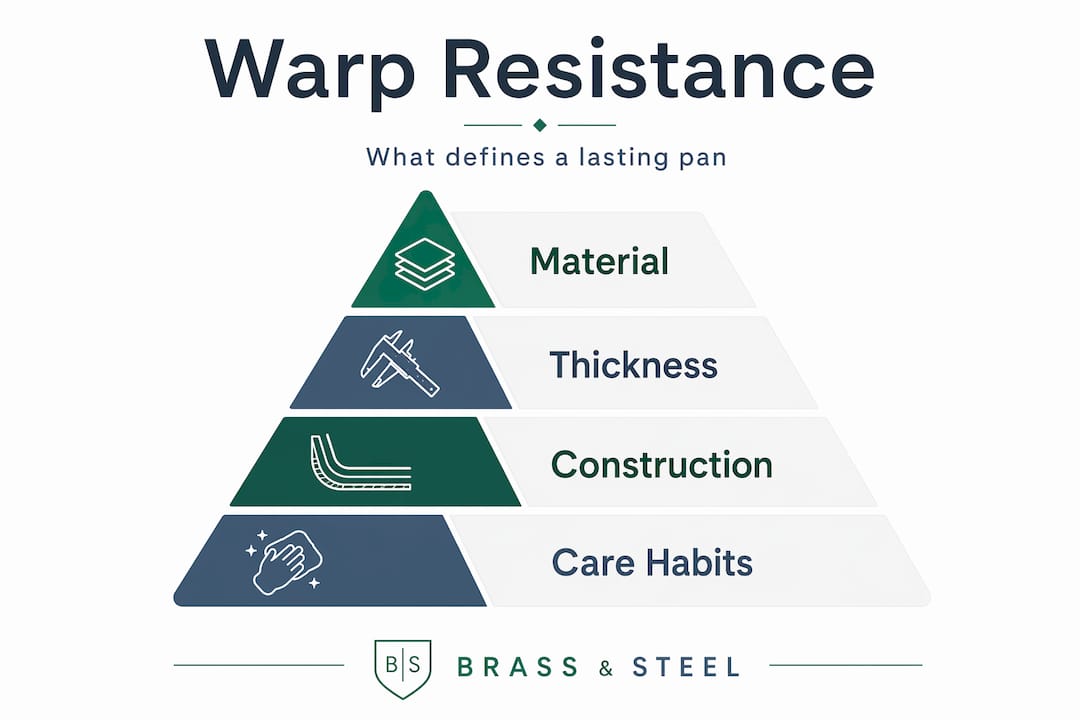
The key insight is that thicker bases and fully clad construction help pans resist warping by distributing heat more evenly and adding physical rigidity. A thin pan flexes under thermal stress. A thick pan absorbs it.
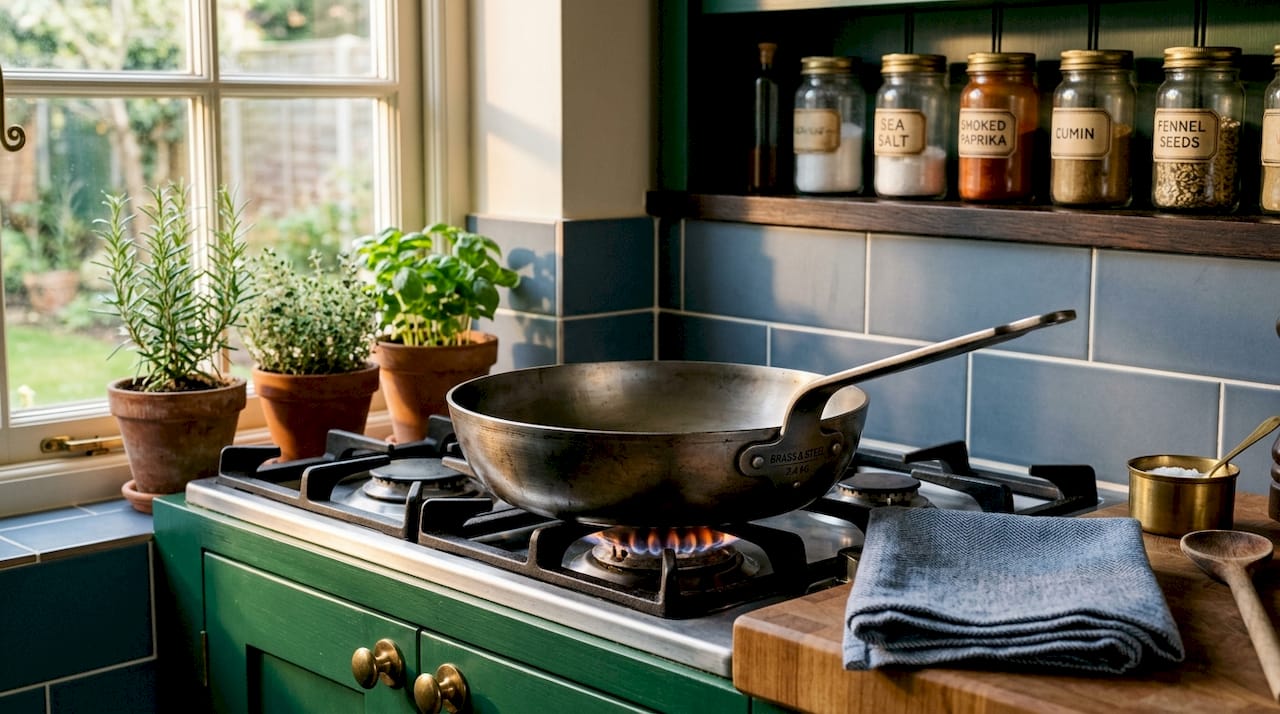
Carbon steel sits in an interesting position here. It is not as massive as cast iron, but a 3mm or 4mm carbon steel pan is significantly more warp-resistant than a 1.5mm version of the same design. The alloy composition also matters. Carbon steel has a tight, uniform grain structure that tolerates repeated heating and cooling better than softer metals, provided you treat it correctly. You can read more about how heat affects carbon steel and what that means for everyday cooking.
One thing worth knowing: even the best materials have limits. No pan is immune to warping if you abuse it consistently. Symmetrical, uniform heating is what actually protects the metal. The material just gives you a wider margin for error.
Pro Tip: When choosing between a 27 cm and 30 cm carbon steel pan, consider that the larger, heavier version typically has a thicker base. More mass means more forgiveness when heat management is less than perfect.
How to prevent pan warping through good habits
Getting a warp-resistant pan is only half the job. What you do with it matters just as much. Here are the habits that keep a pan flat for years:
- Preheat gradually. Place the pan on medium-low heat for two to three minutes before turning up. This lets the whole base expand together rather than forcing the centre to race ahead of the edges.
- Never heat an empty pan on high. If you need a screaming-hot sear, get there in stages. A pan with oil or food in it handles high heat much better because the contents absorb energy.
- Match your burner to your pan. Matching pan base to burner size within about 2.5 cm prevents the concentrated hot spots that gradually distort the base.
- Let the pan cool naturally. Take it off the heat, place it on a trivet or wooden board, and leave it. No cold water. No damp cloth on the base. Give it ten to fifteen minutes.
- Wash with warm water, not cold. If the pan is still warm when you clean it, use warm water. The temperature difference should be minimal.
- Dry it immediately. Leaving a carbon steel pan wet even briefly invites rust and creates moisture that can interact badly with residual heat. A quick towel dry followed by a minute on low heat is ideal.
- Be careful on induction. Carbon steel on induction is efficient but the heat concentrates in rings, which means uneven expansion if you use boost mode on a cold, empty pan. Always start on medium and increase slowly.
For more detail on long-term care, Brass-steel’s guide on preventing rust and warping covers the full maintenance routine worth bookmarking.
Pro Tip: After washing, put your carbon steel pan back on the hob for sixty seconds on low heat to drive off any remaining moisture. Then rub a tiny amount of oil into the surface with a paper towel. This takes thirty seconds and adds years to the pan’s life.
Spotting early signs of warping
Catching a warp early gives you more options. Here is what to look for:
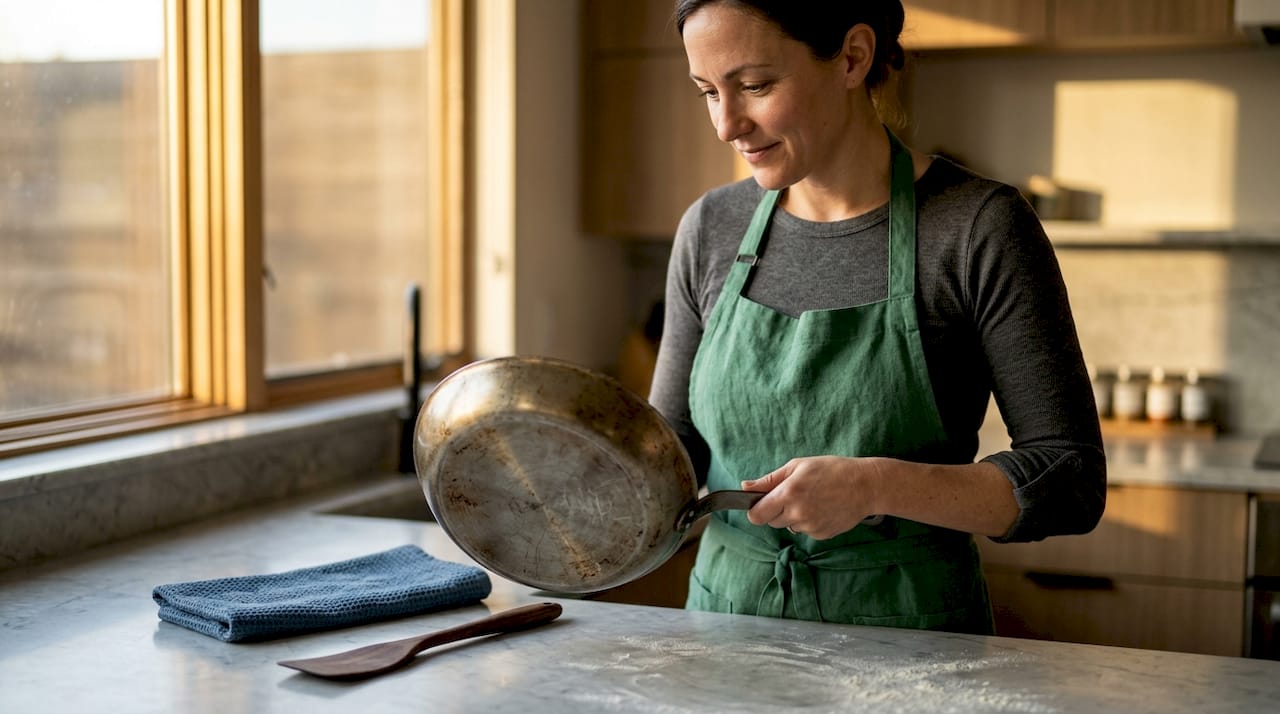
- Rocking on a flat surface. Set the pan on your worktop or hob. If it rocks side to side, the base is no longer flat. A tiny wobble can be corrected. A dramatic rock usually means the warp is permanent.
- Uneven oil pooling. Pour a small amount of oil into a cold, flat pan. If it immediately slides to one side, the base has distorted.
- Inconsistent cooking results. Food browning only on one side of the pan, or burning in the centre while raw at the edges, often points to a warped base losing contact with the burner.
- An audible ping or pop during heating. This is the metal under stress. It does not always mean permanent damage, but it is a warning sign to reduce heat and slow down.
Minor warps can sometimes be corrected by heating the pan gently and applying careful pressure with a padded tool on a flat, heat-safe surface. It is slow, careful work and it does not always succeed. Home repair attempts should be approached with caution because aggressive reshaping risks cracking the metal or making the distortion worse. If the warp is significant and the pan no longer sits flat on your hob, replacement is the honest answer.
My honest take on warp resistance
I have cooked on a lot of pans, cheap ones and expensive ones, and the thing that keeps coming back is this: the pan’s material sets the ceiling, but your habits set the floor.
I have seen cooks ruin a thick, quality carbon steel pan in six months by rinsing it under cold water every time. I have also seen battered, mid-range pans last a decade because their owner treated them with basic respect. What I have learned is that the biggest mistake experienced cooks make is overconfidence. They know their pan is good, so they stop being careful. They crank the induction to full boost because they are in a hurry. They rinse the pan because washing up is boring.
The counterintuitive lesson is that warp resistance is not really about the pan surviving abuse. It is about the pan and cook working together. Gradual preheating, a sensible burner match, and five minutes of patience when cooling will protect a 3mm carbon steel pan indefinitely. Ignore those three things and even the best pan will let you down eventually.
Price matters less than thickness, and thickness matters less than how you treat the pan day to day. If I had to give one piece of advice: buy the heaviest pan you can comfortably handle, then learn to preheat slowly. That combination beats any coating or marketing claim I have ever come across.
— Davide
Why Brass-steel pans are built to last
At Brass-steel, warp resistance is not an afterthought. Both the 27 cm and 30 cm carbon steel sauté pans are forged from a single piece of steel with no rivets, no welds, and no weak points where stress can concentrate. The 30 cm version runs to 4mm thickness, giving it the mass to absorb uneven heat and stay flat through years of serious cooking. The construction also means no hidden joints where thermal stress quietly builds up over time. If you want to see what that looks like in practice, explore the full range at Brass-steel and see how the design choices translate to performance at the hob.
FAQ
What makes a pan warp-resistant?
Warp resistance comes from material thickness, alloy rigidity, and uniform base construction. Thicker bases distribute heat more evenly and resist the thermal stress that causes permanent deformation.
Why do carbon steel pans warp?
Carbon steel pans warp mainly from thermal shock, such as rinsing a hot pan under cold water, or from localised heating caused by a mismatched burner size or induction boost mode on a cold pan.
Can a warped pan be fixed at home?
Minor warps can sometimes be gently corrected by applying careful pressure after controlled heating on a flat surface. Significant warps are difficult to fix safely and the pan is usually better replaced.
How do I stop my pan from warping on induction?
Always start on medium heat and increase gradually. Never place a cold, empty carbon steel pan on induction boost mode, as the concentrated ring heating causes uneven expansion and distortion.
What is the best material for a warp-resistant pan?
Cast iron and thick carbon steel (3mm or more) offer the best warp resistance for everyday cooking, because their mass and rigidity allow even heat distribution and better tolerance of thermal stress.