How heat affects carbon steel cookware: a cook's guide
TL;DR:
- Most home cooks misuse their carbon steel pans by heating them unevenly or too rapidly, leading to warping or sticking. Understanding heat transfer and proper temperature control allows these pans to perform optimally and prevents damage. Proper seasoning, gradual preheating, and small batch cooking maximize responsiveness and durability for versatile high-heat cooking.
Most home cooks treat their carbon steel pan like a standard frying pan: blast it on high, chuck in the food, and hope for the best. That approach works until it doesn’t, and suddenly you’re dealing with a warped pan, a sticky surface, or food that steams instead of sears. Understanding how heat affects cookware, specifically carbon steel, changes everything. Get the heat right and carbon steel becomes one of the most responsive, high-performing materials in your kitchen. This guide covers heat transfer, warping risks, seasoning chemistry, and practical heat management so you can cook with confidence.
Table of Contents
- How heat moves through carbon steel cookware
- Preventing warping: how heat stress affects your carbon steel pan
- Seasoning and heat: polymerising oil for a natural non-stick surface
- Managing heat for optimum cooking performance with carbon steel
- Carbon steel compared: why heat matters in cookware choice
- Why mastering heat makes carbon steel cookware an unbeatable kitchen ally
- Discover premium carbon steel pans for home cooking
- Frequently asked questions
Key Takeaways
| Point | Details |
|---|---|
| Carbon steel heats fast | Its lower mass lets carbon steel pans heat quickly and respond swiftly to burner changes for better cooking control. |
| Prevent warping with care | Gradual preheating and matching the burner size to the pan base minimise heat stress and permanent warping. |
| Season by polymerisation | Proper seasoning requires heating oil above its smoke point to create a durable, natural non-stick surface. |
| Manage batch sizes | Cooking in small portions keeps pan temperature stable, avoiding steaming and achieving optimal searing. |
| Understand cookware differences | Carbon steel heats differently from cast iron or stainless steel, so use the right pan for your cooking style. |
How heat moves through carbon steel cookware
Carbon steel is not a mystery material. It behaves according to predictable physics, and once you understand those basics, you can use them to your advantage every single time you cook.
The key property here is thermal conductivity: how fast heat travels through the pan material from the burner to your food. Carbon steel cookware conducts heat at around 50 W/m·K with a specific heat capacity of 460 J/kg·K. That puts it close to cast iron in raw conductivity. The crucial difference is mass. Carbon steel pans are significantly thinner and lighter, which means they heat up and cool down far faster.
Think of it this way. A cast iron pan is like a storage heater: slow to warm up, slow to cool down, holds a steady temperature for a long time. A carbon steel pan is more like a gas flame itself: immediate, responsive, and precise. When you add a cold steak, temperatures can drop 40 to 60°C in a carbon steel pan. That sounds dramatic, but the pan recovers quickly. Cast iron drops less in that moment but takes far longer to bounce back.
For everyday cooking, carbon steel’s heat behaviour delivers several practical advantages:
- Fast preheating: A carbon steel pan reaches cooking temperature in roughly 2 minutes, not 5 or 6.
- Responsive temperature control: Turn the burner down and the pan follows immediately.
- Quick recovery after adding cold food: No long wait for heat to return to searing levels.
- Better suited to rapid cooking techniques: Stir-frying, flash searing, and sautéing all benefit from this agility.
For a deeper look at how these two materials stack up, the carbon steel vs cast iron guide is worth reading before you choose your next pan.
Preventing warping: how heat stress affects your carbon steel pan
Now that you understand heat flow in carbon steel, let’s look at how improper heating affects the pan’s physical shape over time. Warping is the most common heat-related problem home cooks encounter, and it is almost always preventable.
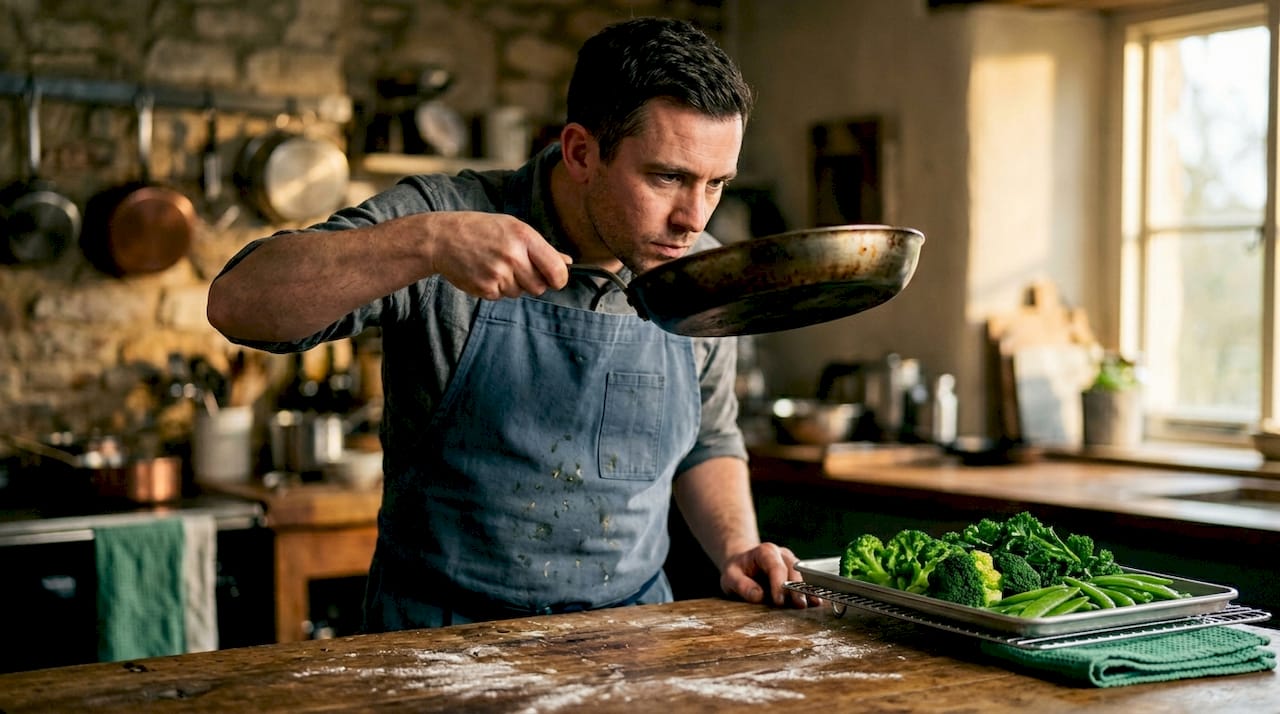
Metal expands when heated. Carbon steel is no exception. The problem arises when different parts of the pan expand at different rates, creating stress in the metal. Carbon steel pans warp from thermal shock or uneven heating, and gradual preheating over 1 to 2 minutes on low to medium heat, combined with matching the burner size to the pan base, is the most reliable way to prevent it.
The most common warping mistakes home cooks make:
- Rinsing a hot pan under cold water. This is thermal shock in its purest form. The sudden contraction of the metal on one side stresses the pan’s structure.
- Heating an empty pan on maximum power. The base heats far faster than the sides, causing uneven expansion.
- Using a small burner under a large pan. The centre overheats while the edges stay cool, creating internal metal stress.
- Skipping the warm-up. Going straight to high heat gives the metal no time to expand evenly.
Pro Tip: Always start your carbon steel pan on a low flame for the first minute, then increase to medium or high. This single habit eliminates the majority of warping risk regardless of pan thickness.
The good news is that thickness genuinely helps. The 4mm Brass & Steel 30 cm pan resists warping better than thinner alternatives precisely because more metal mass distributes heat stress more evenly. But even a thick pan will warp if you hit it with thermal shock repeatedly. Good habits come first. For full prevention guidance, the maintaining carbon steel pans article and the dedicated carbon steel pan warping guide are both worth bookmarking.
Seasoning and heat: polymerising oil for a natural non-stick surface
Understanding heat’s physical impact helps you appreciate how heat triggers the chemical process of seasoning. This is where the temperature effects on pans go beyond physics and into chemistry, and where most home cooks have significant misconceptions.
Seasoning is not a coating you apply. It is a chemical transformation called polymerisation, where heat breaks down oil molecules and causes them to bond together and bond to the pan’s surface. The result is a hard, smooth, non-toxic layer that builds with every cook. Heat polymerises oil on carbon steel at 215 to 245°C for 8 to 12 minutes per layer, and three coats build a durable patina within about 45 minutes total.
Here is how to season your pan correctly, step by step:
- Wash the pan with warm, soapy water before the very first seasoning. A light oil coat applied during manufacturing protects against rust in transit; remove it completely.
- Dry the pan fully, then bake it in the oven at 250°C for 10 minutes to drive off all moisture.
- Apply a very thin coat of oil with a high smoke point: grapeseed, avocado, sunflower, or canola all work well. Avoid olive oil and animal fats.
- Wipe off all excess oil. The pan should look almost dry. Excess oil is the number one cause of sticky, gummy seasoning.
- Bake the pan upside down for 30 minutes at 250°C. Upside down prevents pooling.
- Repeat two to three times to build a strong base layer.
Pro Tip: The difference between a good seasoning and a sticky, useless one is almost always the amount of oil used. Less is genuinely more. Wipe the oil on, then wipe nearly all of it off before you heat the pan.
Overheating during seasoning causes the oil to smoke excessively and turns the surface dark and uneven. Underheating means polymerisation never completes and the oil stays tacky. Staying within 215 to 245°C is not just a guideline; it is the chemistry. Regular cooking at 200 to 300°C naturally reinforces the seasoning layer over time. For ongoing care, the carbon steel pan maintenance guide covers everything you need.
Managing heat for optimum cooking performance with carbon steel
With a solid grasp of seasoning, let’s apply heat management techniques to cook like a pro. The cooking heat and material types you combine determine the result on the plate. Carbon steel rewards cooks who work with its thermal behaviour rather than against it.
The single biggest mistake is overloading the pan. Too much cold food at once causes a dramatic temperature drop, which turns a sear into a steam. A carbon steel wok reaches 300°C in just 2.5 minutes on a 12,000 BTU burner, but drops 85°C when you add 200g of protein. It recovers within 18 seconds. Add twice as much protein and recovery time doubles or more, and you lose the browning window entirely.
Key habits for heat management in practice:
- Cook in small batches. Around 200g per batch for stir-frying keeps the pan temperature high enough to sear rather than steam.
- Use the Leidenfrost effect as a readiness test. Flick a few drops of water into the pan. If they skitter and evaporate in small balls rather than just bubbling away, the surface is ready. This happens at roughly 160°C and above.
- Match burner size to pan diameter. Flames licking up the sides waste energy and create uneven heat. The base of the flame should fill the base of the pan.
- Avoid maximum power with an empty cold pan. It risks both warping and degrading your seasoning.
| Cooking task | Ideal pan temp | Batch size guidance | Heat management tip |
|---|---|---|---|
| Searing steak | 220 to 260°C | One piece at a time | Preheat 2 min, pat meat dry |
| Stir-frying vegetables | 250 to 300°C | Max 200g per batch | Keep food moving constantly |
| Sautéing onions | 160 to 200°C | Medium quantity | Medium heat, stir regularly |
| Eggs | 140 to 170°C | 2 to 3 eggs | Low heat, well-seasoned pan |
Carbon steel is safe up to 450°C and beyond, making it genuinely suitable for the highest heat cooking. For guidance on which pans perform best under these conditions, the best pans for high heat cooking comparison is useful.
Carbon steel compared: why heat matters in cookware choice
To complete your understanding, here is how carbon steel’s heat traits compare with popular alternatives. The impact of heat on pots and pans varies considerably by material, and those differences determine which pan suits which cooking task.
| Property | Carbon steel | Cast iron | Stainless steel (cladded) |
|---|---|---|---|
| Heat-up speed | Fast (2 min) | Slow (5 to 7 min) | Medium (2 to 3 min) |
| Heat retention | Moderate | High | Low to moderate |
| Temperature responsiveness | Excellent | Poor | Good |
| Warping risk | Moderate if misused | Low | Low |
| Best for | Searing, stir-fry, sauté | Braising, slow cooking | Sauces, general use |
| Induction compatible | Yes | Yes | Yes (cladded) |
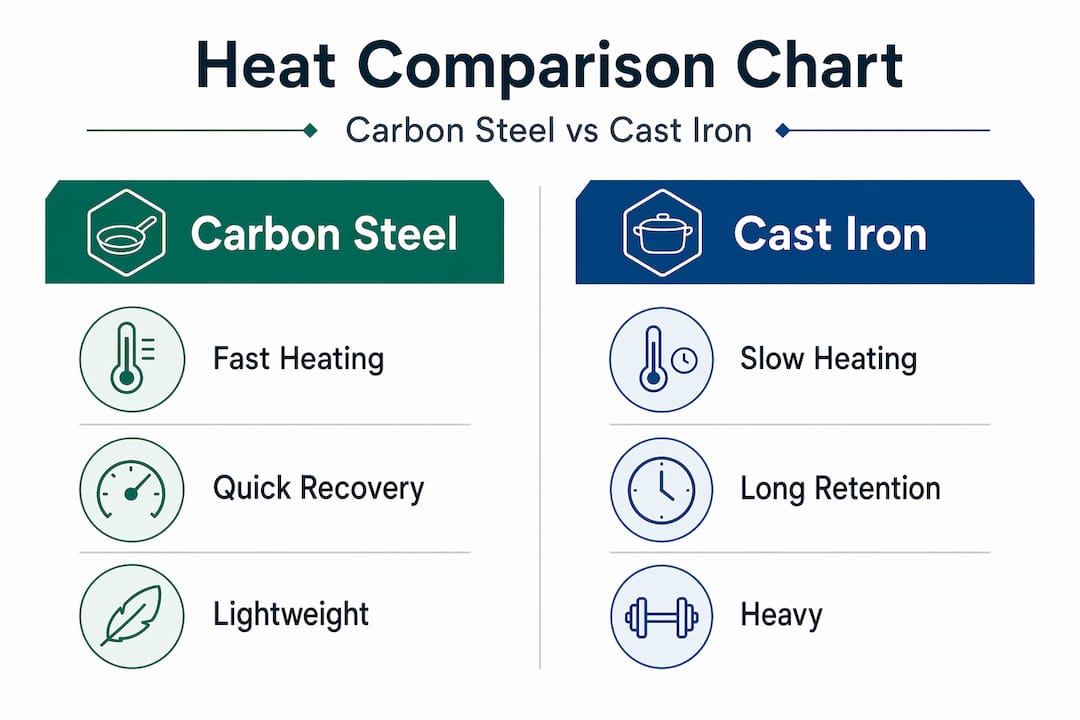
Cast iron retains heat far longer but reacts slowly to temperature changes, making it excellent for braising or oven cooking where steady, sustained heat matters. Stainless steel alone conducts heat poorly and creates significant hot spots; cladded versions with an aluminium core address this but still lack the natural non-stick qualities of seasoned carbon steel. For a thorough side-by-side, the carbon steel vs cast iron comparison lays it out in full.
Why mastering heat makes carbon steel cookware an unbeatable kitchen ally
Here is the perspective that most guides miss entirely. The cookware heat tolerance and heat resistance in kitchenware conversation almost always focuses on what a material can withstand. What rarely gets discussed is what a material rewards in the cook.
Most home cooks underestimate how quickly carbon steel reacts to small burner adjustments. That agility is not a quirk. It is the feature. Carbon steel’s high thermal diffusivity and low thermal mass allow cooks to surf temperature changes, avoiding the twin failures of steaming food or burning it. With cast iron, you commit to a temperature and live with the consequences. With carbon steel, you stay in control throughout the cook.
There is also a dimension of heat that seasoning introduces which rarely gets mentioned: radiant heat from the patina itself. A well-seasoned carbon steel pan does not just conduct heat from below. The dark patina absorbs and re-radiates heat around food, contributing to browning beyond what conduction alone could produce. This is part of why a properly seasoned carbon steel pan outperforms a brand-new one, and why chefs who cook on the same pan for years get results that seem disproportionate to the equipment.
The key mindset shift is this: stop thinking about heat as something you set and forget. With carbon steel, heat is a dial you turn continuously throughout a cook. A small decrease before adding delicate fish. A brief high blast to recover temperature after adding cold protein. A drop to medium to finish cooking through without burning. The carbon steel vs cast iron guide illustrates exactly why this agility gives carbon steel an edge that heavier pans simply cannot replicate.
Discover premium carbon steel pans for home cooking
Ready to take your new heat knowledge into the kitchen? Choosing a pan that is engineered to work with these principles makes the difference between theory and results you can taste.
At Brass & Steel, every pan is forged from a single sheet of carbon steel, free from rivets, welds, and synthetic coatings. The 27 cm and 30 cm sauté pans are built to distribute heat evenly across the base, resist warping under high-heat use, and build a natural non-stick patina that improves with every meal. They work on all cooktops, including induction, and are designed for the kind of cooking this article describes: precise, high-heat, and fully in your control. The carbon steel pan maintenance guide on the Brass & Steel website gives you everything you need to keep your pan performing at its best for decades.
Frequently asked questions
Why does my carbon steel pan warp?
Carbon steel pans warp primarily due to rapid or uneven heating, such as placing a cold pan on maximum heat, using a burner that is too small for the base, or rinsing the pan with cold water while it is still hot. Gradual preheating and letting the pan cool naturally before washing prevent the vast majority of warping cases.
How hot should I heat my carbon steel pan for seasoning?
Heat your pan to between 215 and 245°C and hold it there for 8 to 12 minutes per layer to polymerise the oil correctly. Three thin coats at the correct temperature build a smooth, durable non-stick patina.
Can I cook any food at high heat with carbon steel?
Yes, carbon steel is safe up to 450°C and performs exceptionally well for searing and stir-frying. The main caution is batch size: adding too much cold food at once drops the surface temperature sharply and causes food to steam rather than sear.
Why does heat recovery matter when cooking with carbon steel?
Carbon steel rebounds temperature significantly faster than cast iron after you add cold food, which keeps the cooking surface in the browning range rather than the steaming range. This fast recovery is what makes carbon steel so well-suited to high-heat, batch-style cooking.