The role of metallurgy in cookware: a practical guide
TL;DR:
- Metallurgy determines how cookware heats, reacts with food, and lasts, influencing every cooking decision. Copper offers excellent thermal conductivity and responsiveness, while cast iron and carbon steel provide superior heat retention for searing. Manufacturing techniques like forging enhance durability, and matching metals to specific tasks optimizes performance and safety.
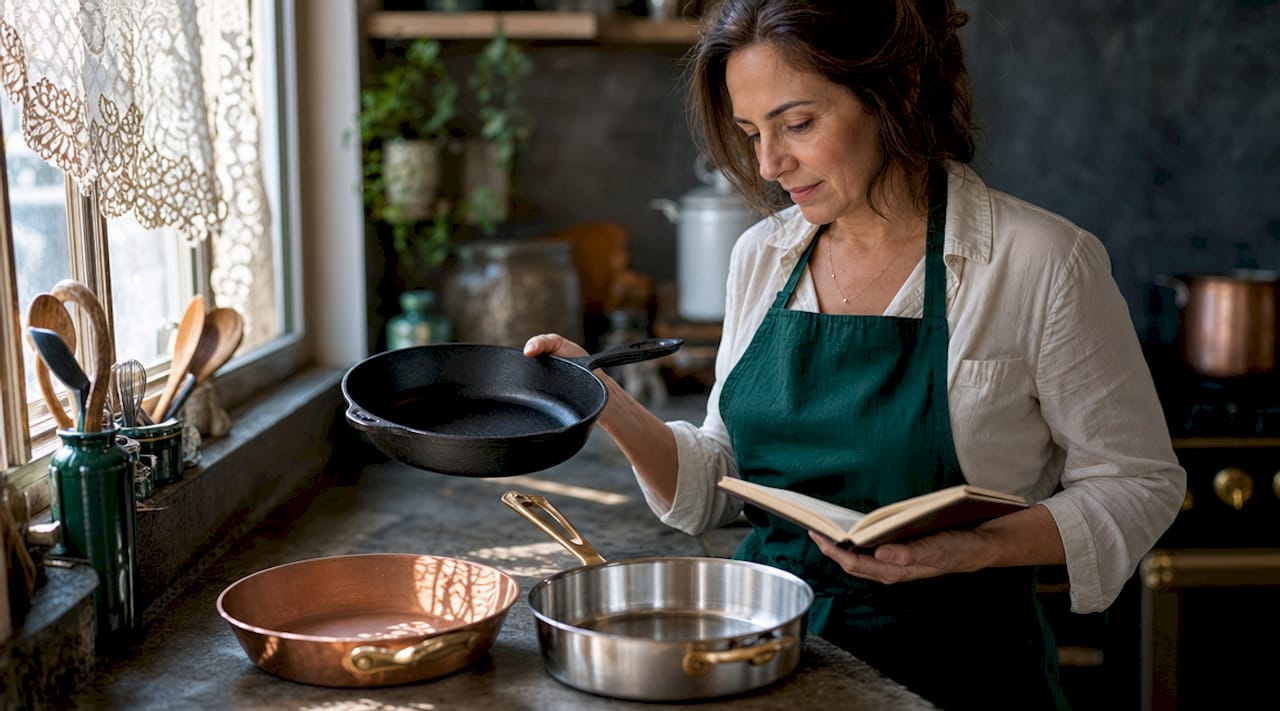
Metallurgy is defined as the science of extracting, refining, and working metals, and it determines every meaningful performance characteristic of your cookware. The role of metallurgy in cookware covers thermal conductivity, heat retention, chemical reactivity, and structural durability. Copper, aluminium, stainless steel, cast iron, and carbon steel each behave differently because of their atomic structure and alloy composition. Understanding those differences is not academic. It is the difference between a perfect sear and a grey, steamed disappointment.
How do metallurgical properties affect heat distribution?
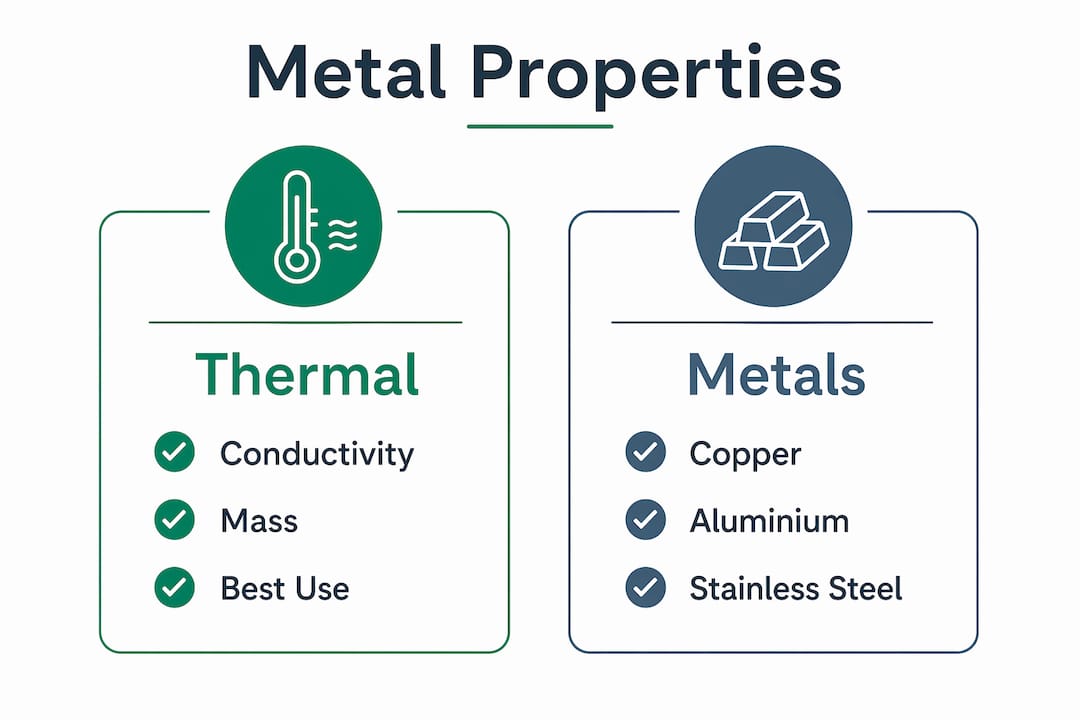
Cookware performance is determined by the balance between thermal conductivity, the speed at which heat transfers through the metal, and thermal mass, the amount of heat the metal can store. These two properties pull in opposite directions, and the best material for any task depends on which one you need most.
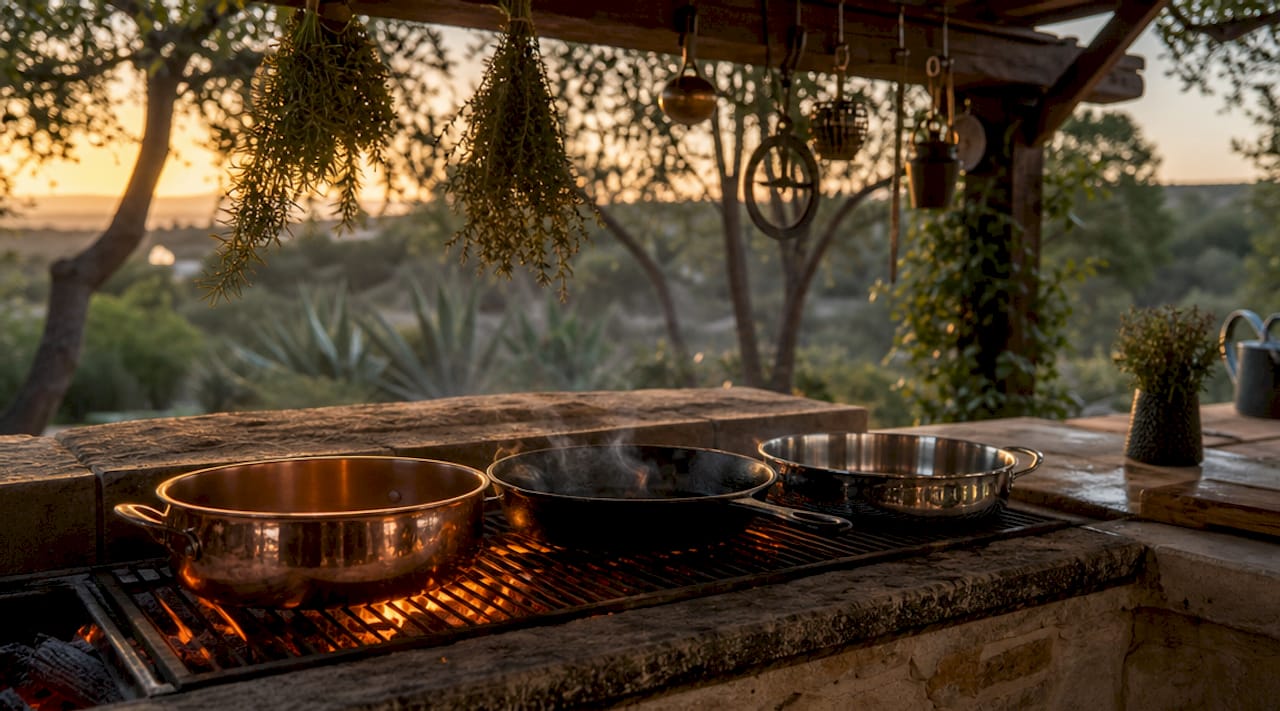
Copper leads every metal in thermal conductivity at approximately 401 W/m·K. Aluminium sits at around 237 W/m·K. Stainless steel, by contrast, conducts at roughly 16 W/m·K, which is why stainless pans almost always require a conductive core of copper or aluminium to heat evenly. That gap is not marginal. It is the reason a bare stainless steel pan produces hot spots that burn protein before the rest of the surface even reaches temperature.
Copper cookware heats and cools almost instantly, which eliminates hot spots and gives you precise temperature control. That responsiveness makes copper the professional choice for sugar work, sauces, and anything where a few degrees matters. The trade-off is cost, weight, and the need for a lining, since bare copper reacts with acidic foods.
Cast iron and carbon steel take the opposite approach. Their thermal mass compensates for lower conductivity. Cast iron stores heat so effectively that it maintains a stable surface temperature even when cold protein hits the pan, which is exactly what you need for a proper sear. Carbon steel is thinner and lighter, so it heats faster than cast iron while still holding enough thermal mass for high-heat cooking.
Construction also shapes heat distribution. Fully-clad pans have a conductive core running from the base up through the sides, not just across the bottom. This matters when you are reducing a sauce or cooking vegetables against the pan wall. A disc-bottom pan concentrates heat at the base and leaves the sides cold, which creates uneven cooking that no technique can fully correct.
| Metal | Thermal conductivity | Thermal mass | Best use |
|---|---|---|---|
| Copper | Very high (401 W/m·K) | Low | Sauces, sugar work, precise temperature tasks |
| Aluminium | High (237 W/m·K) | Moderate | Baking, general cooking, conductive cores |
| Carbon steel | Moderate | Moderate to high | Searing, sautéing, high-heat cooking |
| Cast iron | Low to moderate | Very high | Searing, braising, oven cooking |
| Stainless steel | Low (16 W/m·K) | Low | Stocks, boiling, clad constructions |
Pro Tip: If you cook on induction, check whether your pan is fully clad or disc-bottom. Induction heats only the base, so a disc-bottom pan on induction will have cold sides regardless of the metal used.
What is the impact of metal reactivity on food safety and flavour?
Metal reactivity is one of the most overlooked factors in cookware selection, and it has a direct effect on both flavour and health. Not all metals are chemically inert when they contact food, particularly acidic food like tomatoes, citrus, or wine.
Here is how the main cookware materials behave:
- Copper is highly reactive with acidic foods. Unlined copper can leach copper ions into food, altering flavour and posing health risks at high concentrations. All culinary copper cookware is lined with tin or stainless steel for this reason.
- Aluminium reacts with both acidic and alkaline foods, causing discolouration and a metallic taste. Anodised aluminium forms a harder, less reactive surface, but it is still not fully inert.
- Cast iron releases iron ions into food, which is generally considered beneficial in small amounts. Acidic foods cooked for long periods in unseasoned cast iron will taste metallic and can strip the seasoning.
- Carbon steel behaves similarly to cast iron. A well-seasoned carbon steel pan creates a polymerised oil layer that acts as a barrier between the metal and the food, reducing reactivity significantly.
- Stainless steel (18/10 grade) is the most chemically stable option for everyday cooking. However, acidic foods can cause metal migration even in stainless steel, affecting flavour and safety over time.
The nickel content in 18/10 stainless steel improves corrosion resistance, but nickel migration into food increases with acidity and cooking time. For most cooks this is not a concern at normal levels, but it is worth knowing if you cook acidic dishes frequently in stainless steel.
Pro Tip: Never simmer a tomato sauce for hours in an unseasoned carbon steel or cast iron pan. Use stainless steel or enamelled cast iron for long, acidic braises. Save your carbon steel for high-heat tasks where the seasoning is not at risk.
How does manufacturing technique affect durability and maintenance?
The way a pan is made matters as much as the metal it is made from. Forging increases strength and durability compared to casting by aligning the grain structure of the metal under pressure. A forged pan is denser, less porous, and more resistant to warping under thermal stress than a cast equivalent of the same material.
Casting, by contrast, allows for complex shapes and thick walls, which is why cast iron is almost always cast rather than forged. The trade-off is that cast iron is brittle and can crack under sudden temperature changes, while forged carbon steel flexes slightly without fracturing.
| Method | Strength | Weight | Warping resistance | Best for |
|---|---|---|---|---|
| Forging | Very high | Lighter | Excellent | Carbon steel, aluminium |
| Casting | Moderate | Heavier | Good (but brittle) | Cast iron, some aluminium |
| Cladding (multi-ply) | High | Moderate | Good | Stainless steel with copper or aluminium core |
Cladding is a construction technique rather than a manufacturing method. A clad pan bonds multiple metal layers together, typically stainless steel on the outside with a copper or aluminium core. Three-ply and five-ply constructions are common. More layers do not automatically mean better cooking. What matters is the thickness and quality of the conductive core, not the ply count on the marketing label.
Coatings add another variable. PTFE nonstick coatings are stable up to 260°C and begin to decompose at 350°C, which limits their use in high-heat applications like searing. Ceramic coatings are harder but chip more easily. Seasoning on carbon steel and cast iron is not a coating in the conventional sense. It is a polymerised layer of oil that bonds to the metal surface and improves with every use. A well-maintained carbon steel pan can last generations, which is why cookware longevity is so closely tied to material and construction choice.
Which metals suit which cooking tasks?
No single metal is best for all cooking. Matching the material to the task is the practical application of everything metallurgy teaches us about cookware.
- Stocks, soups, and acidic sauces: Use 18/10 stainless steel. It is chemically stable, easy to clean, and does not interact with long-simmered acidic liquids. A clad stainless pan with an aluminium core gives you even heat without reactivity concerns.
- Searing meat and fish: Use carbon steel or cast iron. Both hold enough thermal mass to maintain surface temperature when cold protein hits the pan. Carbon steel heats faster and is lighter, making it the preferred choice in professional kitchens.
- Delicate sauces and temperature-sensitive tasks: Use copper or copper-clad pans. The near-instant thermal response lets you adjust heat precisely, which is critical for hollandaise, caramel, or chocolate work.
- Oven-to-table and braising: Use enamelled cast iron. The enamel coating removes reactivity concerns, the thermal mass handles long, slow cooking, and the pan goes from hob to oven without issue.
- Everyday sautéing and general use: Carbon steel covers most tasks. It is lighter than cast iron, more responsive than enamelled alternatives, and builds a natural nonstick surface over time through seasoning.
A professional kitchen typically runs on a combination of stainless steel for wet cooking, carbon steel for high-heat work, and copper for precision tasks. Trying to do everything with one material is the most common mistake serious cooks make when building a collection.
Key takeaways
The role of metallurgy in cookware is not abstract. It determines how your pan heats, how it reacts with food, and how long it lasts, making material knowledge the foundation of every cooking decision.
| Point | Details |
|---|---|
| Thermal conductivity varies widely | Copper conducts at 401 W/m·K versus stainless steel at 16 W/m·K, requiring conductive cores in clad pans. |
| Thermal mass drives searing performance | Cast iron and carbon steel store heat effectively, maintaining surface temperature when cold food is added. |
| Metal reactivity affects flavour and safety | Copper, aluminium, and unseasoned iron react with acidic foods; stainless steel and seasoned carbon steel are far more stable. |
| Forging outperforms casting for durability | Forged pans are denser, warp-resistant, and longer-lasting than cast equivalents of the same material. |
| No single metal suits all tasks | Match stainless steel to stocks, carbon steel to searing, and copper to precision sauce work for best results. |
Why metallurgy changed how I think about cooking
I spent years treating cookware as a commodity. A pan was a pan. Then I started paying attention to what was actually happening at the metal surface, and everything shifted.
The moment that changed my thinking was cooking a steak in a thin stainless steel pan and watching the surface temperature drop the instant the meat hit it. The pan simply did not have the thermal mass to hold its temperature. I moved to carbon steel and the difference was immediate. Not because carbon steel is magic, but because its metallurgical properties match what searing actually requires.
What I find most cooks get wrong is chasing marketing language. Terms like “surgical grade” or “five-ply” sound authoritative, but actual metal migration depends on alloy chemistry and cooking conditions, not the label on the box. A three-ply pan with a thick aluminium core will outperform a five-ply pan with thin layers every time.
The other thing I would push back on is the idea that one great pan is enough. Copper for sauces, carbon steel for searing, and stainless for stocks are not redundant. They are tools for different jobs, and understanding the metallurgy behind each one makes you a more deliberate cook. You stop fighting your equipment and start working with it.
— Davide
Cookware built on metallurgical precision
If this article has made you think differently about the metal in your kitchen, Brass-steel makes it practical. Every pan in the Brass-steel collection is forged from a single sheet of carbon steel, which means no rivets, no welds, and no weak points. The 27 cm and 30 cm sauté pans are built for serious cooks who want a pan that performs at high heat, builds a natural nonstick patina, and lasts decades with proper care.
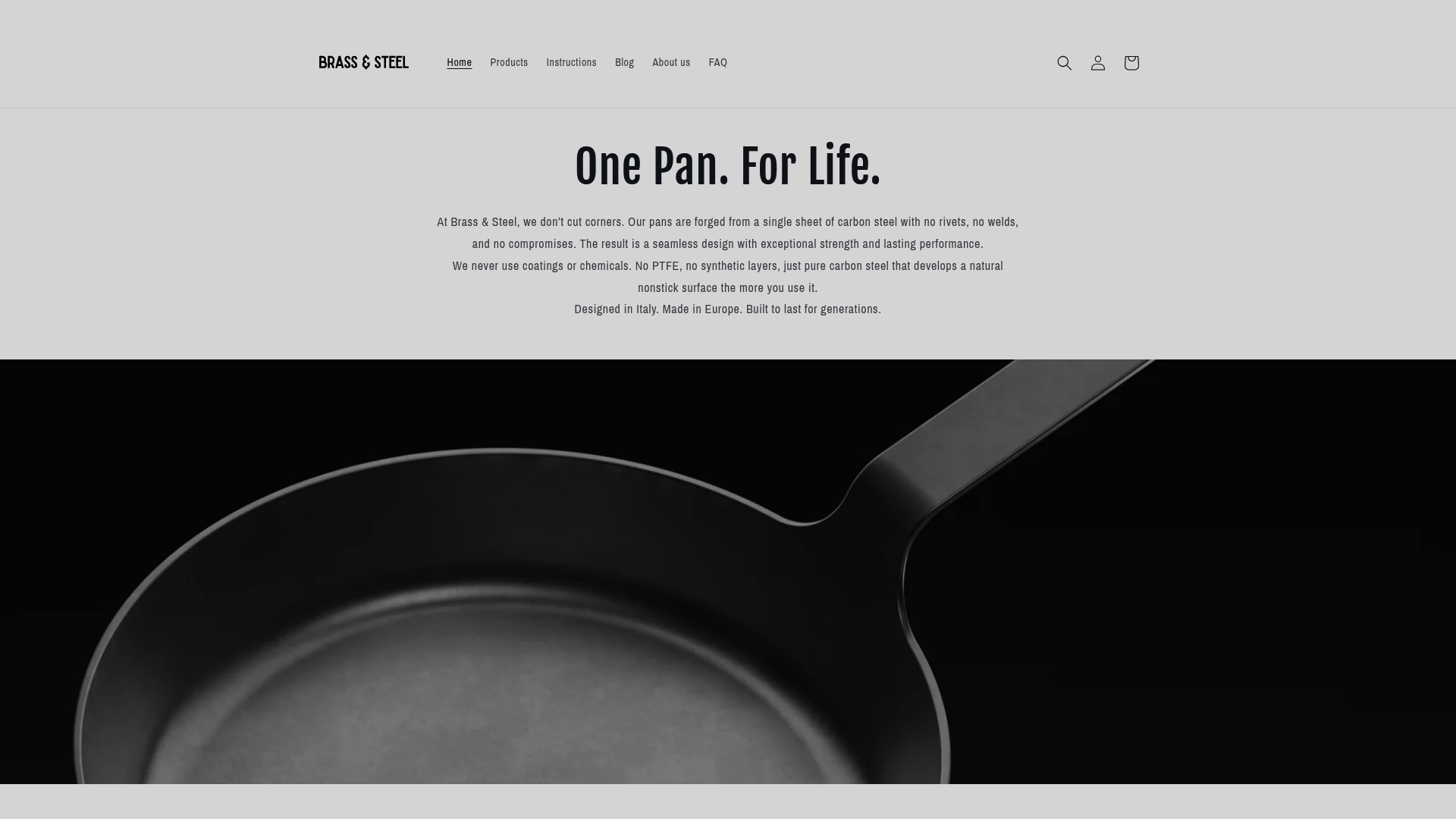
Brass-steel pans are free from PTFE, PFOA, and synthetic coatings. They work on every cooktop, including induction, and they get better with every use. If you are ready to cook with a pan that reflects genuine metallurgical thinking, browse the full range at brass-steel.com.
FAQ
What is the role of metallurgy in cookware performance?
Metallurgy determines how a pan conducts heat, retains temperature, reacts with food, and withstands long-term use. Every material property that affects cooking, from hot spots to seasoning behaviour, is a metallurgical characteristic.
Which metal has the best thermal conductivity for cookware?
Copper has the highest thermal conductivity at approximately 401 W/m·K, making it the most responsive material for temperature-sensitive cooking. Aluminium at 237 W/m·K is a practical alternative used as a conductive core in clad stainless steel pans.
Is carbon steel better than stainless steel for searing?
Carbon steel is better suited to searing because its thermal mass maintains surface temperature when cold protein is added. Stainless steel conducts heat poorly on its own and requires a conductive core to heat evenly.
Do all metals react with acidic food?
Most metals react to some degree with acidic food. Copper and aluminium are the most reactive. Stainless steel (18/10 grade) is the most stable for everyday use, though nickel migration can occur with prolonged exposure to acidic dishes.
How does forging affect cookware durability?
Forging aligns the grain structure of the metal under pressure, producing a denser, stronger pan that resists warping and lasts longer than a cast equivalent. Brass-steel pans are forged from a single carbon steel sheet, which removes the weak points created by rivets or welds.