Pots for induction cooktops: the complete material guide
TL;DR:
- Only pots with ferromagnetic bases, like cast iron, carbon steel, and certain stainless steels, work on induction cooktops. Many existing pots qualify, and a simple magnet test can confirm their compatibility. Hybrid and bonded cookware offer improved heat response and even distribution for better cooking control.
Pots for induction cooktops must have a ferromagnetic base to work. Induction hobs generate heat through electromagnetic fields, and only magnetic materials respond to that process. Cast iron, carbon steel, and certain stainless steels are the materials that qualify. Non-magnetic materials like pure aluminium and copper simply will not heat up on an induction surface. This guide explains which materials work, how to test what you already own, and what to look for when buying new induction stove top cookware.
1. What materials make pots suitable for induction cooktops?
Ferromagnetic materials are the only ones that respond to an induction hob’s electromagnetic field. That means cast iron, carbon steel, and magnetic stainless steel are your core options. Aluminium and copper alone will not work unless a manufacturer bonds a magnetic steel layer to the base.
Here is a breakdown of the main materials:
- Cast iron. Highly magnetic and an excellent heat retainer. Cast iron performs exceptionally well on induction, with thick bases that distribute heat evenly across the cooking surface.
- Carbon steel. Magnetic, lighter than cast iron, and far more responsive to temperature changes. Carbon steel heats up and cools down quickly, making it ideal for searing and sautéing.
- Enamelled cast iron. Carries all the magnetic properties of standard cast iron. The enamel coating removes the need for seasoning and makes cleaning straightforward.
- Magnetic stainless steel (18/0). Fully induction-compatible. 18/0 stainless steel contains no nickel, which is what makes it magnetic. Many budget and mid-range saucepans use this grade.
- 18/10 stainless steel. Not naturally magnetic. Manufacturers often embed a magnetic base plate to make these pots induction-ready. Always check the packaging.
- Aluminium and copper. Neither material is magnetic. They only work on induction when bonded to a magnetic steel exterior.
Pro Tip: Hybrid pots with aluminium or copper cores inside a magnetic stainless steel exterior give you the best of both worlds. The magnetic exterior activates the hob, while the conductive core spreads heat quickly and evenly.
2. How to check if your existing pots work on induction
Many cooks already own pots that work perfectly on an induction hob. Before you spend money on new cookware, run a simple test on everything in your kitchen.
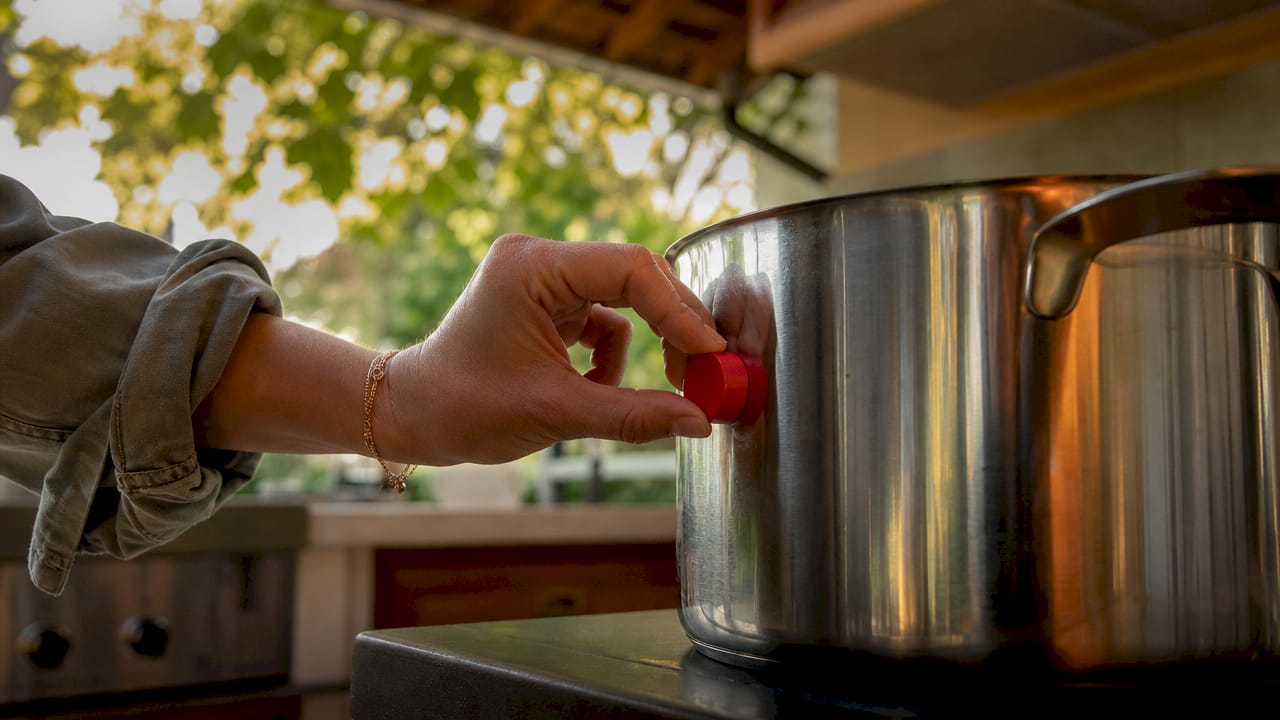
- The magnet test. Hold a fridge magnet against the base of your pot. If it sticks firmly, the pot is induction-compatible. A weak pull or no pull at all means the pot will not heat on induction.
- Check the packaging or base markings. Most modern cookware states “induction-ready” or “induction-compatible” on the box or stamped into the base. Look for a coil symbol, which is the universal induction mark.
- Look at what you already own. Cast iron pans, carbon steel skillets, and many stainless steel saucepans are often already suitable. Older pots with thick steel bases frequently pass the magnet test without any issue.
- Check the base diameter. Even a magnetic pot will not work if its base is too small. Induction hobs use sensors to detect cookware, and a base that is too narrow will not trigger the heating element.
The magnet test takes ten seconds and could save you from replacing a full set of pots unnecessarily. Most home cooks are surprised by how much of their existing cookware already qualifies.
3. Cast iron Dutch ovens for slow cooking and braising
A cast iron Dutch oven is one of the most reliable pots and pans for an induction cooktop. Its thick, heavy base is highly magnetic and distributes heat with exceptional evenness. That makes it perfect for long, slow braises, stews, and soups where consistent temperature matters more than speed.
The main trade-off is weight. A 5-litre cast iron Dutch oven can weigh over 5kg when full. That is not a problem when it sits on a hob, but it makes lifting and pouring less comfortable. For cooks who do a lot of batch cooking or one-pot meals, the weight is worth it.
4. Carbon steel pans for searing and everyday cooking
Carbon steel is the material that professional kitchens rely on, and it is one of the best cooking pans for induction cooktops. It heats up fast, responds immediately to temperature adjustments, and builds a natural nonstick patina through seasoning over time.
Brass-steel forges its carbon steel sauté pans from a single piece of steel, which eliminates rivets and welds entirely. The 27 cm pan (3mm thick, approximately 2kg) suits everyday tasks like searing chicken thighs or sautéing vegetables. The 30 cm pan (4mm thick, approximately 3kg) handles larger meals and works well in professional settings. Both are fully induction-compatible and free from PTFE and PFOA coatings.
Pro Tip: When using a carbon steel pan on induction for the first time, start at moderate power. Bringing a cold, empty pan up to heat gradually prevents warping and protects the seasoning.
5. Stainless steel saucepans with bonded magnetic bases
Stainless steel saucepans are a staple in most kitchens, and many modern versions are engineered specifically for induction compatibility. The key is the base construction. A fully clad or disc-bonded saucepan with a magnetic steel layer will work reliably on any induction hob.
These pans are non-reactive, which means they are safe for acidic foods like tomato sauces and citrus-based dishes. They are also dishwasher-safe in most cases, which makes them practical for everyday use. The downside is that stainless steel alone conducts heat unevenly, so look for pans with an aluminium or copper core bonded between steel layers for better performance.
6. Enamelled cast iron for easy maintenance
Enamelled cast iron offers all the magnetic performance of standard cast iron without the seasoning requirement. The enamel coating protects the iron surface, making it resistant to rust and easy to clean with warm soapy water. This is a strong option for cooks who want the heat retention of cast iron but prefer lower-maintenance cookware.
The enamel does add some weight and can chip if the pot is dropped or knocked against a hard surface. Use wooden or silicone utensils to protect the coating. Enamelled cast iron works well for risottos, casseroles, and anything that benefits from steady, retained heat.
7. Hybrid pots with aluminium or copper cores
Hybrid induction cookware solves a real problem. Pure magnetic materials like cast iron and carbon steel retain heat well but can be slow to respond to temperature changes. Hybrid pots address this by combining a magnetic stainless steel exterior with an aluminium or copper core inside.
The result is a pot that activates on induction and conducts heat with precision. Bonded aluminium or copper cores respond faster to heat adjustments than solid steel or iron. This makes hybrid pots particularly useful for delicate tasks like making sauces, melting chocolate, or cooking fish where temperature control is critical.
8. Key features to look for beyond material
Choosing the right pots for an induction hob goes beyond picking the right material. These practical features make a real difference to how well your cookware performs.
- Flat, wide base. A perfectly flat base maximises contact with the induction zone. Warped or rounded bases reduce efficiency and can cause uneven heating.
- Correct base diameter. Check your hob’s minimum diameter requirement. Most induction cooktops will not activate if the pot base is too small for the sensor zone.
- Weight and balance. Heavier pots retain heat better but are harder to handle. Choose a weight that suits your cooking style and physical comfort.
- Surface finish. Seasoned carbon steel and enamelled cast iron behave very differently from polished stainless steel. Match the surface to the type of cooking you do most often.
- Induction interface disks. If you have a favourite non-magnetic pot, an induction interface disk lets you use it on an induction hob. The disk sits between the hob and the pot and transfers heat by conduction. This works, but it is less efficient than using a directly compatible pot.
9. Choosing the right pot for your budget and cooking style
The best cookware for an induction stove depends on how you cook, not just how much you want to spend.
- Budget-friendly options. Magnetic stainless steel saucepans and basic cast iron skillets offer solid induction performance at a low price. Look for 18/0 stainless steel or pre-seasoned cast iron pieces.
- Mid-range. Carbon steel pans in the 27–30 cm range, like those from Brass-steel, sit at a price point that reflects genuine quality without unnecessary cost. The carbon steel sauté pan at this size handles the majority of everyday cooking tasks.
- Professional grade. Fully clad hybrid pots with copper or aluminium cores offer the most precise heat control. These suit cooks who want restaurant-level responsiveness on a home induction hob.
- Beginners transitioning to induction. Start with the magnet test on your existing pots. Add one or two new pieces where gaps exist rather than replacing everything at once.
- Prolonging pot lifespan on induction. Avoid sudden temperature changes, always start at moderate heat, and dry pots thoroughly after washing. For carbon steel, a light coat of oil after each use keeps the seasoning in good condition.
Key takeaways
The best pots for induction cooktops share one non-negotiable quality: a ferromagnetic base that activates the hob’s electromagnetic field.
| Point | Details |
|---|---|
| Magnetic base is essential | Only cast iron, carbon steel, and magnetic stainless steel work directly on induction hobs. |
| Magnet test saves money | A fridge magnet on the pot base tells you instantly whether it is induction-compatible. |
| Base size matters | Pots with a base too small for the induction sensor zone will not activate the hob. |
| Carbon steel offers the best balance | It is lighter than cast iron, heats fast, and builds a natural nonstick surface over time. |
| Hybrid pots add precision | Bonded aluminium or copper cores inside magnetic steel exteriors give superior heat control. |
What I have learned from cooking on induction
Most home cooks already own more induction-compatible pots than they realise. Before I started paying closer attention to this, I assumed induction meant buying everything new. A quick magnet test around my kitchen proved otherwise. My cast iron skillet, a stainless steel saucepan, and a carbon steel pan all passed immediately.
That said, not all compatible pots perform equally well. Cast iron is my go-to for anything that needs long, steady heat. A braise or a slow-cooked sauce benefits enormously from that thermal mass. For everything else, carbon steel wins. The responsiveness on induction is genuinely impressive. You turn the power down and the pan follows almost immediately. That kind of control matters when you are searing a piece of fish or finishing a sauce.
One thing I wish someone had told me earlier: check the base diameter against your hob’s sensor zones before buying. I once bought a small saucepan that technically passed the magnet test but was too narrow to trigger the induction element on my hob. It sat in a drawer for months before I figured out why it would not heat. Matching the pot to the zone is just as important as the material.
My honest recommendation is to start with carbon steel if you are building an induction-friendly kitchen from scratch. It is versatile, durable, and improves with use. Add a cast iron Dutch oven for slow cooking and a good stainless steel saucepan for liquids and sauces. That combination covers almost everything.
— Davide
Brass-steel carbon steel pans for induction cooking
Brass-steel makes carbon steel sauté pans that are forged in one piece, free from synthetic coatings, and fully compatible with induction hobs. The 27 cm pan at €99 and the 30 cm pan at €119 are built for cooks who want a pan that performs better the more you use it.
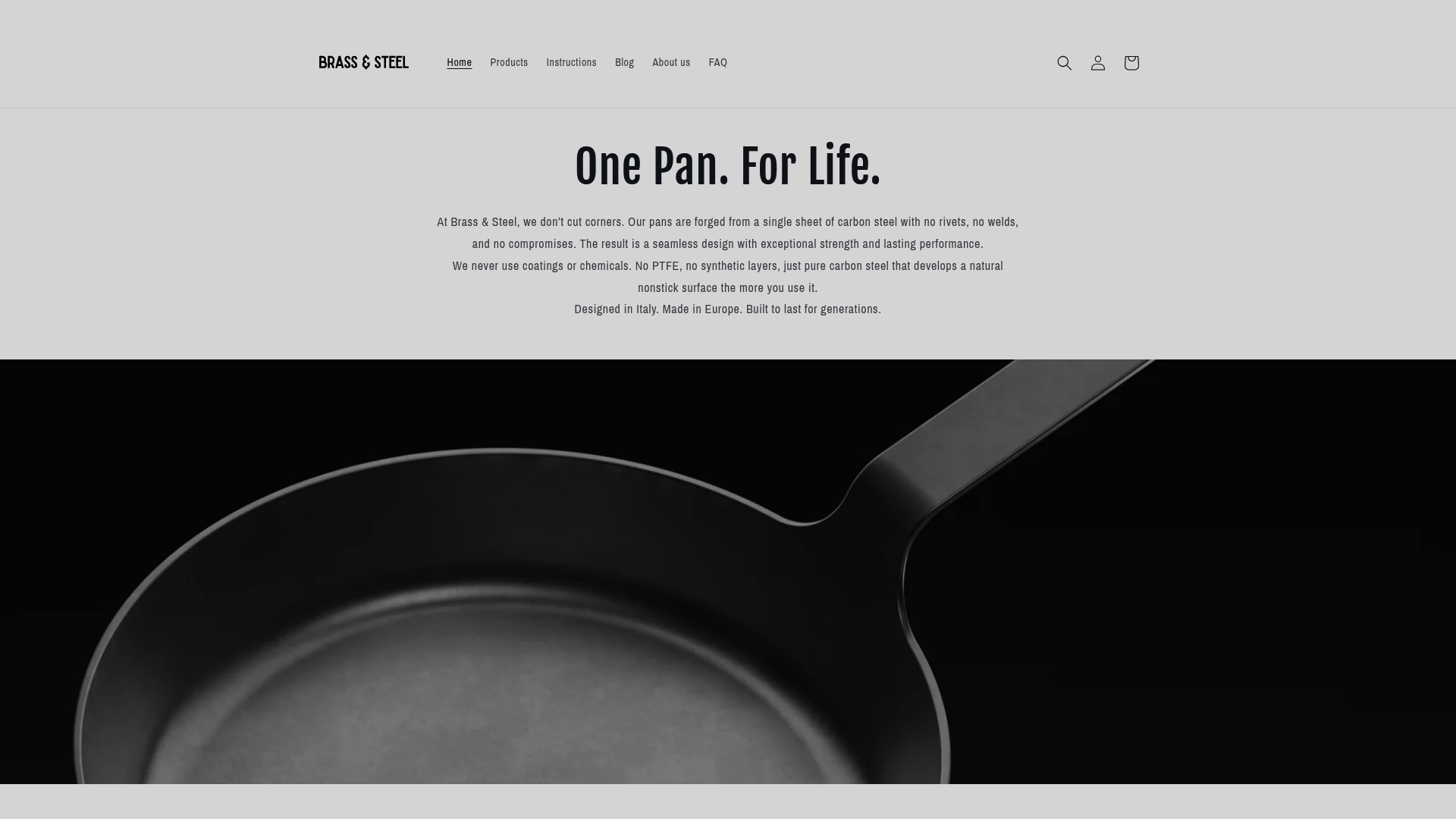
Both pans work on all cooktop types, including induction, and build a natural nonstick patina through seasoning. There are no PTFE or PFOA coatings, no rivets, and no welds. If you are looking to add a serious, long-lasting pan to your induction kitchen, the Brass-steel carbon steel range is worth a close look.
FAQ
What pots work on an induction cooktop?
Pots with ferromagnetic bases work on induction. Cast iron, carbon steel, and magnetic stainless steel (18/0) are the most common compatible materials.
How do I know if my pot is induction-compatible?
Hold a fridge magnet against the base of the pot. If it sticks firmly, the pot is induction-compatible. Many pots also carry an induction symbol stamped on the base.
Will a non-magnetic pot damage my induction hob?
No. Induction hobs simply will not activate without a magnetic pot. There is no risk of damage to the cooktop from placing a non-compatible pot on it.
Is 18/10 stainless steel induction-compatible?
Not always. 18/10 stainless steel is not naturally magnetic, so manufacturers often embed a magnetic base plate to make it induction-ready. Check the packaging or run the magnet test.
Can I use a non-magnetic pot on induction with a disk?
Yes, but with reduced efficiency. An induction interface disk sits between the hob and the pot and transfers heat by conduction rather than direct electromagnetic activation. It works, but heats more slowly than a compatible pot used directly on the hob.