Best pans for induction cooking: your 2026 guide
TL;DR:
- Pans with a ferromagnetic base are essential for effective induction cooking because they generate heat directly from the magnetic field. Heavy-gauge materials like cast iron, carbon steel, and thick stainless steel provide the best performance due to their thermal mass and base thickness, unlike thin or non-magnetic pans. Testing existing cookware with a magnet can determine induction compatibility, saving money before buying new pots and pans.
The best pans for induction cooking are those with a ferromagnetic base, meaning a base that a magnet sticks to strongly. Induction hobs work by generating a magnetic field that heats the pan directly, not the surface beneath it. This makes them 84% energy-efficient, outperforming both traditional electric and gas methods, and they boil water 20–40% faster. The right induction stove top cookware makes that efficiency count. The wrong pan wastes it entirely.
What materials make the best pans for induction cooking?
The material of your pan determines whether it works on induction at all. Cast iron, carbon steel, and certain grades of stainless steel are all naturally ferromagnetic. That means they generate heat when exposed to an induction hob’s magnetic field, without needing any special coating or bonded layer.
Here is how the main materials compare:
- Cast iron is heavy, thick, and holds heat exceptionally well. It is ideal for searing steaks and slow cooking, but it takes longer to heat up and cool down.
- Carbon steel heats quickly and responds fast to temperature changes. Professional chefs favour it for exactly this reason. It is lighter than cast iron and builds a natural nonstick patina through seasoning.
- Magnetic stainless steel (grade 18/0) is induction-compatible and easy to maintain. Quality varies significantly between products, so base thickness matters.
- Pure aluminium, copper, ceramic, titanium, and glass are not magnetic. They cannot generate eddy currents and will not work on induction unless they have a bonded ferromagnetic base layer.
The key insight is that thermal mass and base thickness determine real-world performance, not the label on the box. A thin stainless steel pan with a small magnetic disc on the base will heat unevenly. A heavy-gauge carbon steel pan will outperform it every time.
Pro Tip: Avoid pans marketed as “induction friendly” that feel light and flimsy. Run your hand across the base. If it flexes or feels thin, the magnetic layer is likely inadequate for consistent cooking.

How to test your existing cookware for induction compatibility
Before you buy anything new, test what you already own. You may not need to replace as much as you think. Most heavy-gauge cast iron and carbon steel cookware is already induction-ready.
Follow these steps:
- Grab a fridge magnet. Hold it against the base of your pan. If it sticks firmly, the pan is induction-compatible.
- Test the entire base surface. Move the magnet across the whole bottom of the pan. A weak or inconsistent pull suggests an uneven magnetic layer, which causes hot spots during cooking.
- Check the base is flat. A warped or uneven base sits poorly on the hob and reduces contact with the induction zone.
- Match pan size to hob zone. A pan that is too small may fail to activate the induction element entirely. A pan that is too large heats unevenly at the edges.
Pro Tip: If your magnet sticks strongly across the full base and the pan sits flat, you have a solid induction pan already. Do not replace it until you have actually cooked with it on your new hob.
Top types of induction pans to buy
Cast iron pans
Cast iron is the original induction-compatible material. Its thick base retains heat brilliantly, making it the best choice for searing meat, baking in the oven, or cooking dishes that need steady, sustained heat. The downside is weight. A full-sized cast iron skillet can feel unwieldy for everyday use, and it takes time to preheat properly.
Cast iron also requires seasoning to prevent rust, much like carbon steel. If you are comfortable with that maintenance, it rewards you with decades of reliable performance.
Carbon steel pans
Carbon steel is the professional kitchen’s workhorse, and for good reason. It heats faster than cast iron, responds more quickly to temperature adjustments, and is significantly lighter. Heavy-gauge carbon steel frequently outperforms specialised “induction-ready” multi-clad pans in searing and heat responsiveness, thanks to its thermal mass and base thickness.
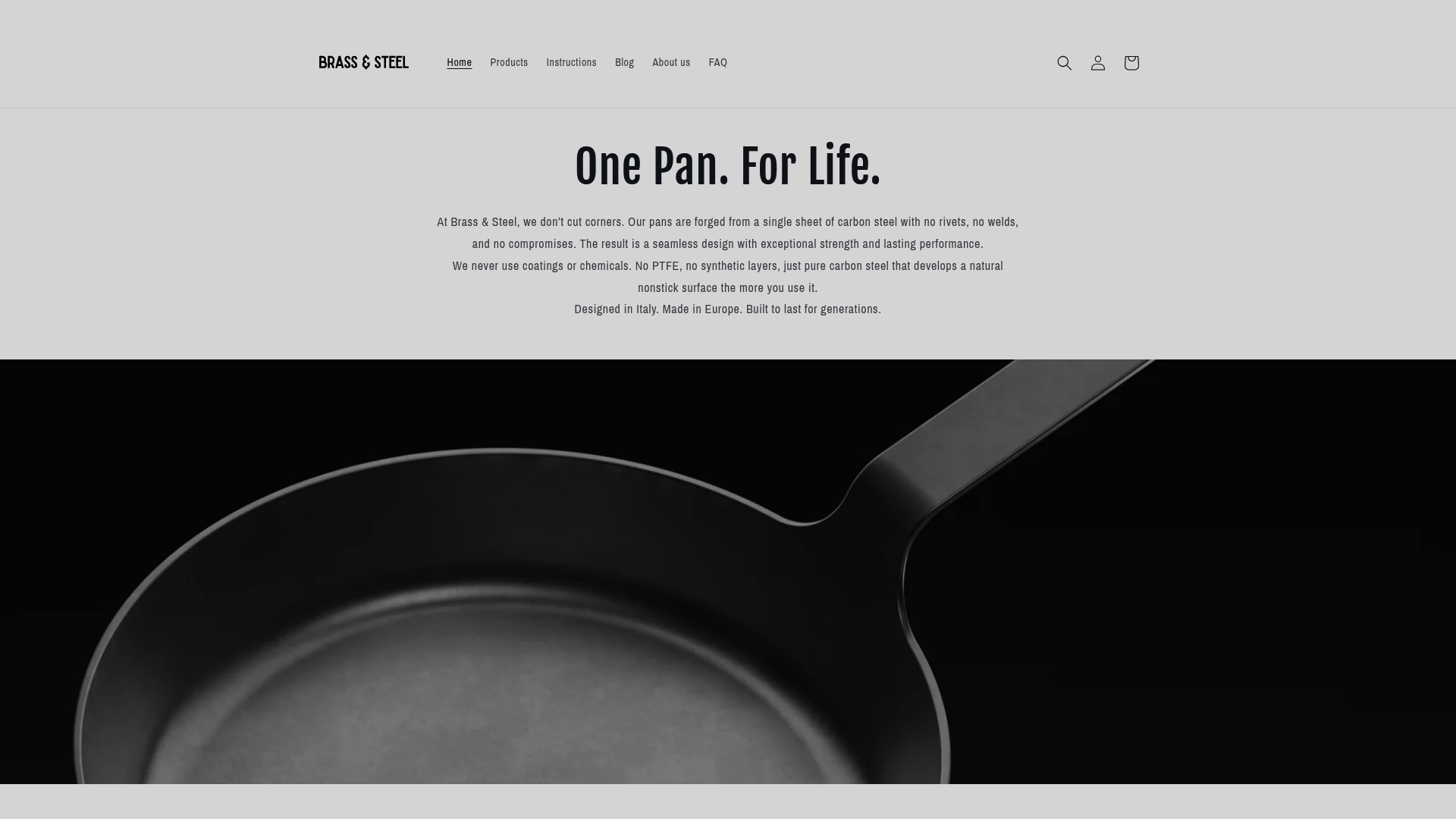
Carbon steel builds a natural nonstick patina over time through seasoning. This patina is free from PTFE and PFOA, making it a healthier alternative to synthetic nonstick coatings. Brass-steel’s carbon steel sauté pans are forged from a single piece of steel, which eliminates rivets and welds. The 27 cm model is 3mm thick and weighs around 2kg. The 30 cm model is 4mm thick and weighs around 3kg. Both work on all cooktops, including induction hobs.
Pro Tip: If you are new to carbon steel, start with the 27 cm pan for everyday tasks. Once you are comfortable with seasoning and care, the 30 cm pan handles family-sized meals and professional-level searing with ease.
Magnetic stainless steel pans
Grade 18/0 stainless steel is magnetic and induction-compatible. These pans are durable, dishwasher-safe in most cases, and do not require seasoning. They suit cooks who want low-maintenance cookware. The trade-off is that stainless steel does not build a nonstick surface naturally, so food can stick without adequate oil or fat.
Quality varies widely in this category. A thin base with a small magnetic disc performs poorly. Look for fully clad or thick-base construction.
Nonstick pans with bonded bases
Some nonstick pans include a bonded ferromagnetic layer on the base, making them induction-compatible. These are convenient for eggs, fish, and delicate foods. The coating does wear over time, however, and most manufacturers recommend replacing them every few years. They are a practical short-term option but not a long-term investment.
Multi-layered or hybrid base pans
These pans combine materials, typically aluminium for heat distribution and a stainless or carbon steel outer layer for induction compatibility. They can perform well, but the quality of the bonding and the thickness of the magnetic layer vary considerably between products.
Practical buying tips for induction cookware
Choosing pots and pans for an induction stove comes down to a few clear priorities. Here is what to focus on:
- Base thickness matters most. A thicker base distributes heat more evenly and holds temperature better. For carbon steel, 3mm is a solid minimum. For cast iron, anything above 4mm is reliable.
- Look for a CHOICE expert rating of 80% or higher. Testing by consumer organisations shows that some premium-priced sets perform worse than mid-range options. Price alone is not a reliable guide.
- Check handle design. A handle that stays cool on the hob and feels balanced in your hand makes a real difference during long cooking sessions.
- Match pan size to your hob zones. This is not just about efficiency. An undersized pan on a large induction zone heats unevenly and may not activate the element at all.
- Avoid pans labelled “induction compatible” without checking base construction. The label is not regulated. True compatibility depends on the magnetic layer covering the full base, not just a small central disc.
- For budget-conscious cooks, a good mid-range carbon steel or magnetic stainless steel pan outperforms an expensive pan with a thin bonded base. Spend on gauge, not branding.
For seasoning carbon steel, use high-smoke-point oils such as grapeseed, avocado, sunflower, or canola. Avoid olive oil and animal fats, as they do not polymerise cleanly and can leave a sticky residue.
Pro Tip: After each use, clean your carbon steel pan with warm water, dry it immediately, and apply a very light coat of oil. This five-minute habit keeps the seasoning strong and prevents rust.
Key takeaways
The best cooking pans for an induction cooktop are made from ferromagnetic materials with a thick, flat base that covers the full induction zone.
| Point | Details |
|---|---|
| Ferromagnetic base is non-negotiable | Only pans with a magnetic base generate heat on induction. Use a magnet to confirm before buying. |
| Carbon steel leads on performance | Heavy-gauge carbon steel heats fast, responds well, and builds a natural nonstick surface over time. |
| Test existing pans first | Most heavy-gauge cast iron and carbon steel pans already work on induction. Check before replacing. |
| Base thickness beats brand labels | A thick, flat base distributes heat evenly. “Induction compatible” labels do not guarantee quality. |
| Match pan size to hob zone | Undersized pans may not activate the element. Oversized pans cause uneven heating at the edges. |
Why I always reach for carbon steel on induction
I have cooked on induction hobs with cast iron, stainless steel, and carbon steel. Each has its place, but carbon steel is the one I reach for most. It heats up quickly, which suits the fast response of induction cooking perfectly. When the hob adjusts temperature, the pan follows almost immediately. That kind of control is genuinely useful when you are searing a steak or reducing a sauce.
The mistake I see most often is cooks buying a pan labelled “induction ready” without checking the base. I have tested pans that technically activate an induction element but heat so unevenly that one side of a steak cooks faster than the other. The magnet test across the full base takes ten seconds and tells you everything you need to know.
My honest advice: do not replace your entire set of pots and pans for induction hobs until you have tested what you already own. You may find that your cast iron skillet and a decent carbon steel pan cover 90% of what you cook. If you do need to buy, prioritise base thickness and material quality over marketing claims. A well-made carbon steel pan, properly seasoned, will outlast any nonstick pan with a bonded induction disc.
For a deeper look at how to get the best from carbon steel on an induction hob, the carbon steel induction guide from Brass-steel covers the practical details clearly.
— Davide
Brass-steel carbon steel pans for your induction hob
Brass-steel makes carbon steel sauté pans forged from a single piece of steel, with no rivets, no welds, and no synthetic coatings. Both the 27 cm (3mm, €99) and 30 cm (4mm, €119) models work on all cooktops, including induction hobs, and build a natural nonstick patina through seasoning.
If you are looking for induction-compatible carbon steel that performs like professional cookware and lasts for years, Brass-steel’s range is worth a close look. The guides on the site also cover seasoning, care, and getting the most from your pan from the very first cook.
FAQ
What pans work on an induction hob?
Pans with a ferromagnetic base work on induction hobs. Cast iron, carbon steel, and grade 18/0 stainless steel are all naturally compatible. Use a magnet to confirm.
How do I know if my existing pan is induction-compatible?
Hold a magnet against the base of the pan. If it sticks firmly across the full base, the pan is induction-compatible and ready to use.
Is carbon steel better than cast iron for induction cooking?
Carbon steel heats faster and responds more quickly to temperature changes, making it better suited to the precise control induction cooking offers. Cast iron is superior for sustained, high-heat retention tasks like searing thick cuts.
Can I use nonstick pans on an induction cooktop?
Yes, if the nonstick pan has a bonded ferromagnetic base. Check with a magnet before use. Nonstick coatings wear over time, so these pans are a practical short-term option rather than a long-term investment.
Does pan size matter on an induction hob?
Pan size matters significantly. A pan that is too small may not activate the induction element. A pan that is too large heats unevenly. Match your pan diameter to the hob zone for consistent results.