How to cook on induction cooktop: a practical guide

TL;DR:
- Cooking on an induction cooktop uses electromagnetic energy to heat ferromagnetic pans directly, providing faster, more precise cooking with a cooler kitchen environment. Proper cookware, understanding power settings, and adjusted workflow are essential for efficient and satisfying induction cooking. Use cast iron, carbon steel, or magnetic stainless steel with flat bases, match pan size to zones, and preheat on medium to optimize results and avoid common mistakes.
Cooking on an induction cooktop uses electromagnetic energy to heat ferromagnetic pans directly, skipping the step of warming the surface itself. That means faster heat, more precise control, and a cooler kitchen. To cook well on induction, you need three things: compatible cookware, an understanding of power settings, and a slightly adjusted workflow. Get those right and induction cooking is genuinely one of the most satisfying ways to cook at home.
What cookware works best for induction cooktops?
Induction cooking only works with ferromagnetic cookware. That means the pan must contain enough iron to respond to the magnetic field beneath the glass surface. Cast iron and magnetic stainless steel are the two most reliable materials. Carbon steel, like the pans made by Brass-steel in Jarocin, Poland, is also an excellent choice because it heats quickly and responds well to power adjustments.
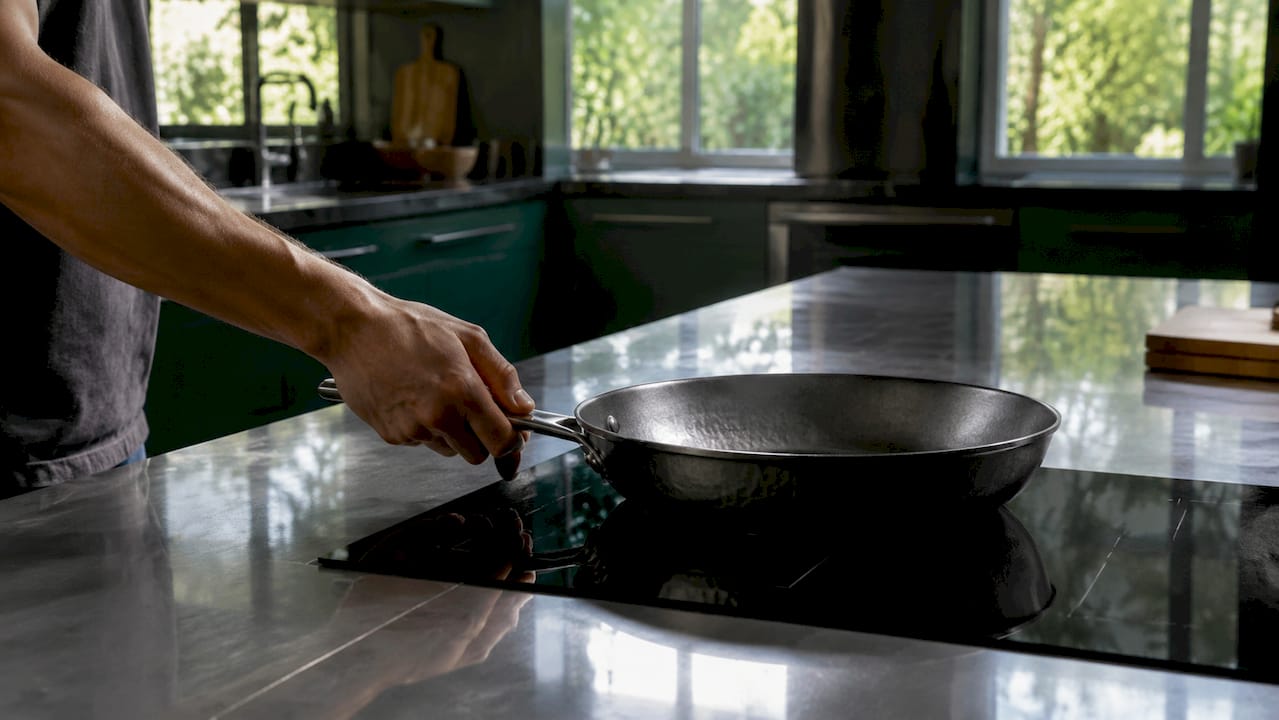
The quickest way to check compatibility is to hold a fridge magnet against the base of your pan. If it sticks firmly, the pan works on induction. If it slides off or barely clings, leave that pan for the gas hob. Aluminium, copper, and glass-only bases will not activate the cooktop at all.
Pan shape matters too. A flat base is non-negotiable. Warped or rounded bases reduce electromagnetic contact and cause uneven heating. The pan base diameter must also roughly match the cooking zone. A pan that is too small will not trigger the cooktop’s sensors. A pan that is far too large will heat unevenly around the edges.
- Use cast iron, carbon steel, or magnetic stainless steel
- Avoid aluminium, copper, ceramic, and glass-only bases
- Check compatibility with a fridge magnet before buying
- Choose a flat base for full contact with the cooking zone
- Match the pan diameter to the zone size as closely as possible
Pro Tip: Always lift your pan rather than sliding it across the glass surface. Grit and seasoning residue on the base of carbon steel pans can cause micro-scratches that dull the surface over time.
How do power settings work on an induction stove?
Induction cooktops offer power ranges from 300W to 2000W, and each range suits a specific cooking task. That precision is one of induction’s biggest advantages over gas or electric hobs. Knowing which setting to reach for removes most of the guesswork.
Here is how to match power to task:
- Simmering sauces or melting butter: Use 300–700W. This range keeps liquids gently moving without boiling over.
- Frying eggs, sautéing vegetables, or searing meat: Around 1000W gives you enough heat to brown food without scorching it.
- Boiling water or blanching pasta: 1200–1500W brings water to the boil quickly and efficiently.
- Boost mode: Most cooktops offer a boost setting above 1800W. Use it only for boiling large volumes of water, and switch down once boiling starts.
Induction heats up to 50% faster than gas or electric, so starting lower than you think you need is always the right call. A setting that felt moderate on a gas hob will feel aggressive on induction. Give yourself room to adjust upward rather than scrambling to rescue burnt food.
Many modern induction cooktops include preset programmes and timer functions. Features like TempCook™, found on several European models, allow you to set a target temperature rather than a power level. These presets are worth using when you are learning, as they remove one variable while you adapt to the technology.
Pro Tip: Preheat your pan on medium power for 60–90 seconds before adding oil or food. Even heat distribution matters especially with carbon steel, which can develop hot spots if rushed.
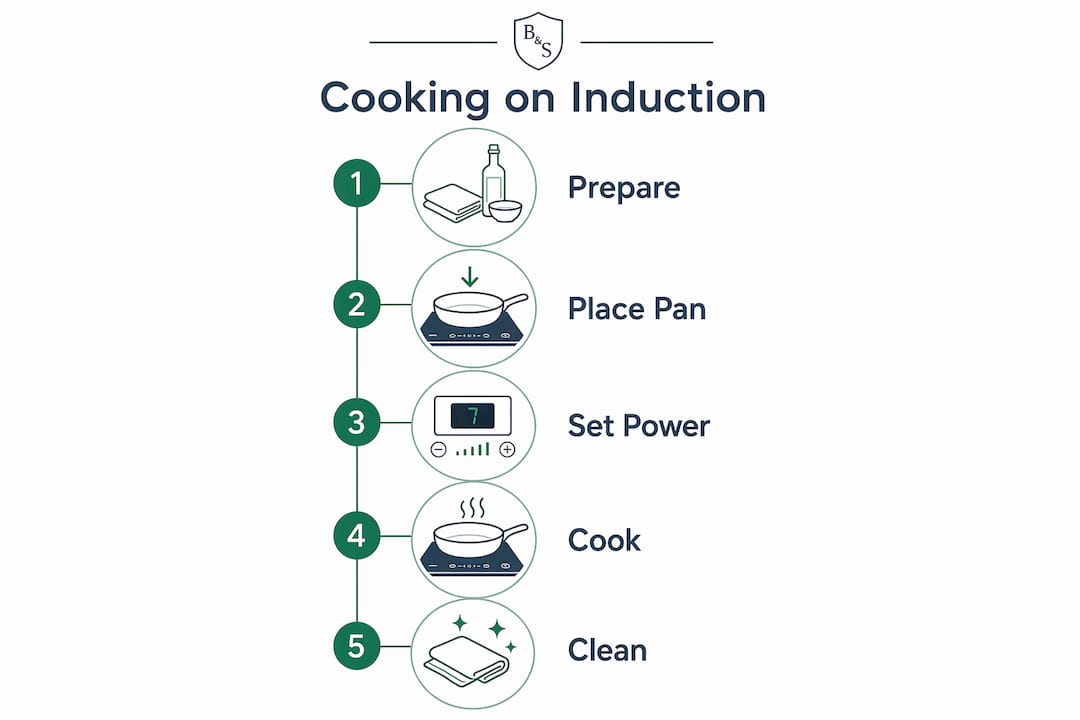
Step-by-step: how to use an induction cooktop from start to finish
The biggest workflow change when you switch to induction is timing. Because the heat arrives almost instantly, prep everything before you switch on the cooktop. Chopped vegetables, measured liquids, seasoned proteins. All of it ready before the pan goes on.
Follow these steps for a smooth cook every time:
- Prepare your ingredients fully. Chop, measure, and season everything before touching the cooktop. Induction responds in seconds, not minutes.
- Place your pan centred on the cooking zone. An off-centre pan may not activate the sensor or will heat unevenly.
- Switch on the cooktop and select the correct zone. Most models require you to tap the zone and then set the power level within a few seconds.
- Start on medium power. Let the pan preheat for 60–90 seconds before adding oil. This prevents thermal shock and protects the seasoning on carbon steel pans.
- Add your oil and ingredients. Listen and watch. Induction cooking is quieter than gas, so you rely more on visual cues: colour, steam, and bubbling.
- Adjust heat as you cook. Drop the power when food starts to colour. Induction responds almost immediately, so small adjustments have a big effect.
- Never leave an empty pan on high heat. Heating an empty pan at high power risks warping and damages the seasoning on carbon steel. If you step away, turn it down.
- Switch off and remove the pan when done. The surface cools quickly, but residual heat from the pan itself remains. Handle with care for a minute or two after cooking.
- Clean the surface once it has cooled. A damp cloth handles most spills. For anything cooked on, use a dedicated glass-ceramic cleaner.
A few additional habits worth building:
- Keep a folded tea towel nearby to handle the pan handle after oven or high-heat use
- Use a splatter guard when frying at 1000W or above
- Keep the cooking zone dry before placing the pan to avoid steam interference
Common mistakes when cooking on induction and how to fix them
Most problems on an induction cooktop come down to one of three things: the wrong pan, the wrong power level, or habits carried over from gas cooking. Recognising them early saves a lot of frustration.
Starting on maximum heat is the most common error. Food burns on the outside before cooking through, and carbon steel pans can warp if heated aggressively while empty. Always start at medium and move up.
Using a pan that is too small for the zone means the cooktop sensor may not activate at all. If your cooktop shows an error or simply will not turn on, check the pan size first. Matching the pan base to the zone is not optional.
Sliding pans across the glass surface leaves scratches that are impossible to remove. Lift every time, even for small adjustments.
Ignoring the humming sound worries a lot of new induction users. A faint buzzing or humming at higher powers is caused by magnetic vibration between the pan and the coil. It is completely normal and not a sign of a fault.
Leaving spills to cool is another mistake. Clean spills promptly with a glass-top cleaner. Burnt-on food becomes much harder to remove once it sets, and abrasive scrubbing will scratch the surface.
The cooktop surface stays cooler than a gas burner, but residual heat from the pan transfers back to the glass after cooking. Treat the surface as hot for at least two minutes after you remove the pan.
Key takeaways
Cooking on an induction cooktop requires compatible ferromagnetic cookware, the right power settings for each task, and a prep-first workflow that accounts for how quickly induction responds.
| Point | Details |
|---|---|
| Cookware compatibility | Use cast iron, carbon steel, or magnetic stainless steel with a flat base. |
| Power matching | Use 300–700W for simmering, 1000W for frying, and 1200–1500W for boiling. |
| Prep before heat | Prepare all ingredients before switching on, as induction heats almost instantly. |
| Lift, never slide | Always lift pans off the glass surface to prevent micro-scratches. |
| Preheat on medium | Allow 60–90 seconds on medium power before adding oil or food, especially with carbon steel. |
What I have learned from cooking on induction every day
The thing nobody tells you when you first switch to induction is how much it changes your relationship with time in the kitchen. On gas, you have a few seconds of grace. On induction, you do not. I burned more onions in my first two weeks than in the previous five years combined, simply because I kept walking away from the hob.
The fix that worked for me was treating prep like a professional kitchen does. Everything chopped, everything measured, everything within arm’s reach before the pan goes on. Once that habit clicked, induction became the most enjoyable way I have ever cooked.
I also want to say something about carbon steel specifically. It is the material that rewards patience most on induction. A Brass-steel carbon steel pan preheated slowly on medium power, given time to come up to temperature evenly, produces a sear that rivals anything I have achieved on gas. Rush it and you get hot spots and sticking. Take your time and it is extraordinary.
One safety point worth repeating: the surface feels cool compared to gas, but the pan itself holds heat for longer than you expect. I have caught myself reaching for the handle without a cloth more times than I care to admit. Build the habit of treating the pan as hot for a full two minutes after you switch off.
Experiment with your power settings more than you think you need to. Most people find a level they are comfortable with and stay there. The real control induction offers only reveals itself when you start moving between settings mid-cook, dropping from 1000W to 500W the moment the onions start to colour. That responsiveness is what makes induction genuinely better than gas for precise cooking.
— Davide
Cook with confidence using Brass-steel carbon steel pans
If you are serious about getting the most from your induction cooktop, the cookware you choose makes the biggest difference. Brass-steel carbon steel pans are forged from a single piece of steel, free from PTFE, PFOA, and rivets, and fully compatible with induction hobs. The 27 cm sauté pan at €99 handles everyday cooking beautifully, while the 4mm thick 30 cm pan at €119 is built for larger meals and serious heat.
Brass-steel also publishes detailed guides to help you get the best from your pans on induction, including a practical induction guide covering flat base requirements and pan selection. If you are moving from nonstick to carbon steel, the carbon steel on induction guide walks you through exactly what to expect in 2026. Good cookware and good technique together make induction cooking genuinely exceptional.
FAQ
What pans work on an induction cooktop?
Cast iron, carbon steel, and magnetic stainless steel all work on induction. Test your existing pans with a fridge magnet: if it sticks firmly to the base, the pan is compatible.
Why is my induction cooktop not turning on?
The most common cause is a pan that is too small for the cooking zone or made from a non-magnetic material. Place a correctly sized ferromagnetic pan centred on the zone and try again.
Is the humming sound from my induction hob normal?
Yes. A faint buzzing or humming at higher power levels is caused by magnetic vibration between the coil and the pan. It is not a fault and does not affect cooking performance.
Can I use carbon steel pans on induction?
Carbon steel is one of the best materials for induction cooking. It is ferromagnetic, heats quickly, and responds well to power changes. Preheat on medium power and avoid heating an empty pan on high settings to protect the seasoning.
How do I clean an induction cooktop after cooking?
Wipe spills as soon as the surface cools using a damp cloth. For cooked-on residue, use a dedicated glass-ceramic cleaner and a soft cloth. Avoid abrasive pads, which scratch the surface permanently.