Natural nonstick surfaces explained for home cooks
TL;DR:
- Natural nonstick surfaces are formed by polymerising thin layers of cooking oil on metal pans through seasoning, resulting in a durable, hydrophobic, and repairable coating. Unlike synthetic coatings such as Teflon or ceramic, seasoned cookware improves with use and can last for decades when properly maintained. This method offers a healthy, sustainable alternative that enhances with time and offers superior longevity and safety for everyday cooking.
Natural nonstick surfaces are created by polymerising thin layers of cooking oil onto metal cookware, forming a smooth, hydrophobic coating that reduces food sticking without any synthetic chemicals. This process, known as seasoning, is the foundation of natural nonstick cookware in carbon steel and cast iron pans. Unlike PTFE-based coatings such as Teflon, a seasoned surface improves with every use rather than wearing down over time. Understanding how natural nonstick surfaces work gives you a real advantage in the kitchen, both for cooking results and for choosing cookware that lasts a lifetime.
How do natural nonstick surfaces form through seasoning?
Natural nonstick surfaces form when thin layers of cooking oil are applied to metal and heated past their smoke point, triggering a chemical reaction called polymerisation. The fatty acids in the oil bond together and bond to the metal surface, creating a hard, plastic-like layer that fills the microscopic pores of the pan. The result is a hydrophobic, low-surface-energy layer that repels both water and food particles, making release far easier. This is the science behind what cooks have been doing instinctively for centuries.
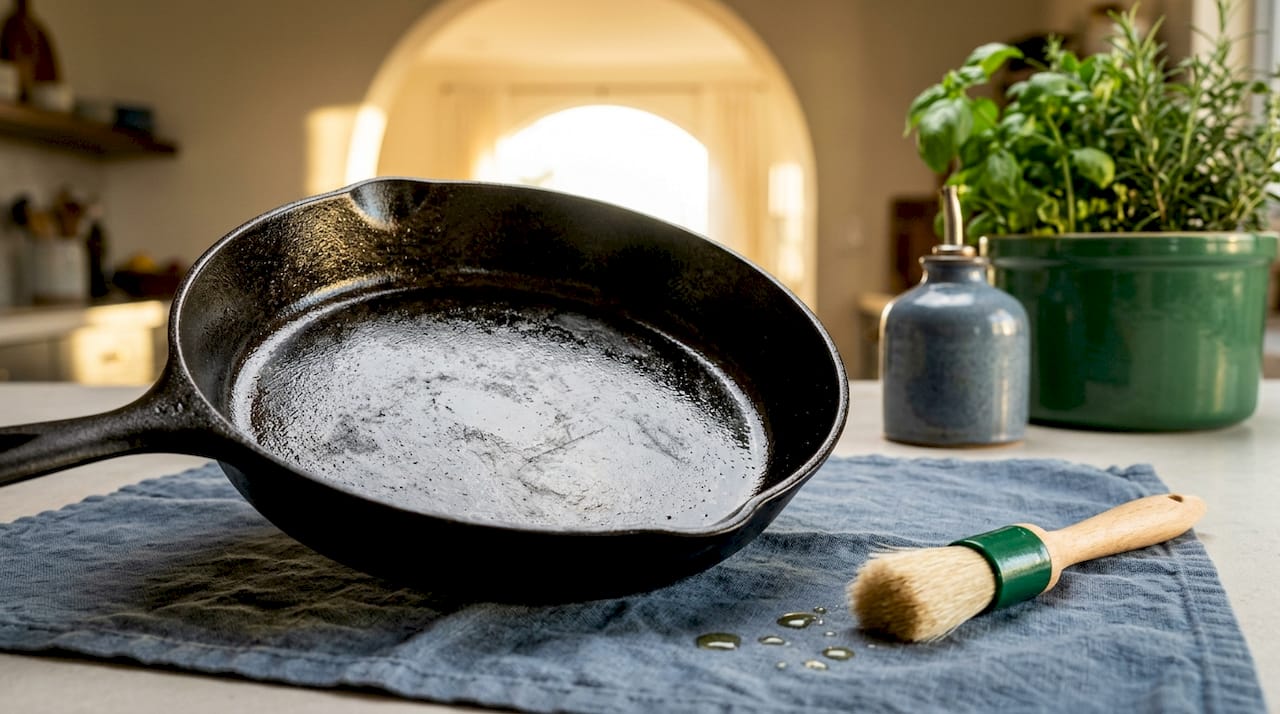
Each seasoning session adds another thin layer on top of the last. Over time, these layers build into a smooth, dark patina that gets more effective the longer you use the pan. A well-seasoned carbon steel pan can rival the release of a synthetic nonstick surface, and it does so without any coating that can chip, flake, or degrade.
The choice of oil matters significantly. High-smoke-point oils such as grapeseed, avocado, sunflower, and canola polymerise most effectively because they reach the required temperature before burning off entirely. Olive oil and animal fats have lower smoke points and contain compounds that resist full polymerisation, leaving a sticky, gummy residue instead of a hard patina.
Here is how to build a strong base seasoning on a carbon steel pan:
- Wash the pan with warm, soapy water to remove any factory coating or protective oil.
- Dry it completely, either with a cloth or by placing it on a low heat for a few minutes.
- Preheat your oven to 250°C (480°F) and bake the empty pan for 10 minutes to drive out all moisture.
- Apply a very thin coat of grapeseed or avocado oil across the entire surface, inside and out.
- Wipe off the excess with a clean cloth until the pan looks almost dry. This step is critical.
- Place the pan upside down in the oven and bake for 30 minutes.
- Repeat this process two or three times to build a reliable base layer.
Pro Tip: The single most common seasoning mistake is using too much oil. A thick layer will not polymerise properly and will leave a sticky, uneven surface. The pan should look almost bare before it goes into the oven.
Natural nonstick vs synthetic coatings: what is the real difference?
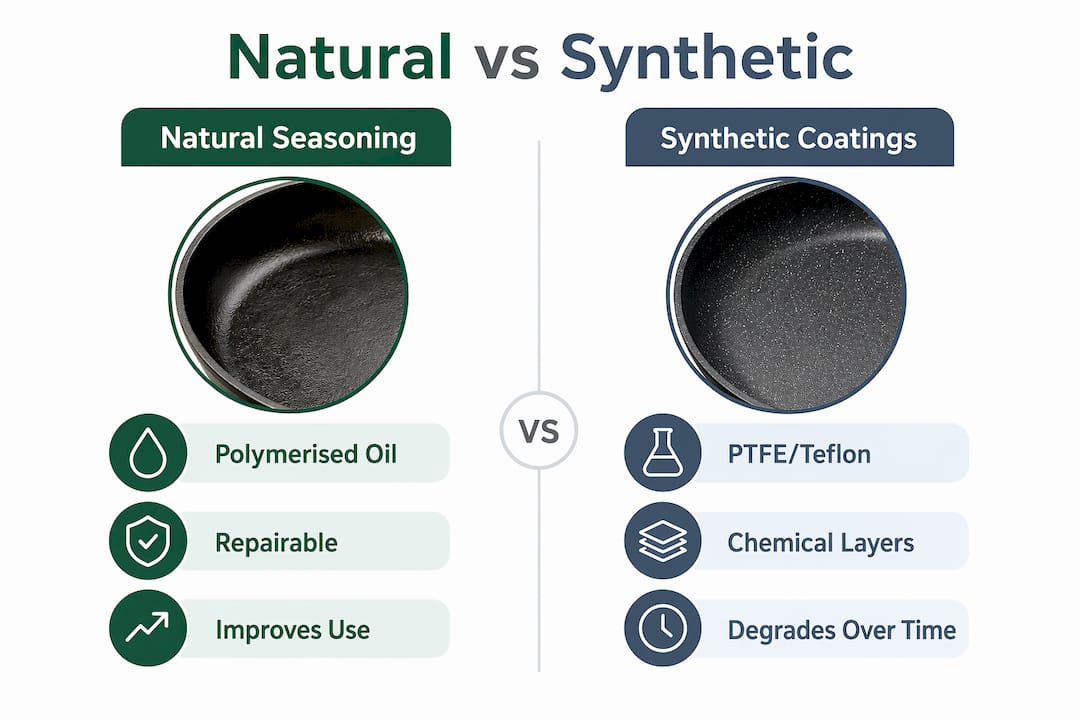
The most widely used synthetic nonstick coating is PTFE, sold under the brand name Teflon. PTFE provides extremely low friction straight out of the box, which is why it became so popular in domestic kitchens from the 1960s onwards. The problem is that PTFE coatings risk toxic fume release if overheated above approximately 260°C (500°F), and many experts now recommend avoiding high-heat cooking with PTFE pans entirely. This is a significant limitation for anyone who sears meat or cooks at high temperatures regularly.
Ceramic-coated pans are often marketed as a safer alternative, but the distinction matters. Ceramic coatings are a silica-based layer applied to a metal base, not solid ceramic cookware. They are less heat resistant than true ceramic and prone to wear, meaning their nonstick properties diminish over time. Once the coating is scratched or damaged, restoration is rarely possible at home, and the pan effectively becomes a standard metal pan with a damaged surface.
Here is a direct comparison of the three main surface types:
| Feature | Natural seasoning (carbon steel/cast iron) | PTFE coating (Teflon) | Ceramic coating |
|---|---|---|---|
| Heat tolerance | Very high (no upper limit for cooking) | Limited to ~260°C | Moderate, prone to thermal shock |
| Improves with use | Yes, builds deeper patina over time | No, degrades gradually | No, wears down |
| Repairable at home | Yes, strip and re-season | No | No |
| Chemical concerns | None | PFAS/PTFE fume risk at high heat | Varies by brand and labelling |
| Longevity | Decades with proper care | Typically 3 to 5 years | 1 to 3 years typically |
It is also worth noting that non-toxic cookware labelling lacks standardised definitions, meaning a pan marketed as non-toxic may still contain materials you would rather avoid. This makes understanding the actual surface type far more useful than trusting a label.
Key advantages of natural seasoning over synthetic coatings at a glance:
- No risk of coating flaking into food
- Compatible with metal utensils without damage
- Handles very high heat without chemical breakdown
- Gets better the more you cook with it
- Fully repairable if damaged
What are the real benefits and drawbacks of natural nonstick cookware?
The health case for natural nonstick cookware is straightforward. There are no synthetic chemicals involved, no PFAS compounds, and no risk of fumes at high temperatures. You are cooking on a surface made entirely of polymerised plant-based oil and metal, both of which are inert at normal cooking temperatures. For anyone who regularly sears, stir-fries, or cooks at high heat, this matters.
The sustainability argument is equally strong. Natural nonstick coatings improve with use and can be fully restored if damaged, meaning a well-cared-for carbon steel pan can last generations. Compare this to a synthetic nonstick pan that typically needs replacing every few years, and the environmental calculation shifts considerably.
Pro Tip: Cooking fatty foods like bacon, sausages, or a buttered omelette in a new pan actively builds the seasoning. Think of the first few months with a carbon steel pan as a seasoning investment, not a performance test.
The drawbacks are real but manageable. Acidic foods such as tomatoes, citrus, and wine can break down the seasoning layer if cooked for extended periods. A new pan requires patience before it reaches its full nonstick potential. And unlike a synthetic pan, a carbon steel or cast iron pan needs drying immediately after washing to prevent rust. These are not deal-breakers, but they do require a small shift in kitchen habits.
How to care for and maintain a natural nonstick surface
Proper maintenance is what separates a pan that lasts 50 years from one that rusts in a drawer after six months. The good news is that the routine is simple once it becomes habit.
Follow these steps for ongoing care after each use:
- Clean the pan with warm water and a soft brush or cloth while it is still warm. Avoid soaking it.
- Dry it immediately and thoroughly, either with a cloth or by placing it back on a low heat for one to two minutes.
- Apply a very thin layer of oil with a cloth and wipe off the excess. The surface should look barely oiled.
- Store the pan in a dry place, ideally with a cloth or paper towel inside to absorb any residual moisture.
Knowing when to re-season is just as important as knowing how. If the surface looks dull, patchy, or food starts sticking consistently, it is time to rebuild the seasoning. Carbon steel pans can be stripped and fully re-seasoned to restore their nonstick properties, which is something no synthetic-coated pan can offer. Brass-steel’s re-seasoning guide walks through this process in detail.
Pro Tip: If your pan develops a sticky patch, the fix is almost always the same: scrub the affected area with coarse salt and a little oil, rinse, dry, and apply a fresh seasoning layer. You do not need to strip the whole pan unless the damage is widespread.
Avoid sudden temperature changes, such as running a very hot pan under cold water. This can cause warping in carbon steel, which is difficult to reverse. Heat management is part of caring for the surface, not just the cooking.
How natural nonstick technology redefines healthy, sustainable cooking
Consumer and regulatory concern over PFAS compounds, the family of synthetic chemicals used in many nonstick coatings, has grown considerably in recent years. Sustainability concerns are driving research into alternatives to fluoropolymer PTFE coatings, with natural seasoning and ceramic options receiving renewed attention from both manufacturers and home cooks. This is not a niche trend. It reflects a broader shift in how people think about what their cookware is made of and what it might be releasing into their food.
“The most durable, health-conscious cookware choice available to a home cook today is a well-seasoned carbon steel or cast iron pan. It requires no synthetic coating, improves with age, and can be repaired indefinitely. No manufactured nonstick surface comes close to that combination of longevity and safety.”
Natural nonstick cookware also reduces kitchen waste in a meaningful way. A carbon steel pan that lasts 30 years replaces roughly six to ten synthetic nonstick pans over the same period. Each of those pans involves manufacturing, packaging, and disposal. Choosing a pan you can maintain and repair is one of the most practical sustainability decisions a home cook can make, and it costs nothing extra once you own the pan.
Key takeaways
Natural nonstick surfaces built through seasoning outperform synthetic coatings on longevity, repairability, and safety, making carbon steel and cast iron the most practical choice for health-conscious home cooks.
| Point | Details |
|---|---|
| How seasoning works | Thin oil layers polymerise under heat to form a hard, hydrophobic patina on the metal surface. |
| Oil selection matters | Use grapeseed, avocado, sunflower, or canola oil. Avoid olive oil and animal fats for seasoning. |
| Synthetic coatings degrade | PTFE and ceramic coatings wear down and cannot be repaired at home, unlike natural seasoning. |
| Maintenance is simple | Dry immediately after washing, apply a thin oil layer, and re-season when the surface looks dull. |
| Sustainability advantage | A well-maintained carbon steel pan lasts decades, replacing multiple synthetic nonstick pans over a lifetime. |
Why I think natural nonstick is the most underrated skill in the kitchen
I have cooked on carbon steel pans for years, and the thing that surprises most people is how quickly a well-seasoned pan changes the way you cook. The first few weeks feel like work. The seasoning is patchy, eggs stick, and you wonder if you have made a mistake. Then something shifts. The surface darkens, smooths out, and suddenly you are sliding omelettes out of the pan with no effort at all.
The biggest misconception I encounter is that natural nonstick is fragile or high-maintenance. It is neither. A carbon steel pan is far more forgiving than people expect once the seasoning is established. You can use metal spatulas, cook at high heat, and even scrub off stubborn residue without destroying the surface. The seasoning checklist from Brass-steel is a genuinely useful reference if you want a structured approach to building that base.
What I find most rewarding is that the pan improves with neglect in the best possible way. Every steak, every batch of sautéed vegetables, every fried egg adds another micro-layer to the patina. You are not fighting against the pan’s limitations. You are building something. That is a completely different relationship with cookware than you get from a synthetic nonstick pan that you are always trying not to scratch.
If you have been hesitating, my honest advice is to start with one pan and commit to using it for three months. By the end of that period, you will not want to go back.
— Davide
Cook better with Brass-steel carbon steel pans
Brass-steel designs carbon steel pans forged from a single piece of steel, with no rivets, no synthetic coatings, and no compromises. The 27 cm and 30 cm sauté pans are built to develop a natural nonstick surface that gets better every time you cook. They work on all cooktops including induction, handle oven temperatures without issue, and are made to last far beyond a single generation of cooking. If you are ready to move away from synthetic coatings and invest in cookware that genuinely improves with use, explore the full range at Brass-steel and find the pan that fits your kitchen.
FAQ
What is a natural nonstick surface on a pan?
A natural nonstick surface is a polymerised oil layer built up through seasoning on metal cookware such as carbon steel or cast iron. It creates a hydrophobic coating that reduces food adhesion without any synthetic chemicals.
Which oils work best for seasoning a natural nonstick pan?
Grapeseed, avocado, sunflower, and canola oils are the best choices because their high smoke points allow full polymerisation. Olive oil and animal fats do not polymerise reliably and tend to leave a sticky residue.
How does natural nonstick compare to Teflon?
Natural seasoning improves with use and can be repaired at home, while PTFE coatings like Teflon degrade over time and risk releasing fumes above 260°C. For high-heat cooking, a seasoned carbon steel pan is the safer and more durable option.
Can a damaged natural nonstick surface be repaired?
Yes. Carbon steel and cast iron pans can be stripped back and fully re-seasoned to restore their nonstick properties. This is one of the key advantages over ceramic or PTFE-coated pans, which cannot be repaired once damaged.
Why does my carbon steel pan feel sticky after seasoning?
Stickiness almost always means too much oil was applied before heating. The fix is to scrub the affected area, dry the pan thoroughly, and re-season with a thin, almost dry oil layer before baking again.