How to season cast iron in oven: a practical guide
TL;DR:
- Seasoning cast iron in the oven builds a durable, nonstick surface through high-heat polymerization of a thin oil layer. Repeated cycles with high smoke point oils like grapeseed or canola create a strong base, while proper cleaning and maintenance preserve the coating over time.
Seasoning cast iron in the oven is the most reliable way to build a durable, nonstick surface on your pan. The process involves applying a thin coat of high smoke point oil and baking it at high heat, which triggers polymerisation and bonds a protective layer to the iron. This guide covers the science, the best oils to use, the full oven method step by step, and how to keep your seasoning in good shape long term. Whether you are seasoning a new cast iron skillet for the first time or looking to reseason a pan that has seen better days, this is the process that works.
What do you need before seasoning cast iron in the oven?
Getting your tools and materials right before you start saves time and prevents mistakes. The preparation stage is where most home cooks go wrong, so treat it seriously.
The right oils to use
High smoke point oils are the only oils worth using for seasoning. Grapeseed, canola, and vegetable oils are the top choices because they polymerise cleanly at oven temperatures. That means they harden into a smooth, bonded layer rather than staying tacky or breaking down.
Olive oil and flaxseed oil create weak or unstable coatings when used for seasoning. Flaxseed oil in particular has a reputation for flaking off after a few uses, which defeats the whole purpose.
| Oil | Smoke point | Suitable for seasoning? |
|---|---|---|
| Grapeseed oil | ~216°C (420°F) | Yes |
| Canola oil | ~204°C (400°F) | Yes |
| Vegetable oil | ~204°C (400°F) | Yes |
| Olive oil | ~190°C (375°F) | No |
| Flaxseed oil | ~107°C (225°F) | No |
Tools and supplies checklist
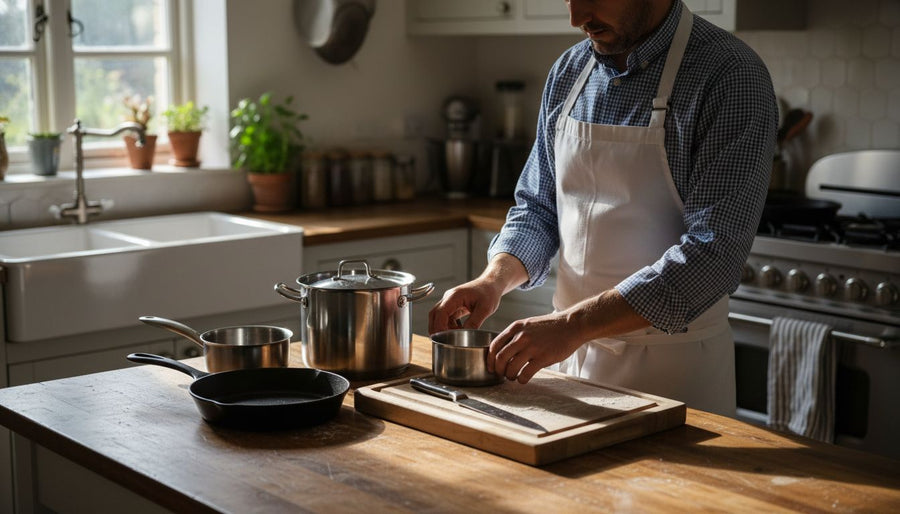
You do not need specialist equipment. Here is what to gather before you start:
- Mild washing up liquid and a stiff brush or sponge
- Paper towels or a clean cloth
- Your chosen high smoke point oil
- A sheet of foil or a baking tray to catch drips
- Oven gloves
Pro Tip: Preheat your oven to around 230–260°C (450–500°F) before you begin. A fully hot oven gives you consistent, even heat from the moment the pan goes in.
Cleaning the pan first
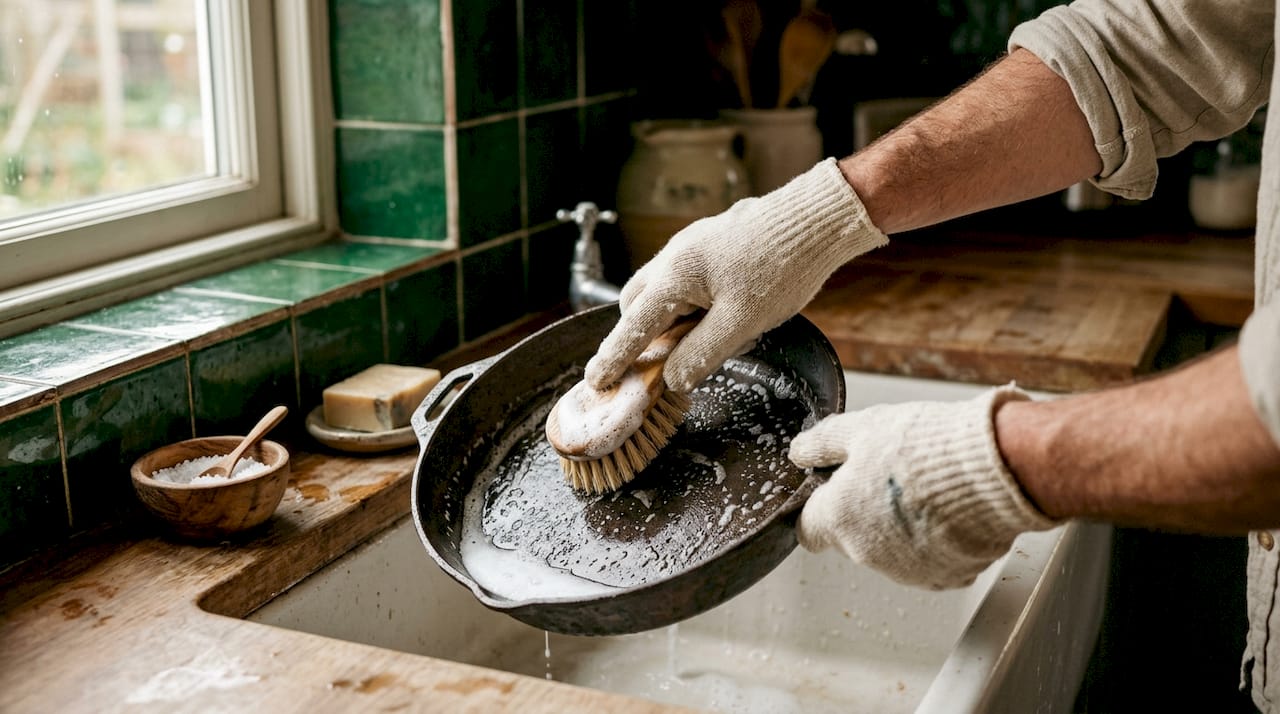
Mild soap is acceptable and necessary before the first seasoning. It removes any factory residue, rust, or old oil that would prevent the new seasoning from bonding. Rinse the pan thoroughly and dry it completely. Any moisture left on the surface will cause rust during baking, so dry it on the hob over low heat for a couple of minutes if you want to be certain.
Step-by-step guide: how to season cast iron in the oven
This method works for a brand new pan, a pan you have just bought second hand, or one you are reseasoning after stripping it back. Follow each step in order and do not rush the process.
-
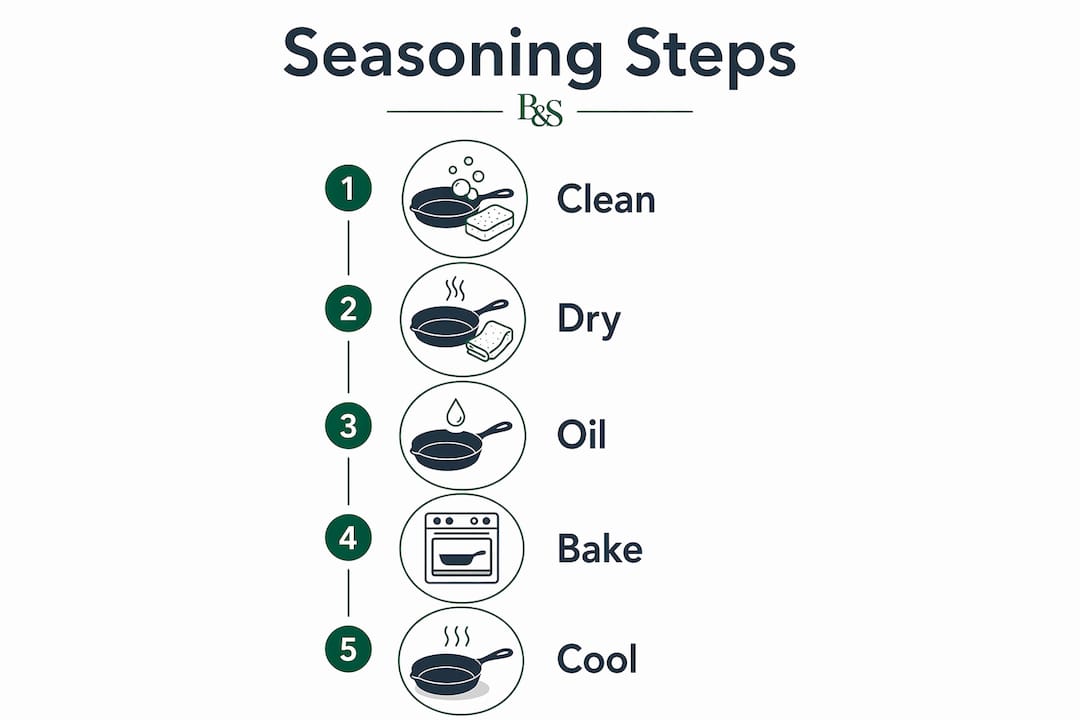
Clean the pan. Wash with mild soap, rinse well, and dry completely. Place it on the hob over low heat for two minutes to drive off any remaining moisture.
-
Apply a very thin coat of oil. Pour a small amount of grapeseed or canola oil onto a paper towel and rub it over the entire pan, including the outside and the handle. The pan should look almost dry when you are done. This is the step most people get wrong. Too much oil is the single biggest cause of sticky, blotchy seasoning.
-
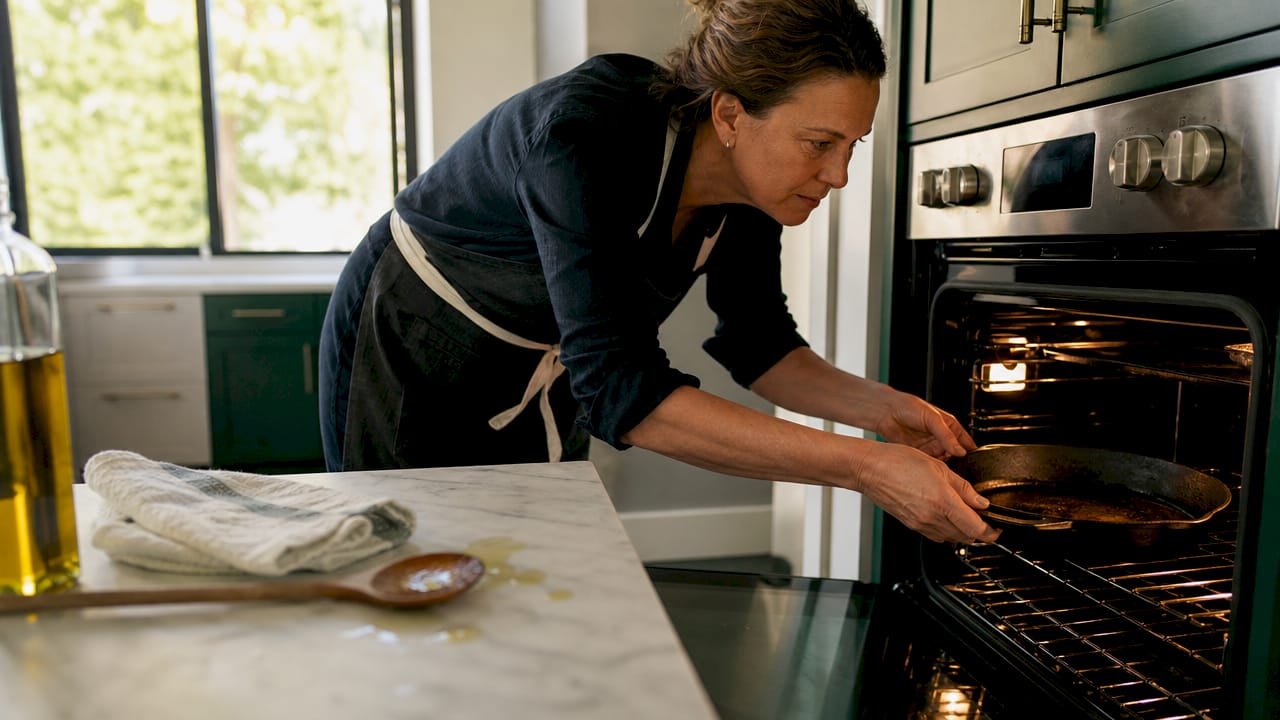
Place the pan upside down in the oven. Baking cast iron upside down prevents oil from pooling in the cooking surface, which would create uneven patches. Put a sheet of foil or a baking tray on the rack below to catch any drips.
-
Bake at 230–260°C (450–500°F) for one hour. This temperature range pushes the oil past its smoke point and triggers polymerisation. The oil transforms from a liquid into a hardened layer that bonds to the iron.
-
Turn off the oven and leave the pan inside. Let it cool completely before removing it. Pulling a hot pan into cold air can cause warping, and slow cooling helps the seasoning set properly.
-
Repeat the process 2–3 times. New or rusty pans benefit from multiple seasoning cycles to build a strong base. Each layer adds depth and durability to the surface.
Pro Tip: After your final seasoning cycle, cook something fatty in the pan straight away. Bacon, sausages, or a buttered omelette all help consolidate the new seasoning through actual cooking.
The whole process takes around three to four hours when you include cooling time between cycles. That sounds like a lot, but most of it is hands off. You are just waiting for the oven to do its work.
Why does seasoning actually work?
Seasoning works through a chemical process called polymerisation. When oil is heated past its smoke point, the fat molecules break down and reform into long polymer chains. These chains bond to the iron surface and harden into a layer that is effectively a thin, food safe plastic.
“Seasoning is simple maintenance, not complicated science.” — Kent Rollins, cast iron cooking expert
This protective coat improves over time with every cook. The more you use the pan, the more layers build up, and the better the nonstick performance becomes. That is why a well used cast iron pan from a grandparent’s kitchen often performs better than a brand new one.
The black patina on a seasoned pan is not dirt or burnt residue. It is the goal. That dark colour is the accumulated seasoning, and it is what gives cast iron its nonstick quality and rust resistance. Scrubbing it away with steel wool or harsh cleaners removes the very thing that makes the pan work well.
This same principle applies to carbon steel pans, which Brass-steel specialises in. Carbon steel and cast iron both rely on polymerised oil layers for their nonstick surface, and the oven seasoning method works for both.
Common mistakes when seasoning cast iron in the oven
Most seasoning problems come down to a small number of repeatable errors. Knowing what they are makes it easy to avoid them.
- Too much oil. This is the most common mistake. A thick oil coat does not polymerise evenly. It stays tacky and creates a sticky, blotchy surface. Always wipe off more oil than you think you need to.
- Wrong oil choice. Low smoke point oils like olive oil produce weak, unstable coatings. Stick to grapeseed, canola, or vegetable oil.
- Moisture on the pan. Any water left on the surface before baking will cause rust spots to form under the new seasoning. Always dry the pan completely on the hob before oiling.
- Skipping repeat cycles. One round of oven seasoning is a starting point, not a finished surface. Two to three cycles give you a base that will hold up to regular cooking.
- Aggressive scrubbing after cooking. Using steel wool or abrasive pads strips the seasoning you have worked to build. Use a stiff brush or a chainmail scrubber instead.
Pro Tip: If your pan develops a sticky patch, scrub it back with coarse salt and a paper towel, rinse, dry, and do a single oven seasoning cycle. You do not need to strip the whole pan and start again.
How to fix damaged or dull seasoning
A pan that looks dull, grey, or patchy just needs a couple of oven seasoning cycles to recover. If the seasoning is badly damaged or rusty, scrub the rust away with steel wool, wash the pan, dry it thoroughly, and go through the full seasoning process from the beginning. It takes an afternoon, but the pan will come back completely.
How often should you season cast iron in the oven?
Full oven seasoning is not something you need to do every week. Two to three times a year is enough for most home cooks, provided you maintain the pan properly between uses.
Daily maintenance does most of the work. Follow these steps after every cook:
- Rinse the pan with warm water while it is still warm. Avoid soaking it.
- Dry it immediately with a cloth or paper towel.
- Place it on the hob over low heat for one to two minutes to drive off any moisture.
- Apply a very small amount of oil with a paper towel and wipe it over the cooking surface.
- Store the pan in a dry place.
Cooking fatty foods regularly strengthens seasoning better than repeated oven sessions. Bacon, steak, and sautéed vegetables all contribute to building up the patina over time. Think of every cook as a small seasoning session.
Reseason in the oven when you notice the surface looking dull or grey, when food starts sticking more than usual, or after you have had to scrub the pan hard to remove stuck food. These are the signs that the seasoning needs a refresh rather than just daily maintenance.
Heating the pan after each use to dry it and applying a light coat of oil is the single most effective daily habit for keeping seasoning in good condition. It takes less than two minutes and prevents rust from forming between uses.
Key takeaways
Oven seasoning cast iron requires thin oil layers, high heat, and repeated cycles to build a durable, nonstick polymerised coating.
| Point | Details |
|---|---|
| Use high smoke point oils | Grapeseed, canola, or vegetable oil polymerise cleanly; avoid olive or flaxseed oil. |
| Apply oil thinly | The pan should look almost dry before going into the oven to prevent sticky patches. |
| Bake upside down at high heat | 230–260°C for one hour with foil below ensures even seasoning and catches drips. |
| Repeat 2–3 cycles | Multiple rounds build a strong base that holds up to regular cooking. |
| Maintain daily | Rinse, dry, heat, and lightly oil after every use to preserve the seasoning between oven sessions. |
My honest view on seasoning cast iron
People overcomplicate seasoning more than almost any other cooking task. I have seen home cooks spend hours researching the perfect oil, the exact temperature, and the ideal number of cycles, then give up because the result was not perfect first time. The truth is that cast iron is forgiving. A slightly imperfect first seasoning will improve with every cook.
The one thing I would not compromise on is oil choice. Using the wrong oil, especially flaxseed oil despite its popularity in some circles, causes real problems that take effort to fix. Grapeseed oil is my go-to. It is cheap, widely available, and produces a clean, hard layer every time.
The other thing worth saying is that your pan gets better the more you use it. A pan you cook in three times a week will have better seasoning after six months than one you carefully oven season and then store. Cooking is the maintenance. The oven method gives you the foundation, but the pan builds its character through use. Be patient, cook fatty things, and do not scrub it with anything abrasive. That is genuinely all there is to it.
— Davide
Brass-steel’s guides for cast iron and carbon steel care
Seasoning is a skill that transfers across cookware types. If you cook with carbon steel as well as cast iron, the same principles apply, and Brass-steel has detailed guides to help you get the most from both.
The oven seasoning method guide on the Brass-steel website walks through the same process for carbon steel pans, with specific temperature guidance and tips for building a lasting patina. If you are new to carbon steel or want to compare how it performs against cast iron, the carbon steel pan guide covers everything from first use to long term care. Brass-steel pans are forged from a single piece of carbon steel, free from PTFE and PFOA, and built to last a lifetime with the right maintenance.
FAQ
What is seasoning a cast iron pan?
Seasoning is the process of baking a thin layer of oil onto cast iron at high heat. The oil polymerises and bonds to the surface, creating a protective, nonstick coating.
What is the best oil for seasoning cast iron in the oven?
Grapeseed, canola, and vegetable oils are the best choices because they have high smoke points and polymerise cleanly. Avoid olive oil and flaxseed oil, which produce weak or unstable coatings.
How do I reseason a cast iron pan that has gone rusty?
Scrub the rust away with steel wool, wash the pan, dry it completely on the hob, apply a thin coat of high smoke point oil, and bake it upside down at 230–260°C for one hour. Repeat two to three times.
Why is my cast iron sticky after seasoning?
A sticky surface means too much oil was applied before baking. Scrub the sticky area with coarse salt, rinse, dry, and redo the seasoning cycle with a much thinner oil coat.
How often should you season cast iron in the oven?
Two to three full oven seasoning sessions per year is enough for most home cooks. Daily maintenance, including drying and lightly oiling after each use, does the rest of the work between sessions.