7 Essential Tips for Using Frying Pan Cast Iron & Carbon Steel
Over 80 percent of British home cooks own at least one cast iron or carbon steel pan, yet many remain unsure about their true differences and best uses. With well-seasoned cookware promising both healthier meals and superior flavour, choosing wisely impacts everything from your daily breakfast eggs to ambitious roasts. Whether you are a seasoned chef or a curious beginner, you will learn how to select, season, and care for your frying pans to bring out the best in every British kitchen.
Table of Contents
- Understand the Differences Between Cast Iron and Carbon Steel
- How to Properly Season Your Frying Pan for Natural Nonstick
- Tips for Cooking with High Heat and Retaining Flavour
- Maintaining a Healthy Surface Without Toxic Coatings
- Best Oils to Use for Seasoning and Everyday Cooking
- Cleaning and Caring for Your Frying Pan Cast Iron Safely
- Using Your Frying Pan on Induction and All Cooktops
Quick Summary
| Key Insight | Explanation |
|---|---|
| 1. Understand Material Differences | Cast iron holds more carbon and retains heat better, while carbon steel heats quickly and is more responsive to temperature changes. |
| 2. Proper Seasoning is Essential | Season your pans with a high smoke point oil to create a nonstick surface and prevent rust. |
| 3. Use High Heat for Flavour | High heat cooking enhances flavour development through the Maillard reaction, ideal for achieving a perfect crust. |
| 4. Maintain Your Cookware Carefully | Clean and dry your pans properly to preserve their seasoned surface and prevent rusting. |
| 5. Compatible with Various Cooktops | Cast iron and carbon steel are versatile for induction, gas, electric, and ceramic cooktops due to their magnetic properties. |
1. Understand the Differences Between Cast Iron and Carbon Steel
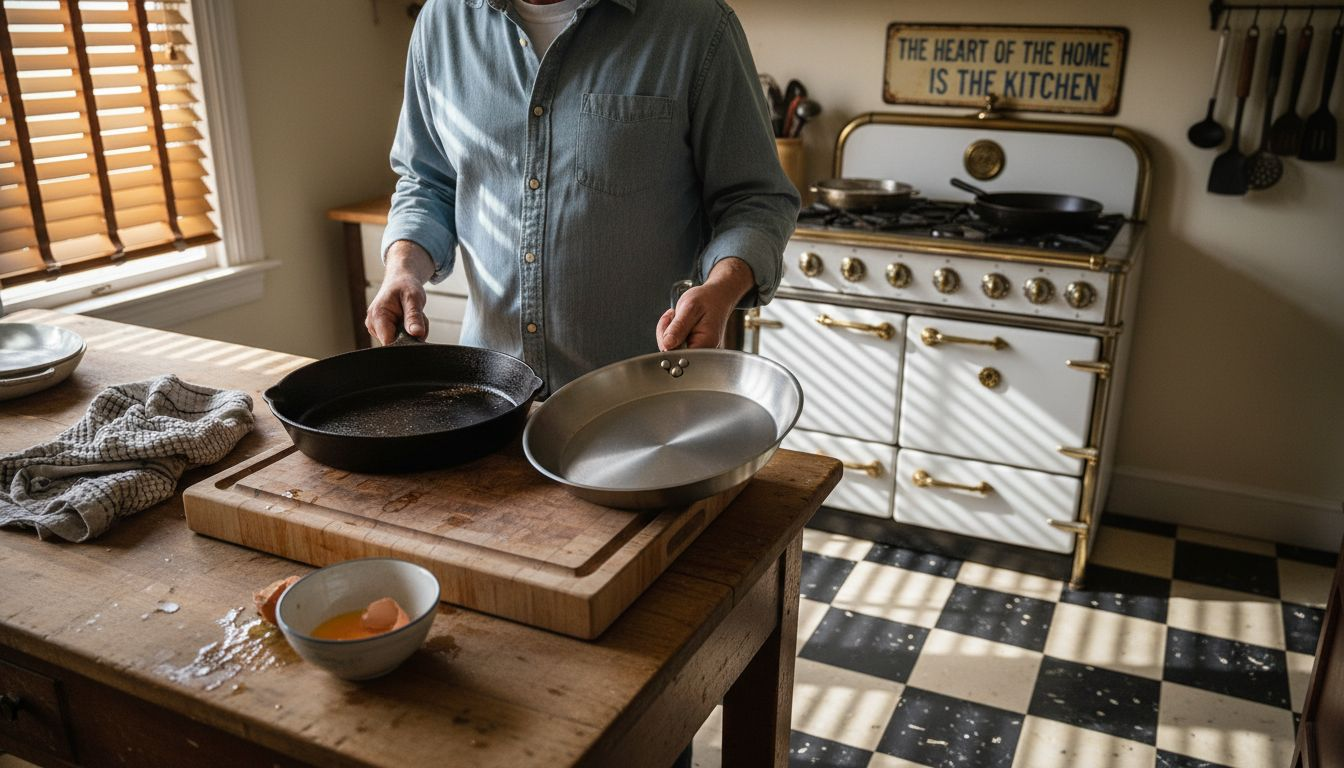
Understanding the nuanced differences between cast iron and carbon steel cookware is crucial for selecting the right pan for your culinary adventures. While both materials might seem similar at first glance, they possess distinct characteristics that significantly impact cooking performance.
Cast iron and carbon steel are both iron-carbon alloys, but their carbon content creates fundamental variations in properties. Carbon steel and cast iron differ primarily in their carbon composition, with cast iron containing over 2% carbon compared to steel’s lower carbon percentage. This seemingly minor distinction results in substantial differences in cooking characteristics.
Key Compositional Differences:
- Cast Iron: Higher carbon content (over 2%), more brittle, excellent heat retention
- Carbon Steel: Lower carbon content (less than 2%), more malleable, faster heat responsiveness
In practical cooking terms, cast iron pans are heavier and slower to heat but maintain temperature remarkably well, making them ideal for slow cooking and searing. Carbon steel pans, conversely, heat up faster and respond more quickly to temperature changes, providing greater control during delicate cooking techniques.
Chefs and home cooks appreciate these materials for different reasons. Cast iron excels in creating robust, even heat distribution perfect for dishes requiring consistent temperatures, while carbon steel offers precision and agility for techniques demanding rapid temperature adjustments.
Understanding these differences allows you to select the right cookware for specific cooking styles and recipes, transforming your kitchen performance.
Pro Tip: When transitioning between cast iron and carbon steel, remember that each pan requires distinct seasoning and maintenance approaches to maintain optimal cooking performance.
2. How to Properly Season Your Frying Pan for Natural Nonstick
Seasoning your cast iron or carbon steel pan is more than a maintenance ritual its a transformative process that turns a basic cooking surface into a culinary powerhouse. Proper seasoning creates a polymerised protective layer that enhances nonstick properties and prevents rust.
What is Seasoning?
Seasoning involves applying a thin layer of oil to your pan and heating it at high temperatures, causing the oil to bond with the metal surface. This process creates a natural protective coating that improves cooking performance and reduces the risk of food sticking.
Essential Steps for Effective Seasoning:
- Clean the Pan: Ensure your pan is thoroughly cleaned and completely dry before starting
- Choose the Right Oil: Select oils with high smoke points like grapeseed, avocado, or sunflower oil
- Apply Thin Layer: Use a paper towel to spread a very thin, even coat of oil across the entire pan surface
- Bake Upside Down: Place the pan upside down in a preheated oven to prevent oil pooling
The seasoning process not only improves your pan’s nonstick capabilities but also contributes to food safety by creating a natural protective barrier. Repeated seasoning builds up a robust, smooth surface that enhances cooking performance and prevents rust formation.
Seasoning Frequency
New pans require initial seasoning, but maintaining that protective layer involves seasoning after each use by cooking fatty foods or lightly oiling the pan after cleaning.
Bonus Tip: Avoid cooking acidic foods during the first few seasoning cycles, as these can strip away the developing protective layer.
Pro Tip: Always heat your pan gradually and avoid sudden temperature changes to maintain the integrity of your seasoned surface.
3. Tips for Cooking with High Heat and Retaining Flavour
Mastering high heat cooking requires understanding the unique properties of your cookware and its impact on flavour development. Carbon steel pans excel at high temperature cooking techniques, offering exceptional heat conductivity and flavour retention.
High Heat Cooking Fundamentals
High heat cooking transforms ingredients by creating complex flavour compounds through a process called Maillard reaction. This browning phenomenon occurs when proteins and sugars interact under intense heat, producing rich caramelised notes and deep colour.
Essential Techniques for Maximum Flavour:
- Preheat Thoroughly: Allow your pan to heat gradually and evenly before adding ingredients
- Pat Ingredients Dry: Remove excess moisture to ensure proper searing and prevent steaming
- Use High Smoke Point Oils: Select oils like avocado or grapeseed that withstand intense temperatures
- Avoid Overcrowding: Leave space between ingredients to maintain high heat and promote browning
- Cook in Batches: Preserve heat consistency by cooking similar ingredients together
Carbon steel and cast iron pans are particularly suited for high heat cooking due to their superior heat retention and ability to create exceptional crust on meats and vegetables.
Temperature Management
Understand your pan’s heat zones. The centre typically remains hottest, while edges offer slightly lower temperatures. Rotate and move ingredients strategically to achieve uniform cooking and maximum flavour development.
Pro Tip: Let your protein rest at room temperature for 15 minutes before cooking to ensure more even heat distribution and prevent moisture loss.
4. Maintaining a Healthy Surface Without Toxic Coatings
Healthy cooking begins with understanding how to create a natural nonstick surface without relying on synthetic chemical coatings. Seasoning cast iron and carbon steel pans offers a safe alternative to traditional nonstick cookware, providing both performance and peace of mind.
Why Avoid Toxic Coatings?
Traditional nonstick pans often contain polytetrafluoroethylene (PTFE) and perfluorooctanoic acid (PFOA), chemicals linked to potential health concerns. Carbon steel and cast iron pans create a natural protective layer through seasoning, eliminating the need for these controversial synthetic treatments.
Key Steps for a Healthy Cooking Surface:
- Build Seasoning Gradually: Create a protective layer through repeated cooking and oil application
- Use High Quality Oils: Select oils with high smoke points like grapeseed or avocado
- Clean Gently: Use soft tools and minimal soap to preserve the protective layer
- Avoid Metal Scrubbers: Protect your pan’s seasoning with soft cleaning materials
- Maintain Regular Conditioning: Apply a light oil coat after each cleaning
The seasoning process transforms your pan’s surface into a naturally nonstick environment. This polymerised layer not only prevents sticking but also reduces bacterial contamination, offering a healthier cooking approach.
Surface Protection Techniques
Think of seasoning as building a microscopic protective shield. Each cooking session and careful maintenance adds another layer of natural protection, improving your pan’s performance and longevity.
Pro Tip: After cleaning, heat your pan briefly and apply a whisper thin layer of oil to maintain and strengthen your pan’s natural nonstick surface.
5. Best Oils to Use for Seasoning and Everyday Cooking
Choosing the right oil transforms your cast iron and carbon steel pans from simple cookware into culinary masterpieces. Oils with high unsaturated fat content play a critical role in creating a durable nonstick surface, making your seasoning process both scientific and artful.
Understanding Oil Polymerisation
When certain oils are heated, they undergo a remarkable transformation called polymerisation. This process creates a hard protective layer that bonds with the pan’s surface, producing a natural nonstick coating that improves with each cooking session.
Top Oils for Seasoning and Cooking:
- Grapeseed Oil: High smoke point, neutral flavour, excellent polymerisation properties
- Avocado Oil: Extremely high smoke point, rich in monounsaturated fats
- Sunflower Oil: Light taste, good heat tolerance
- Canola Oil: Affordable, widely available, consistent performance
Oils to Avoid:
- Extra virgin olive oil (low smoke point)
- Butter (burns quickly)
- Coconut oil (inconsistent seasoning results)
The key is selecting oils that can withstand high temperatures without breaking down, ensuring your pan develops a smooth, protective seasoning layer that enhances cooking performance.
Seasoning Technique
Apply a whisper thin layer of oil, ensuring no pooling. The goal is a surface that looks almost dry, which prevents sticky residue and promotes even polymerisation.
Pro Tip: Always wipe your pan with a paper towel after applying oil during seasoning. Less is more when creating that perfect protective layer.
6. Cleaning and Caring for Your Frying Pan Cast Iron Safely
Maintaining your cast iron and carbon steel pans is an art form that preserves their performance and extends their lifespan. Proper care involves understanding the delicate balance between cleaning and protecting your pan’s seasoned surface.
The Golden Rules of Cast Iron Care
Unlike other cookware, cast iron and carbon steel demand a unique approach to cleaning. Traditional dishwashing techniques can destroy the carefully developed seasoning layer, rendering your pan vulnerable to rust and losing its nonstick properties.
Essential Cleaning Techniques:
- Clean Immediately After Use: Remove food residue while pan is still warm
- Use Minimal Water: Avoid soaking or prolonged water exposure
- Soft Tools Only: Use soft sponges or brushes to prevent scratching
- Dry Thoroughly: Eliminate all moisture immediately after washing
- Light Oil Coating: Apply a whisper thin layer of oil after cleaning
What to Avoid:
- Harsh metal scrubbers
- Dishwashers
- Prolonged soap usage
- Leaving water standing in the pan
Rust Prevention Strategy
Rust is the sworn enemy of cast iron cookware. Your primary defence is keeping the pan completely dry and maintaining its protective oil layer. Think of this process as creating an invisible shield that repels moisture and preserves your pan’s integrity.
Pro Tip: Store your pan in a dry location with good air circulation, and consider placing a paper towel between stacked pans to absorb any residual moisture.
7. Using Your Frying Pan on Induction and All Cooktops
Versatility is the hallmark of quality cookware, and cast iron and carbon steel pans excel across cooking platforms. These magnetic materials are uniquely compatible with multiple heat sources, making them exceptional choices for home and professional kitchens.
Cooktop Compatibility Fundamentals
The magnetic properties of cast iron and carbon steel create an extraordinary advantage. Unlike aluminium or copper pans, these materials interact perfectly with induction cooktops, generating heat through magnetic interactions rather than direct flame contact.
Cooktop Performance Across Different Surfaces:
- Induction Cooktops: Excellent heat transfer and precise temperature control
- Gas Stoves: Direct flame interaction allows exceptional heat distribution
- Electric Cooktops: Consistent and even heating surface
- Ceramic Cooktops: Smooth surface contact ensures uniform heat
Key Considerations for Optimal Performance:
- Ensure pan bottom is completely flat for maximum contact
- Use moderate heat settings on induction to prevent potential warping
- Clean pan bottom to maintain magnetic conductivity
- Avoid sudden temperature changes
Temperature Management
Unlike other materials, cast iron and carbon steel provide remarkable heat retention. This means your cooking surface remains consistent, allowing for precise culinary techniques across different cooktop technologies.
Pro Tip: Always preheat your induction cooktop with the pan already in place to prevent thermal shock and maintain your cookware’s structural integrity.
Below is a comprehensive table summarizing the differences, maintenance, and usage of cast iron and carbon steel cookware discussed throughout the article.
| Topic | Description | Key Considerations |
|---|---|---|
| Material Differences | Cast iron contains more than 2% carbon, is heavier, and retains heat well. Carbon steel has less than 2% carbon, is lighter, and heats quickly. | Cast iron is ideal for slow cooking; carbon steel is best for quick, controlled techniques. |
| Seasoning Process | Involves applying oil and heating to create a nonstick layer. | Use high smoke point oils; apply a thin layer to avoid pooling. |
| High Heat Cooking | Excellent for developing rich flavours through Maillard reaction. | Preheat thoroughly and use high smoke point oils; avoid overcrowding. |
| Healthy Surface Maintenance | Seasoning provides a non-toxic alternative to synthetic coatings. | Build seasoning gradually and avoid harsh scrubbers. |
| Best Oils for Cooking | Grapeseed, avocado, and sunflower oils are recommended. | Avoid oils with low smoke points like olive oil. |
| Cleaning and Care | Clean with minimal water and soft tools immediately after use. | Avoid dishwashers and metal scrubbers; apply a light oil coat after cleaning. |
| Cooktop Compatibility | Suitable for induction, gas, and electric cooktops due to magnetic properties. | Ensure flat bottoms for maximum contact and avoid sudden temperature changes. |
Elevate Your Cooking with Expertly Crafted Carbon Steel Pans
Struggling to master the art of seasoning and maintaining your cast iron or carbon steel pan? Discover the seamless performance and natural nonstick benefits of our heirloom-quality carbon steel cookware, designed for serious cooks who value durability and health-conscious design. At Brass & Steel, we forge each pan from a single piece of carbon steel to ensure unmatched strength and effortless cleaning—perfectly compatible with all cooktops including induction.
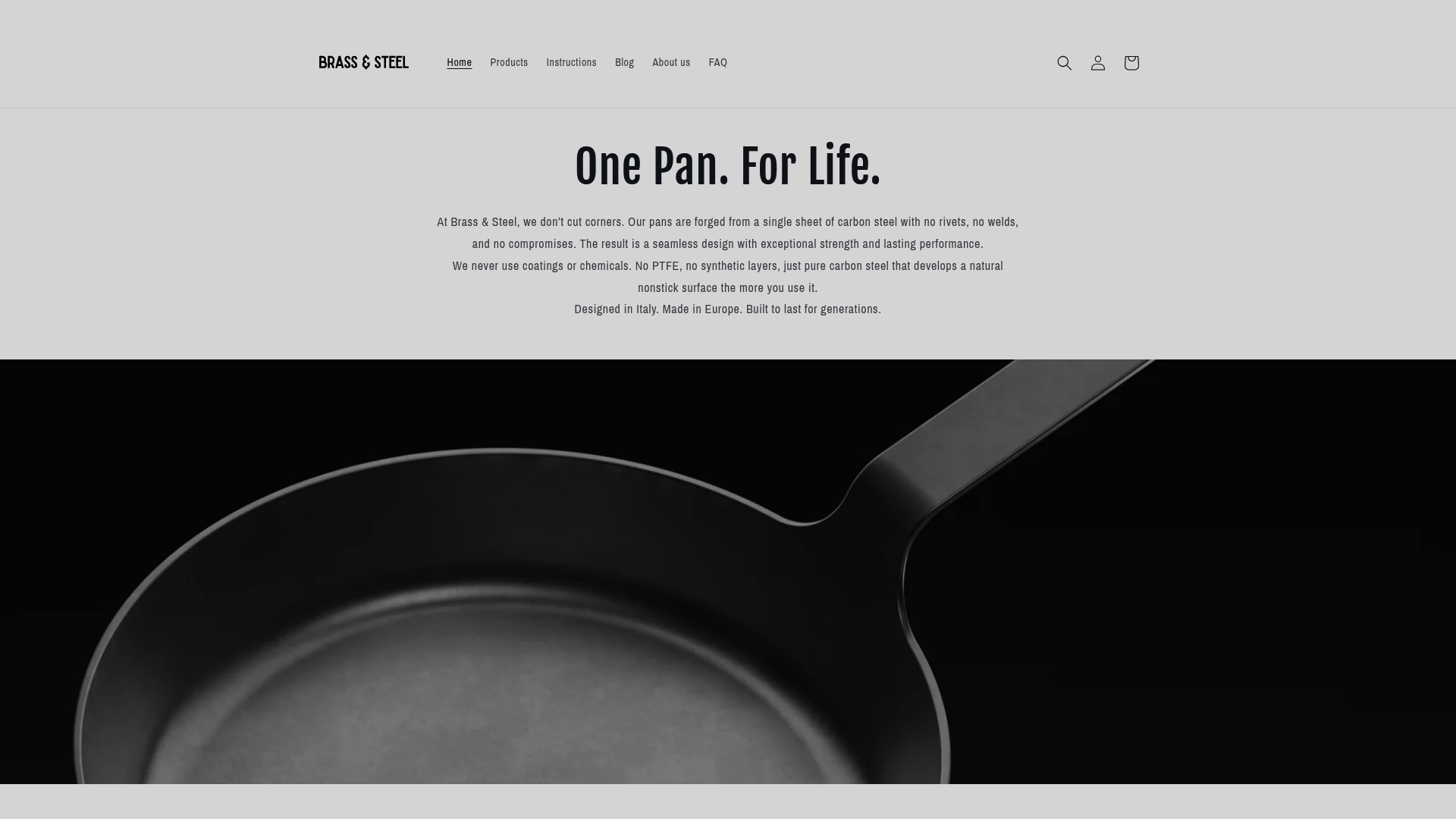
Transform your kitchen with the precision-crafted Carbon Steel Collection | Brass&Steel that delivers excellent heat retention and easy maintenance. Ready to upgrade your cookware? Explore our New Arrivals – Brass & Steel to find your perfect pan today. Experience the natural, toxin-free cookware revolution at Brass & Steel and start creating meals that celebrate flavour and healthy cooking now.
Frequently Asked Questions
How do I properly season my cast iron or carbon steel frying pan?
To properly season your frying pan, start by cleaning it thoroughly and ensuring it is completely dry. Then apply a thin layer of oil with a high smoke point, such as grapeseed or avocado oil, and bake it upside down in a preheated oven. Season your pan after each use to maintain its nonstick surface and prevent rust.
What oils are best for seasoning and everyday cooking with cast iron or carbon steel?
The best oils for seasoning and cooking are those with high smoke points, such as grapeseed oil, avocado oil, and sunflower oil. These oils create a durable nonstick surface when heated, enhancing your cooking experience. Avoid oils like extra virgin olive oil or butter that can burn quickly and compromise your pan’s seasoning.
How can I prevent rust on my cast iron or carbon steel frying pan?
To prevent rust, always ensure your frying pan is completely dry after cleaning and apply a light layer of oil following each use. Store your pan in a dry place and consider placing a paper towel inside to absorb moisture. Regularly maintaining this protective oil layer will keep rust at bay.
What techniques should I use for high heat cooking with carbon steel?
For high heat cooking, preheat your carbon steel pan thoroughly and ensure your ingredients are patted dry to promote proper searing. Use oils with high smoke points and avoid overcrowding the pan to maintain temperature consistency. Cook in batches if necessary to achieve maximum flavour development.
Can I use my cast iron or carbon steel pan on induction cooktops?
Yes, cast iron and carbon steel pans are compatible with induction cooktops due to their magnetic properties. Ensure the bottom of the pan is completely flat for optimal heat transfer and performance. Avoid sudden temperature changes to protect the integrity of your cookware.
What cleaning methods should I use to care for my frying pan safely?
After each use, clean your frying pan immediately while it is still warm, using minimal water and soft tools to avoid damaging the seasoning. Only use gentle sponges and avoid harsh metal scrubbers. Remember to dry your pan completely and apply a thin layer of oil after cleaning to maintain its seasoned surface.