How to choose the perfect sauté pan for your kitchen
TL;DR:
- A straight-sided sauté pan contains liquids better and provides an even cooking surface.
- Carbon steel offers quick, responsive heating and improves with use, ideal for European kitchens.
- Proper maintenance, including drying and oiling, prolongs pan life and enhances performance over time.
A poor-quality sauté pan is one of the most common sources of kitchen frustration. Food sticks unevenly, heat spreads poorly, and you end up fighting the pan rather than focusing on the meal. For European home cooks, the challenge goes further: not every pan suits induction hobs, and not every material rewards the long-term investment. Choosing well changes everything. The right carbon steel sauté pan delivers responsive heat, a naturally developing non-stick surface, and the versatility to handle everything from a weeknight stir-fry to a slow-braised Sunday sauce. This guide walks you through exactly what to look for, why material matters, and how to keep your pan in peak condition for years.
Table of Contents
- Understanding sauté pans: Form, function, and essentials
- Why carbon steel? Material matters for European kitchens
- Key factors to consider before buying
- Maintenance and care: Ensuring your pan lasts
- Our take: What truly makes a sauté pan worth it
- Find your ideal carbon steel sauté pan
- Frequently asked questions
Key Takeaways
| Point | Details |
|---|---|
| Know your pan’s purpose | A sauté pan’s straight sides are excellent for both browning and simmering sauces. |
| Choose carbon steel for versatility | Its heat response and European availability make carbon steel ideal for home cooks seeking lasting performance. |
| Check size and compatibility | Always match pan diameter to your burner and cooking needs to avoid uneven cooking. |
| Care ensures longevity | Regular maintenance and seasoning protect your pan from rust and support non-stick function. |
Understanding sauté pans: Form, function, and essentials
A sauté pan is not simply a frying pan with taller sides. The distinction matters, and once you understand it, you will stop reaching for the wrong tool. A traditional fry pan features sloped sides that make tossing and flipping easy. A sauté pan, by contrast, has straight vertical sides, typically between 5 cm and 8 cm tall, which serve a completely different purpose. Those straight sides help you to master everyday cooking by keeping liquids, sauces, and braising juices contained within the pan rather than splashing across your hob.
The straight-sided design also creates a larger usable cooking surface area relative to pan diameter, which means more food fits flat on the base. That matters enormously for achieving an even sear. When you crowd a sloped frying pan, food sits at different angles and steams rather than browns. A sauté pan eliminates that problem.
Here is a quick comparison to help you see how a sauté pan stacks up against other common choices:
| Pan type | Sides | Best for | Drawbacks |
|---|---|---|---|
| Sauté pan | Straight, tall | Sauces, searing, braising | Less suited to tossing |
| Fry pan | Sloped | Tossing, omelettes | Poor at retaining liquids |
| Casserole | Very tall, heavy | Stews, soups | Slow to heat |
| Wok | Deeply sloped | Stir-frying | Poor contact on flat hobs |
Note that
Key anatomy to assess before you buy:
- Base thickness: A thicker base distributes heat more evenly and reduces hot spots
- Handle length and angle: Longer handles stay cooler on the stovetop; riveted handles can collect grease
- Side height: Between 5 cm and 8 cm is the practical sweet spot for most tasks
- Lid compatibility: A well-fitted lid transforms a sauté pan into a braising vessel
Pro Tip: Match your pan size to your typical portion size. A 27 cm pan is practical for one to three people; a 30 cm pan suits four or more. Oversizing your pan means wasted heat and poor browning on smaller portions.
Why carbon steel? Material matters for European kitchens
Once you understand what a sauté pan does structurally, the next question is material. There are many options available: stainless steel, aluminium, cast iron, enamelled iron, and carbon steel. Each has genuine merits, but for a sauté pan used across a wide range of European cooking tasks, carbon steel is a standout choice.
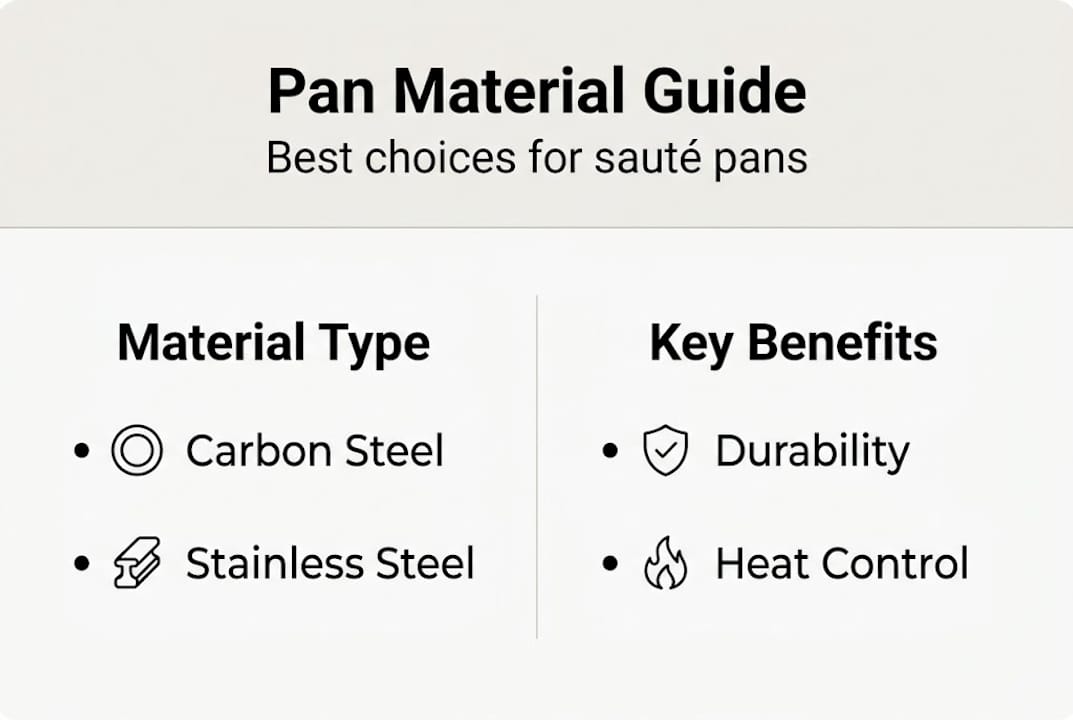
Carbon steel sits at an interesting middle ground in terms of thermal diffusivity. Thermal diffusivity describes how quickly heat moves through a material. Carbon steel diffusivity measures approximately 10 units, which outperforms stainless steel at around 6 units, though it falls below aluminium at approximately 62 units. What does that mean in practice? Carbon steel heats faster and more evenly than stainless steel, yet unlike aluminium it retains heat effectively once hot, making it excellent for achieving the sear you need on proteins.
A data comparison helps clarify the choice:
| Material | Thermal diffusivity | Weight | Develops non-stick surface | Induction-compatible |
|---|---|---|---|---|
| Carbon steel | ~10 units | Medium | Yes (via seasoning) | Yes |
| Stainless steel | ~6 units | Medium/heavy | No | Yes |
| Aluminium | ~62 units | Light | No | No (unless clad) |
| Cast iron | ~4 units | Heavy | Partially | Yes |
You can see why understanding how carbon steel pans are made gives you a real appreciation for the material’s performance profile.
For European kitchens specifically, several factors raise carbon steel’s appeal. First, it is compatible with induction hobs, which are increasingly standard across France, Germany, and Northern Europe. Second, it transitions seamlessly from hob to oven, a common requirement in European cooking traditions. Third, the naturally developing patina (the built-up layer of polymerised oil that forms through use and seasoning) means you get a PTFE-free, PFOA-free cooking surface that improves over time rather than degrading.
In terms of brands widely available across Europe, reputable European brands include:
- Matfer Bourgeat (French, professional heritage)
- de Buyer (French, wide product range)
- Blanc Creative (French, design-focused)
- Brass & Steel (Polish manufacturing, Italian design influence)
Understanding carbon steel pan essentials before purchasing any of these brands will help you make a genuinely informed comparison rather than simply following marketing claims.
Key factors to consider before buying
With the material case made, the next step is applying a structured buying framework. Here are the most important factors to evaluate before committing:
-
Size relative to your household: A 27 cm sauté pan handles everyday meals for small households. A 30 cm pan is better suited to family cooking and professional-style output. Consider the advantages of a 30 cm pan if you regularly cook for four or more people or want room for larger cuts of meat.
-
Thickness of the base: Thicker bases retain heat better and reduce warping over time. A 3 mm base is solid for everyday use; a 4 mm base offers more stability and is preferable for high-heat cooking tasks like searing.
-
Weight and manageability: A heavier pan is not always better. For daily use, a pan that you can comfortably lift and manoeuvre with one hand matters. Carbon steel is generally lighter than cast iron, which makes it more practical for extended cooking sessions.
-
Handle design: Look for a long, well-angled handle that keeps your hand away from the heat source. Single-piece construction without rivets means no grease traps and a cleaner, more hygienic cooking surface.
-
Hob compatibility: Always confirm induction compatibility before purchasing. European kitchens frequently use induction hobs, and not all carbon steel pans explicitly state this. Look for ferromagnetic steel confirmation in the product specifications.
-
Lid compatibility: Sauté pans without compatible lids lose a significant portion of their versatility. A lid allows you to braise, steam, and finish proteins in the oven without transferring to a separate pot.
“Match your burner size to your pan for home hobs.” Mismatched burner-to-pan ratios create uneven heat across the base and result in edge hotspots where food burns and the centre remains underdone. This is one of the most overlooked causes of inconsistent cooking results.
Once you have selected your pan, the next priority is learning perfect sauté techniques so you can maximise what the pan offers from day one.
Pro Tip: Before buying, place the pan base on your largest hob ring and check the fit visually. The pan should be the same size as or slightly larger than the burner. If the burner extends beyond the pan base, heat escapes around the edges and you lose efficiency.
Maintenance and care: Ensuring your pan lasts
Choosing the right pan is only half the equation. Long-term performance depends almost entirely on how well you look after it. Carbon steel is not a set-and-forget material. It rewards consistent, simple maintenance with a surface that genuinely improves with use.
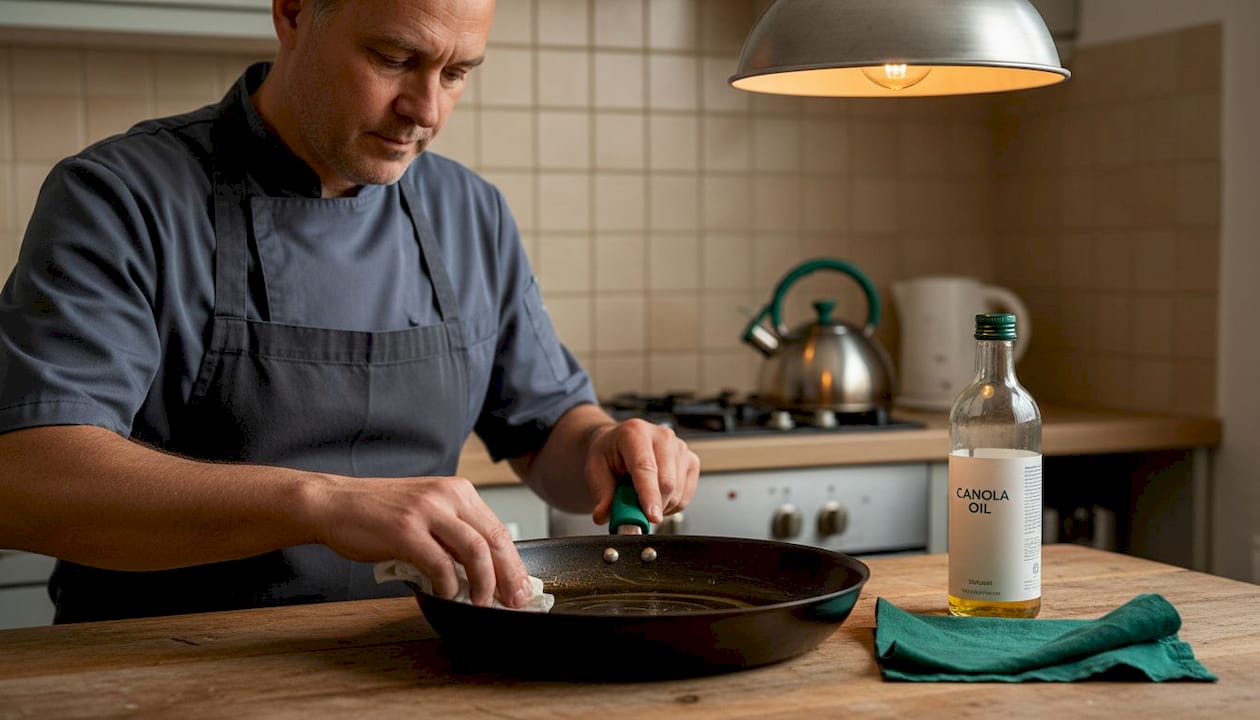
The first and most important habit is drying immediately after washing. Carbon steel will develop surface rust within hours of being left wet. Wash with warm water and a soft brush or cloth, then dry the pan immediately on a low hob ring for a minute to drive off any remaining moisture.
Good ongoing care habits include:
- Never soaking the pan in water, even briefly. Prolonged water contact is the enemy of a well-seasoned surface
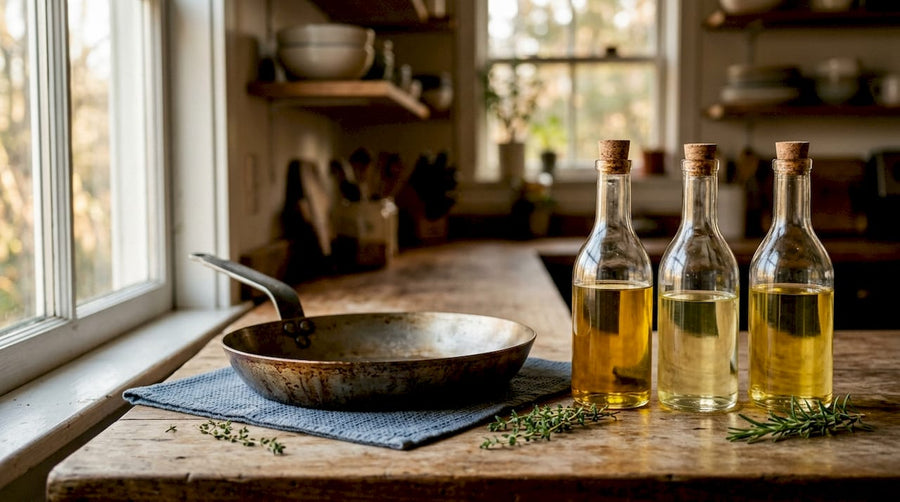
- Applying a thin coat of oil after each use. Grapeseed, sunflower, or avocado oil all work well; apply a small amount and wipe until the surface looks almost dry
- Cooking fatty foods regularly to strengthen the seasoning layer. Bacon, sausages, and oily fish all contribute positively to patina development
- Avoiding acidic foods until the seasoning is well established. Tomatoes, citrus, and wine can strip a young patina if used too early
- Re-seasoning promptly if you notice dull patches or a sticky texture. A single oven-seasoning session restores the surface
For the initial seasoning process, work in layers. Apply an extremely thin coat of high-smoke-point oil, wipe off any visible excess, and bake the pan upside down at 250°C for 30 minutes. Repeat this two to three times to build a solid base. Many home cooks apply too much oil in this step, which leads to a tacky, uneven surface rather than a slick patina.
As French carbon steel brands consistently demonstrate, the quality of the steel matters as much as the care routine. A high-quality carbon steel pan responds better to seasoning and maintains its surface integrity across years of heavy use.
For a complete routine, the carbon steel care guide covers daily and seasonal maintenance in full detail. And if surface rust does appear, following a structured approach to avoiding pan rust will restore your pan without damaging the base steel.
Pro Tip: After cooking, leave the pan on a low heat for 60 seconds to evaporate surface moisture before wiping it down. That small step eliminates the primary cause of rust spots and extends the life of your seasoning noticeably.
Our take: What truly makes a sauté pan worth it
The most underestimated factor in sauté pan selection is not material, brand, or even price. It is the relationship between pan size and your specific burner. A great pan on the wrong hob performs like a mediocre one. Before spending more on a premium product, understand your hob’s heat output and burner diameter. Then select your pan accordingly. You can follow our recommended sauté pan cooking workflow to make the most of whatever setup you have.
We also see a lot of home cooks obsessing over achieving maximum non-stick performance right away. That is the wrong priority. A carbon steel pan’s surface evolves. The first weeks involve some sticking, some adjusting, and some learning. That is not failure. That is the pan developing. Embrace the signs of wear. Darker patches and an uneven early patina are exactly what you want to see.
Finally, weight does not equal quality. A heavier pan is not automatically better. A 4 mm carbon steel pan at 3 kg offers exceptional performance, but a well-forged 3 mm pan used correctly will outlast a thick, poorly finished pan every time. Focus on construction quality and material purity, not raw mass.
Find your ideal carbon steel sauté pan
For those ready to invest in a pan that genuinely earns its place in the kitchen, the range at Brass & Steel offers two carefully designed options: the 27 cm sauté pan at €99.00, forged from 3 mm carbon steel and ideal for everyday cooking, and the 30 cm sauté pan at €119.00, with a 4 mm base suited to family meals and high-heat searing. Both are single-piece constructions with no rivets, no synthetic coatings, and full induction compatibility.
Browse the full selection and access detailed guides on seasoning, care, and technique to make the most of your investment from the very first use. Everything you need to choose confidently and cook well is right there.
Frequently asked questions
Do carbon steel sauté pans work on induction hobs?
Yes, most carbon steel sauté pans from reputable brands are induction-compatible. Always check product details to confirm induction compatibility before purchasing, as not all models explicitly state this.
How do I prevent my carbon steel sauté pan from rusting?
Dry it thoroughly after every wash and apply a very thin coat of oil before storing. Consistent care ensures longevity and keeps the pan’s seasoning intact between uses.
What size sauté pan is best for most home cooks?
A 28 to 30 cm pan offers the best balance for family meals and fits most European burners. Always match burner size to pan to avoid edge hotspots and uneven cooking.
Are carbon steel pans heavy to handle?
Carbon steel pans are typically lighter than cast iron but heavier than aluminium, offering a practical blend of manageability and durability that suits daily home cooking well.