Complete Guide to What Makes a Good Sauté Pan
Choosing the right pan can be the difference between a perfect sear and a soggy sauté. With over 60 percent of professional chefs relying on specialty pans like the sauté pan for everyday cooking, understanding what sets this kitchen workhorse apart is crucial for anyone who wants consistent, delicious results. Unlocking the role, material options, and unique features of a sauté pan helps cooks at any level make smarter choices and elevate every meal.
Table of Contents
- Defining The Sauté Pan And Its Role
- Key Materials: Carbon Steel Vs Alternatives
- Essential Design Features For Performance
- Sizing, Weight, And Handling Considerations
- Comparing Sauté Pans And Common Alternatives
- Best Practices For Use And Maintenance
Key Takeaways
| Point | Details |
|---|---|
| Sauté Pan Design | Sauté pans feature high, straight sides and a flat bottom, providing optimal heat distribution for diverse cooking techniques. |
| Material Importance | Carbon steel is preferred for its lightweight, heat-responsive properties, and ability to develop a natural non-stick surface. |
| Size Matters | Choose sauté pans that accommodate your usual cooking quantities, with dimensions ranging from 6 to 16 inches for various needs. |
| Maintenance Practices | Proper care, including regular seasoning and specific cleaning protocols, is crucial for extending the life and performance of sauté pans. |
Defining the Sauté Pan and Its Role
A sauté pan is a versatile cooking vessel designed specifically for a culinary technique that combines rapid heating, precise temperature control, and efficient food movement. Unlike standard frying pans, sauté pans feature straight, high sides that enable complex cooking methods beyond simple frying. These unique characteristics make them essential for professional and home kitchens alike.
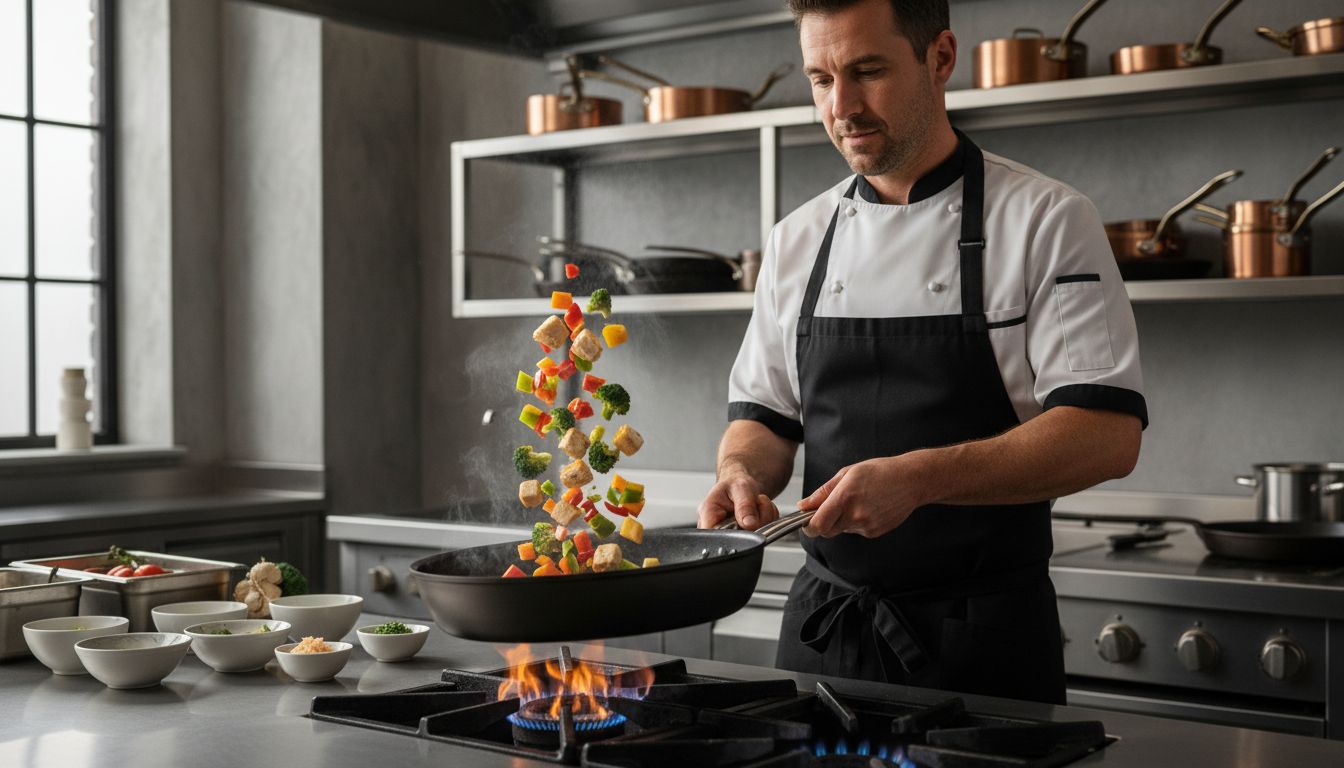
Originally derived from the French verb “sauter” meaning “to jump,” sauté pans are engineered to help chefs quickly cook ingredients while maintaining their texture and flavor. The pan’s design allows for intense, even heat distribution and enables cooks to toss or move ingredients with minimal effort. Understanding the difference between sauté and fry pans can dramatically improve your cooking precision and technique.
Key characteristics of an exceptional sauté pan include:
- Substantial, flat bottom for maximum heat contact
- High, straight sides preventing ingredient spillage
- Robust heat conductivity for rapid temperature changes
- Comfortable handle design for safe ingredient manipulation
- Compatible with multiple heat sources (stovetop, oven)
Professional chefs rely on sauté pans for numerous cooking techniques, from quickly searing meats to creating complex pan sauces. The pan’s construction determines its performance, with materials like carbon steel offering superior heat responsiveness and durability. 7 Types of Sauté Pans Every Cook Should Know provides deeper insights into selecting the right pan for specific culinary needs.
Key Materials: Carbon Steel vs Alternatives
Choosing the right material for a sauté pan is critical for achieving exceptional cooking results. Carbon steel has emerged as a top choice among professional chefs due to its unique performance characteristics. Understanding carbon steel cookware reveals why this material has become increasingly popular in modern kitchens.
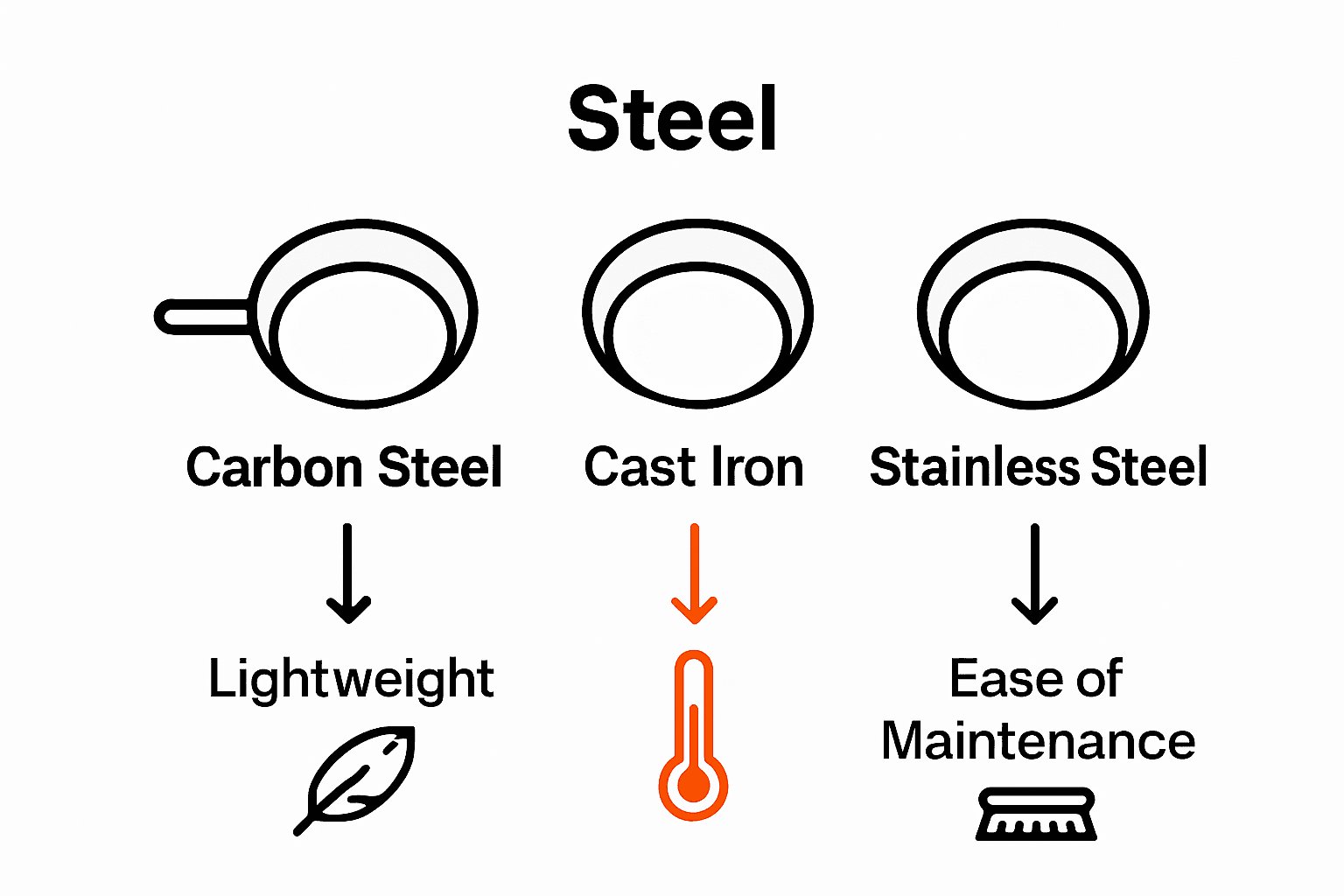
According to Bon Appétit, carbon steel pans offer remarkable advantages: they are lightweight, provide consistent and even heating, and develop a natural non-stick surface through seasoning. This makes them particularly suitable for high-heat cooking techniques that require rapid temperature management. In contrast, alternative materials present distinct pros and cons:
Material Comparison:
-
Carbon Steel
- Lightweight design
- Rapid heat responsiveness
- Develops natural non-stick patina
- Excellent for high-heat cooking
-
Cast Iron
- Superior heat retention
- Heavy and more challenging to manoeuvre
- Requires significant maintenance
- Slower to heat up
-
Stainless Steel
- Extremely durable
- Rust-resistant
- Less responsive to temperature changes
- Typically more expensive
Cast iron and carbon steel share some similarities, but carbon steel stands out for professional cooking due to its superior weight and heat responsiveness.
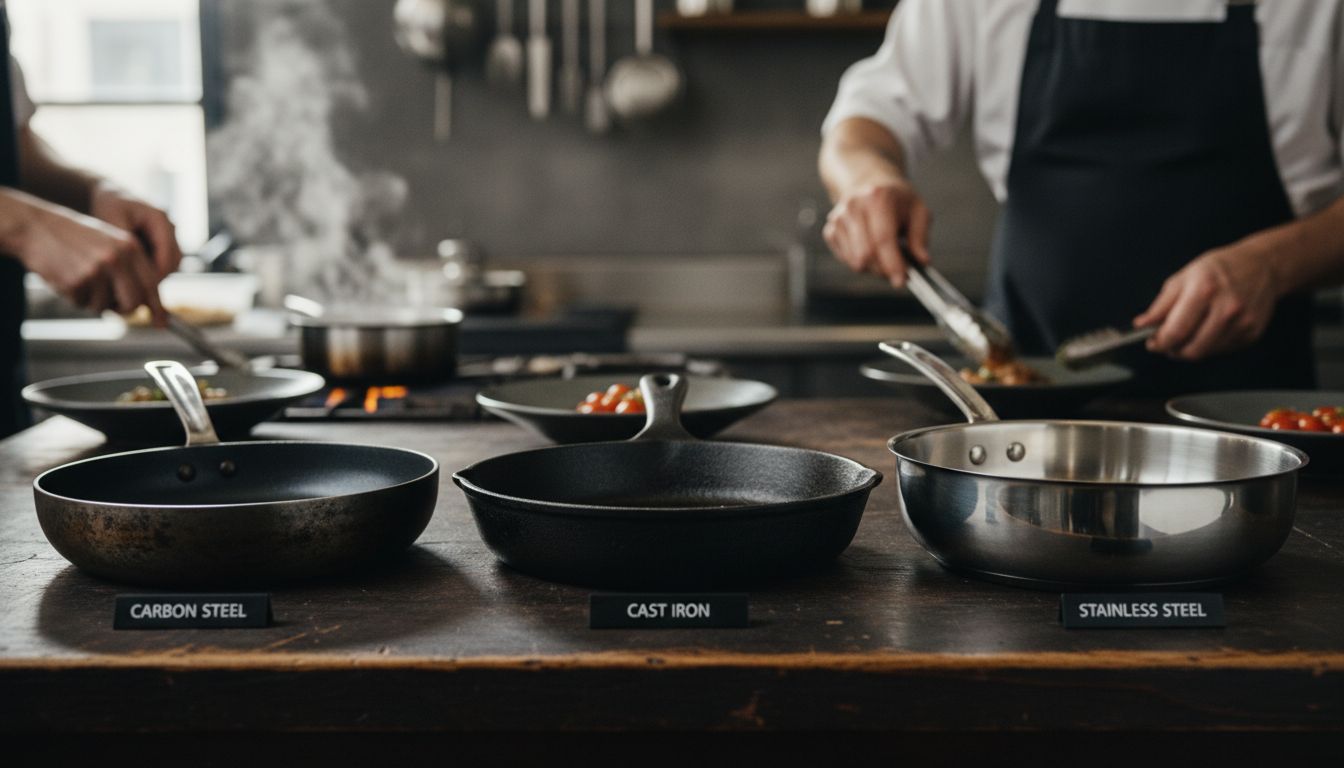 As Wikipedia notes, traditional pan materials like copper and cast iron each have unique thermal properties, but carbon steel represents a modern solution that balances performance, durability, and versatility for contemporary cooking needs.
Essential Design Features for Performance
Designing an exceptional sauté pan involves careful consideration of multiple performance-critical features. Geometry plays a crucial role in determining how effectively a pan conducts heat, manages ingredients, and supports various cooking techniques. 7 Types of Sauté Pans Every Cook Should Know highlights the importance of understanding these nuanced design elements.
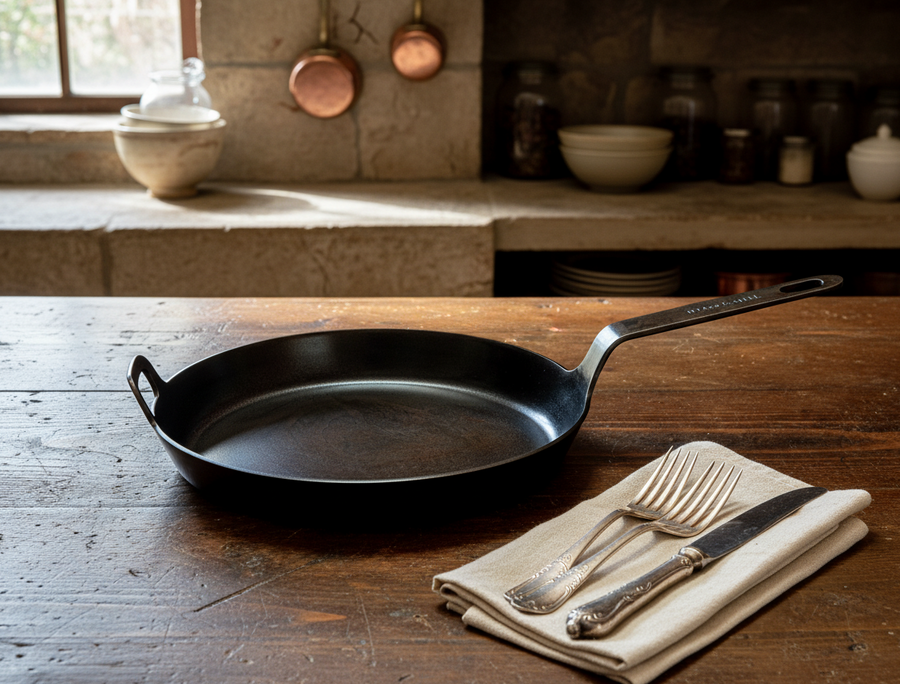
According to Wikipedia, a superior sauté pan must meet specific structural requirements. The pan should feature a wide, flat base to maximize heating surface and low sides that facilitate rapid steam escape and ingredient browning. These straight vertical sides serve a critical function: containing ingredients while minimizing splashing and promoting even cooking.
Key design features that distinguish high-performance sauté pans include:
-
Base Geometry
- Broad, flat surface for maximum heat contact
- Even heat distribution across entire cooking area
- Minimal hot spots or temperature variations
-
Side Profile
- Low, straight sides for ingredient visibility
- Easy ingredient manipulation
- Efficient moisture management
-
Handle Design
- Ergonomic shape for comfortable grip
- Heat-resistant material
- Balanced weight distribution
- Oven-safe construction
Professional chefs understand that a pan’s design is not just about aesthetics but about functional performance. The intricate balance between base width, side height, and handle construction determines how effectively a cook can execute complex cooking techniques like sautéing, searing, and reducing sauces. Understanding Professional Chefs’ Carbon Steel Choices reveals that material selection and design precision are paramount in creating a truly exceptional cooking instrument.
Sizing, Weight, and Handling Considerations
Selecting the perfect sauté pan involves understanding the critical relationship between size, weight, and practical handling. Pan dimensions are not merely aesthetic choices but fundamental performance factors that directly impact cooking effectiveness. 7 Types of Sauté Pans Every Cook Should Know provides essential insights into navigating these nuanced selections.
According to Wikipedia, sauté pans typically range from 6 to 16 inches in diameter and 2.5 to 5 inches in depth. These dimensions are critically important because they determine the pan’s capacity and cooking performance. Professional chefs recommend choosing a pan size based on the quantity of food you typically prepare, ensuring ingredients can be spread in a single layer for optimal sautéing.
Pan Size Selection Guide:
-
Small (6-8 inches)
- Ideal for individual portions
- Perfect for quick, small-batch cooking
- Lightweight and easy to manoeuvre
-
Medium (10-12 inches)
- Versatile for most home cooking needs
- Accommodates 2-3 servings
- Balanced weight distribution
-
Large (14-16 inches)
- Suitable for family meals
- Professional kitchen standard
- May include helper handle for easier lifting
Handling considerations extend beyond mere size. The pan’s weight significantly influences cooking technique and comfort. Lighter pans offer greater control and easier ingredient manipulation, while heavier pans provide superior heat retention. Understanding Professional Chefs’ Carbon Steel Choices emphasizes that the ideal pan balances weight, heat conductivity, and ergonomic design to support seamless cooking performance.
Comparing Sauté Pans and Common Alternatives
Understanding the nuanced differences between cookware types is crucial for selecting the right cooking instrument. 7 Different Types of Frying Pans Every Chef Should Know provides comprehensive insights into the diverse world of professional cooking surfaces.
Sauté pans distinguish themselves from other cookware through specific design and performance characteristics. While frying pans, skillets, and other cooking vessels might seem similar, each has unique attributes that make them suitable for different culinary techniques. Carbon Steel vs Stainless Steel Pans illuminates the critical differences in material performance.
Cookware Comparison:
-
Sauté Pan
- Straight, tall sides
- Ideal for sauce preparation
- Even heat distribution
- Versatile cooking methods
-
Skillet
- Sloped sides
- Better for quick tossing
- Less liquid retention
- Typically lighter weight
-
Frying Pan
- Shallow profile
- Maximum surface area
- Quick high-heat cooking
- Less sauce management capability
The primary distinction lies in each pan’s specific design philosophy. Sauté pans excel at controlled cooking techniques that require precise heat management and ingredient containment. Their unique geometry allows for superior sauce reduction, ingredient browning, and multi-stage cooking processes that other pan types struggle to achieve.
The 30 cm professional sauté pan review demonstrates how professional-grade design can transform cooking performance.
Best Practices for Use and Maintenance
Mastering a sauté pan requires understanding both its cooking techniques and essential maintenance protocols. Understanding Professional Chefs’ Carbon Steel Choices offers insights into professional-grade care and usage strategies.
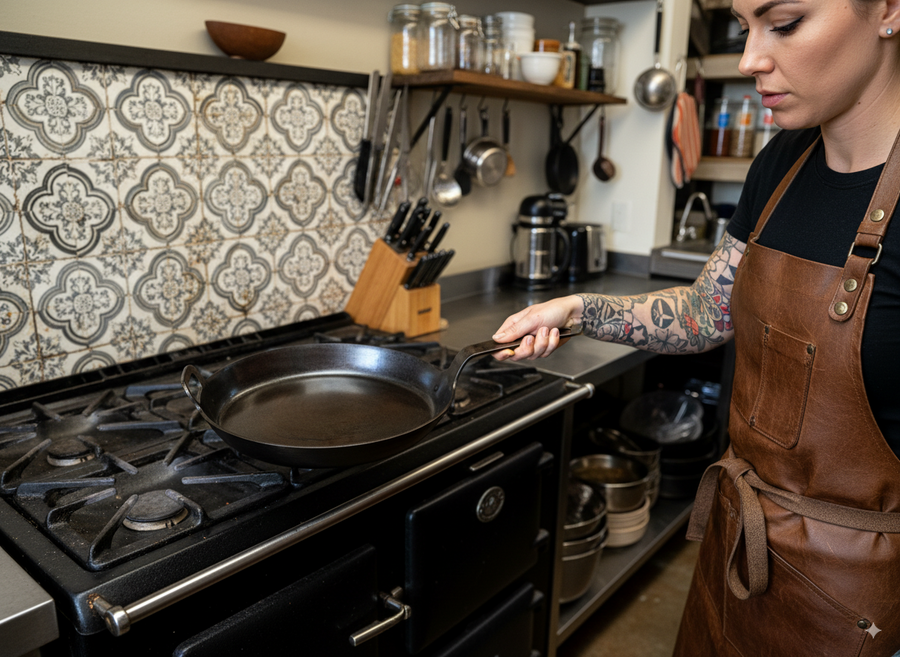
According to Bon Appétit, carbon steel pans demand specific maintenance to preserve their performance. The critical process involves developing and maintaining a natural non-stick seasoning through careful cleaning, drying, and periodic re-seasoning. The goal is to create a protective patina that enhances cooking performance while preventing rust.
Sautéing Best Practices:
-
Preparation
- Use medium to high heat
- Preheat pan before adding oil
- Select high smoke point oils
- Avoid overcrowding ingredients
-
Cooking Techniques
- Keep ingredients moving
- Maintain consistent heat
- Use minimal oil
- Allow proper browning time
-
Post-Cooking Care
- Clean with hot water
- Use soft sponge
- Avoid harsh detergents
- Dry immediately
- Light oil application
Sauté Pan Maintenance Guide emphasizes that proper care transforms a good pan into an exceptional, long-lasting cooking companion. Professional chefs treat their pans as precision instruments, understanding that consistent, mindful maintenance is key to culinary success.
Elevate Your Sautéing with Professional Carbon Steel Cookware
If you have discovered how crucial pan design, material, and maintenance are to mastering the art of sautéing, the next step is choosing cookware that truly supports your culinary ambitions. The challenge most cooks face is finding a pan that combines durability, superior heat responsiveness, and a natural nonstick surface without compromises. This guide highlights key qualities like straight high sides, even heat distribution, and comfort in handling — all features perfectly embodied by Brass & Steel’s Carbon Steel Collection.
Benefit from cookware that is forged in a single piece from premium carbon steel to guarantee seamless strength and easy cleaning. Whether you favour the nimble 27 cm option for everyday meals or the 30 cm pan designed for larger portions and professional kitchens, our pans deliver unmatched performance on any stove including induction. Discover why chefs trust carbon steel as the best choice for sauté pans and start cooking with confidence today by exploring our full range at Brass & Steel. Your perfect pan awaits.
Frequently Asked Questions
What is a sauté pan and what makes it different from a frying pan?
A sauté pan is a versatile cooking vessel designed for sautéing, featuring straight high sides that prevent spillage. Unlike frying pans, which have sloped sides, sauté pans enable more complex cooking techniques such as sauce preparation.
What are the best materials for a sauté pan?
Carbon steel is highly favored for sauté pans due to its lightweight design, quick heat responsiveness, and the ability to develop a natural non-stick surface. Alternatives like cast iron provide superior heat retention, while stainless steel is durable but less responsive to temperature changes.
How do I choose the right size sauté pan for my cooking needs?
Sauté pans typically range from 6 to 16 inches in diameter. For individual portions or small batches, a smaller pan is ideal (6-8 inches). A medium pan (10-12 inches) works for 2-3 servings, while a large pan (14-16 inches) is suitable for family meals or larger quantities, often featuring a helper handle for ease of lifting.
What are the best practices for maintaining a sauté pan?
To maintain a sauté pan, especially if it’s carbon steel, clean it with hot water and a soft sponge, avoid harsh detergents, and dry it immediately. Periodic seasoning with oil helps maintain its non-stick surface and prevents rusting.