Heat retention in carbon steel pans: 2026 guide
TL;DR:
- Carbon steel cookware balances fast heating and quick response, making it ideal for searing and stir-frying. Its high thermal conductivity and adjustable gauge enable efficient heat transfer and control, outperforming stainless steel and approaching cast iron in heat retention. Proper preheating and technique maximize its responsiveness, offering precise temperature management for various cooking styles.
Heat retention in carbon steel is defined as the material’s ability to absorb, store, and redistribute thermal energy during cooking, giving you both speed and stability in a single pan. Unlike cast iron, which holds heat like a storage heater, or stainless steel, which loses it almost immediately, carbon steel sits in a genuinely useful middle ground. It heats fast, responds to adjustments quickly, and holds enough thermal energy to sear properly. Sources including Skillet Guide and ada.cooking confirm that this balance is what makes carbon steel the preferred choice in professional kitchens across Europe and beyond.
How does carbon steel’s thermal conductivity affect heat retention?
Carbon steel’s thermal performance is governed by three measurable properties: thermal conductivity, specific heat capacity, and thermal diffusivity. Understanding these tells you exactly why your pan behaves the way it does.
Thermal conductivity in carbon steel sits at roughly 43–51 W/m·K. That figure is significantly higher than stainless steel, which manages around 16 W/m·K for its steel layer. Higher conductivity means heat moves through the pan quickly and evenly, which is why carbon steel responds so fast to burner changes.
Specific heat capacity for carbon steel is approximately 460 J/kg·K, nearly identical to cast iron’s 450–500 J/kg·K. This means both materials store a similar amount of heat per kilogram of mass. The difference in cooking behaviour comes down to thickness and total weight, not the material itself.
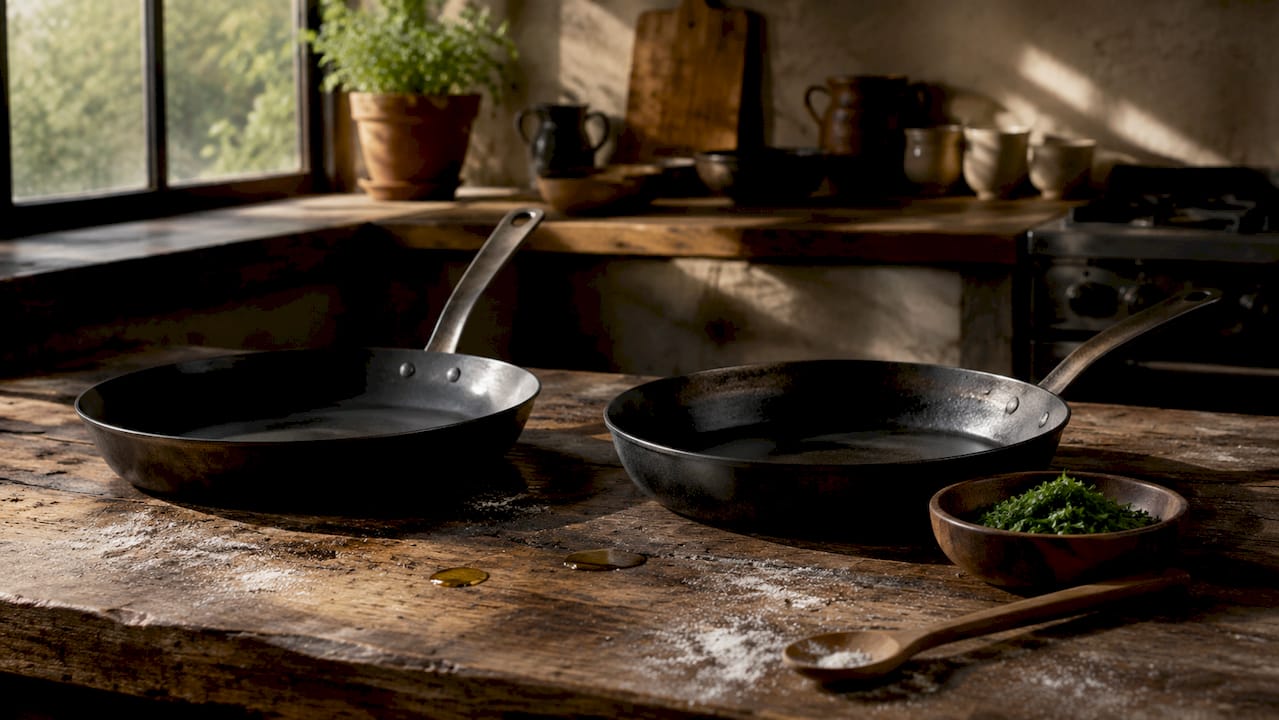
This is where gauge becomes critical. A thin 2mm carbon steel pan has less total thermal mass than a 4mm pan, so it heats faster but also loses temperature more sharply when cold food lands in it. The carbon steel heat capacity is the same per kilogram, but a heavier pan simply contains more kilograms of material to draw from.
| Property | Carbon Steel | Cast Iron | Stainless Steel |
|---|---|---|---|
| Thermal conductivity (W/m·K) | 43–51 | 36–58 | ~16 |
| Specific heat capacity (J/kg·K) | ~460 | 450–500 | ~500 |
| Typical pan weight (2kg example) | 2kg | 4–6kg | 1.5–2kg |
| Heat-up speed | Fast | Slow | Moderate |
| Temperature responsiveness | High | Low | Moderate |
Pro Tip: If you want cast iron levels of heat storage with faster warm-up times, choose a 4mm carbon steel pan rather than a 2mm one. The extra gauge adds thermal inertia without the punishing weight of cast iron.
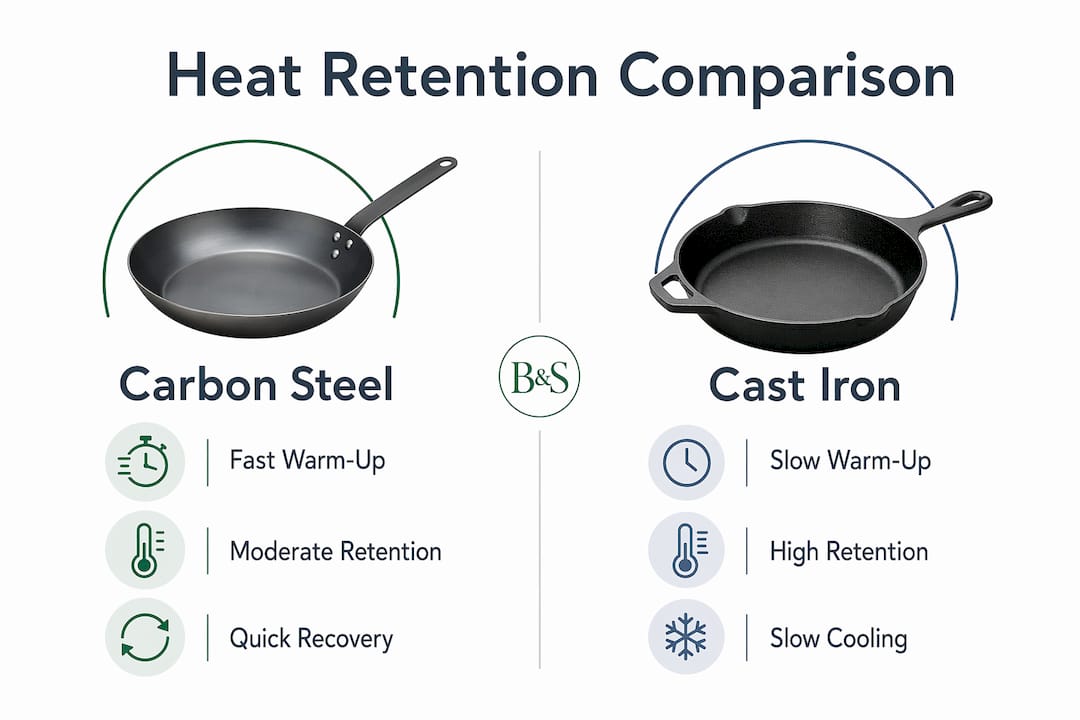
Carbon steel vs cast iron vs stainless steel: which retains heat best?
The honest answer is that cast iron retains heat longest, but carbon steel is more useful for most cooking tasks. Here is why the distinction matters in practice.
Carbon steel reaches searing temperatures above 230°C in 3–5 minutes, while cast iron takes 8–10 minutes to reach the same point. That time difference is significant when you are cooking a midweek dinner or running a busy service. Carbon steel gets you to temperature faster and lets you start cooking sooner.
Once you remove carbon steel from the heat, it cools in 30–45 seconds, compared to 120–180 seconds for cast iron. That rapid cool-down is actually an advantage. It means you can pull the pan off the burner and stop the cooking process almost immediately, giving you precise control over doneness.
Here is a quick breakdown of how the three materials compare for heat retention in cookware:
Carbon steel
- Heats up fast, responds quickly to adjustments
- Good heat retention for searing and stir-frying
- Lighter than cast iron, easier to handle
- Requires preheating and seasoning
Cast iron
- Excellent long-term heat storage
- Slow to heat, slow to cool
- Heavy, less responsive
- Best for slow cooking, braising, and oven work
Stainless steel
- Poor heat retention on its own
- Often bonded with aluminium core to improve performance
- Easy to clean, no seasoning required
- Less suited to high-heat searing without a clad construction
For stir-frying, searing steaks, and cooking fish, carbon steel wins. For a Sunday braise or a slow-cooked casserole, cast iron is the better tool. You can read a detailed breakdown in this carbon steel vs cast iron guide from Brass-steel.
Pro Tip: When moving from cast iron to carbon steel, lower your burner setting slightly. Carbon steel transfers heat more efficiently, so you need less energy to reach the same cooking temperature.
What cooking techniques get the most from carbon steel’s heat properties?
Knowing the science is useful. Knowing how to cook with it is better. Here are the steps to get the most from your pan’s thermal performance.
-
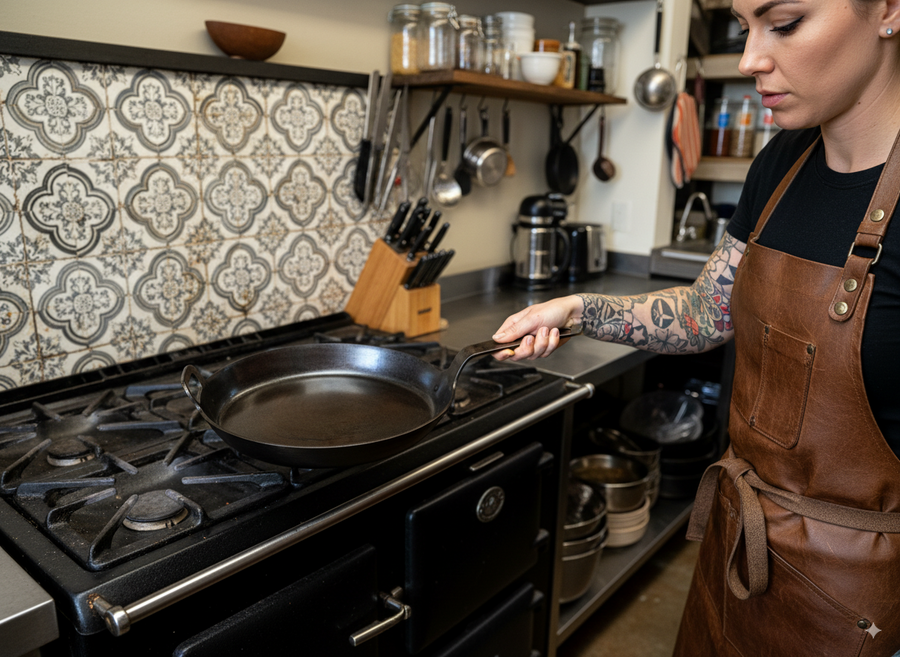
Preheat for 3–5 minutes. Carbon steel requires consistent preheating to stabilise heat across the surface. Skipping this step creates hot spots directly above the burner and cooler zones at the edges. A properly preheated pan gives you even contact heat across the whole cooking surface.
-
Test the surface before adding food. Hold your hand 5cm above the pan. If you feel strong radiant heat within two seconds, the pan is ready. Alternatively, add a drop of water. It should bead and evaporate almost instantly.
-
Add food confidently, do not crowd the pan. When cold protein hits the surface, the pan temperature drops. A 2mm carbon steel pan sees roughly a 60°C temperature drop when 200g of cold protein is added, with a recovery time of around 14 seconds. That recovery speed is what prevents steaming and triggers the Maillard reaction properly.
-
Adjust heat mid-cook by moving the pan, not just the dial. Carbon steel’s thermal inertia means the pan holds residual heat even off the burner. Slide it to a cool zone or lift it off the heat entirely to slow cooking without turning the burner down. This is a technique used in professional kitchens to manage delicate proteins.
-
Use the oven to finish. Carbon steel handles oven temperatures well. Start a thick steak on the hob to build a crust, then transfer to a 200°C oven to finish cooking through. The pan’s retained heat continues cooking the base while the oven works the top.
Seasoning also plays a role in thermal performance. A well-built patina from oils like grapeseed or avocado creates a low-friction surface that improves heat transfer between pan and food. It also protects the steel from oxidation, which can degrade the surface over time.
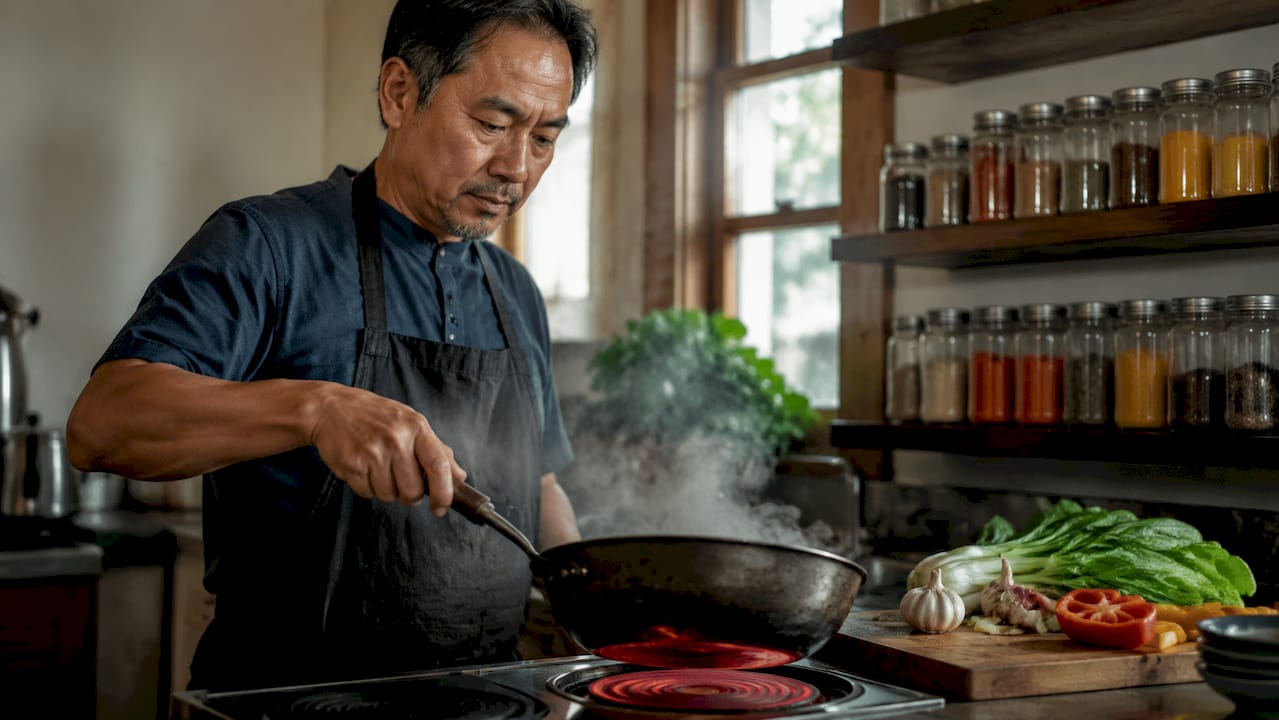
Pro Tip: For wok hei at home, preheat your carbon steel pan until it just begins to smoke, then cook in small batches. Rapid thermal recovery after adding food keeps the temperature above 100°C, which prevents steaming and creates that characteristic charred, smoky flavour.
Common misconceptions about heat retention in carbon steel pans
A lot of frustration with carbon steel comes from expecting it to behave like a different material. Here are the most common misunderstandings and how to correct them.
“Carbon steel holds heat as well as cast iron.” It does not, and it is not supposed to. Carbon steel’s advantage is responsiveness, not raw storage. A cast iron pan holds more total thermal energy because it is heavier. Carbon steel recovers faster after temperature drops, which suits high-heat cooking better.
“My pan is ready as soon as it feels warm.” This is the most common mistake. Carbon steel conducts heat so quickly that the area directly above the burner gets hot long before the rest of the pan does. You need the full 3–5 minute preheat for even heat distribution across the surface.
“Thicker pans are always better.” Thicker pans do offer greater thermal inertia, which is useful for bulk cooking. But a 4mm pan is noticeably heavier and slower to respond than a 2mm pan. The right gauge depends on what you cook most often.
Here are the most common troubleshooting issues and their fixes:
- Hot spots in the centre: Burner is too small for the pan. Use a larger burner or preheat longer on a lower setting to allow heat to spread.
- Food sticking after preheating: Pan was not hot enough before adding oil, or oil was added too early. Add oil to a hot pan, not a cold one.
- Uneven browning: Pan was not preheated long enough. Give it the full 3–5 minutes before cooking.
- Pan cooling too fast: You are using a thin gauge pan for a task that needs more thermal mass. Consider a 4mm option for larger cuts of meat.
Pro Tip: Seasoning is not just about nonstick performance. A thick, even patina also acts as a mild insulating layer that smooths out minor temperature fluctuations across the cooking surface. Cook fatty foods like bacon or duck breast regularly to build it up.
Key takeaways
Carbon steel’s heat retention works best when you understand its balance of fast heat-up, strong thermal recovery, and gauge-dependent storage capacity.
| Point | Details |
|---|---|
| Thermal conductivity is high | Carbon steel conducts heat at 43–51 W/m·K, far above stainless steel’s 16 W/m·K. |
| Gauge determines heat storage | Thicker pans (3–4mm) hold more thermal energy and behave closer to cast iron. |
| Preheat is non-negotiable | Allow 3–5 minutes to stabilise heat and avoid hot spots before adding food. |
| Recovery speed enables searing | A 14-second temperature recovery after adding cold protein prevents steaming and builds crust. |
| Responsiveness beats cast iron | Carbon steel cools in 30–45 seconds versus 120–180 seconds for cast iron, giving precise control. |
Why i think carbon steel gets misunderstood more than any other pan
Most cooks who give up on carbon steel do so in the first two weeks. They skip the preheat, add food too early, and end up with something stuck to the surface. Then they blame the pan. I have been there myself.
What changed my cooking was treating the pan as an active tool rather than a passive surface. Carbon steel tells you when it is ready. It changes colour slightly as it heats. The oil shimmers and moves. Once you learn to read those signals, you stop guessing and start cooking with real confidence.
The thermal responsiveness is what I value most. With cast iron, you commit to a temperature and wait. With carbon steel, you can pull the pan off the heat mid-cook and know it will stop within seconds. That level of control is what separates a good sear from an overcooked one.
My recommendation for anyone serious about cooking: start with a 3mm pan for everyday use, then add a 4mm pan if you regularly cook for four or more people. The 4mm gives you the thermal mass for larger cuts without the full weight penalty of cast iron. Brass-steel’s 30 cm sauté pan at 4mm is exactly the kind of pan I would reach for in that situation.
Heat management is a skill. Carbon steel teaches it faster than any other material.
— Davide
Discover carbon steel cookware from Brass-steel
If this guide has convinced you that carbon steel belongs in your kitchen, Brass-steel makes it straightforward to find the right pan.
Brass-steel forges its pans from a single piece of carbon steel, with no rivets or welds, in 3mm and 4mm gauges. The 27 cm sauté pan at €99 suits everyday searing and sautéing. The 30 cm pan at €119 handles larger meals and professional-level cooking. Both are free from PTFE and PFOA, work on induction hobs, and build a natural nonstick patina over time. If you want to understand how pan thickness affects cooking before you buy, Brass-steel’s guides cover exactly that. Visit brass-steel.com to explore the full range.
FAQ
What is heat retention in carbon steel cookware?
Heat retention in carbon steel refers to the pan’s ability to store thermal energy and maintain cooking temperature after food is added. Carbon steel stores heat at roughly 460 J/kg·K, similar to cast iron, but its lighter weight means it responds faster to temperature changes.
How does carbon steel compare to cast iron for retaining heat?
Cast iron retains heat longer due to its greater mass, cooling in 120–180 seconds after heat removal. Carbon steel cools in 30–45 seconds, which gives you faster temperature control but less sustained heat storage for slow cooking tasks.
Why does my carbon steel pan have hot spots?
Hot spots occur when the pan has not been preheated long enough. Carbon steel conducts heat rapidly from the burner contact point, so the centre heats before the edges. A full 3–5 minute preheat on a medium setting allows heat to spread evenly across the surface.
Does pan thickness affect heat retention in carbon steel?
Yes, significantly. Thicker pans at 3–4mm hold more total thermal energy and recover faster after cold food is added. Thinner pans at 2mm heat up quicker but lose temperature more sharply, making gauge one of the most important factors when choosing a carbon steel pan.
How quickly does carbon steel recover temperature after adding cold food?
A 2mm carbon steel pan recovers from a 60°C temperature drop in approximately 14 seconds after adding 200g of cold protein. That rapid recovery keeps the surface above 100°C, which prevents steaming and allows proper browning and crust formation.