Carbon steel thickness guide for cooks: 2026 edition

TL;DR:
- Choosing a carbon steel pan with a thickness of 2.5 to 3.5 mm offers the best balance of responsiveness and heat retention for most cooking needs. Thicker pans above 3.5 mm are ideal for searing and slow-cooked dishes, while thinner pans respond quickly but are more prone to warping. Always verify gauge measurements in millimetres, as they vary between systems, to ensure optimal durability and performance.
Carbon steel thickness is the single most important specification to check before buying a pan, because it determines how your pan heats, holds temperature, and resists warping over years of use. The industry measures this in millimetres, though manufacturers sometimes list it in gauge numbers, which creates genuine confusion at the point of purchase. For cookware, the practical range runs from around 1.5 mm at the thin end to 4 mm or more for professional-grade pans. Getting this decision right means the difference between a pan that sears a steak beautifully and one that scorches the edges while leaving the centre pale.
How does carbon steel thickness affect heat behaviour and cooking?
Thickness governs two competing qualities in any pan: responsiveness and thermal mass. A thinner pan heats up in seconds and reacts immediately when you turn the flame down. That sounds ideal, but it also means the temperature spikes and drops sharply, which makes it harder to hold a steady sear or cook delicate proteins evenly.

Medium-thick carbon steel in the 2.5 to 3.5 mm range balances both qualities. You get fast enough heat-up for weeknight cooking and enough thermal mass to maintain temperature when a cold piece of chicken hits the surface. That recovery speed is where carbon steel genuinely outperforms other materials.
Carbon steel recovers heat faster than stainless steel after a cold ingredient is added. A carbon steel pan drops roughly 19°F and recovers in 13 seconds, while a comparable stainless pan drops around 31°F and takes 58 seconds to recover. Faster recovery means deeper browning and crispier crusts, which is exactly what you want when searing fish or building a fond for a pan sauce.
Thicker pans above 3.5 mm behave more like cast iron. They take longer to heat through, but once at temperature they hold it steadily, which rewards longer searing phases and slow-cooked dishes. The trade-off is weight and slower adjustment when you need to reduce heat quickly.
Key heat behaviour differences by thickness:
- Thin (under 2 mm): Heats fast, cools fast, prone to hot spots and warping under high heat
- Medium (2.5 to 3.5 mm): Balanced responsiveness and retention, suits most cooking techniques
- Thick (4 mm and above): Steady, sustained heat, best for searing and professional use, heavier to handle
Pro Tip: Preheat a medium-thick carbon steel pan gradually over low to medium heat for two to three minutes before raising the temperature. This prevents uneven expansion and reduces warping risk significantly.
Understanding carbon steel gauge charts and thickness measurements
The gauge system is where most buyers get confused, and the confusion is understandable. Different gauge systems exist for different metals. Brown and Sharpe gauge applies to aluminium and non-ferrous metals, while carbon steel uses the Manufacturers’ Standard Gauge (MSG). If you apply the wrong chart to a specification, you will calculate the wrong thickness entirely.
Within the MSG system, lower gauge numbers mean thicker metal. A 16 MSG sheet measures approximately 1.52 mm, while a 20 MSG sheet measures approximately 0.91 mm. Most cookware sits between 10 MSG (approximately 3.4 mm) and 16 MSG (approximately 1.52 mm). Always confirm which gauge system a manufacturer is using before comparing specifications across brands.
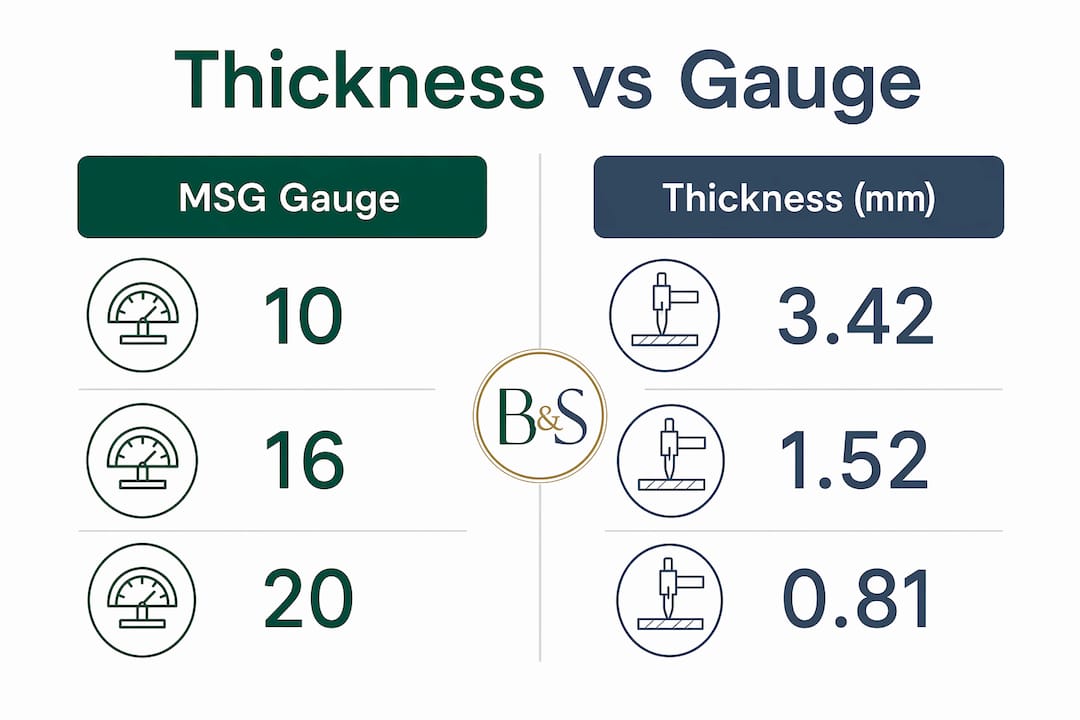
Here is a practical carbon steel thickness chart covering the cookware range:
| MSG gauge | Thickness (mm) | Typical cookware use |
|---|---|---|
| 10 | ~3.42 mm | Heavy professional pans, sustained searing |
| 12 | ~2.78 mm | Mid-weight professional and home pans |
| 14 | ~1.90 mm | Lighter home pans, quick-response cooking |
| 16 | ~1.52 mm | Thin pans, crêpe pans, quick-heat applications |
| 18 | ~1.21 mm | Very thin, specialist use only |
For cookware purposes, 16 MSG at 1.52 mm is generally considered the minimum for a usable everyday pan. Anything thinner risks warping on a domestic hob, particularly on induction. The Brass-steel 27 cm sauté pan is built at 3 mm and the 30 cm version at 4 mm, both sitting firmly in the professional-performance range of this chart.
Pro Tip: When reading a product specification, always look for the thickness in millimetres rather than gauge. If only gauge is listed, ask the manufacturer which system they are using before purchasing.
What thickness of carbon steel suits different cooking techniques?
Pan thickness influences your entire cooking workflow, not just heat-up time. Choosing the right thickness means thinking about what you cook most often and how you cook it.
Here is a practical guide to matching thickness to technique and stovetop:
-
Everyday home cooking on gas (sautéing, eggs, vegetables): A 2.5 to 3 mm pan gives you fast response and enough stability to handle varied heat levels. Gas distributes heat across the base more evenly than induction, so thinner pans perform well here without warping risk.
-
Searing meat at high heat: Go for 3 mm or above. You need the thermal mass to maintain temperature when a cold steak lands in the pan. A thin pan will drop temperature sharply and steam the meat rather than sear it.
-
Induction hobs: Use medium or thicker carbon steel on induction. Induction concentrates heat at the centre of the base, which creates uneven expansion in thin pans and accelerates warping. A 3 mm or 4 mm pan distributes that concentrated heat more evenly across the cooking surface.
-
Crêpes and thin omelettes: A thinner pan in the 1.5 to 2 mm range heats the entire surface quickly and responds instantly to small heat adjustments. This is one of the few cases where a lighter, thinner pan outperforms a heavier one.
-
Professional kitchens and family-sized meals: A 4 mm pan handles the demands of high-volume cooking. The extra weight is manageable for experienced cooks, and the heat retention means you can cook batch after batch without waiting for the pan to recover.
Warping occurs when parts of a thin pan heat unevenly and expand at different rates. The fix is not always buying a thicker pan. Controlled preheating on a lower flame before raising the heat solves most warping issues even with medium-weight pans. Avoid placing a cold pan directly onto a screaming-hot induction ring.
Professional chefs favour the 2.5 to 3.5 mm range because it offers durability without the cumbersome weight of cast iron. You can toss vegetables, flip fish, and move the pan from hob to oven without fatigue.
How does carbon steel thickness compare with cast iron and stainless steel?
Carbon steel and cast iron are often grouped together, but their thickness profiles and cooking behaviour differ in ways that matter at the stove. Cast iron cookware typically runs from 4 mm to 6 mm or more, giving it exceptional heat retention but very slow responsiveness. Carbon steel at 3 to 4 mm achieves comparable retention with significantly faster heat-up and recovery, which makes it more versatile across different cooking tasks. You can read a detailed breakdown of these differences in this carbon steel vs iron comparison from Brass-steel.
Stainless steel cookware is often sold with a multi-ply construction, sandwiching aluminium or copper cores between steel layers. This engineering compensates for stainless steel’s poor heat conductivity. Carbon steel does not need that workaround because its thermal properties are naturally superior for cookware applications. The heat recovery advantage of carbon steel over stainless is measurable and practical, not just theoretical.
Key differences across materials at comparable thicknesses:
- Carbon steel vs cast iron: Carbon steel heats faster, weighs less, and responds more quickly to heat changes. Cast iron holds heat longer but is slower to adjust.
- Carbon steel vs stainless steel: Carbon steel recovers temperature faster after adding cold ingredients, producing better browning. Stainless steel requires multi-ply construction to match carbon steel’s heat distribution.
- Warping risk: Carbon steel at medium thickness warps less than thin stainless steel but more than cast iron, which is too rigid to warp under normal cooking conditions.
- Durability over time: A well-seasoned carbon steel pan at 3 mm or above will last decades. Thinner pans in any material are more vulnerable to physical damage and heat stress.
Key takeaways
The best carbon steel thickness for most cooks is 2.5 to 3.5 mm, balancing heat responsiveness, retention, and warp resistance across the widest range of cooking techniques and stovetops.
| Point | Details |
|---|---|
| Optimal thickness range | 2.5 to 3.5 mm suits most home and professional cooking needs. |
| Gauge system matters | Always confirm Manufacturers’ Standard Gauge (MSG) when reading carbon steel specifications. |
| Induction needs thicker pans | Use 3 mm or above on induction to prevent warping from concentrated heat. |
| Heat recovery advantage | Carbon steel recovers temperature faster than stainless steel, producing better sears and crusts. |
| Preheating prevents warping | Gradual preheating on lower heat reduces uneven expansion regardless of pan thickness. |
Why I always reach for the heavier pan
I spent a long time convinced that a lighter, thinner carbon steel pan was the smarter choice. It heats faster, it is easier to toss food, and it feels more agile on the hob. That logic holds up until you try to sear a thick piece of fish or cook for four people at once.
The moment a cold protein hits a thin pan, the temperature drops and you lose the crust you were building. A 3 mm or 4 mm pan absorbs that thermal shock and keeps working. The sear continues. The fond develops. The result on the plate is noticeably better.
What I have also found is that warping is rarely about thickness alone. I have seen thin pans survive years of daily use because the cook preheats them properly. I have seen medium-weight pans warp in a month because someone put them cold onto a high induction setting. The habit matters as much as the specification.
My honest recommendation is to start with a 3 mm pan if you cook on gas or a mixed hob, and go to 4 mm if induction is your primary cooktop or you regularly cook large portions. The extra weight becomes invisible once you are used to it, and the cooking results are consistently better. A pan you cook on every day for twenty years is not heavy. It is familiar.
— Davide
Find the right carbon steel pan at Brass-steel
Brass-steel builds its pans from a single forged sheet of carbon steel, with no rivets, no coatings, and no compromises on thickness. The 27 cm sauté pan at 3 mm is the right choice for everyday home cooking, searing, and oven use. The 30 cm version at 4 mm is built for larger meals, professional kitchens, and anyone who wants maximum heat retention. Both are free from PTFE and PFOA, work on all cooktops including induction, and build a natural nonstick patina over time. If you want a pan that performs better every year you use it, this is where to start.
FAQ
What is the best thickness for a carbon steel pan?
Medium-thick carbon steel at 2.5 to 3.5 mm is the best choice for most cooks, offering a balance of heat responsiveness, retention, and warp resistance. For induction hobs or high-volume searing, 4 mm provides extra stability.
What does gauge mean on a carbon steel pan?
Gauge refers to the thickness of the steel sheet, measured using the Manufacturers’ Standard Gauge (MSG) system for carbon steel. A lower gauge number means thicker metal, so 16 MSG equals approximately 1.52 mm while 10 MSG equals approximately 3.42 mm.
Does a thicker carbon steel pan warp less?
Thicker pans are more resistant to warping, but warping results from uneven heating as much as from thin metal. Preheating gradually on a lower flame before raising the temperature reduces warping risk in pans of any thickness.
Is carbon steel better than stainless steel for heat recovery?
Carbon steel recovers heat significantly faster than stainless steel. After adding a cold ingredient, a carbon steel pan recovers in around 13 seconds compared to 58 seconds for a stainless steel pan, which translates directly to better browning and crispier results.
How do I measure the thickness of a carbon steel pan?
Use a digital calliper to measure the base of the pan in millimetres. Avoid relying on gauge numbers alone unless you can confirm the manufacturer is using the Manufacturers’ Standard Gauge (MSG) system for carbon steel.