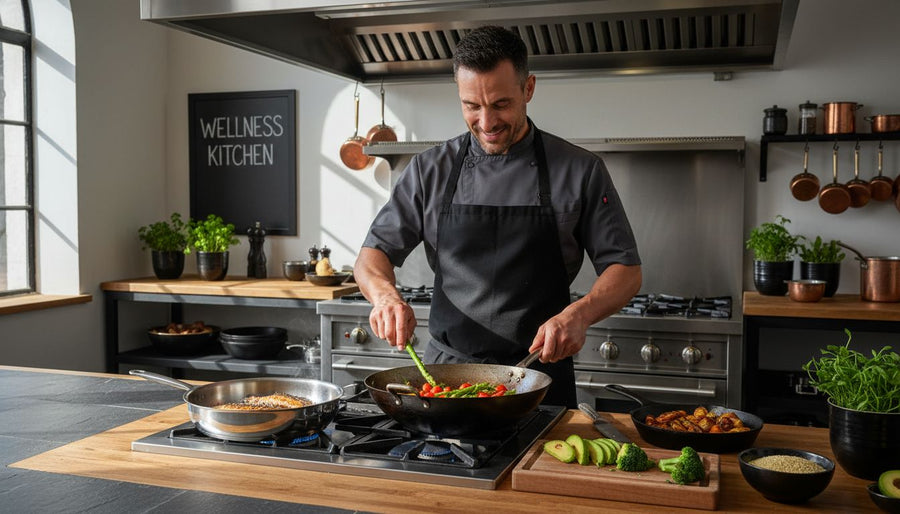
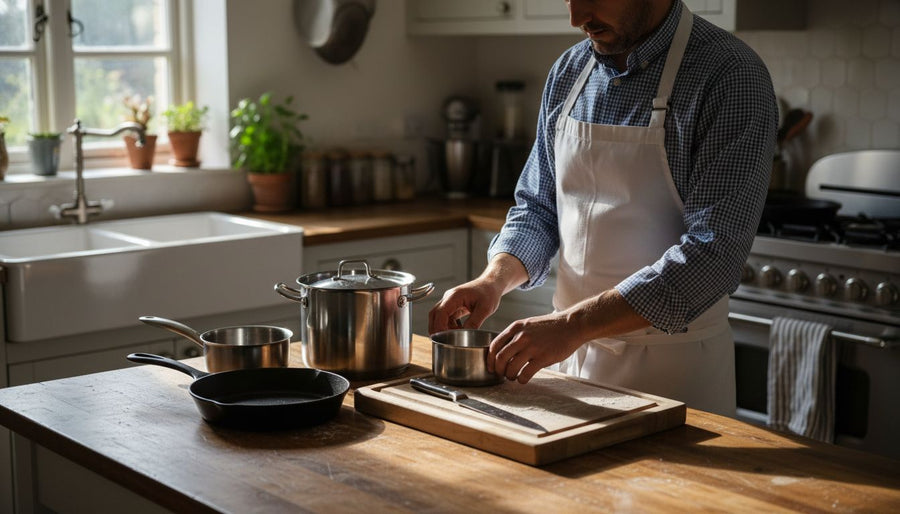
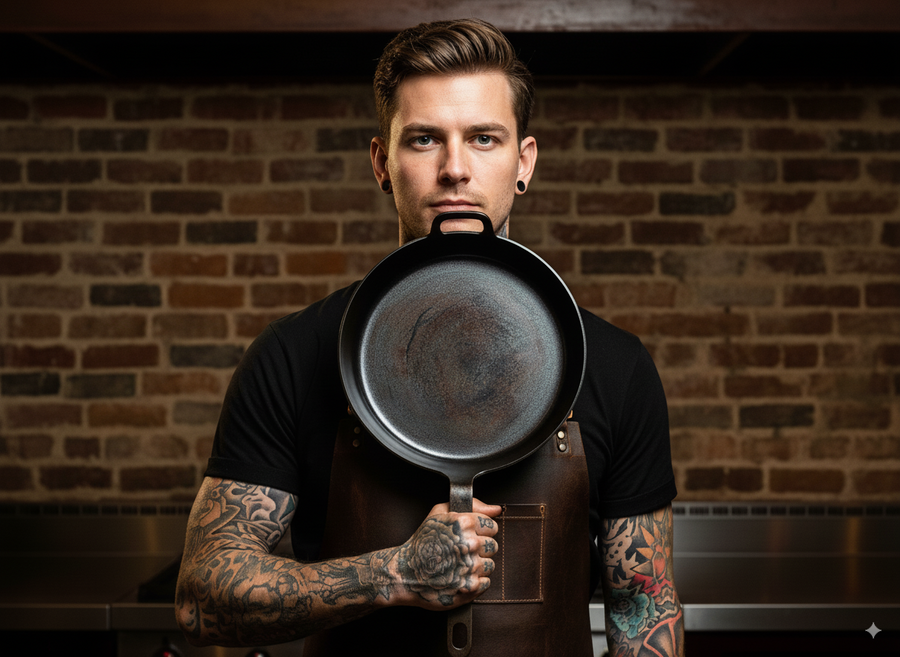
Cookware weight balance: your practical 2026 guide
TL;DR:
- Cookware weight balance focuses on how the mass is distributed within a pan to ensure safe, comfortable handling. Properly balanced pans reduce wrist strain, improve stability, and prevent spills during cooking tasks. Materials and construction methods, like forged carbon steel, influence the pan’s weight distribution and overall feel.
Cookware weight balance is the distribution of mass within a pan that ensures safe, comfortable handling and effective cooking performance. Most home cooks focus on a pan’s total weight, but weight distribution matters more than absolute heaviness for safe, confident handling. A well-balanced pan feels centred in your hand, reduces wrist strain, and prevents spills. This guide to cookware weight balance covers the principles behind ergonomic mass distribution, compares materials and constructions, and gives you practical steps to choose the right pan for your kitchen.
What is cookware weight balance and why does it matter?
Cookware weight balance describes how a pan’s mass is spread across its base, sidewalls, and handle. A pan that concentrates weight at the front will tip forward when you lift it. One that is too heavy at the handle will feel awkward to tilt when pouring. Ergonomic design centres the mass so the pan feels stable and natural in your grip.
The practical payoff is real. Proper balance reduces wrist strain and prevents spills during everyday tasks like sautéing, pouring sauces, or flipping vegetables. For home cooks who spend long stretches at the hob, a poorly balanced pan causes cumulative fatigue that a well-distributed one simply does not. Ergonomic weight distribution enhances stability during cooking movements and lowers the risk of kitchen accidents.
Carbon steel, the material used by Brass-steel, sits in a particularly useful middle ground. It is heavier than aluminium but lighter than cast iron, and its single-piece forged construction keeps the mass consistent from base to rim. That consistency is a key part of what makes a pan feel balanced rather than clunky.
How does cookware weight affect handling and performance?
The difference between absolute weight and balanced weight distribution is the difference between a pan that tires you out and one that feels like an extension of your arm. A heavy pan is not automatically a bad pan. The question is whether that weight is distributed so you can control it comfortably.
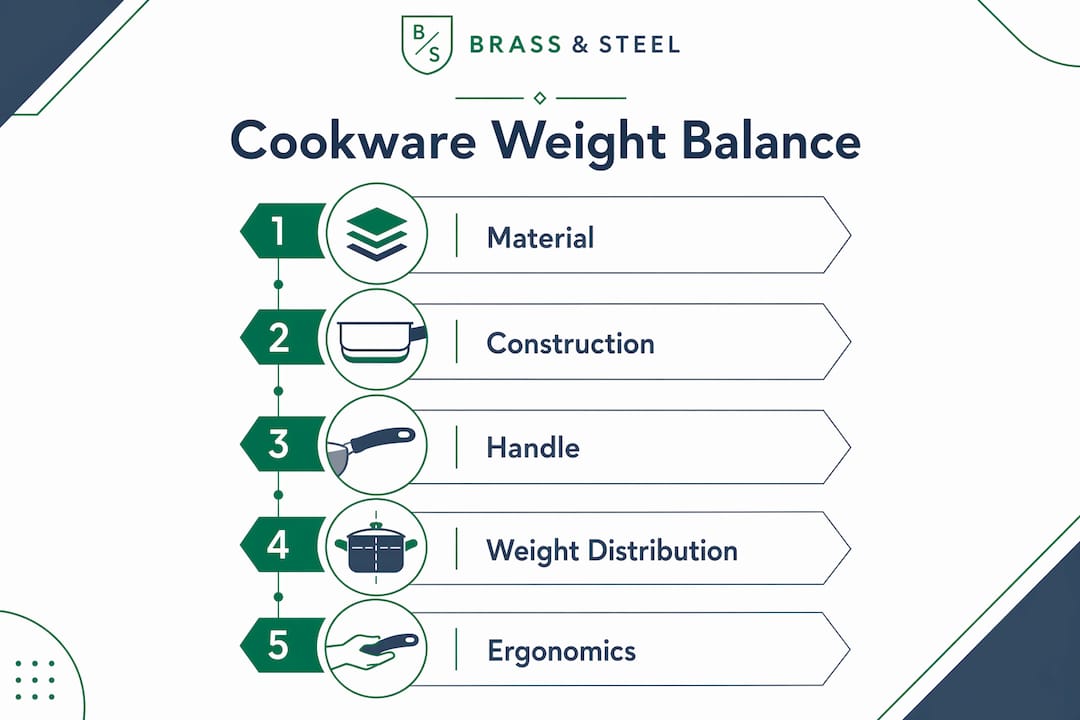
Heavier pans retain heat better but increase wrist and arm strain during handling. That trade-off matters depending on what you are cooking. A thick-based pan is ideal for searing a steak because it holds temperature when cold meat hits the surface. The same pan becomes a liability if you need to toss vegetables quickly or pour a sauce with one hand.
Lighter pans respond faster to temperature changes, which suits quick, agile cooking. Thinner, lighter cookware heats rapidly but requires careful use to avoid hotspots. The best approach for most home cooks is to match the pan’s weight profile to the task.
- Searing and slow cooking: choose a heavier pan with a thick base for heat retention.
- Stir-frying and sautéing: choose a lighter pan you can tilt and toss with ease.
- Everyday all-rounder: choose a mid-weight pan with a centred balance point, like the Brass-steel 27 cm carbon steel sauté pan at approximately 2 kg.
- Family-sized meals: a heavier pan like the Brass-steel 30 cm sauté pan at approximately 3 kg gives you capacity without sacrificing control, provided the handle design supports the extra mass.
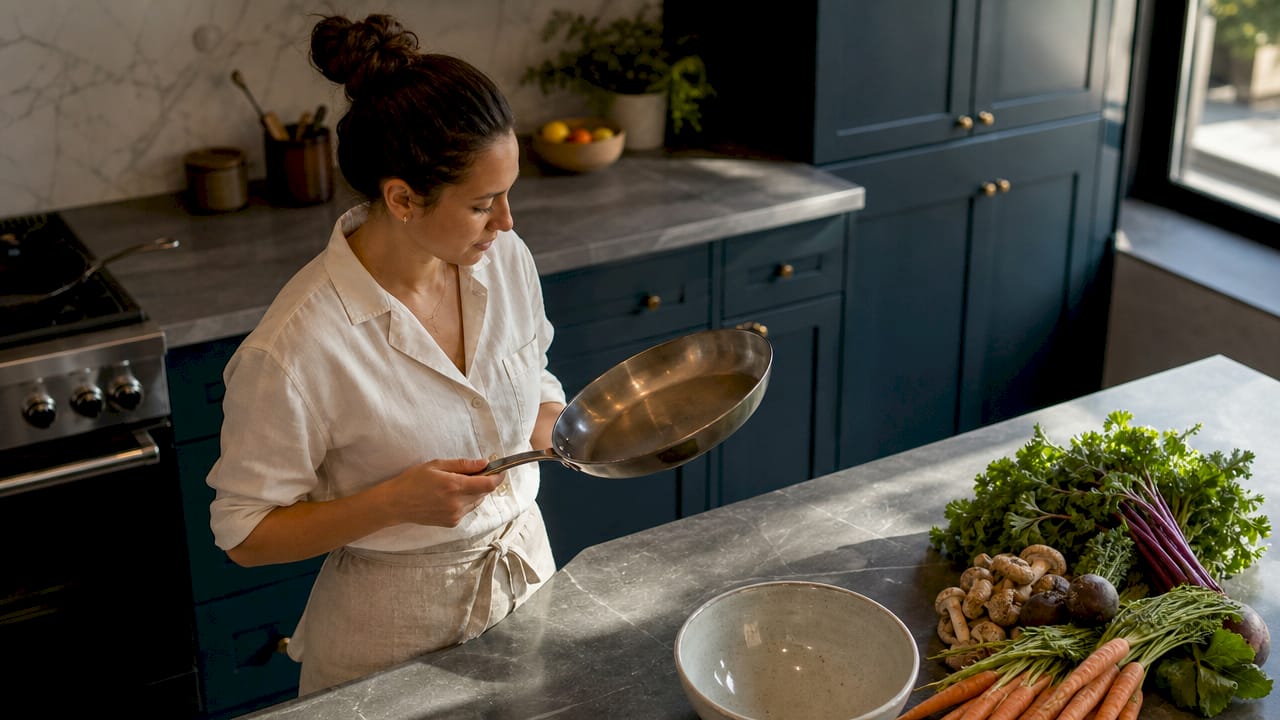
Pro Tip: Pick up a pan in the shop and hold it at arm’s length with one hand, as if you were tilting it to pour. If it pulls your wrist forward or sideways, the balance point is off. A well-balanced pan should feel centred, not front-heavy.
How do materials and construction affect weight balance?
The material a pan is made from sets its baseline weight. Construction methods then determine how that weight is distributed. Both factors shape how the pan feels in use.
| Material | Typical weight (28–30 cm pan) | Heat retention | Balance characteristic |
|---|---|---|---|
| Cast iron | 3.5–5 kg | Excellent | Heavy, base-forward, tiring for quick tasks |
| Carbon steel | 2–3 kg | Very good | Lighter than cast iron, responsive, well-centred when forged |
| Stainless steel (clad) | 1.5–2.5 kg | Good | Even distribution across layers, manageable |
| Aluminium | 0.8–1.5 kg | Moderate | Very light, fast to heat, prone to hotspots |
Cookware material influences both weight and cooking responsiveness significantly. Cast iron is dense and retains heat brilliantly, but its mass concentrates in the base and makes one-handed manoeuvring difficult for many home cooks. Aluminium is agile but can feel flimsy and heats unevenly without a quality core.
Multi-layer clad constructions balance heat retention and manageable weight by sandwiching an aluminium or copper core between steel layers. The result is a pan that conducts heat well without the full mass of cast iron. The trade-off is that layered construction adds complexity and can create slight inconsistencies in weight distribution if the layers are not bonded evenly.
Forged single-piece construction, the method Brass-steel uses, eliminates that inconsistency. Because the pan is pressed from one carbon steel sheet, the thickness is uniform from base to rim. There are no rivets or welds adding localised mass, so the weight distribution is consistent throughout. That uniformity is one reason forged carbon steel pans feel so well-balanced compared to assembled alternatives.
Pro Tip: If you have wrist or shoulder concerns, prioritise a forged carbon steel or clad stainless steel pan over cast iron. You get strong heat retention with a weight you can actually manage through a full cooking session.
What ergonomic design features improve cookware balance?
A pan’s shape and handle design determine whether its weight feels manageable or punishing. The best ergonomic features work together to keep the centre of mass close to your grip point.
Handle length is the most important variable. A longer handle gives you more leverage, which makes a heavier pan feel lighter when you lift it. The physics are straightforward: the further your hand is from the pan’s mass, the less effort you need to hold it level. Long handles and helper handles improve leverage and reduce wrist fatigue during lifting and pouring.
Handle angle matters too. A handle angled slightly upward keeps the pan’s base flat on the hob without you having to compensate with your wrist. A handle that sits perfectly horizontal can force your wrist into an awkward position, especially with a heavier pan.
Features to look for when assessing ergonomic balance:
- Centred mass: the pan should feel balanced at the midpoint between base and handle, not front-heavy.
- Long main handle: gives leverage and keeps your hand away from heat.
- Helper handle: a small secondary handle on the opposite side, useful for lifting heavy pans with two hands.
- Consistent sidewall thickness: avoids localised heavy spots that pull the pan to one side.
- Smooth, contoured grip: reduces hand fatigue during extended cooking sessions.
- Appropriate base diameter: a base that matches your hob ring size keeps heat and mass centred.
The Brass-steel sauté pans are forged without rivets, so there are no metal protrusions adding uneven weight near the handle joint. That clean construction keeps the balance point predictable every time you pick the pan up. For more on how design choices affect comfort, the ergonomic cookware design guide from Brass-steel covers the topic in detail.
How to choose cookware with the right weight balance for your kitchen
The best cookware weight depends on personal cooking habits and ergonomic needs rather than a universal standard. Use these steps to find the right fit.
-
Assess your cooking style first. If you cook quick weeknight meals, you need a lighter, agile pan. If you braise, sear, or slow-cook regularly, a heavier pan with strong heat retention suits you better. Lighter pans suit quick meals; heavier pans suit slow cooking that demands heat retention.
-
Test the balance point before you buy. Hold the pan by the handle with one hand and lift it to hob height. The base should stay roughly level without you gripping tightly. If it tips forward, the balance point is too far from the handle.
-
Consider your physical strength and any joint sensitivities. A 3 kg pan is manageable for most adults when cold, but add food and liquid and it can reach 5 kg or more. If you have wrist or shoulder concerns, a 2 kg pan is a more practical starting point.
-
Choose thick bases with manageable sidewalls. Thick, heavy bases with manageable sidewalls give you heat retention where it counts without adding unnecessary mass to the sides. This combination is the most practical for home cooking.
-
Build a small collection rather than relying on one pan. A lighter pan for quick tasks and a heavier one for searing gives you the right tool for each job. The Brass-steel 27 cm and 30 cm carbon steel sauté pans cover both ends of that range. You can read more about how pan weight shapes cooking outcomes in this pan weight cooking guide.
-
Check the handle material. Steel handles conduct heat in the oven but stay cool on the hob. Knowing this helps you handle the pan safely and choose the right grip for each cooking method.
Pro Tip: When shopping online, check the weight listed in the product specifications and compare it to the pan’s diameter. A 28 cm pan weighing under 1 kg is likely too thin for even heat distribution. One weighing over 4 kg will tire most home cooks quickly. Aim for the middle range and prioritise forged or clad construction for the most consistent balance.
For a broader look at how responsive cookware is designed to combine agility with stability, the Brass-steel guide on the topic is worth reading alongside this one.
Key takeaways
Cookware weight balance is about centred mass and ergonomic design, not just total weight, and getting it right makes every cooking session safer and more comfortable.
| Point | Details |
|---|---|
| Distribution beats total weight | A well-centred pan feels lighter and safer than a heavy pan with poor balance. |
| Match weight to cooking style | Use lighter pans for quick tasks and heavier ones for searing or slow cooking. |
| Forged construction improves balance | Single-piece forging creates consistent thickness and eliminates uneven mass from rivets. |
| Ergonomic handles reduce fatigue | Long handles with good leverage make heavier pans manageable during extended cooking. |
| Build a two-pan collection | A lighter everyday pan and a heavier performance pan covers most home cooking needs. |
Why balance changed how I cook
I used to think a heavier pan was always a better pan. The logic seemed sound: more mass, more heat retention, better results. Then I spent a week cooking with a cast iron skillet that weighed close to 4 kg, and by thursday my wrist was aching before I had even started dinner.
What I learned is that balance is the variable nobody talks about enough. A pan that weighs 2 kg but sits perfectly centred in your hand is far easier to cook with than a 3 kg pan that pulls forward every time you tilt it. The difference shows up most when you are pouring, tossing, or moving a pan from hob to oven. Those small movements, repeated dozens of times across a cooking session, are where poor balance costs you.
Carbon steel converted me because it sits in the right zone. It is light enough to manoeuvre confidently but heavy enough to hold heat through a proper sear. The Brass-steel pans in particular feel well-considered in the hand because the forged construction keeps the weight consistent. There are no heavy spots near the handle joint, no thin patches in the base. You pick it up and it just feels right.
My honest advice: do not buy a pan based on weight alone. Pick it up, hold it at arm’s length, and tilt it as if you were pouring. That five-second test tells you more than any specification sheet.
— Davide
Brass-steel carbon steel pans: built for balance
Brass-steel designs carbon steel sauté pans for home cooks who want performance without the strain of heavy, unwieldy cookware.
The 27 cm pan at approximately 2 kg and the 30 cm pan at approximately 3 kg are both forged from a single carbon steel sheet, which keeps the weight distribution consistent from base to rim. No rivets, no welds, no uneven mass. Both pans work on all cooktops including induction, build a natural nonstick patina over time, and are free from PTFE and PFOA. If you are ready to cook with a pan that feels as good as it performs, explore the full Brass-steel cookware collection and find the right fit for your kitchen.
FAQ
What is cookware weight balance?
Cookware weight balance is the distribution of mass across a pan’s base, sidewalls, and handle so it feels centred and stable in your hand. Proper balance reduces wrist strain and prevents spills during cooking.
Is a heavier pan always better for cooking?
Not always. Heavier pans retain heat well but increase fatigue during handling. The best choice depends on your cooking style, with lighter pans suiting quick tasks and heavier ones suiting searing or slow cooking.
How do I test a pan’s balance before buying?
Hold the pan by the handle at hob height with one hand and check whether the base stays level without effort. A well-balanced pan should feel centred, not front-heavy or tilted to one side.
What material offers the best weight balance for home cooks?
Carbon steel and clad stainless steel offer the most practical balance between heat retention and manageable weight. Carbon steel forged in one piece, like the Brass-steel range, provides consistent weight distribution without the bulk of cast iron.
Does handle design affect cookware balance?
Yes. A longer handle gives more leverage, making a heavier pan easier to control. Helper handles on the opposite side allow two-handed lifting, which is particularly useful for larger pans above 2.5 kg.