Carbon Steel vs Stainless Steel Cookware – What Every Chef Needs to Know

Over half of British kitchens feature cookware made from carbon steel or stainless steel, yet many home cooks are surprised by how much the choice between these materials can affect both flavor and convenience. Whether you are perfecting a classic British roast or experimenting with new techniques, the performance and maintenance needs of your pans matter. Discover the core differences between carbon steel and stainless steel so you can match your cookware to your cooking ambitions and enjoy more satisfying results.
Table of Contents
- Defining Carbon Steel And Stainless Steel Cookware
- Typical Uses In Home And Professional Kitchens
- Heat Performance And Cooking Characteristics
- Care, Maintenance, And Longevity Compared
- Health, Safety, And Environmental Impact
- Cost, Value, And Choosing The Right Pan
Key Takeaways
| Point | Details |
|---|---|
| Cookware Material Matters | Choose between carbon steel for high-temperature cooking and stainless steel for consistency and durability. |
| Maintenance Requirements | Carbon steel requires regular seasoning and care, while stainless steel is easier to maintain and dishwasher safe. |
| Health and Safety | Stainless steel offers superior corrosion resistance, making it safer for food applications; carbon steel is free from synthetic coatings. |
| Cost-Value Considerations | Carbon steel is usually more affordable and improves over time, while stainless steel justifies higher costs with long-lasting performance. |
Defining Carbon Steel and Stainless Steel Cookware
Cooking enthusiasts and professional chefs recognise that cookware material dramatically influences culinary performance. Carbon steel and stainless steel represent two fundamental materials in modern kitchen equipment, each offering distinct characteristics for cooking techniques. Carbon steel is an iron-carbon alloy with up to 2.5% carbon content, creating a versatile material prized for its strength and heat responsiveness.
Stainless steel, distinguished by containing at least 11% chromium, provides exceptional corrosion resistance and durability. Unlike carbon steel, stainless steel maintains its appearance and structural integrity even under challenging cooking conditions. Its widespread use in cookware stems from remarkable resistance to rust and chemical reactions, making it a popular choice for home and professional kitchens.
The fundamental differences between these materials significantly impact cooking performance. Carbon steel cookware offers superior heat conductivity and develops a natural non-stick seasoning over time, making it ideal for high-temperature searing and quick cooking methods. Stainless steel, conversely, provides more consistent temperature distribution and requires less maintenance, appealing to cooks who prioritise ease of use and longevity.
Cook’s Pro Tip: When selecting between carbon steel and stainless steel, consider your specific cooking style, maintenance preferences, and the types of dishes you most frequently prepare. Understanding each material’s unique properties will help you make an informed cookware investment.
Here is a side-by-side comparison of carbon steel and stainless steel cookware characteristics:
| Attribute | Carbon Steel | Stainless Steel |
|---|---|---|
| Composition | Iron alloy with up to 2.5% carbon | Iron with at least 11% chromium |
| Heat Conductivity | Heats and cools rapidly | Gradual, steady heating |
| Corrosion Resistance | Prone to rust without seasoning | Highly resistant to corrosion |
| Non-Stick Qualities | Develops natural seasoning over time | Depends on cooking technique only |
| Typical Uses | Searing, stir-frying, sautéing | Browning, poaching, delicate sauces |
| Dishwasher Safe | Not recommended | Generally safe |
| Longevity | Improves with age if maintained | Maintains original profile for decades |
Typical Uses in Home and Professional Kitchens
In home and professional kitchens, carbon steel and stainless steel cookware serve distinct yet complementary roles, reflecting their unique material properties. Stainless steel frying pans are particularly renowned for versatile cooking techniques like frying, searing, and browning foods, making them a staple in both domestic and commercial cooking environments.
Professional chefs often prefer carbon steel for high-heat cooking methods, appreciating its exceptional heat conductivity and ability to develop a natural non-stick surface through seasoning. These pans excel in tasks requiring rapid temperature changes, such as sautéing vegetables, searing meats, and creating delicate reduction sauces. Stainless steel, by contrast, finds favour in settings demanding consistent heat distribution and minimal maintenance, like preparing delicate sauces, poaching, and creating intricate culinary preparations.
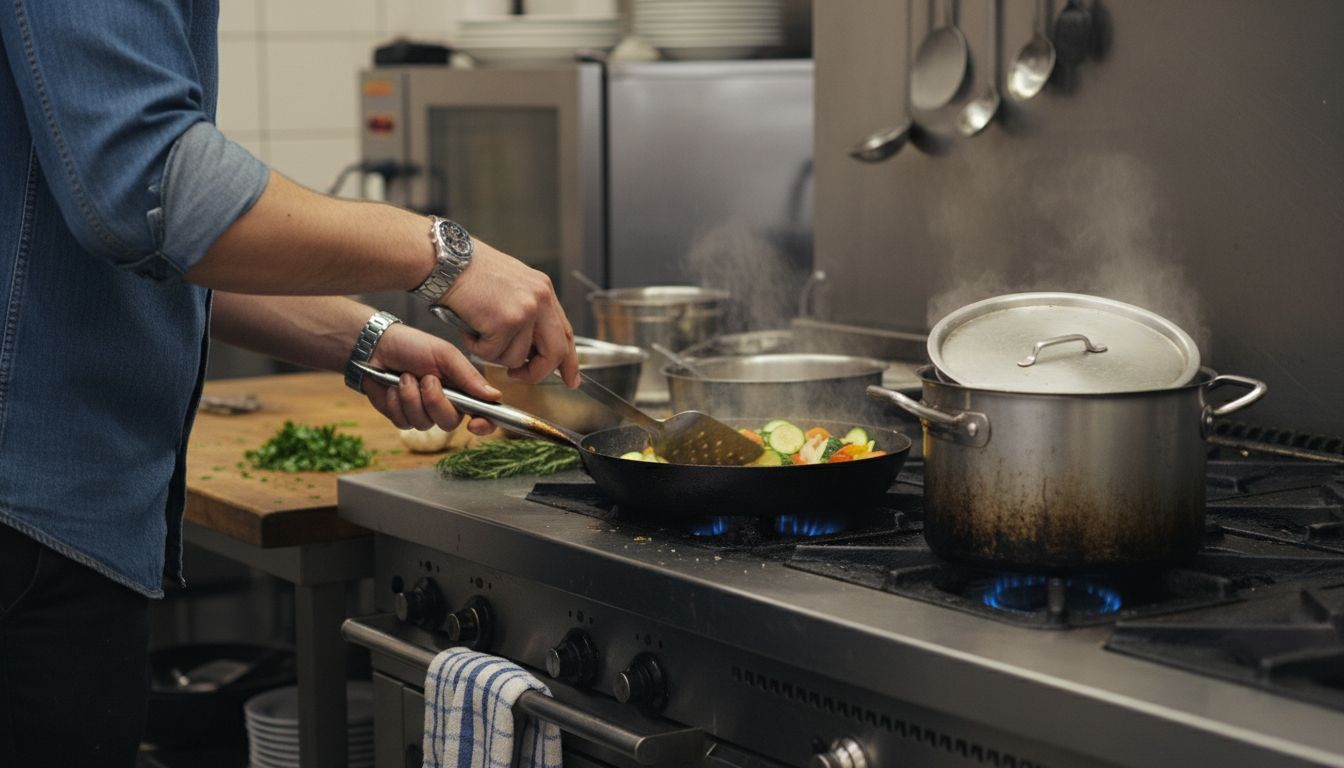
Home cooks increasingly recognise the benefits of both materials. Carbon steel works brilliantly for home cooks who enjoy traditional cooking techniques and are willing to invest time in maintaining their cookware. Stainless steel appeals to those seeking low-maintenance, durable kitchen tools that can transition seamlessly between stovetop, oven, and dishwasher. Many kitchens now incorporate both types of cookware to leverage their complementary strengths.
Cook’s Pro Tip: Invest in a mix of carbon steel and stainless steel cookware to create a versatile kitchen arsenal. Start with one pan of each type and gradually expand your collection based on your most frequent cooking techniques.
Heat Performance and Cooking Characteristics
Understanding the thermal dynamics of cookware materials is crucial for culinary success. Carbon steel pans demonstrate exceptional heat responsiveness, heating and cooling rapidly to offer precise temperature control, making them a favourite among professional chefs who require immediate cooking adjustments.
Stainless steel cookware presents a different thermal profile, characterised by more gradual and consistent heat distribution. While carbon steel pans allow for quick temperature shifts ideal for techniques like searing and stir-frying, stainless steel provides a more stable cooking environment. This makes stainless steel particularly suited to delicate cooking methods that demand uniform heat, such as preparing sauces, poaching, and creating intricate reductions that require gentle, steady temperatures.
The heat retention capabilities of each material further distinguish their performance. Carbon steel develops a natural seasoning that enhances its non-stick properties and heat management over time, creating a cooking surface that becomes increasingly refined with repeated use. Stainless steel, by contrast, maintains a more consistent surface character, offering predictable cooking results that appeal to cooks seeking reliable performance across various culinary techniques.
Cook’s Pro Tip: Match your cookware material to your specific cooking technique. Carbon steel excels for high-heat, quick-response cooking, while stainless steel provides reliable, even heating for more nuanced culinary preparations.
Care, Maintenance, and Longevity Compared
Cookware maintenance represents a critical consideration for both home cooks and professional chefs. Carbon steel pans require regular seasoning to maintain their nonstick properties and prevent rust, demanding a more hands-on approach to preservation compared to other cookware materials.
Maintenance routines differ significantly between carbon steel and stainless steel cookware. Carbon steel demands immediate cleaning and oiling after each use to prevent potential rust formation, creating a more intensive care regimen. Stainless steel, in contrast, offers remarkable durability and forgiveness, tolerating more aggressive cleaning methods and being dishwasher safe. This fundamental difference means carbon steel requires a more nuanced understanding of care techniques, while stainless steel provides a more straightforward maintenance experience.
Longevity for both materials depends on consistent, thoughtful care. Carbon steel cookware can last generations when properly seasoned and maintained, with its cooking surface actually improving over time as it develops a natural patina. Stainless steel maintains its original characteristics more consistently, offering reliable performance without the need for periodic re-seasoning. Each material’s longevity reflects its inherent properties: carbon steel’s adaptability versus stainless steel’s structural consistency.
Cook’s Pro Tip: Invest time in understanding your cookware’s specific maintenance requirements. Regular, gentle care will dramatically extend the lifespan of both carbon steel and stainless steel cooking tools.
The following table summarises key maintenance aspects for both cookware materials:
| Maintenance Step | Carbon Steel | Stainless Steel |
|---|---|---|
| Seasoning Needed | Regular, forms protective layer | Not required |
| Cleaning Routine | Hand wash, dry and oil immediately | Tolerates dishwasher use |
| Rust Prevention | Essential, must stay dry and oiled | Naturally resists rust issues |
| Surface Repair | Easily re-seasoned if damaged | Resistant, rarely needs repair |
| Typical Lifespan | Can last generations, improves | Decades-long, consistent performance |
Health, Safety, and Environmental Impact
The health and safety considerations of cookware materials extend far beyond their immediate cooking performance. Stainless steel’s remarkable corrosion resistance makes it exceptionally suitable for food and beverage applications, significantly reducing potential contamination risks, offering peace of mind for health-conscious consumers.
Carbon steel and stainless steel present distinct health profiles. Carbon steel requires seasoning, which creates a natural non-stick surface without synthetic chemical coatings, appealing to those seeking minimally processed cookware. Stainless steel’s resistance to staining and ease of maintenance ensures consistent hygiene standards, making it an excellent choice for individuals prioritising food safety and cleanliness.

Environmentally, both materials offer sustainable advantages compared to traditional non-stick cookware. Carbon steel’s durability and potential to last generations reduce manufacturing waste, while stainless steel’s recyclability and long-term performance contribute to reduced environmental impact. The ability to repair and maintain these cookware types further extends their ecological benefits, contrasting sharply with disposable or quickly degrading cooking equipment.
Cook’s Pro Tip: Choose cookware materials that align with your health priorities and environmental values. Consider the long-term sustainability and safety features of carbon steel and stainless steel when making your selection.
Cost, Value, and Choosing the Right Pan
Budget-conscious cooks and professional chefs alike understand that selecting cookware involves careful consideration of both initial investment and long-term value. Carbon steel pans offer excellent performance at a generally more affordable price point, making them an attractive option for those seeking quality without excessive expenditure.
Stainless steel cookware represents a higher initial investment, reflecting its durability and versatility. While the upfront cost is typically higher, the pan’s ability to withstand extensive use, resist corrosion, and maintain performance over decades can justify the premium pricing. Carbon steel, in contrast, provides exceptional value through its lower initial cost and potential to improve with proper seasoning and maintenance.
Choosing between carbon steel and stainless steel depends on individual cooking styles, maintenance preferences, and budget constraints. Home cooks who enjoy traditional cooking techniques and are willing to invest time in seasoning and maintenance might find carbon steel more appealing. Professional chefs and individuals seeking low-maintenance, consistently performing cookware will likely gravitate towards stainless steel’s reliable characteristics.
Cook’s Pro Tip: Consider your long-term cooking goals when selecting cookware. Invest in quality pans that match your cooking frequency, style, and willingness to maintain your equipment, understanding that both carbon steel and stainless steel offer unique value propositions.
Discover the Ultimate Carbon Steel Cookware for Every Chef’s Kitchen
Choosing between carbon steel and stainless steel cookware can be challenging when you want precision, durability and health-conscious design in one pan. If you seek exceptional heat responsiveness and a natural, safe nonstick surface free from synthetic coatings, Brass & Steel offers expertly forged carbon steel pans that meet those exact needs. Our pans feature seamless single-piece construction for lasting strength combined with a minimalist design crafted to elevate your cooking experience.
Explore the Carbon Steel Collection | Brass&Steel to find the perfect pan for your style whether you prefer the everyday versatility of the 27 cm sauté pan or the professional-grade performance of the 30 cm option. Act now to invest in heirloom-quality cookware that improves with use and provides superb heat control for both home kitchens and professional setups. Visit Brass & Steel today to experience cookware that transforms your culinary creations and embraces your commitment to quality and care. See what’s new in our New arrivals – Brass & Steel and take the first step towards mastery with your next pan.
Frequently Asked Questions
What is the main difference between carbon steel and stainless steel cookware?
Carbon steel is an iron-carbon alloy that provides superior heat conductivity and develops a natural non-stick seasoning over time, making it ideal for high-heat cooking. Stainless steel, on the other hand, contains at least 11% chromium, offering exceptional corrosion resistance and durability, suitable for consistent, low-maintenance cooking.
How do I care for carbon steel cookware to prevent rust?
To prevent rust, carbon steel cookware should be seasoned regularly, cleaned immediately after use, and dried thoroughly. It should also be oiled to maintain its protective layer, ensuring longevity and optimal cooking performance.
Is stainless steel cookware dishwasher safe?
Yes, stainless steel cookware is generally dishwasher safe, making it easy to clean and maintain compared to carbon steel cookware, which requires more careful handling and cleaning methods to prevent rust.
Which type of cookware is better for high-temperature cooking?
Carbon steel cookware is better suited for high-temperature cooking methods due to its rapid heat responsiveness and ability to handle immediate temperature changes, making it ideal for techniques like searing and stir-frying.