Carbon steel reactivity: what chemists need to know
TL;DR:
- Carbon steel’s reactivity is an electrochemical process causing rust due to the absence of chromium. Proper seasoning and protective coatings can manage and mitigate corrosion, ensuring long-term durability. Understanding its chemistry helps optimize both cookware maintenance and industrial applications effectively.
Carbon steel reactivity is defined as the electrochemical tendency of iron-carbon alloys to oxidise when exposed to moisture and oxygen, producing porous iron oxides commonly known as rust. This process is driven by the absence of chromium in carbon steel’s composition, which contains 0.05%–2.1% carbon but no passive protective layer. Understanding this reactivity is the foundation for working with carbon steel intelligently, whether you are analysing corrosion mechanisms in a laboratory or seasoning a pan for the first time. The industry term for this process is electrochemical corrosion, and it governs every practical decision around carbon steel use.
What is carbon steel reactivity and why does it happen?
Carbon steel reactivity describes the propensity of iron-carbon alloys to undergo electrochemical oxidation at their surface. The core mechanism is a galvanic reaction: iron atoms at the surface donate electrons to dissolved oxygen in the presence of water, forming ferrous and ferric oxide compounds. These oxides are porous and non-adherent, meaning they do not seal the surface. Instead, they allow further oxygen and moisture penetration, accelerating corrosion continuously.
The absence of chromium is the structural reason this happens. Stainless steel forms a dense chromium oxide layer that blocks further oxidation. Carbon steel has no equivalent. Every exposed iron atom on the surface is a potential reaction site.
Several environmental factors control the rate of this oxidation:
- Moisture and oxygen are the primary reactants. Without both present simultaneously, the reaction stalls.
- Chloride ions from salt or seawater dramatically accelerate corrosion by disrupting any incidental oxide formation.
- Electrolytes from any source, including fingerprints depositing salts, intensify localised corrosion at contact points.
- Temperature increases reaction kinetics. Higher temperatures accelerate oxidation rates measurably.
- Differential aeration creates anodic and cathodic zones on the same surface. Oxygen-depleted areas, such as crevices or the underside of a rivet, become anodic zones driving pitting. This is why riveted cookware corrodes faster at the rivet seat than on the open pan surface.
Unprotected carbon steel loses 0.1–0.5 mm of thickness per year through this process. That range reflects the difference between a mild indoor environment and a harsh marine or industrial one. In practical terms, a 3 mm pan left unprotected in a humid kitchen would lose structural integrity within years, not decades.
Pro Tip: Dry your carbon steel pan immediately after washing. Even a few minutes of standing water on bare iron is enough to initiate the oxidation cycle.
Carbon steel vs stainless steel: how do they compare?
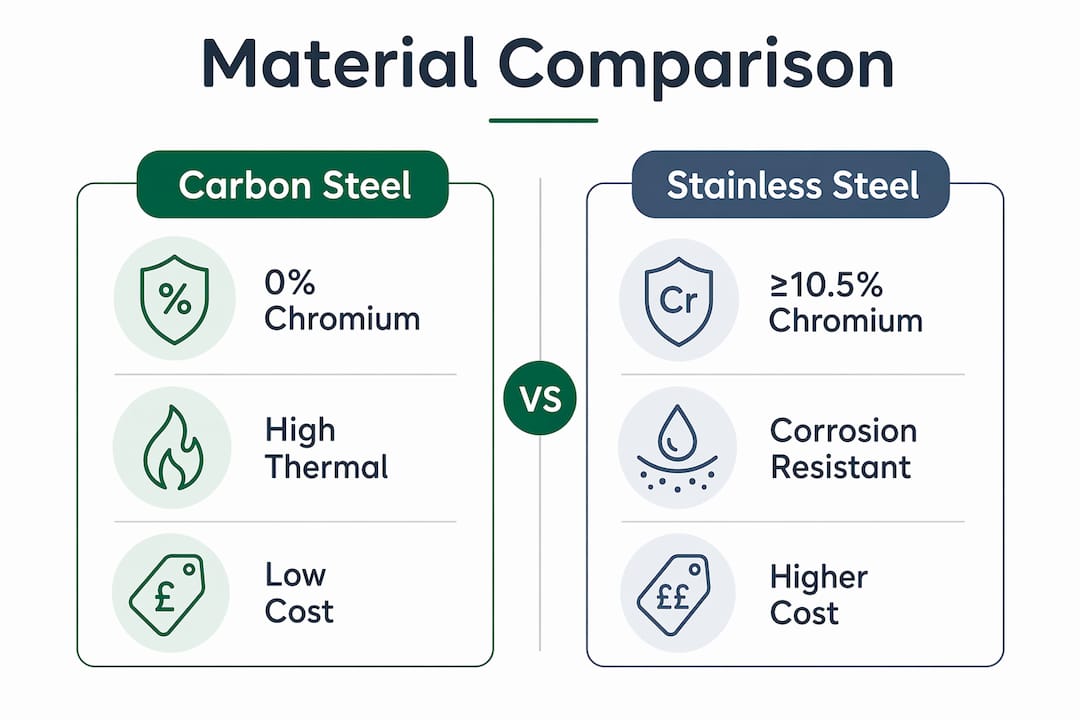
The difference in corrosion behaviour between carbon steel and stainless steel comes down to one element: chromium. Stainless steel contains at least 10.5% chromium, which reacts with atmospheric oxygen to form a dense, self-healing chromium oxide layer approximately 2–3 nanometres thick. This passive layer provides roughly 200 times better corrosion resistance than carbon steel. When scratched, it reforms spontaneously in the presence of oxygen.
Carbon steel forms no equivalent layer. Its iron oxide products are loose, porous, and non-protective. The contrast in performance under aggressive conditions is stark. In 3% NaCl solution, carbon steel fails structural integrity tests within 72 hours, while stainless steel endures over 1,000 hours. That is not a marginal difference. It reflects a fundamentally different corrosion mechanism.
Beyond corrosion, the two materials differ significantly in thermal and mechanical properties relevant to both industry and cookware.
| Property | Carbon Steel | Stainless Steel |
|---|---|---|
| Chromium content | 0% | 10.5% minimum |
| Corrosion resistance | Low without protection | High, self-healing |
| Thermal conductivity | ~46 W/m·K | ~15 W/m·K |
| Relative cost | Lower (30–50% less) | Higher |
| Passive layer | None | Chromium oxide |
| Cookware suitability | Excellent with seasoning | Good, low maintenance |
Carbon steel’s thermal conductivity of approximately 46 W/m·K is roughly three times that of stainless steel at 15 W/m·K. This means carbon steel heats faster, responds more quickly to temperature changes, and delivers more even heat to food. For a chef searing a steak, that responsiveness is the point. The trade-off is that you must manage the reactivity actively, whereas stainless steel largely manages itself.
Carbon steel costs 30–50% less than stainless steel. That economic advantage holds across cookware and structural applications alike, provided protective measures are factored into the lifecycle cost.
How does carbon steel reactivity affect cookware performance?
In cookware, carbon steel reactivity is managed almost entirely through seasoning. Seasoning is not a chemical passive layer like chromium oxide. It is a carbonised lipid mechanical barrier formed when polymerised oils bond to the iron surface under heat. This layer physically blocks moisture and oxygen from reaching the reactive iron beneath. The distinction matters: seasoning must be maintained continuously, because it is a physical film, not a self-repairing chemical one.
The practical implications for cookware use are significant:
- Avoid prolonged contact with acidic foods. Tomatoes, citrus, and wine are acidic enough to degrade the seasoning layer and expose bare iron. Short cooking times are generally fine, but long braises in acidic sauces will strip the surface.
- Dry the pan immediately after washing. Cyclic wet and dry conditions concentrate salts and ions on the surface, accelerating corrosion between uses. Never leave a carbon steel pan to air-dry.
- Apply a thin oil coat after each use. A light wipe of grapeseed, avocado, or sunflower oil after drying maintains the protective film between cooking sessions.
- Build seasoning gradually. Multiple thin layers of oil, each baked at 250°C, create a more durable and even barrier than a single thick coat. Thick coats polymerise unevenly and produce a sticky surface.
- Cook fatty foods regularly. Bacon, sausages, and similar foods naturally reinforce the seasoning layer during normal cooking. This is why a well-used pan performs better than a rarely used one.
The thermal advantage of carbon steel is directly relevant here. Because the pan heats quickly and responds to burner adjustments almost instantly, you get precise control over the Maillard reaction when searing. Stainless steel is slower to respond and more prone to hot spots. The thermal benefits of carbon steel are what make serious cooks willing to invest in active maintenance.
Brass-steel’s single-piece forged construction eliminates rivets entirely. This removes the differential aeration problem at rivet seats, which is one of the most common sites for localised pitting on carbon steel cookware. No crevices means fewer anodic zones and a more uniform surface for seasoning to adhere to.
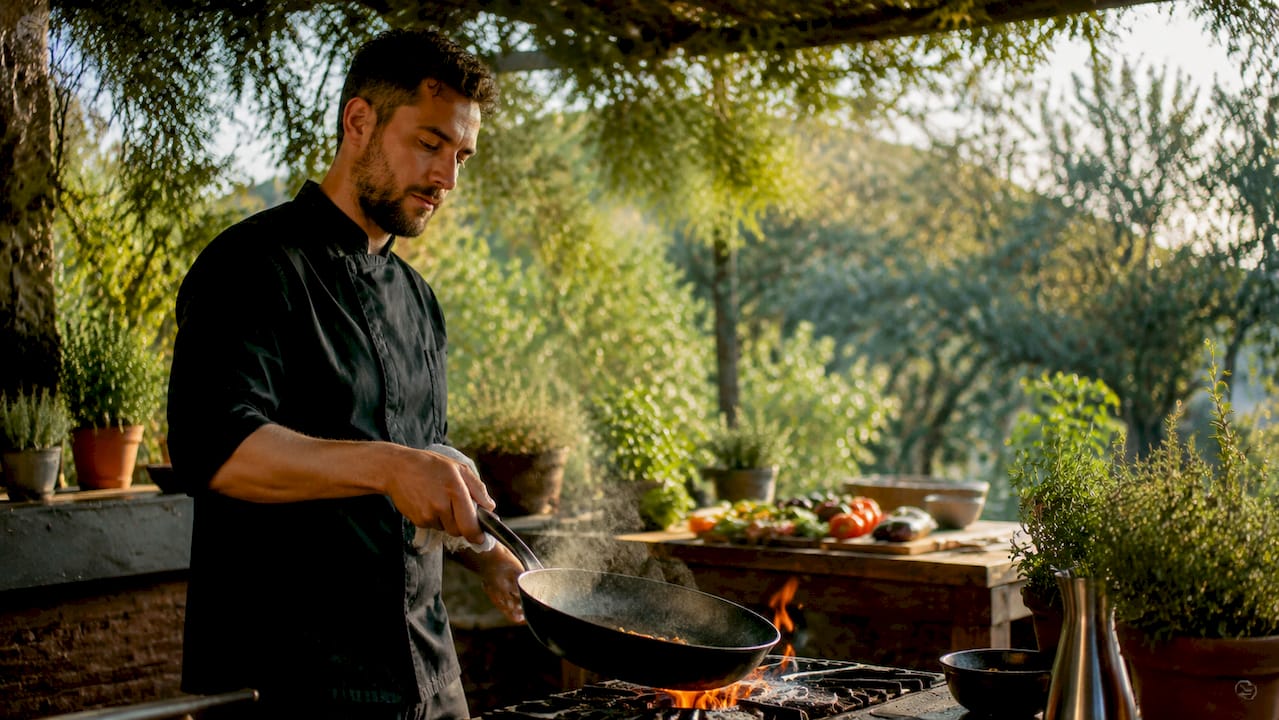
Pro Tip: Follow a structured seasoning checklist the first time you season a new pan. Getting the initial layers right makes every subsequent cook easier and the surface more resistant to moisture.
What strategies manage carbon steel reactivity in industry?
Industrial applications of carbon steel rely on protective systems rather than seasoning. The core challenge is the same: prevent moisture and oxygen from reaching reactive iron. The methods scale from simple to highly engineered depending on the environment.
Protective coatings used in industry include galvanisation, powder coating, and specialised industrial paints. Each addresses reactivity differently.
| Treatment | Mechanism | Typical Application |
|---|---|---|
| Hot-dip galvanisation | Zinc sacrificial anode layer | Structural steel, pipelines |
| Powder coating | Physical barrier, polymer film | Outdoor furniture, frames |
| Epoxy paint | Chemical-resistant barrier | Marine, chemical plant |
| Phosphate conversion | Converts surface iron to stable phosphate | Automotive, machinery |
| Oil or wax film | Physical moisture barrier | Tooling, short-term storage |
Galvanisation is particularly effective because zinc is more electrochemically active than iron. Even when the zinc layer is scratched, zinc preferentially oxidises, protecting the underlying steel. This is sacrificial anode protection in practice.
Carbon steel remains the dominant structural material in construction, automotive manufacturing, and pipeline engineering despite its reactivity. The reasons are economic and mechanical. It is cheaper, easier to weld, and stronger in tension than most alternatives. Where the environment is controlled or coatings are applied, its reactivity is a manageable variable rather than a disqualifying flaw.
The sustainability argument also favours carbon steel. It is fully recyclable, and its lower production energy compared to stainless steel makes it the lower-carbon choice for applications where corrosion protection can be engineered in.
Key takeaways
Carbon steel reactivity is an electrochemical property that is fully manageable with the right protective strategy, whether that is seasoning in a kitchen or galvanisation on a bridge.
| Point | Details |
|---|---|
| Reactivity mechanism | Iron-carbon alloys oxidise continuously without a chromium passive layer to block moisture and oxygen. |
| Corrosion rate | Unprotected carbon steel loses 0.1–0.5 mm per year depending on environmental severity. |
| Stainless steel contrast | Stainless steel’s chromium oxide layer gives approximately 200 times better corrosion resistance. |
| Cookware management | Seasoning creates a physical lipid barrier that must be maintained actively to protect the reactive surface. |
| Industrial protection | Galvanisation, powder coating, and epoxy paints extend carbon steel service life in harsh environments. |
Why i think reactivity is carbon steel’s most misunderstood property
Most people treat carbon steel reactivity as a defect. I think that framing is wrong, and it leads to poor decisions about both cookware and materials selection.
Reactivity is not a flaw. It is a consequence of the same iron-carbon composition that gives carbon steel its thermal conductivity, its weldability, and its cost advantage. You cannot separate the properties. When you choose carbon steel, you are choosing the whole package.
The mistake I see most often is treating seasoning as a one-time fix rather than an ongoing relationship with the material. A well-maintained carbon steel pan from Brass-steel, seasoned properly and used regularly, develops a surface that performs better than PTFE coatings and lasts decades. A neglected one rusts. The difference is not the pan. It is the understanding of what the material requires.
For materials scientists, the interesting question is not “how do we stop carbon steel from reacting?” but “how do we direct that reactivity productively?” Sacrificial anode systems, phosphate conversion coatings, and even the seasoning layer are all answers to that question. They work with the material’s chemistry rather than against it.
My practical advice: read the carbon steel care guide before you cook your first meal in a carbon steel pan. The science behind it will make the maintenance feel logical rather than tedious.
— Davide
Explore carbon steel cookware from Brass-steel
Understanding the chemistry behind carbon steel reactivity makes the care routine make sense. Brass-steel builds its pans from a single forged sheet of carbon steel, which eliminates the rivet crevices where differential aeration and localised pitting typically begin.
If you want to put this knowledge into practice, the Brass-steel cookware range includes detailed care guides for every stage, from first seasoning to long-term maintenance. The 27 cm and 30 cm sauté pans are forged in Jarocin, Poland, free from PTFE and PFOA, and built to develop a natural nonstick surface through use. For those working in professional kitchens, the restaurant care guide covers high-volume maintenance in detail.
FAQ
What is carbon steel reactivity in simple terms?
Carbon steel reactivity is the tendency of iron-carbon alloys to oxidise when exposed to moisture and oxygen, forming rust. It occurs because carbon steel contains no chromium to create a protective passive layer.
How does carbon steel react with acidic foods?
Acidic ingredients such as tomatoes and citrus degrade the seasoning layer on carbon steel, exposing bare iron to moisture. Short cooking times are generally safe, but prolonged contact with acids will strip the surface and accelerate corrosion.
Why does carbon steel rust faster than stainless steel?
Stainless steel contains at least 10.5% chromium, which forms a self-healing oxide layer providing approximately 200 times better corrosion resistance. Carbon steel has no equivalent layer, so every exposed iron atom is a potential oxidation site.
Does seasoning permanently stop carbon steel from reacting?
No. Seasoning is a physical lipid barrier, not a chemical passive layer. It slows oxidation effectively but must be maintained continuously, as acids, moisture, and abrasion can degrade it over time.
What oils are best for seasoning carbon steel?
Grapeseed, avocado, sunflower, and canola oils are the best choices because of their high smoke points and good polymerisation properties. Avoid olive oil and animal fats, which do not polymerise cleanly and can produce a sticky, uneven surface.