Why Cookware Needs Patina – Performance and Longevity
Precision in the kitchen means knowing how to coax the best from every tool, and carbon steel cookware rewards those with patience and skill. For many professional chefs across European kitchens, understanding the science and care behind patina development transforms a standard pan into an irreplaceable instrument. This guide breaks down the chemistry, seasoning steps, and maintenance secrets behind building a rich patina, so your carbon steel truly becomes the backbone of elevated, consistent culinary performance.
Table of Contents
- What Is Patina In Carbon Steel Cookware
- How Patina Forms Through Seasoning
- Benefits Of Patina: Nonstick And Protection
- Common Mistakes In Patina Development
- Comparing Patina To Coated Alternatives
Key Takeaways
| Point | Details |
|---|---|
| Patina Development | Patina forms through regular cooking and seasoning, enhancing the pan’s performance as it creates a natural nonstick surface. |
| Chemical Process | The creation of patina involves oil polymerisation at high temperatures, developing a resilient protective layer that benefits cooking efficiency. |
| Benefits of Maintenance | Proper cleaning and oil application preserve the patina, preventing rust and enhancing the cooking surface over time. |
| Comparison with Synthetic Coatings | Unlike synthetic nonstick surfaces, the patina improves with use, offering better heat responsiveness and fewer health risks associated with chemical release. |
What Is Patina In Carbon Steel Cookware
Patina represents a natural protective layer that develops on carbon steel cookware through repeated cooking and seasoning processes. This remarkable transformation occurs when heat, oils, and cooking interactions create a thin molecular coating that enhances the pan’s performance and prevents rust.
Carbon steel undergoes a fascinating chemical reaction when exposed to cooking temperatures and oils. Protective oxidation layer gradually forms, changing the metal’s surface from silvery grey to progressively darker bronze and eventually deep black tones. This transition isn’t mere aesthetic change but a crucial functional development that improves cooking characteristics.
The patina acts like a natural nonstick surface, becoming more effective with each cooking session. As oils polymerise and bond with the metal’s surface, they create a smooth, slick layer that prevents food from sticking and provides excellent heat distribution. Professional chefs value this layer because it improves cooking performance and protects the underlying metal from corrosion.
Unlike rust or tarnish, which damage metal, patina strengthens and preserves carbon steel cookware. Regular cooking with appropriate oils and maintaining proper cleaning techniques will help develop and maintain this protective layer, ensuring your cookware remains functional for decades.
Pro tip: Clean your carbon steel pan with hot water and a soft brush immediately after cooking to preserve the developing patina and prevent unnecessary scrubbing.
How Patina Forms Through Seasoning
The formation of patina is a sophisticated chemical process that transforms carbon steel cookware through deliberate and repeated seasoning. Precise oil polymerisation occurs when high temperatures cause oils to break down and bond with the metal’s molecular structure, creating a durable protective layer.
Initially, seasoning begins with applying a thin layer of high smoke-point oil across the pan’s surface. When heated to specific temperatures, these oils undergo a complex transformation called polymerisation. During this process, oil molecules restructure and create a strong, adherent coating that gradually darkens and strengthens with each cooking session. Professional chefs understand this isn’t just about creating a nonstick surface, but developing a robust protective shield that enhances cooking performance.
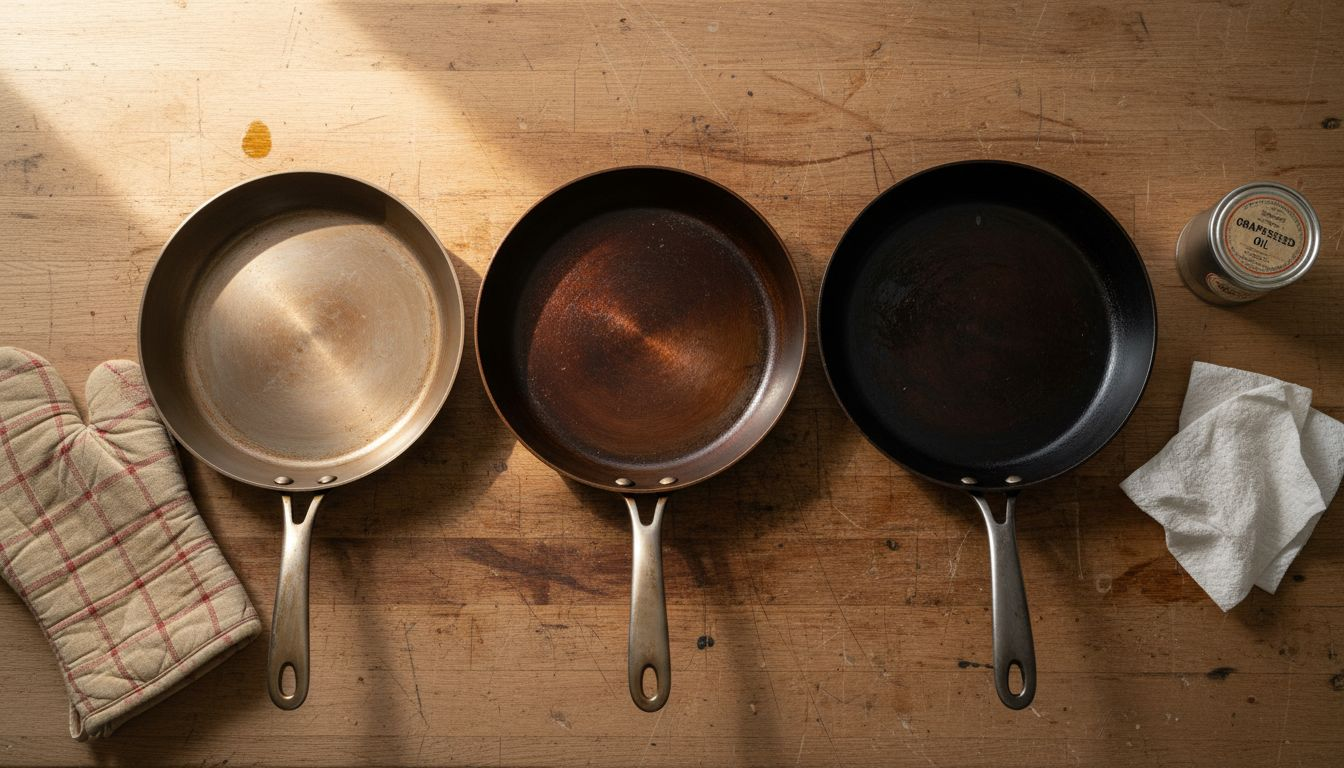
The progression of patina development follows a predictable pattern. Early stages involve lighter bronze tones that gradually transition to deep, rich black surfaces. Each cooking session contributes additional molecular layers, making the pan increasingly resilient. The more frequently you cook with appropriate oils and maintain consistent temperatures, the more effectively the patina develops. This natural seasoning process not only prevents rust but also imparts subtle flavour nuances to future dishes.
Carbon steel’s unique metallurgical properties make it particularly receptive to patina formation. Unlike other materials, carbon steel creates a symbiotic relationship between the cooking surface and the oils used, resulting in a dynamic, self-improving cooking platform. Regular maintenance and understanding the seasoning process ensures your cookware becomes more effective with each use.
Here is a summary of key stages in patina development on carbon steel cookware:
| Patina Stage | Appearance | Cooking Performance | Rust Resistance |
|---|---|---|---|
| Initial Seasoning | Light bronze tint | Slightly improved nonstick | Minimal protection |
| Intermediate Use | Brown to dark grey | Enhanced food release | Moderate barrier |
| Mature Patina | Deep black sheen | Excellent nonstick quality | Maximum rust defence |
Pro tip: Use oils with high smoke points like grapeseed or avocado during initial seasoning to promote faster and more uniform patina development.
Benefits Of Patina: Nonstick And Protection
Carbon steel cookware’s patina represents a remarkable evolutionary process that transforms a simple cooking surface into a sophisticated, high-performance culinary tool. Natural nonstick coating develops through careful seasoning, creating an exceptional cooking surface that reduces the need for additional cooking fats and prevents food from sticking.
The protective qualities of patina extend far beyond mere nonstick performance. As the layer builds up, it creates a robust barrier against moisture and oxidation, effectively shielding the underlying metal from rust and corrosion. Professional chefs appreciate how this natural coating becomes increasingly effective with each cooking session, developing a smooth, almost silky surface that releases food effortlessly while simultaneously protecting the pan’s structural integrity.
Unlike synthetic nonstick coatings that degrade over time, a well-maintained patina actually improves with use. The polymerised oil layer becomes more resilient and uniform, creating a cooking surface that develops subtle flavour-enhancing properties. Each cooking session contributes to a more refined surface, with the patina becoming progressively more nonstick and protective. This natural process turns carbon steel cookware into a living, evolving cooking instrument that responds and adapts to culinary techniques.
The performance benefits of a fully developed patina are particularly notable in high-temperature cooking methods. Searing, frying, and rapid heat transfer become more consistent and controlled, with the patina acting as both a protective shield and a performance-enhancing layer. The more consistently a pan is used and maintained, the more exceptional its cooking characteristics become.
Pro tip: Avoid using soap when cleaning your seasoned pan, as this can strip away the protective patina you’ve carefully developed.
Common Mistakes In Patina Development
Professional chefs and home cooks often inadvertently compromise their carbon steel cookware’s patina development through seemingly innocuous actions. Critical seasoning errors can rapidly degrade the carefully built protective layer, undermining years of careful maintenance and culinary potential.
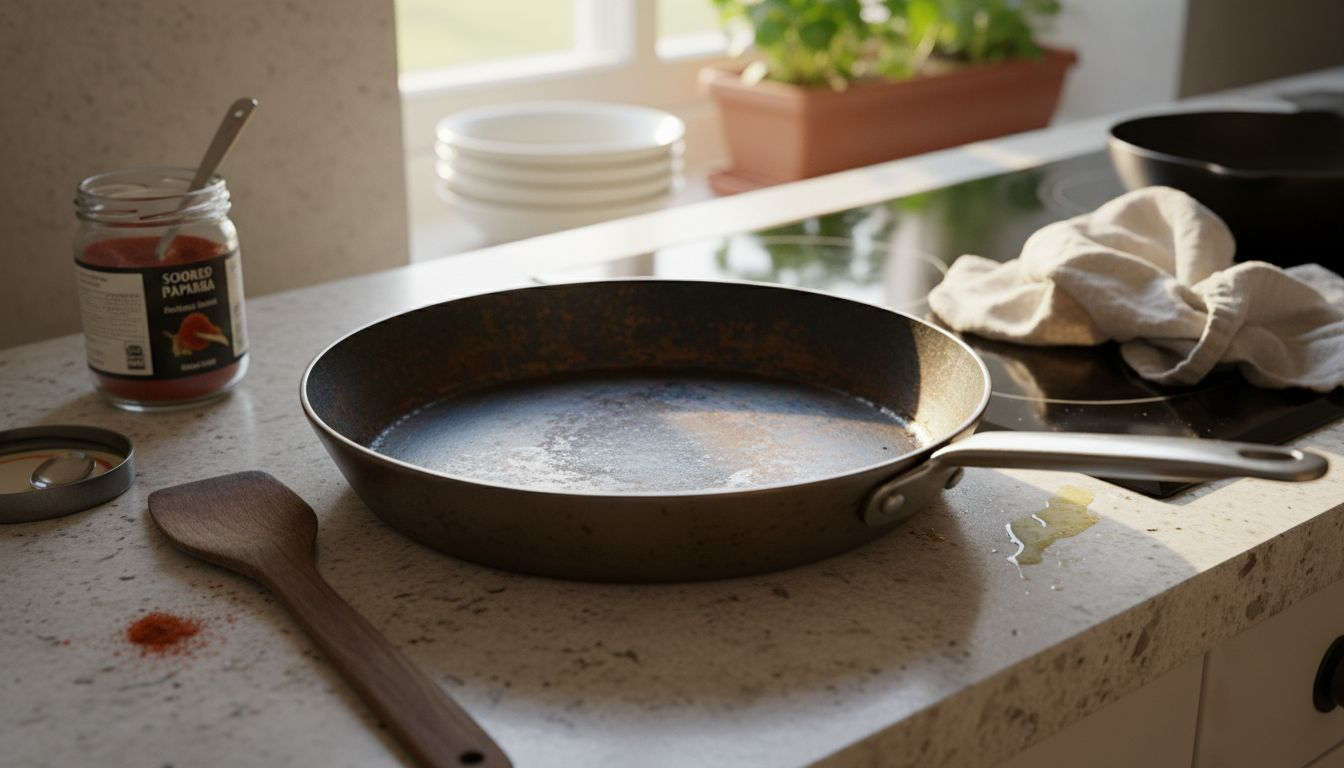
The most prevalent mistakes centre on improper cleaning techniques. Aggressive scrubbing with metal scouring pads or harsh chemical cleaners strips away the delicate polymerised oil layer that constitutes the patina. Similarly, prolonged soaking creates an environment conducive to rust formation, which can permanently damage the pan’s surface. Professional kitchens understand that gentle cleaning with hot water and a soft brush represents the most effective maintenance strategy.
Temperature management represents another critical area where cooks frequently err. Subjecting a hot carbon steel pan to cold water creates thermal shock, causing potential warping and compromising the patina’s structural integrity. The sudden temperature differential can cause microscopic surface fractures that disrupt the carefully developed protective coating. Gradual cooling and careful temperature transitions are essential for preserving the pan’s performance and longevity.
Oil selection during seasoning also dramatically impacts patina quality. Using oils with low smoke points or inappropriate molecular structures can result in uneven, sticky layers that prevent proper polymerisation. Refined oils like grapeseed or avocado provide more consistent results, creating uniform, durable protective coatings that enhance cooking performance and resist degradation.
Pro tip: Always dry your carbon steel pan immediately after washing and apply a light coat of high smoke-point oil to maintain the protective patina.
Comparing Patina To Coated Alternatives
The world of cookware surfaces represents a complex landscape of performance, durability, and safety considerations. Cookware coating challenges reveal significant differences between synthetic nonstick surfaces and naturally developed carbon steel patina, with profound implications for cooking performance and long-term health.
Traditional nonstick coatings like PTFE offer immediate slickness but suffer from critical limitations. These synthetic surfaces typically degrade faster, becoming less effective after repeated use and potentially releasing harmful chemicals when overheated. Carbon steel’s patina, by contrast, represents a self-regenerating surface that becomes more effective with each cooking session, creating a robust, naturally nonstick layer without introducing synthetic compounds.
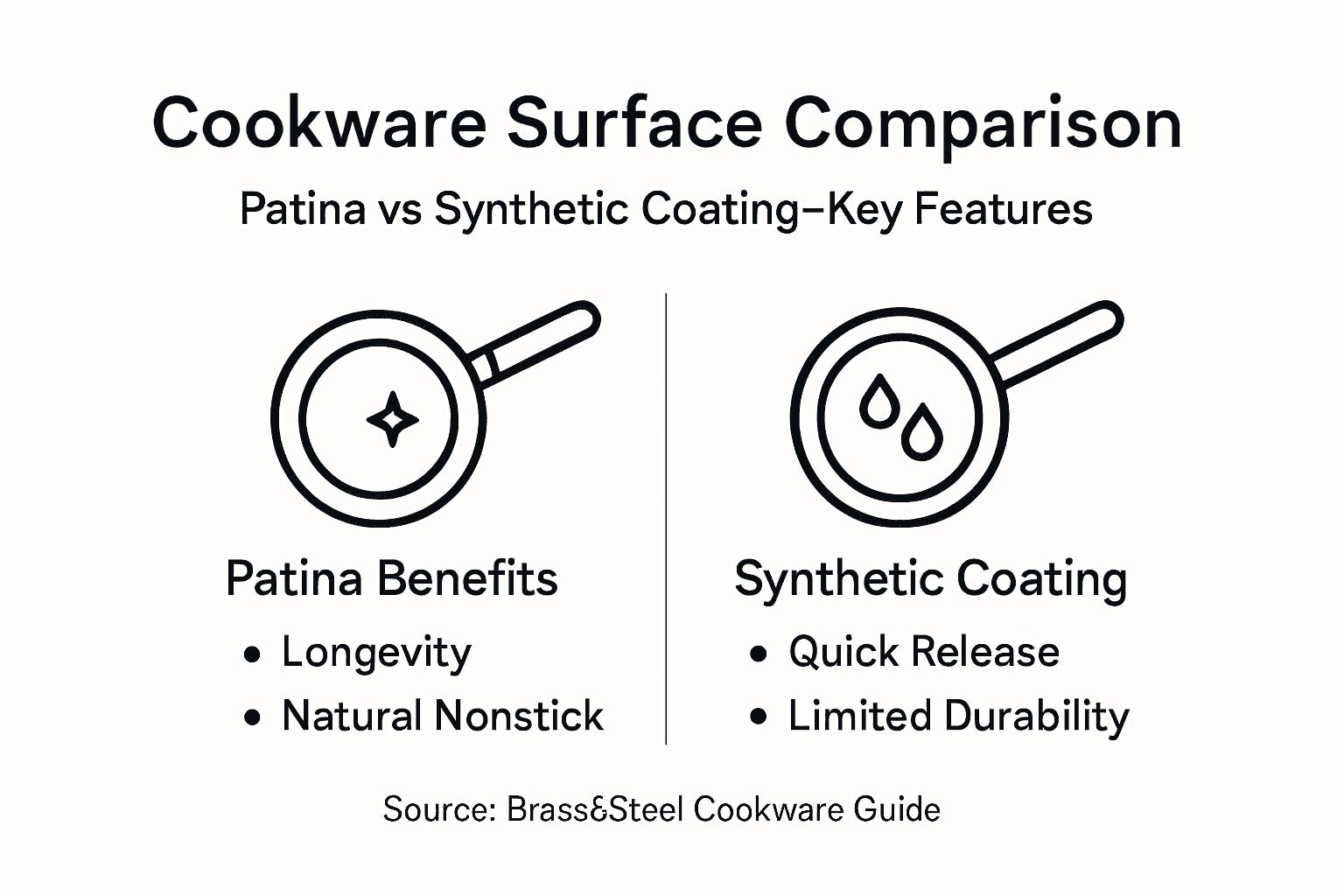
The following table compares patina and synthetic nonstick coatings:
| Feature | Carbon Steel Patina | Synthetic Coating (e.g. PTFE) |
|---|---|---|
| Longevity | Improves with consistent use | Degrades after repeated use |
| Health Considerations | No synthetic chemicals introduced | Potential chemical release when worn |
| Maintenance | Requires regular seasoning and oiling | Needs gentle cleaning, may chip |
| Surface Regeneration | Self-repairs through continued use | Cannot be naturally restored |
Durability represents another critical distinction between coated and patina-based cookware. Synthetic nonstick surfaces are prone to scratching, peeling, and structural breakdown, particularly when used with metal utensils or subjected to high temperatures. Carbon steel’s patina develops a resilient molecular bond with the underlying metal, creating a protective layer that actually strengthens through consistent use and proper maintenance.
Professional chefs and culinary experts increasingly favour patina-based cookware for its superior heat responsiveness, natural nonstick properties, and potential health benefits. Unlike manufactured coatings that require replacement, a carbon steel pan’s patina can last decades when properly maintained, offering a sustainable and performance-driven alternative to traditional nonstick technologies.
Pro tip: Invest time in developing your carbon steel pan’s patina, as this natural coating will consistently outperform synthetic nonstick alternatives.
Unlock the Full Potential of Your Carbon Steel Cookware with Brass & Steel
The article highlights the importance of a well-developed patina for performance and longevity in carbon steel cookware. If you are aiming to achieve a natural nonstick surface that improves with every meal and want to avoid common seasoning mistakes like improper cleaning or wrong oil use, Brass & Steel offers high-quality pans forged from a single carbon steel sheet. Our cookware supports ideal patina formation, providing exceptional heat responsiveness and a safe, PTFE-free cooking experience.
Explore the Carbon Steel Collection | Brass&Steel for pans designed to build a superior seasoning layer that protects against rust and creates a naturally slick surface. Whether you choose our 27 cm or 30 cm carbon steel sauté pans, crafted with durability and health-conscious design, you get cookware that lasts decades and improves with use. Begin your journey towards heirloom-quality pans today by visiting Brass & Steel and checking out our latest New arrivals – Brass & Steel. Don’t wait to transform your cooking performance with cookware that truly evolves with you.
Frequently Asked Questions
What is patina in carbon steel cookware?
Patina is a natural protective layer that develops on carbon steel cookware through repeated cooking and seasoning processes, enhancing performance and preventing rust.
How does patina improve cooking performance?
Patina creates a natural nonstick surface that becomes more effective with use. It allows for better heat distribution and prevents food from sticking, making cooking easier and more enjoyable.
How can I properly maintain the patina on my carbon steel cookware?
To maintain the patina, clean your pan with hot water and a soft brush immediately after cooking, avoid harsh chemicals or scrubbing pads, and apply a light coat of high smoke-point oil after drying.
What are the differences between patina and synthetic nonstick coatings?
Patina improves with use and contains no synthetic compounds, while synthetic coatings can degrade and release harmful chemicals over time. Patina also provides better durability and heat responsiveness compared to synthetic alternatives.