Carbon steel pan prices: a cook's guide to value
TL;DR:
- Properly seasoned budget carbon steel pans perform similarly to premium ones in everyday cooking.
- European carbon steel pans range from €35 to €239 based on construction, origin, and finish.
- Knowledge of features and care practices is more important than price for achieving great results.
Many cooks assume that spending more on a carbon steel pan automatically delivers better results in the kitchen. That belief drives buyers towards triple-digit price tags when a fraction of that cost might serve them just as well. The truth is more nuanced. Serious Eats testing found that once properly seasoned, there is little meaningful difference between budget and premium carbon steel pans in everyday performance. What actually separates a great result from a frustrating one is knowledge: knowing what to buy, what to pay, and how to care for it. This guide gives you exactly that.
Table of Contents
- What do carbon steel pans really cost in Europe?
- What drives carbon steel prices? Material, trends and the European market
- Performance over price: Why carbon steel’s value goes beyond the label
- Choosing the right pan: When does paying more make sense?
- Why price isn’t everything: An expert’s view on the real value of carbon steel
- Discover the best carbon steel for your kitchen
- Frequently asked questions
Key Takeaways
| Point | Details |
|---|---|
| Broad price range | Carbon steel pans in Europe range from €35 for basic models to €239 for premium sets, offering options for every budget. |
| Performance parity | Both budget and high-end pans perform similarly after proper seasoning, so value isn’t dictated by price alone. |
| Stable pricing | Despite steel price volatility, carbon steel cookware prices have remained stable owing to manufacturing and brand factors. |
| Consider usage needs | Invest in premium only if you want specific finishes or heritage—otherwise most pans excel with good care and seasoning. |
| Market trends boost value | Growth in home cooking and sustainability trends make carbon steel a reliable, lasting investment for ambitious cooks. |
What do carbon steel pans really cost in Europe?
Having set the scene for price confusion, let’s examine exactly what you can expect to pay for quality carbon steel cookware across Europe. The range is wider than most buyers realise, and neither extreme tells the full story.
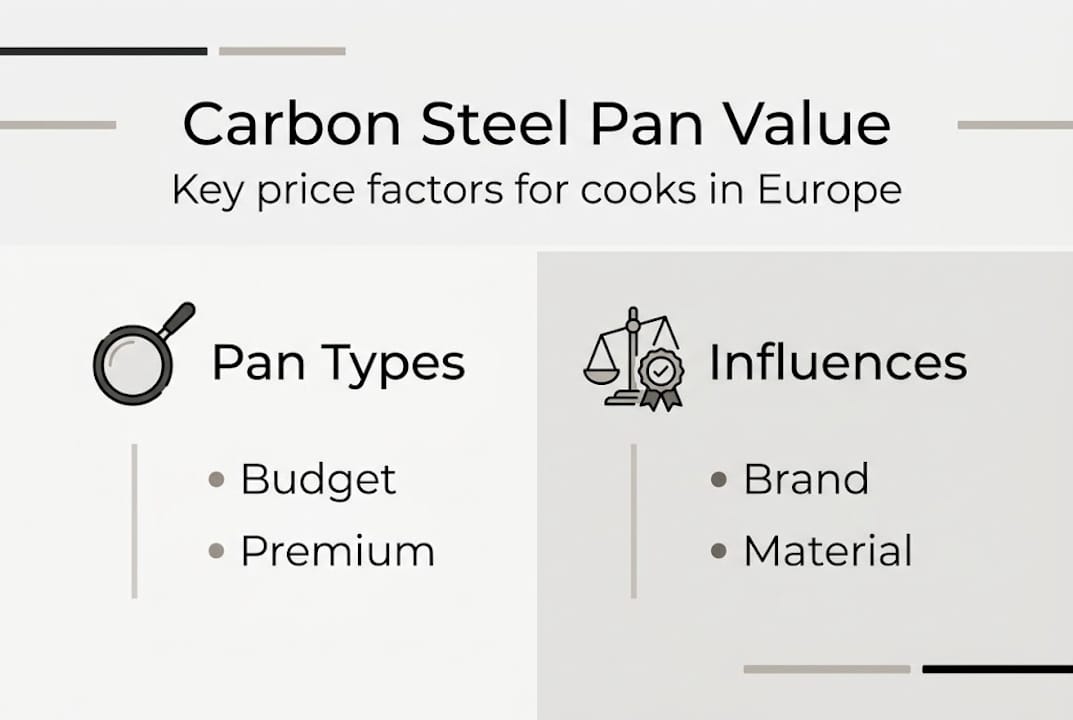
At the budget end, entry-level carbon steel pans from brands like IKEA’s Vardagen line or Gastrotools start at around €35 for a single pan. Mid-range options from established European suppliers typically sit between €60 and €120. Premium Italian and Polish makers, including sets from craft-focused producers, can reach €239 for a multi-pan bundle. According to Serious Eats’ 2026 roundup, European prices range from €35 to €239 depending on brand and set size.
| Brand tier | Typical price range | Pan size | Key feature |
|---|---|---|---|
| Budget (e.g. IKEA) | €35 to €55 | 24 to 28 cm | Functional, basic finish |
| Mid-range (e.g. Gastrotools) | €60 to €100 | 26 to 30 cm | Improved thickness, better balance |
| Premium (e.g. Italian, Polish craft) | €99 to €239 | 27 to 32 cm | Single-piece forge, refined finish |
What is striking is how stable these retail prices have remained despite raw material volatility in recent years. Manufacturing costs, brand positioning, and supply chain decisions act as buffers between steel spot prices and what you pay at checkout.
Several factors beyond brand name influence what a pan costs. Understanding them helps you find the best carbon steel pans for your actual needs rather than paying for marketing.
- Steel thickness: Pans ranging from 2mm to 4mm require more material and more forging time, which raises cost.
- Manufacturing origin: European-made pans carry higher labour costs than Asian-produced alternatives.
- Construction method: Single-piece forged pans without rivets or welds cost more to produce but last significantly longer.
- Surface finish: Beeswax coatings, pre-seasoning treatments, or polished interiors add to the price.
- Certification and compliance: EU safety and materials standards add overhead for manufacturers.
Knowing these variables means you can make a genuinely informed choice rather than defaulting to the most expensive option on the shelf.
What drives carbon steel prices? Material, trends and the European market
Now that you’ve seen the numbers, let’s explore what actually influences these price tags and why some pans command a premium.
Steel prices in Europe have had a turbulent few years. After a significant drop in 2022, European steel semi-finished prices have recovered and are now stabilising in 2026. For cookware buyers, this matters less than you might think. Manufacturers typically lock in material contracts months in advance, and retail prices adjust slowly. A spike in raw steel costs rarely translates to an immediate price hike at the consumer level.
The broader market context is also worth understanding. The European carbon steel cookware market is valued at around USD 270 million, sustained by strong culinary traditions across France, Italy, Spain, and increasingly Poland. That cultural weight keeps the premium segment alive and growing, even as budget options improve in quality.
Several current trends are reshaping what buyers expect and what producers charge:
- Home cooking boom: Post-pandemic interest in serious home cooking has driven demand for professional-grade tools, pushing mid-range prices upward.
- Sustainability push: Buyers increasingly want PTFE-free, long-lasting cookware. Carbon steel fits perfectly, which strengthens its market position.
- Craft manufacturing revival: Small European producers are gaining ground by emphasising origin, construction quality, and longevity over mass-market volume.
- Induction compatibility: As induction hobs become standard in European kitchens, carbon steel’s natural compatibility adds perceived value.
Understanding how carbon steel pans are made helps clarify why construction differences justify price differences in some cases. A single-piece forged pan requires more precise tooling and skilled labour than a stamped and riveted alternative.
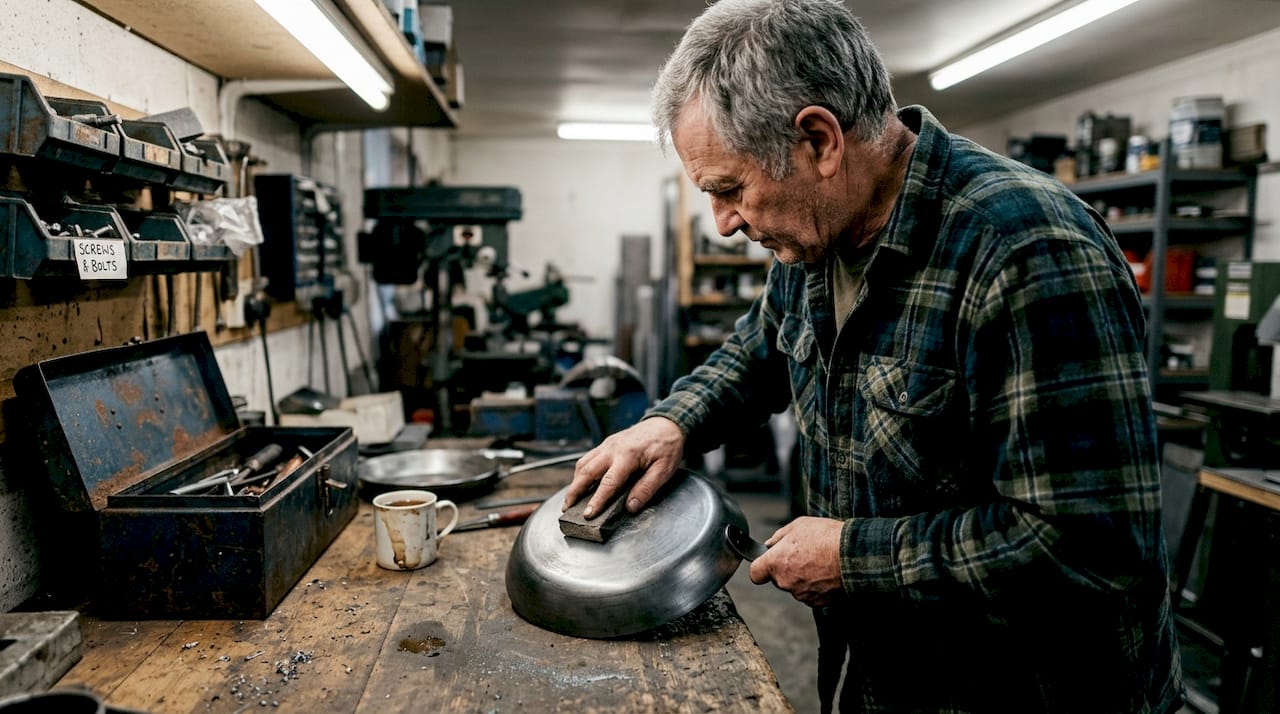
When comparing materials, it’s also useful to understand carbon steel vs iron cookware to see why carbon steel commands its own premium over cast iron in professional kitchens.
Pro Tip: Do not pay extra for a brand name alone. If the pan is stamped rather than forged, uses riveted handles, and offers no meaningful finish upgrade, the premium is marketing, not craftsmanship.
Performance over price: Why carbon steel’s value goes beyond the label
Understanding market trends is powerful, but day-to-day performance is what makes carbon steel a favourite for many cooks.
The properties that make carbon steel exceptional are not locked behind a high price point. Carbon steel pans heat quickly, are lighter than cast iron, and build a natural nonstick patina through regular use. These traits exist whether the pan costs €40 or €140.
“Once seasoned, budget carbon steel pans can match the cooking performance of premium models in virtually every everyday task.” — Serious Eats, Best Carbon Steel Pans 2026
This is not a minor caveat. It is the central truth of the carbon steel market. Minimal performance difference exists between cheap and expensive pans once seasoning is established. The patina you build through cooking is the nonstick surface, and it belongs to you, not the manufacturer.
Why do chefs and serious home cooks prefer carbon steel across price points?
- Searing: Rapid, even heat response creates a proper Maillard crust on proteins.
- Tossing: Lighter than cast iron, making it practical for sautéing vegetables or flipping omelettes.
- Patina development: Each cook strengthens the surface, making the pan genuinely better over time.
- Versatility: Moves from hob to oven without issue, and works on every cooktop including induction.
- Longevity: A well-maintained carbon steel pan can last decades, making even a €99 purchase exceptional value per use.
For the carbon steel vs cast iron comparison, carbon steel wins on weight and responsiveness, while cast iron holds more thermal mass for low-and-slow cooking.
To get the most from any carbon steel pan at any price, follow these seasoning steps:
- Wash the new pan with warm soapy water and dry it completely.
- Preheat your oven to 250°C and bake the pan for 10 minutes to remove all moisture.
- Apply a very thin coat of high-smoke-point oil such as grapeseed, avocado, or sunflower.
- Wipe off the excess until the pan looks almost dry.
- Bake upside down for 30 minutes, then allow to cool in the oven.
- Repeat this process two to three times to build a strong base seasoning.
Pro Tip: If you want results from the first cook, choose a pan that arrives pre-seasoned. It saves time and reduces the risk of a sticky first experience.
Choosing the right pan: When does paying more make sense?
Once you understand how carbon steel performs at any price, it’s time to decide which pan and price point suits your needs best.
The honest answer is that most cooks do not need to spend at the top of the market. Premium pans offer specific advantages in finish and craftsmanship, but the majority of cooks get equal cooking performance from well-seasoned budget lines. The question is not “which is better?” but “what do I actually need?”
Here is when spending more genuinely makes sense:
- Single-piece construction: No rivets means no food traps and no weak points. Worth paying for if you cook daily.
- Greater thickness: A 4mm pan holds heat more evenly than a 2mm pan, which matters for high-volume professional use.
- European origin: Craft-made pans from Poland or Italy carry real quality assurance and support local manufacturing.
- Refined handle design: Ergonomic, stay-cool handles reduce fatigue during long service periods.
- Aesthetic finish: If the pan lives on a pot rack or open shelf, a polished or waxed finish holds its appearance better.
Conversely, here is when saving money is the smarter move:
- You are new to carbon steel and want to practise seasoning before committing to a premium piece.
- You need a dedicated pan for a single task, such as eggs or crêpes, where ultra-thin construction is actually preferable.
- You are equipping a rental kitchen or a secondary cooking space.
Pro Tip: Check key facts on carbon steel before buying a set. Gastrotools and some Italian bundle deals offer genuine savings of 20 to 30 percent compared to buying individual pans, which is worth calculating before you order.
For professional kitchens, the calculus shifts. Durability, handle comfort, and thermal consistency across a busy service justify a higher investment. For the passionate home cook, a mid-range pan from a reputable European maker hits the sweet spot between quality and cost.
Why price isn’t everything: An expert’s view on the real value of carbon steel
After years of working with carbon steel cookware, one pattern stands out clearly: the cooks who get the best results are rarely the ones who spent the most. They are the ones who understood what they bought and looked after it properly.
A €35 pan, seasoned with care and used consistently, will outperform a neglected €150 pan every single time. The patina built through regular cooking with fatty foods, proper drying, and light oiling after each use is what creates the nonstick surface that makes carbon steel so compelling. No manufacturer can bottle that for you.
The fixation on price often distracts from the real skill: learning to read the pan. Knowing when it is hot enough to sear, how to adjust heat for different proteins, and how to restore a dull surface are the things that separate good results from great ones. Those skills cost nothing.
When choosing between steel and iron, the same principle applies. Fit matters more than prestige. Buy the pan that suits your cooking style, your cooktop, and your maintenance habits. Then invest your energy in learning it rather than shopping for an upgrade.
Discover the best carbon steel for your kitchen
You now have a clear picture of what carbon steel pans cost in Europe, what drives those prices, and how to match your budget to your actual cooking needs. The next step is finding the right pan.
At Brass & Steel, we craft single-piece forged carbon steel pans in Jarocin, Poland, with design roots in Italy. Our 27 cm and 30 cm sauté pans are built without rivets or welds, free from PTFE and PFOA, and compatible with every cooktop including induction. Whether you are equipping a professional kitchen or upgrading your home setup, see our carbon steel range and find the pan that will last you a lifetime.
Frequently asked questions
What is the typical price range for carbon steel pans in Europe?
Carbon steel pans in Europe range from around €35 for budget brands to €239 for premium multi-pan sets, with most quality single pans sitting between €60 and €120.
Are expensive carbon steel pans better than cheaper options?
Once seasoned, budget pans match premium performance in most everyday cooking tasks. The main advantages of premium pans are construction quality, finish, and longevity rather than cooking performance alone.
Why have carbon steel prices remained stable despite variations in steel costs?
Manufacturers use forward contracts and absorb short-term steel price swings before they reach retail, which is why cookware prices tend to move slowly even when raw material costs fluctuate.
What features are worth paying more for in a carbon steel pan?
Single-piece construction, greater steel thickness (3mm to 4mm), European manufacturing, and ergonomic handle design are the features that add genuine long-term value beyond the initial price.
How does carbon steel compare with cast iron for everyday use?
Carbon steel is lighter and more responsive than cast iron, making it better for high-heat searing and tossing, while cast iron suits long, slow cooking where thermal mass is an advantage. Both require seasoning for best results.