Best carbon steel pans for chefs: pro picks & comparisons
TL;DR:
- Carbon steel pans offer quick heat response and develop natural nonstick surfaces suitable for professional kitchens.
- Proper maintenance involves immediate drying, oiling, and careful cleaning to prevent rust and preserve seasoning.
- Thicker pans (3-4mm) are better for high-volume searing, while lighter 2mm pans excel in responsiveness for delicate tasks.
Professional kitchens across Europe hold cookware to an uncompromising standard. Every pan must deliver consistent heat, survive relentless daily use, and perform across stations without fuss. Carbon steel has long been the material of choice in many brigade kitchens, yet the market is crowded with options that vary wildly in thickness, handle design, and seasoning quality. This guide cuts through the noise with expert-vetted picks, a head-to-head comparison, and practical maintenance advice tailored specifically for high-volume professional use.
Table of Contents
- Key criteria for choosing carbon steel cookware
- Top carbon steel pans for professional kitchens
- comparison of leading carbon steel pans
- caring for carbon steel in a pro kitchen
- Expert recommendations for specific chef needs
- What most lists miss about carbon steel for professional chefs
- explore curated carbon steel solutions for your kitchen
- frequently asked questions
Key Takeaways
| Point | Details |
|---|---|
| Seasoning is critical | A properly seasoned carbon steel pan performs like nonstick and is ideal for fast kitchen service. |
| Choose by task | Match your pan’s thickness and style to the type of food and cooking volume for best results. |
| Care avoids rust | Hand wash, dry, and oil your pan to keep it high-performing and rust-free. |
| Compare before you buy | Reference chef-tested comparison tables to select pans with the best build for your station. |
Key criteria for choosing carbon steel cookware
Before you commit to a specific pan, it pays to understand the properties that genuinely affect performance in service. Not all carbon steel is created equal, and the differences matter more when you are cooking 200 covers a night than when you are cooking at home.
Here are the core criteria to evaluate:
- Heat distribution and responsiveness: Carbon steel heats quickly and responds to temperature changes almost instantly, which is crucial when you need to adjust a sear mid-service. Unlike cast iron, it does not hold so much thermal mass that recovery between batches becomes sluggish.
- Natural nonstick performance: A well-seasoned carbon steel pan develops a natural nonstick patina that outperforms an unseasoned pan from the start, with pre-seasoned models releasing eggs immediately. This builds over time with proper care.
- Handle construction: In a high-volume kitchen, handle safety is non-negotiable. Single-piece or welded handles are stronger and eliminate food traps that harbour bacteria. You can read more about carbon steel pan essentials to understand why construction details matter so much in professional settings.
- Pan thickness and warping risk: A 3mm or 4mm pan is significantly more warp-resistant than thinner consumer-grade options. Understanding carbon steel performance benefits helps you match thickness to your busiest stations.
- Chemical safety: Professional kitchens increasingly demand cookware free of synthetic coatings. The pros and cons of carbon steel are well-documented: no toxic off-gassing, but real care requirements.
- Daily upkeep: Carbon steel must be hand-washed and dried immediately. It is not a pan you leave in a sink.
Pro tip: Some new carbon steel pans ship with a beeswax protective coating. Remove it thoroughly before first seasoning, or your first cooking sessions will taste off and the seasoning will not polymerise correctly.
Top carbon steel pans for professional kitchens
With selection criteria clear, here are the pans that consistently stand out in demanding European professional kitchens.
When tested across 15 models, results showed that “the best pans combine even heating with a fast-developing nonstick surface”, with brands like de buyer, matfer bourgeat, and mauviel topping both chef and food-science evaluations.
Here is a breakdown by use case:
- mauviel m’steel: Best for eggs, crêpes, and delicate fish. Its 2mm thickness makes it notably lighter and highly responsive on gas burners. The agility suits sauté stations where the pan moves constantly.
- matfer bourgeat black steel: Best for heavy searing, large proteins, and high-volume service. Its thicker build creates serious thermal mass, meaning it recovers heat quickly between portions.
- de buyer carbone plus: A well-balanced choice for mixed-station use. It sits between mauviel and matfer in weight, and its beeswax factory coat is a recognisable quality signal.
- OXO and merten & storck: Both offer factory pre-seasoning, which reduces setup time. This appeals in kitchens where staff turnover is high and training time is limited.
For a deeper look at what professional chefs are actually reaching for, see our professional picks for chefs guide.
Pro tip: Stock at least three sizes per station. A 24cm pan for individual portions, a 28cm for two-person dishes, and a 32cm for batch work gives your team the agility to move fast without waiting for a pan to free up.
comparison of leading carbon steel pans
To help you prioritise, the table below benchmarks top pan choices on chef-critical qualities.
| Pan | Steel thickness | Weight | Handle type | Pre-seasoned | Best use | Price range (approx.) |
|---|---|---|---|---|---|---|
| mauviel m’steel | 2mm | Light | Single-piece | No | eggs, crêpes, fish | €60–€140 |
| matfer bourgeat black | 3mm | Heavy | Single-piece | No | searing, large proteins | €40–€100 |
| de buyer carbone plus | 2.5–3mm | Medium | Single-piece | No (beeswax coat) | all-round use | €50–€130 |
| OXO pro | 2mm | Light | welded | Yes | quick-cooking, stations | €60–€110 |
| merten & storck | 2mm | Light | welded | Yes | everyday service | €40–€90 |
| brass & steel 30cm | 4mm | ~3kg | Single-piece | No | volume searing, induction | €119 |
The chefs’ pan comparison offers further breakdowns if you are matching pans to specific station types.
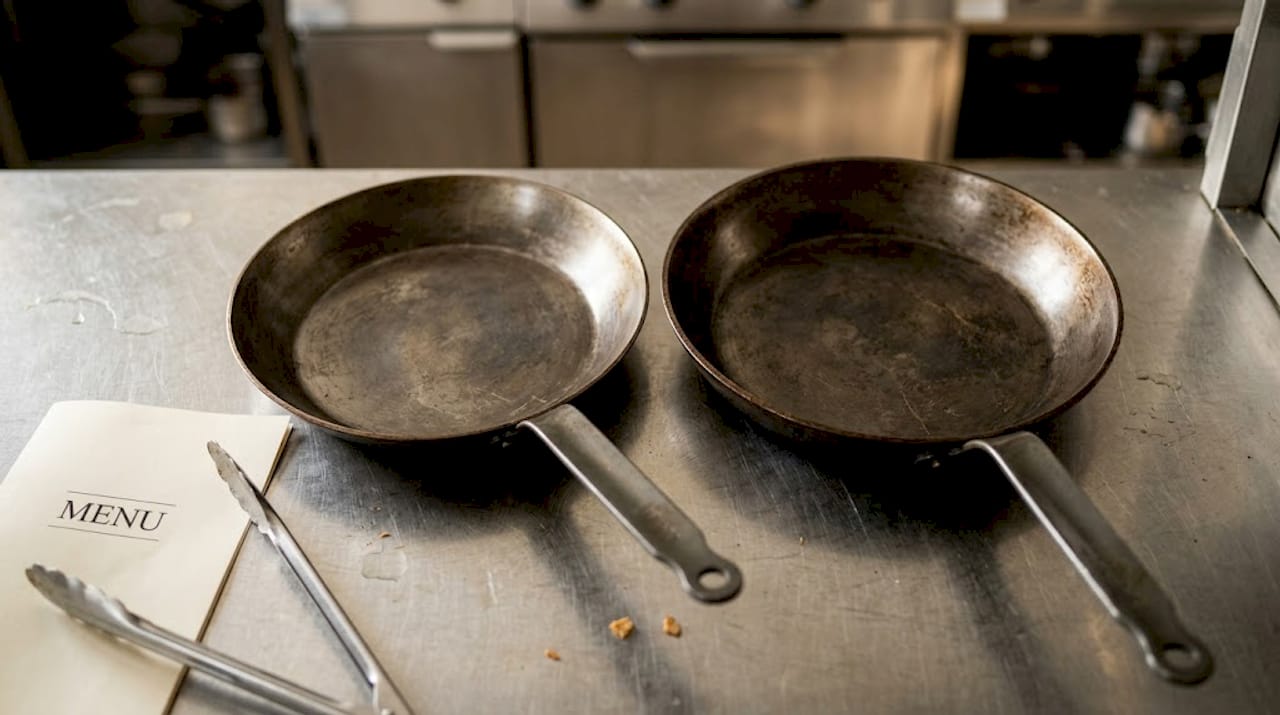
A key finding from independent testing: thicker 3mm pans offer superior thermal mass for volume searing, while 2mm options prioritise agility over heat retention. The matfer recorded just a 9°F temperature differential across its surface in controlled heat tests, making it exceptionally even for a carbon steel pan. That kind of consistency matters enormously when you are searing multiple portions to the same doneness.
caring for carbon steel in a pro kitchen
After choosing the best pan, maintaining its peak performance is the next essential step. Carbon steel rewards consistent care and punishes neglect quickly.
Follow this routine for long-term performance:
- After each service: Clean with warm water and a stiff brush or chainmail scrubber. Never use soap on a seasoned pan unless you are prepared to re-season.
- Remove stubborn residue with a chainmail scrub that lifts stuck food without stripping the patina. This is far preferable to steel wool.
- Always dry immediately. Carbon steel is rust-prone if wet, and even a short soak can cause surface oxidation. Place on a warm hob for a minute after washing.
- Apply a thin oil layer after every wash. Use a high-smoke-point oil: grapeseed, sunflower, or avocado work best.
- Re-season after acidic foods. A long braise with tomatoes or wine will strip seasoning faster than almost anything else. Plan a re-seasoning session the following day.
- Store pans in a dry area. If stacking, place a cloth between pans to protect the cooking surface.
For a full protocol designed specifically for commercial kitchens, our restaurant carbon steel care guide walks through every scenario including rust recovery. The carbon steel uses guide also helps match the right pan to each cooking task before damage even becomes a risk.
Pro tip: In a team kitchen, rotate your pans deliberately. Using the same pan every service creates uneven seasoning wear. A rotation system keeps all pans in active condition and extends each one’s useful life significantly.
Expert recommendations for specific chef needs
With technique and maintenance handled, let’s align specific pan recommendations with unique chef requirements. The right pan depends heavily on your kitchen’s setup, volume, and primary cooking methods.
Use this decision framework:
- High-volume searing on gas: Go thicker. A 3mm to 4mm pan absorbs and retains the thermal energy needed to sear multiple portions without the surface temperature dropping sharply. The brass & steel 30cm (4mm, 3kg) is built precisely for this.
- Quick egg and fish cookery: Go thinner and lighter. A 2mm pan at 1.2–1.5kg is far easier to lift, tilt, and manoeuvre quickly. mauviel or OXO pro are appropriate here.
- induction hobs: Use gradual preheat on induction to prevent warping, especially with heavier pans. Never blast a cold thick pan to maximum power. Start at medium and build heat slowly.
- Open fire and grill work: Carbon steel excels here. The transition from grill grate to gas to a cold resting surface is where some pans warp. Choose pans with even thicknesses and avoid thermal shock by letting them cool gradually.
- Mixed-station kitchens: Keep a chef pan selection guide accessible for your team. Different stations benefit from different pan weights.
| Station type | recommended thickness | recommended weight | Priority feature |
|---|---|---|---|
| sauté and egg | 2mm | Light (under 1.5kg) | responsiveness |
| searing and proteins | 3–4mm | Heavy (2–3kg) | thermal mass |
| grill to hob transition | 3mm | Medium | warp resistance |
| induction cooking | 3–4mm | Medium to heavy | gradual heat tolerance |
For a full breakdown of what to look for before purchasing, our cookware checklist for chefs covers every specification worth checking.
What most lists miss about carbon steel for professional chefs
Most roundups focus on brand names, thickness measurements, and star ratings from a single test kitchen. What they rarely discuss is how a pan performs during an actual service shift, when decisions happen in seconds.
Grip fatigue is real. A pan you love during prep becomes a liability after hour four of service if the handle shape does not fit your grip naturally. Marketing images look identical across brands, but the angle and diameter of the handle vary meaningfully. Always handle a pan in person before committing.
Redundancy is underrated. Every professional kitchen needs backup pans seasoned and ready. The carbon steel pan benefits are only realised when pans are consistently maintained, and that requires depth in your kit, not just one showpiece pan.
Staff training shapes pan longevity more than any specification. A high-quality pan destroyed by poor washing habits costs more than a mid-range pan that is cared for properly. The best investment is both the right pan and a consistent team briefing on why care matters.
explore curated carbon steel solutions for your kitchen
If you are ready to upgrade or expand your kitchen arsenal with expertly-vetted carbon steel, brass & steel can help. Our pans are forged as a single piece, meaning no rivets, no welds, and no food traps to scrub around during a busy close-down.
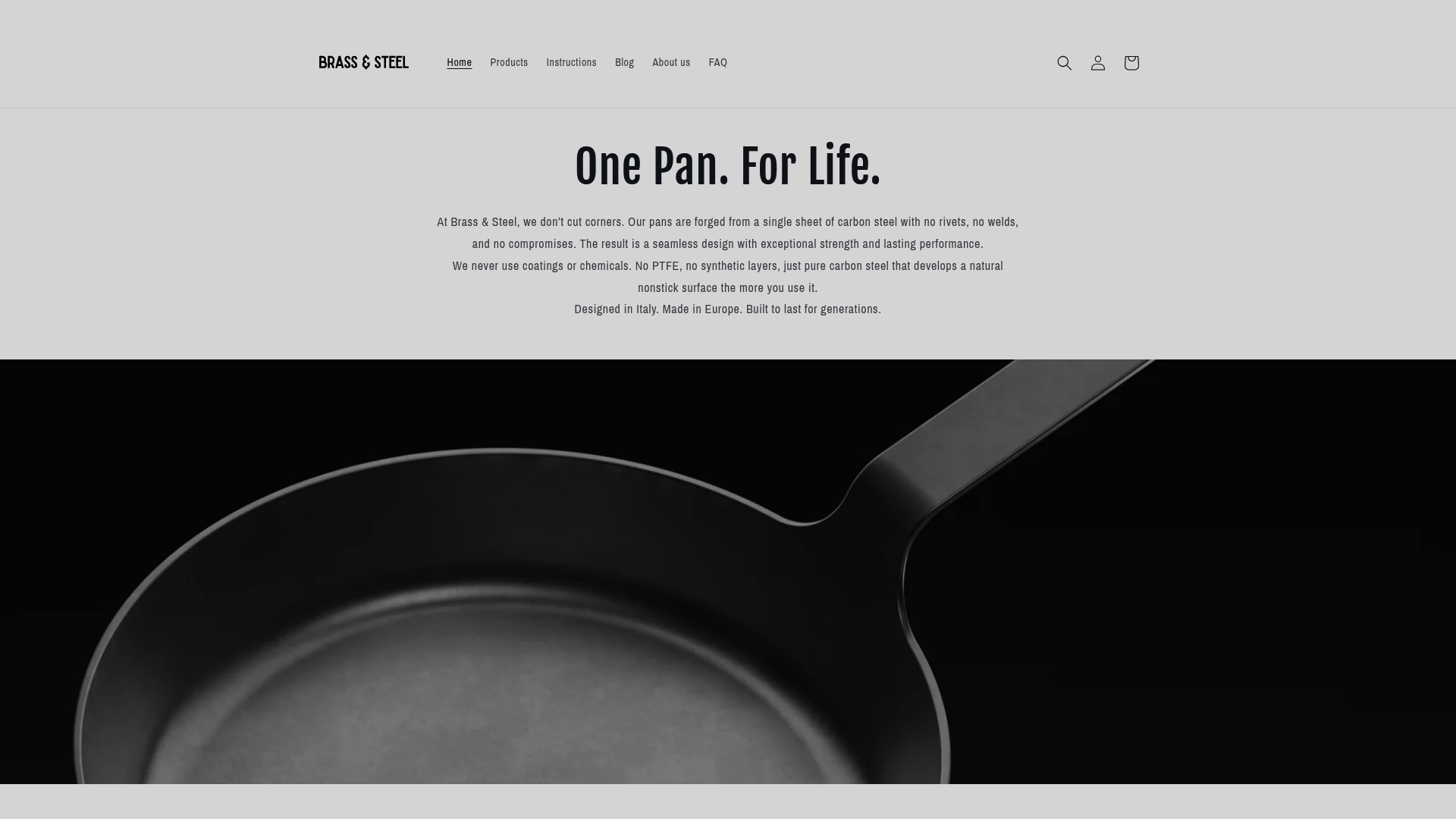
Browse our full carbon steel collection to find the right thickness and size for your station. From the 27cm 3mm pan suited to sauté work, to the 30cm 4mm pan built for high-volume searing, every option is designed for serious use. Our carbon steel essentials guide answers the most common questions from working chefs, and our chef’s cookware checklist makes the purchasing decision straightforward.
frequently asked questions
What makes carbon steel better than stainless steel for chefs?
Carbon steel heats faster, offers finer heat control, and develops a nonstick patina that stainless steel never will. Professional chefs in high-volume European kitchens favour it for both thermal recovery and cooking versatility.
How often do I need to re-season my carbon steel pan in a restaurant?
In a commercial kitchen, plan to re-season every few weeks or immediately after cooking acidic foods. A chainmail scrub removes residue without stripping the patina between full re-seasoning sessions.
Are carbon steel pans safe for induction or electric hobs?
Yes, but always preheat gradually. On induction or electric, sudden high heat risks warping the base, particularly in thicker commercial pans that are sensitive to rapid temperature spikes.
What’s the main care mistake with carbon steel in busy kitchens?
Leaving a pan wet or unprotected after washing. Carbon steel strips seasoning and rusts quickly without immediate drying and a light oil coat applied after every wash.
Is beeswax coating helpful for pro kitchens?
Beeswax aids initial rust protection during transit and storage, but it must be fully removed before first use. It is a quality signal, not a cooking surface.