What is patina in cookware and why it matters

Many home cooks mistake the dark coating on their carbon steel pan for rust or burnt residue and scrub it away. That layer is patina, a natural protective surface formed through repeated cooking and seasoning. Far from being dirt, patina transforms your cookware into a durable, nonstick tool that improves with every meal. Understanding how patina forms and functions empowers you to build a cooking surface that rivals synthetic coatings without the health concerns. This guide explains the science behind patina, its benefits for performance and longevity, and practical steps to develop and maintain it on your carbon steel cookware.
Table of Contents
- Key takeaways
- What is patina in cookware and how does it form?
- Why is patina important for cooking performance and longevity?
- Common misconceptions and nuances about patina maintenance
- How to develop and care for patina on your carbon steel cookware
- Discover carbon steel pans with superb patina potential
- Frequently asked questions about patina in cookware
Key Takeaways
| Point | Details |
|---|---|
| Patina explained | Patina is a natural protective layer formed by oil polymerisation during repeated cooking and seasoning of carbon steel. |
| Improved nonstick with use | The polymerised oil layer fills microscopic pores, smoothing the surface and reducing sticking as you cook more. |
| Rust protection provided | Patina shields carbon steel from moisture and oxygen, helping to prevent rust as the layer matures. |
| High heat stability | Patina remains stable at temperatures beyond 300°C, enabling high heat searing and wok cooking without coating degradation. |
| Outperforms synthetic coatings | A mature patina can deliver better nonstick performance and longevity than many synthetic coatings. |
What is patina in cookware and how does it form?
Patina is not rust or simple oxidation. It results from oil polymerisation at high temperatures creating a hard, slick surface that darkens from silver to deep black. When you heat fat in a carbon steel pan, the molecules break apart and recombine into a polymer network that bonds tightly to the metal. This process mirrors the chemistry of drying oils used in traditional wood finishes, building layer upon layer with each cooking session.
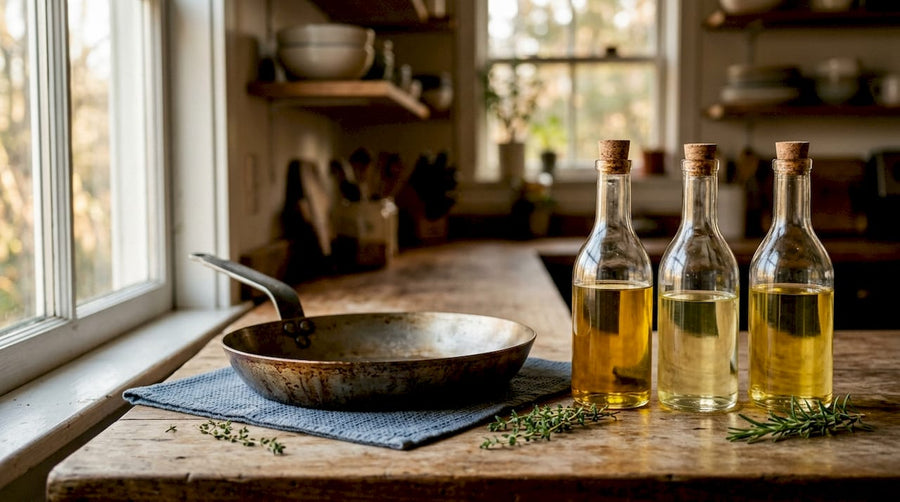
The visual transformation marks patina maturity. A new pan gleams silver. After initial seasoning, it shifts to bronze or amber. Regular use deepens the colour to mahogany, then chocolate brown, and finally a glossy black that signals a fully developed surface. Each shade represents thicker polymerised layers offering better nonstick performance and protection.
This process creates a slick, durable nonstick surface superior to many synthetic options. The polymer chains fill microscopic pores in the steel, smoothing the cooking surface and preventing food from adhering. Unlike chemical coatings that degrade under high heat, patina thrives in the same conditions that formed it. Every sear, sauté, and stir fry reinforces the layer rather than wearing it down.
Patina protects metal and improves cooking over time. The polymer barrier shields carbon steel from moisture and oxygen, preventing rust formation. It also enhances heat distribution by creating a consistent surface that conducts energy evenly across the pan. As the patina matures, you gain better control over browning, reduced sticking, and easier cleanup. This natural seasoning develops through deliberate practice and rewards patience with a cooking tool that becomes more valuable with age.
Pro Tip: Cook fatty proteins like bacon, sausages, or duck breast during the first weeks with your carbon steel pan. The rendered fat accelerates patina formation whilst delivering excellent flavour.
- Patina forms through repeated exposure to heated fats, not through passive oxidation
- Colour progression from silver to black indicates increasing polymer thickness and protection
- Each cooking session adds microscopic layers that accumulate into a robust nonstick surface
- The process is self-reinforcing: better patina makes cooking easier, which builds more patina
Why is patina important for cooking performance and longevity?
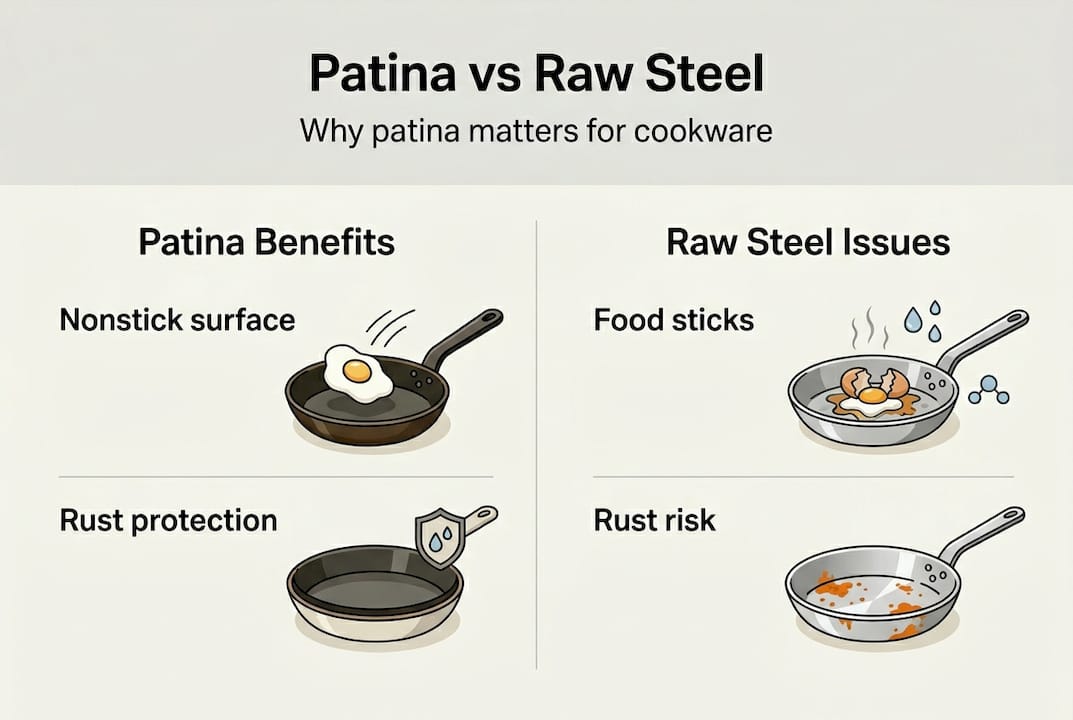
Patina provides superior nonstick performance improving with use, rust protection, and heat distribution whilst outperforming synthetic coatings that last decades. The polymerised oil layer reduces surface friction dramatically, allowing delicate foods like fish fillets and eggs to release cleanly without tearing. Unlike PTFE coatings that degrade above 260°C, patina remains stable at temperatures exceeding 300°C, making it ideal for high-heat techniques like wok cooking and searing steaks.
The nonstick properties strengthen rather than diminish over time. Each cooking session deposits additional polymer layers, filling remaining microscopic gaps and smoothing the surface further. A well-maintained patina on a five-year-old pan outperforms a brand new synthetic nonstick surface. This improvement curve reverses the typical cookware lifecycle, where performance peaks on day one and declines steadily.
“A mature patina transforms carbon steel into a cooking surface that rivals the slickness of Teflon whilst tolerating the brutal heat that would destroy chemical coatings within months.”
Rust protection ranks equally important. Carbon steel contains minimal alloying elements, making it vulnerable to oxidation when exposed to moisture and air. The patina acts as a sacrificial barrier, absorbing environmental stress whilst preserving the underlying metal. This protection extends cookware lifespan from years to generations when properly maintained.
Heat distribution improves as patina fills surface irregularities. Raw carbon steel has microscopic peaks and valleys that create hot spots and uneven cooking. The polymer layers smooth these variations, promoting consistent heat transfer across the entire cooking surface. This translates to better browning, reduced burning, and more predictable results.
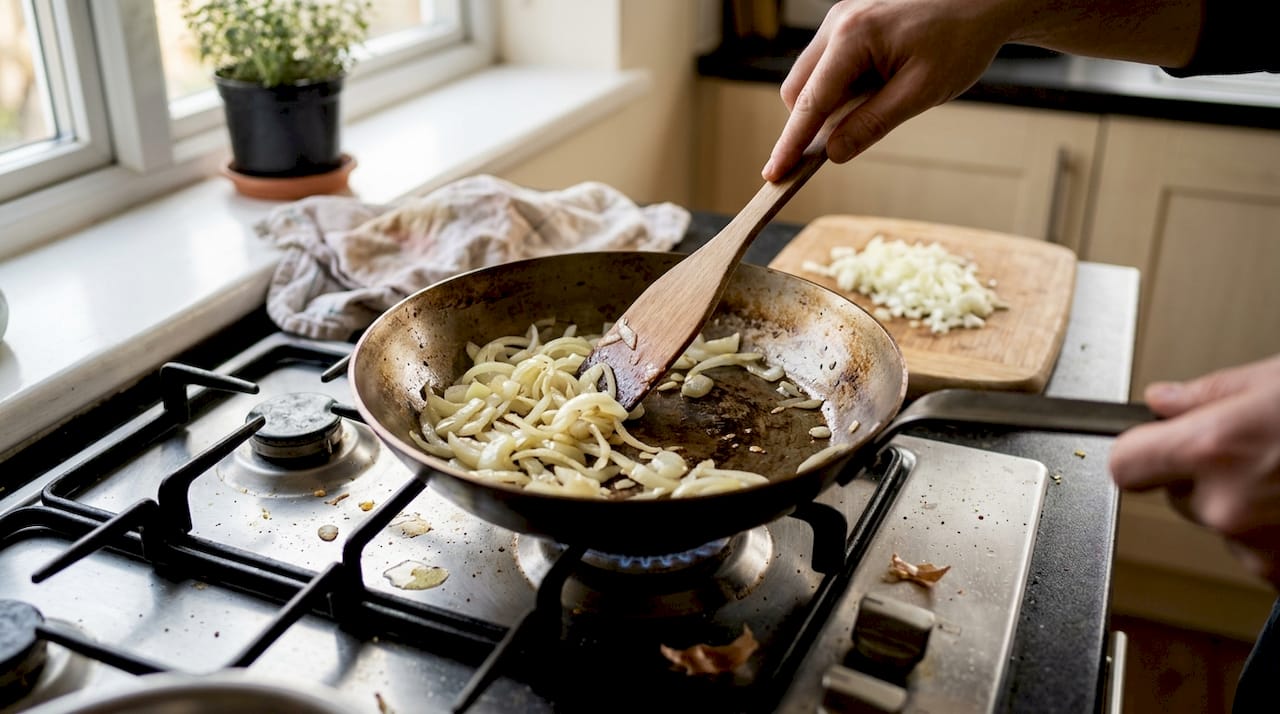
Patina lasts far longer than synthetic coatings like PTFE or ceramic. Chemical nonstick surfaces typically survive 18 to 36 months of regular use before scratching, chipping, or losing their release properties. A properly seasoned carbon steel pan maintains its patina for decades, requiring only occasional touch-ups rather than complete replacement. This durability makes carbon steel more economical and sustainable over its lifetime.
Safety at very high temperatures distinguishes patina from chemical alternatives. PTFE coatings release toxic fumes above 260°C, limiting cooking techniques and creating health risks. Ceramic coatings lose effectiveness after repeated thermal cycling. Patina contains only polymerised plant oils, remaining inert and safe regardless of temperature. This allows you to use your pan for everything from gentle egg cookery to blazing-hot stir fries without concern.
- Patina improves nonstick performance with each use rather than degrading
- Protects carbon steel from rust and corrosion through a durable polymer barrier
- Enhances heat distribution by smoothing microscopic surface irregularities
- Outlasts synthetic coatings by decades when maintained properly
- Remains safe and stable at temperatures that would damage chemical nonstick surfaces
Performance comparison: A mature patina reduces food adhesion by approximately 85% compared to raw carbon steel, approaching the performance of new PTFE coatings whilst maintaining this effectiveness indefinitely rather than degrading within two years.
Common misconceptions and nuances about patina maintenance
Acidic foods can wear thin patina and patchy patina is normal early on, whilst forced patinas are mostly cosmetic and distinct from flaky rust. Understanding these nuances prevents unnecessary worry and helps you maintain your cookware effectively.
Acidic ingredients like tomatoes, wine, and citrus react with the polymer layers, gradually dissolving them through chemical interaction. A mature, thick patina tolerates occasional acidic cooking without significant damage. A young patina with only a few layers remains vulnerable. Limit exposure to acidic foods during the first months whilst your seasoning builds strength. Once you achieve a deep black surface, you can cook tomato sauce or deglaze with wine without fear, though you may need to re-season slightly more often.
Patchy patina appears normal initially and resolves with continued use. New pans often develop seasoning unevenly, with darker areas where oil pooled during seasoning and lighter spots that received less coverage. Some cooks obsess over achieving uniform black coverage immediately. This aesthetic concern matters little for performance. As you cook, the lighter areas gradually darken and blend with the rest. Focus on building thickness rather than perfect colour matching.
Forced patinas using potato peels, flaxseed oil, or other accelerated methods create visual appeal without functional benefit. These techniques produce dramatic colour changes quickly by using ingredients that polymerise rapidly or leave residue. The resulting surface often flakes or remains sticky because it lacks the gradual layering that creates durable seasoning. Forced patinas look impressive in photos but offer no performance advantage over traditional seasoning with regular cooking oils. Save yourself the effort and build patina through normal use.
Distinguishing patina from rust prevents unnecessary stripping and reseasoning. Patina feels smooth and slightly slick, even when dry. Rust appears rough, flaky, and orange rather than black. Patina adheres firmly to the metal and requires deliberate scrubbing to remove. Rust flakes off easily and leaves orange residue on cloths. If you spot orange spots, you have rust that needs addressing. If the surface looks dark but feels smooth, you have healthy patina worth preserving.
Proper care preserves patina and prevents rust formation. Dry your pan immediately after washing, apply a thin oil coat after each use, and store it in a dry location. Avoid soaking carbon steel or leaving it wet overnight. These simple habits maintain the protective polymer layer whilst preventing moisture from reaching the underlying metal.
Pro Tip: If you accidentally cook something highly acidic and notice your patina thinning, simply cook a fatty meal or two to rebuild the affected areas. The patina repairs itself through normal use.
- Limit acidic ingredients during the first three months whilst patina strengthens
- Patchy colour distribution resolves naturally with continued cooking
- Forced patina methods create cosmetic appeal without improving function
- Smooth, black surfaces indicate healthy patina whilst rough, orange spots signal rust
- Immediate drying and light oiling after each use preserve patina and prevent corrosion
- After washing, place the pan over medium heat for 60 seconds to evaporate residual moisture completely
- Apply three drops of high smoke point oil whilst the pan remains warm
- Wipe the oil across the entire surface with a paper towel until it appears almost dry
- Allow the pan to cool before storing to lock in the protective coating
How to develop and care for patina on your carbon steel cookware
Regular use and seasoning with oil at high temperature best develop a natural, long-lasting patina layer. The process requires patience but rewards you with a cooking surface that improves for years.
-
Initial oven seasoning establishes the foundation. Preheat your oven to 250°C. Wash the pan with warm, soapy water to remove factory coatings. Dry thoroughly, then place it in the hot oven for 10 minutes to ensure complete moisture removal. Remove the pan, apply a very thin coat of grapeseed, avocado, or sunflower oil, then wipe away excess until the surface looks almost dry. Bake upside down for 30 minutes. Repeat this cycle three times for a strong base layer.
-
Stovetop seasoning between uses reinforces the patina. After cooking, whilst the pan remains warm, add a few drops of oil and wipe it across the surface with a paper towel. Heat the pan over medium heat until the oil smokes lightly, about two minutes. This quick seasoning after each meal accelerates patina development dramatically.
-
Cook fatty foods frequently during the first month. Bacon, sausages, duck breast, and stir-fried vegetables with generous oil all contribute to patina growth. The rendered fats coat the surface and polymerise during cooking, adding layers without dedicated seasoning sessions. Aim for at least four fatty meals per week initially.
-
Avoid problematic foods until patina matures. Limit eggs, fish, and delicate proteins during the first two weeks. These foods stick easily to new pans and create frustration. Similarly, avoid tomato sauce, citrus marinades, and wine-based dishes until you achieve a dark brown or black surface.
-
Clean gently to preserve existing layers. Use hot water and a soft sponge or brush. Avoid soap unless absolutely necessary, as it can strip young patina. For stuck food, add water to the warm pan and bring it to a simmer, then scrape gently with a wooden spatula. Dry immediately after washing.
-
Oil after every use without exception. This habit prevents rust and adds micro-layers of seasoning. Even a quick wipe with an oiled paper towel makes a difference over time.
Pro Tip: Keep a dedicated oil bottle with a pour spout near your hob. This makes post-cooking oiling effortless and ensures you never skip this crucial step.
Daily cooking practices that promote patina:
- Use medium to high heat for most cooking tasks
- Add adequate fat before heating the pan
- Allow proteins to develop a crust before attempting to flip them
- Deglaze with stock or water rather than wine or citrus during the first month
- Cook something at least three times per week to maintain momentum
Maintenance tips for long-term patina health:
- Store pans in a dry location with good air circulation
- Avoid stacking other cookware inside carbon steel pans, which can scratch the patina
- Re-season if the surface appears dull, sticky, or shows rust spots
- Never put carbon steel in the dishwasher
- Avoid sudden temperature changes that can cause warping
| Feature | Patina (carbon steel) | Synthetic coating (PTFE/ceramic) |
|---|---|---|
| Lifespan | Decades with proper care | 18-36 months typical use |
| Heat tolerance | Safe above 300°C | Degrades above 260°C |
| Performance over time | Improves with use | Declines from day one |
| Repair capability | Easily restored through re-seasoning | Irreparable once damaged |
| Health concerns | None, pure polymerised plant oils | PTFE releases fumes, ceramic contains silicates |
| Environmental impact | Minimal, lasts for generations | Requires replacement, manufacturing pollution |
A comprehensive seasoning approach combines initial oven treatment with consistent stovetop maintenance and strategic food choices. This three-pronged strategy builds patina faster than any single method whilst creating a more durable, even surface. The investment of time during the first month pays dividends for years, transforming your carbon steel cookware into a treasured kitchen tool that outperforms and outlasts synthetic alternatives.
Discover carbon steel pans with superb patina potential
Building a magnificent patina starts with quality carbon steel cookware designed for optimal seasoning and performance. Brass & Steel crafts premium carbon steel pans in Poland using single-piece construction that eliminates rivets and welds. This seamless design creates an ideal canvas for patina development whilst ensuring even heat distribution and lasting durability.
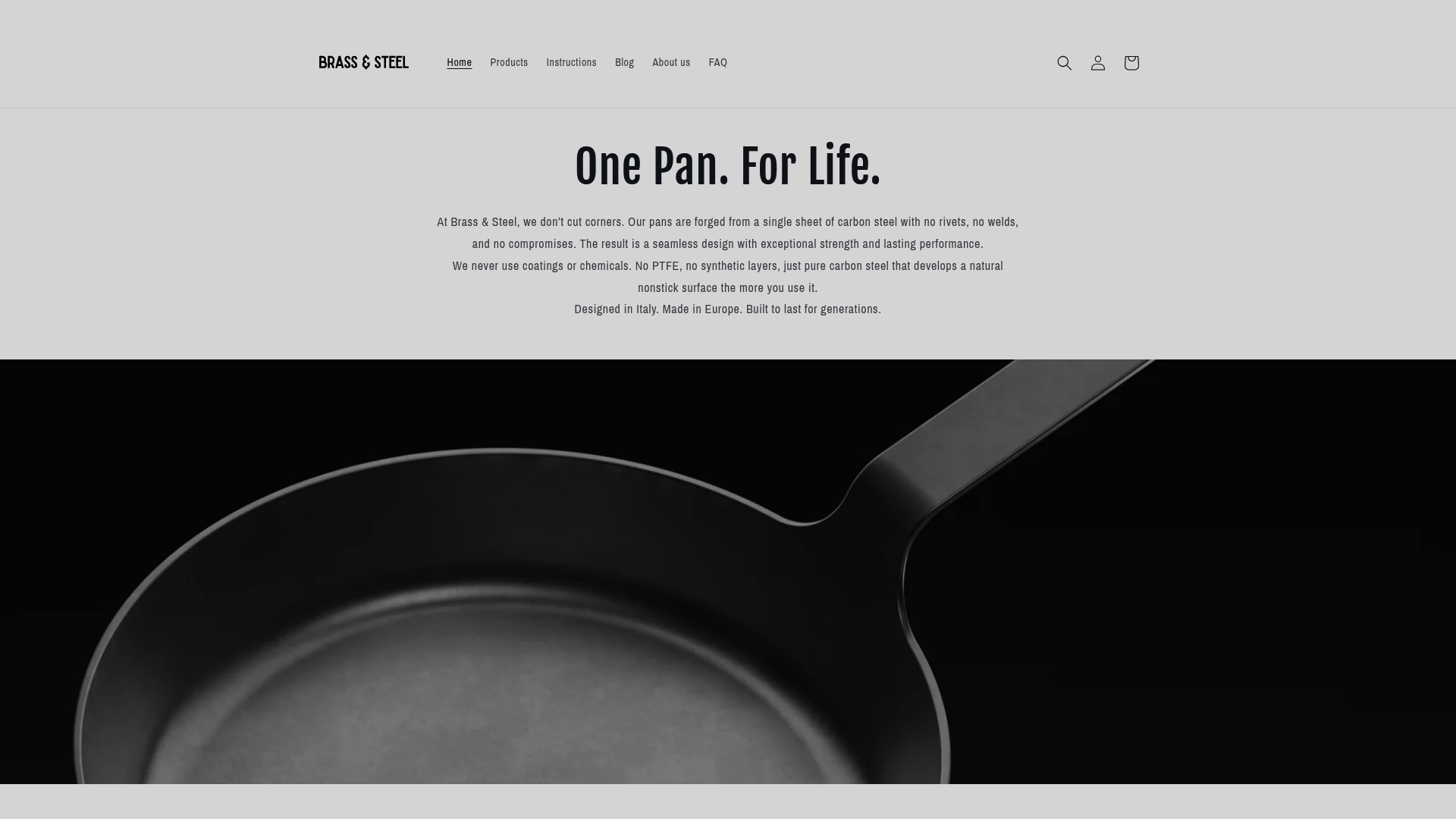
Their 27 cm and 30 cm sauté pans feature 3 mm and 4 mm carbon steel respectively, providing the thermal mass needed for excellent heat retention whilst remaining responsive to temperature changes. These pans combine professional performance with home kitchen practicality, supporting everything from delicate egg cookery to blazing-hot sears. Free from PTFE, PFOA, and synthetic coatings, they offer a pure cooking surface that improves with every meal. Explore the collection at Brass & Steel and start building patina that will serve you for decades.
Frequently asked questions about patina in cookware
What is the difference between patina and rust on carbon steel?
Patina feels smooth and appears black or dark brown, created by polymerised oil layers that protect the metal. Rust appears orange, feels rough and flaky, and results from iron oxidation when moisture reaches unprotected steel. Patina enhances cooking performance whilst rust damages the pan and requires removal.
How long does it take to develop a mature patina?
A functional patina develops within two to three weeks of regular cooking, providing basic nonstick properties and rust protection. A deep black, fully mature patina takes three to six months of consistent use. The timeline varies based on cooking frequency, food types, and maintenance habits.
Can acidic foods damage patina permanently?
Acidic ingredients thin patina temporarily but rarely cause permanent damage. A mature, thick patina tolerates occasional acidic cooking without significant loss. If you notice thinning after cooking tomatoes or citrus, simply cook a few fatty meals to rebuild the affected areas. The patina repairs itself through normal use.
Is forced patina useful for improving cooking performance?
Forced patina methods using potato peels or flaxseed oil create visual appeal but offer no performance advantage over traditional seasoning. These techniques often produce surfaces that flake or remain sticky because they lack gradual layering. Build patina through regular cooking with standard oils for better, longer-lasting results.
How do I revive or repair worn patina on my pan?
For minor wear, cook several fatty meals and perform stovetop seasoning after each use. For significant damage or rust spots, scrub the affected area with steel wool, rinse and dry thoroughly, then perform three rounds of oven seasoning at 250°C. The patina rebuilds quickly once you re-establish the base layers and resume regular cooking.